Zoals je wellicht wel weet, erger ik me kapot aan het enorme leugencliché dat De Krim is geannexeerd door de Russen en dat het daar gehouden referendum werd gemanipuleerd door de Russen, die tijdens het referendum met grote aantallen militairen op straat zouden zijn gezien…… Niets van waar, bovendien hebben internationale waarnemers het referendum gecontroleerd en zij stelden dat het referendum eerlijk en goed was verlopen…….
Niet voor niets leefde die wens onder de bevolking, zeker als je de staat van de infrastructuur zag (van wegen t/m de havens en het vliegveld van Simferopol) ten tijde van het Oekraïense bestuur: enorm veel gaten in de wegen, alles afgeragd en slecht onderhouden, Kiev stak dan ook geen geld in De Krim….. Ook de bouw van ziekenhuizen en crèches bleef ver achter bij de behoefte daaraan….. Uit eerdere berichtgeving (al van voor de opstand) weet ik dat men destijds stemde voor Janoekovytsj, die beloofde e.e.a. op te knappen, bovendien wilde hij vriendschappelijke banden met Rusland onderhouden, waarbij Oekraïne zelfs een verdrag werd aangeboden, dat in tegenstelling tot een verdrag met de EU, uiterst lucratief zou zijn geweest (iets dat de VS zo stak dat het de opstand in Oekraïne organiseerde en regisseerde*).
Return to Russia: Crimeans Tell the Real Story of the 2014 Referendum and Their Lives Since
Eva Bartlett traveled to Crimea to see firsthand out how Crimeans have fared since 2014 when their country reunited with Russia, and what the referendum was really like.
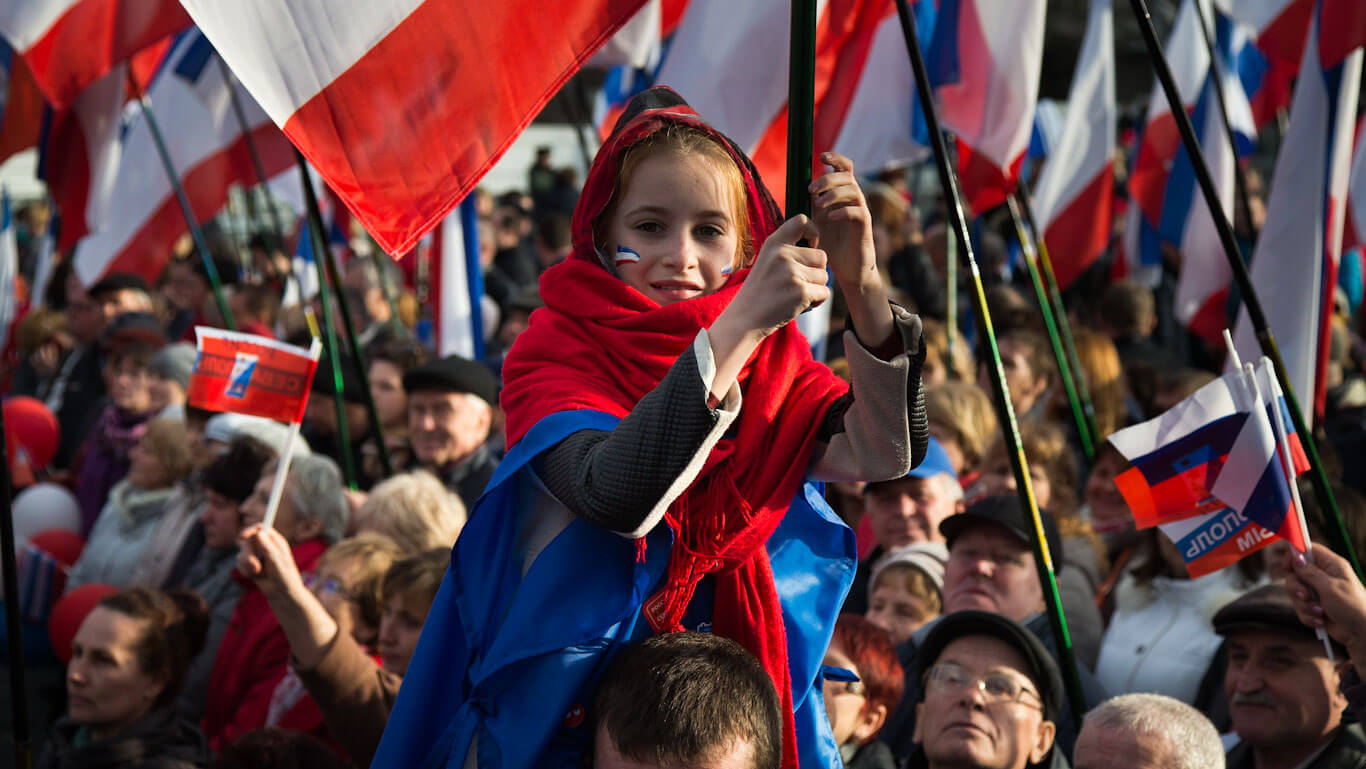
SIMFEROPOL, CRIMEA — In early August I traveled to Russia for the first time, partly out of interest in seeing some of the vast country with a tourist’s eyes, partly to do some journalism in the region. It also transpired that while in Moscow I was able to interview Maria Zakharova, spokeswoman of the Foreign Ministry.
High on my travel list, however, was to visit Crimea and Donetsk People’s Republic (DPR) — the former a part of Russia, the latter an autonomous republic in the east of Ukraine, neither accurately depicted in Western reporting. Or at least that was my sense looking at independent journalists’ reports and those in Russian media.
From the Russian mainland to the Crimean Peninsula
“When I came here at the end of 2014, Simferopol Airport was very dated: small and stuffy, low ceilings, small windows; the bathrooms didn’t work, there was a constant stench in the air, and many facilities weren’t working — even the baggage carousels didn’t work properly. There were no restaurants or cafes, and no places to rent taxis. Now, it’s a world-class international airport.”
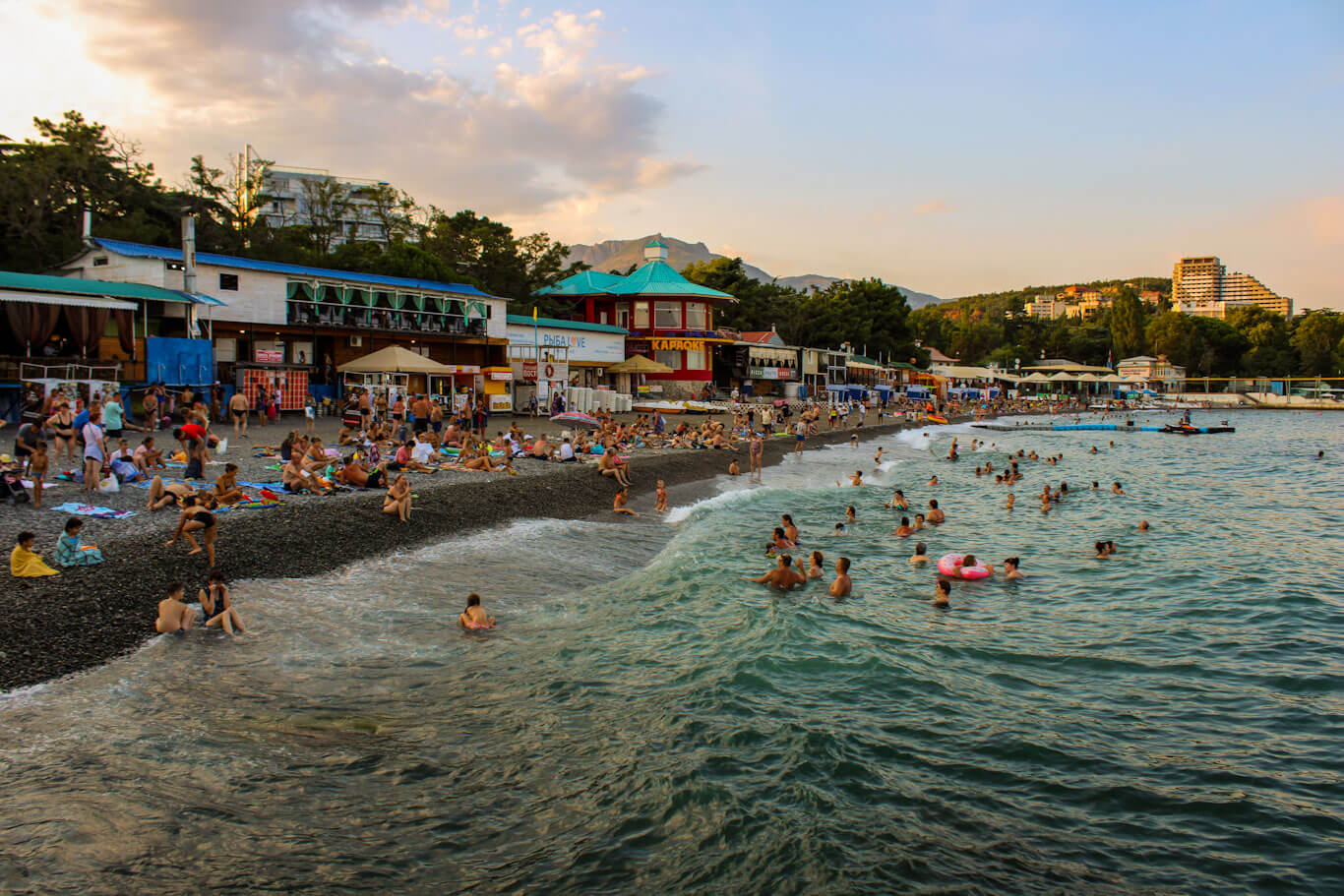
“It shouldn’t be surprising — people are people anywhere. But Western media conditions us with stereotypes of Russians as cold and hard, vilifying an entire nation.”
In the evening, we stay in the home of Vlad’s friend Tata, a Russian woman who moved to Crimea in 2012.
Since there was so much hype in Western media about a Russian takeover of the peninsula, I ask the burning questions: Were Crimeans forced to take part in the referendum? What was the mood like around that time? Tata replied:
“I never saw so many people in my life go out to vote, of their own free will. There was a period before the referendum, maybe about two months, during which there were two holidays: International Women’s Day, March 8, and Defender of the Fatherland Day, February 23.
Normally, people would go away on vacation during these holidays. But that year, Crimeans didn’t go anywhere; they wanted to be sure they were here during the referendum. We felt the sense of a miracle about to happen. People were anxiously awaiting the referendum.
There were military tents in the city, but they were not erected by the military, but by local men. They would stand there every day, and people could come and sign a document calling for a referendum.
I went one day and asked if I could add my name but I couldn’t, because I have a Russian passport. Only Crimean citizens could sign it. This was the fair way to do it.
At that time, my husband was in America. One day, he was watching CNN and got scared and called me because he saw reports of soldiers in the streets, an ‘invasion’ by Russia.
The local navy came from Sevastopol to Yalta and anchored their ships off the coast, made a blockade to ensure no larger Ukrainian or other ships could come and attack.
But I never saw tanks, I never saw Russian soldiers. I never saw any of that in the city.”
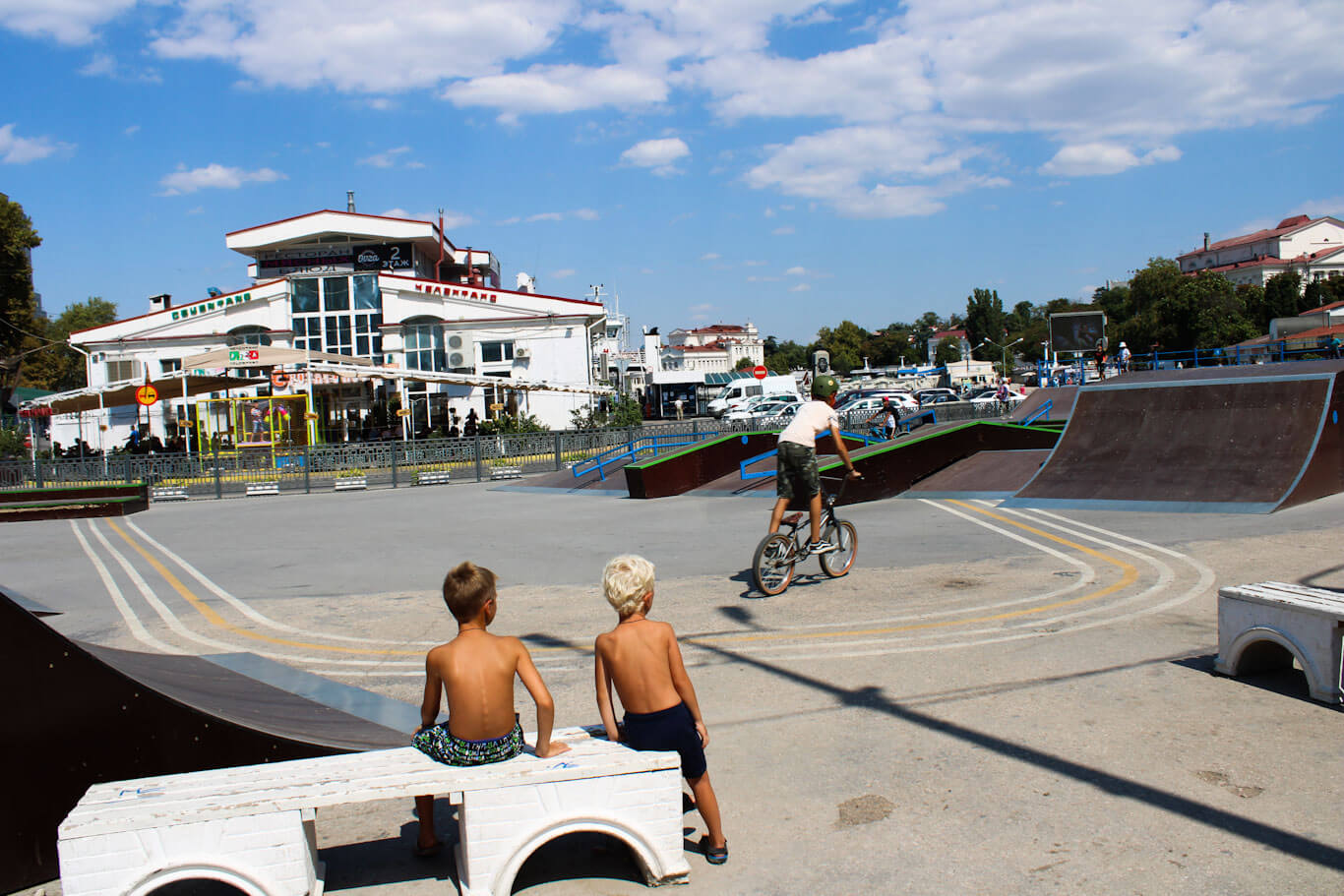
“When I came here in December 2012, everything was dilapidated and run down. The nice roads you were driving on, they didn’t exist when we were a part of Ukraine. I didn’t understand why Crimea was still a part of Ukraine. It was Russian land ever since the Tsars, the imperial time of Russia. This is where the Russian soul is, and the soul of the Russian navy.
After the Soviet Union collapsed, it wasn’t the will of the Crimean people to join Ukraine. People were always Russian here; they always identified as Russian. Ukraine understood this well, and put nothing into Crimea, as punishment. Ukraine didn’t build any hospitals, kindergartens or roads.
In the past four years, the Crimean government has built 200 new kindergartens. This is the most obvious example of how things have improved. They also built the new Simferopol airport.
I worked in aviation. It took three years to build an airport of this standard in Yekaterinburg, Russia. It took half a year in Simferopol.”
International Jazz Festival
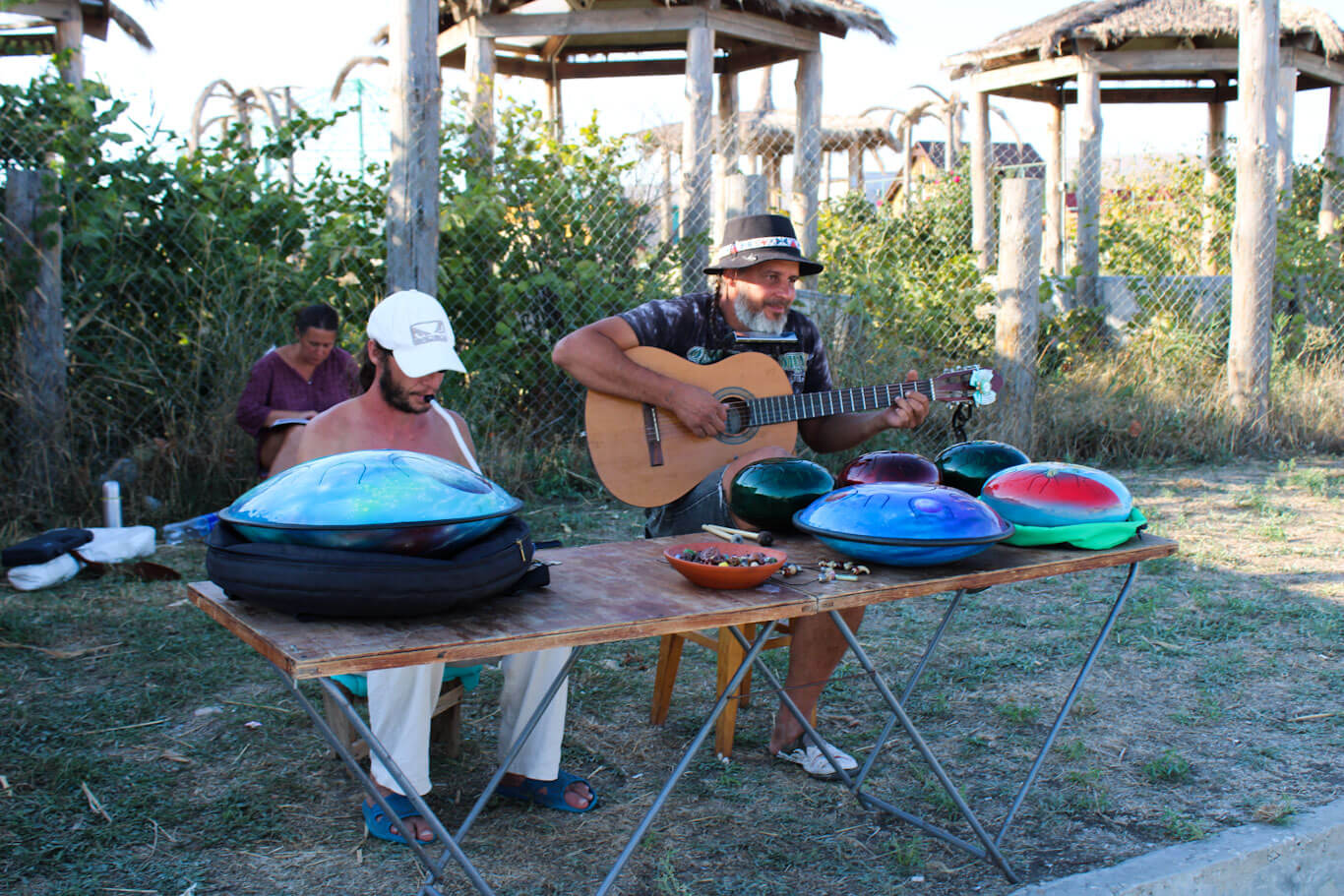
The next day, I walk through Koktebel, taking in the local markets brimming with produce, cheeses, and other goods, and every so often come across a streetside stand laden with fresh fruits. In the late afternoon, I walk along the sea, past packed beaches, and meet with a Crimean woman, Yaroslava, who lives in Austria but every summer returns to her beloved Crimea. She is ardently supportive of the decision to have joined Russia and spends much of her time back in Austria trying to educate people on why Crimeans wanted to be a part of Russia.
Construction everywhere
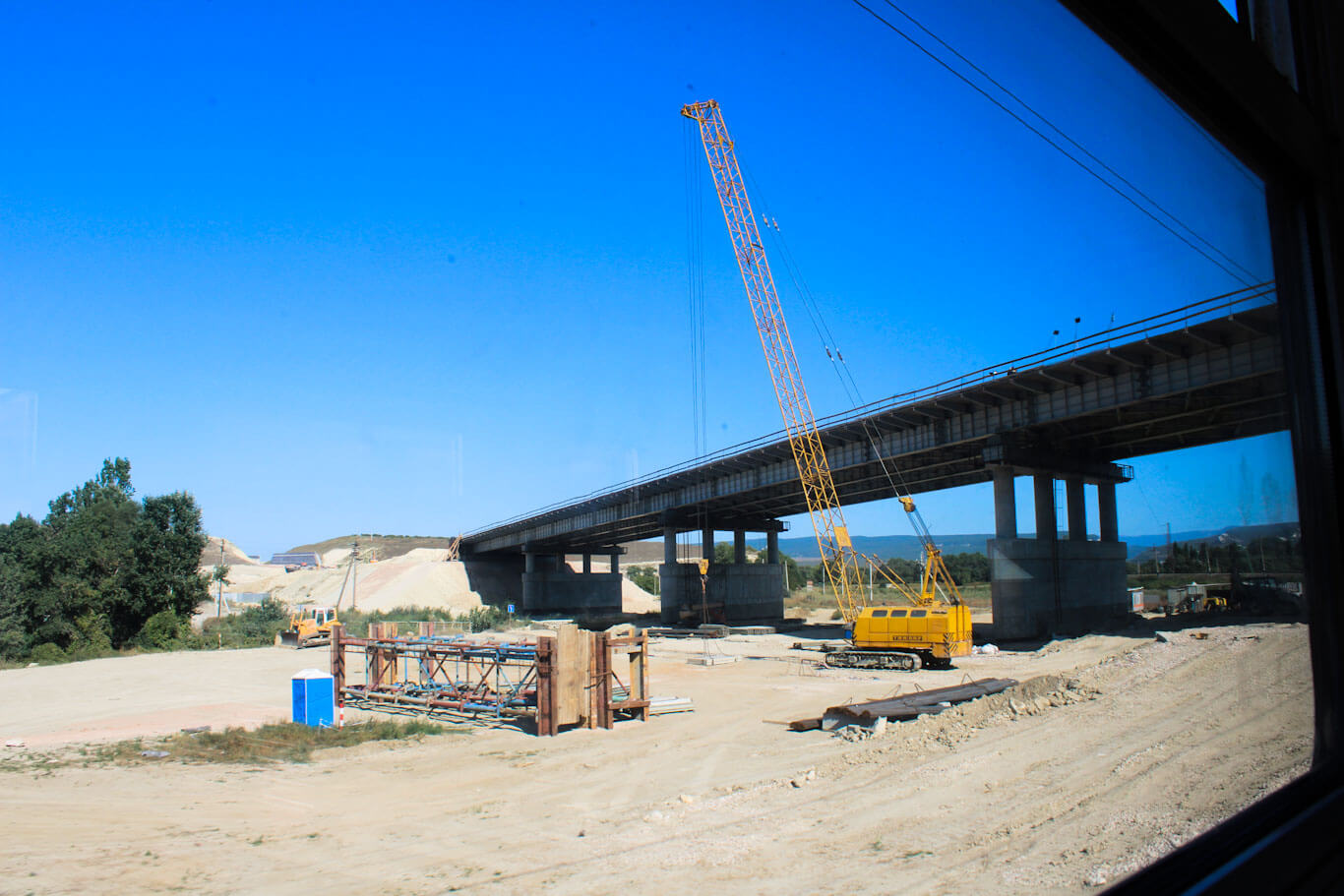
On the fifth day, we drive back to Simferopol; Vlad is heading back to Moscow. As we drive, we see road work repeatedly, just as we had when driving from Simferopol south to Alushta: roads being widened, repaved; bridges being repaired or newly built. This is something I observed throughout my travels around Crimea. I remember Tata’s words about “everything being dilapidated” and have a hard time imagining that now with what I see.
Vlad departs for Moscow, and I’m on my own now, traveling from the airport via public bus and minibus. At one point I ask a young couple, using Yandex translate, for directions. They get me on the right minibus and, following my route via Yandex maps, I get myself to Simferopol’s rail station and walk the half-hour to my nondescript hotel. I again need to ask locals for directions, as the unmarked hotel is in some parking lot behind a supermarket.
As I stand to orient the map route and zoom in to look for any signs of cafes, a woman walks by me and says with a smile something with the word “shto,” which I think means “what.” When I reply in English, she laughs and flags down another woman, Yana, who speaks English well and insists she and her husband drive me.
As we drive, we chat. I ask her about the referendum, mentioning that many in the West have the notion that it was done under duress, with a heavy military presence to influence the vote. She laughs, saying: “There were no troops, no military, around us during the referendum.” She speaks of the joy of Crimeans to vote, says that maybe 98 percent of Sevastopol voters had voted in favor [it was apparently 96 percent, but close enough], and adds, “We are now under the wing of Russia.”
I ask about developments since then. She mentions the improvements in roads, also the modern trolley-buses and regular buses, the opening of kindergartens and schools, and free courses (like music) for children.
We arrive at the remote guesthouse, where we realize that no one is home to give me a room. Yana mentions her parents have a guesthouse just outside the city and overlooking the bay. We drive to it, I meet the owners, charming people who set me up in a little apartment surrounded by fig and pear trees and with a small swimming pool to cool off in.
When I finally need to leave Sevastopol for Simferopol again, the couple refuses to take my money, insists I am their guest, and drives me to the bus station, stopping en route at a market where they search for ten minutes until they find the traditional Armenian treats they want to give me: walnuts covered in the syrup of various fruits (pomegranate, peach, currant, grape), and a box of walnut-stuffed dried figs.
Ukrainians in Crimea
In Simferopol anew, I meet Anastasiya Gridchina, the Chair of the Ukrainian Community of Crimea, an organization formed in 2015 whose main goals, she tells me, “are to have friendly relations between two great peoples: Ukrainians and Russians — not the politicians but the people. The second goal is to preserve inter-ethnic peace in the Republic between different nationalities.”
Gridchina explains that in Crimea there are more than 175 nationalities, just 20 less than in all of Russia, but in a very small territory. Hence the importance of preserving inter-ethnic peace. After Russians, Ukrainians comprise the second largest population in Crimea.
I asked Anastasiya whether she supported, much less participated in the referendum.
“I worked very hard in order that we could have a referendum. I live in Perevalne, the last settlement in the mountains above Alushta. There was a Ukrainian military detachment which did surrender. In February 2014, I was among a line of people standing between the Ukrainian and Russian military detachments, to prevent any bloodshed. The fear that prevailed at that time was that nationalists from Ukraine would come here and we would have massacres.
In February, there was a confrontation outside the Parliament here in Simferopol. It was organized by leaders of the Mejlis — the Crimeans Tatars. On the other side, there were some pro-Russia organizations who were protecting the Parliament. They were far less [numerous] than the Mejlis. The Mejlis were armed with sticks and knives. There were clashes and two people were killed, but thankfully it didn’t escalate beyond that.
When the news came that there would be a referendum, people relaxed. They had a chance to express their point of view and 96 percent of the population of Crimea voted for Crimea to return to Russia.”
Since she is Ukrainian, I asked Anastasiya why she wanted Crimea to join Russia:
“I’ve lived in Crimea all my life, and my language is Russian. And I know the history of Crimea, which has always been Russian territory, which has a history beginning with the Russian Empire and then the Soviet Union. So, it is Russian-speaking territory, first of all. That’s why I believe it should be in the Russian Federation, not in Ukraine.”
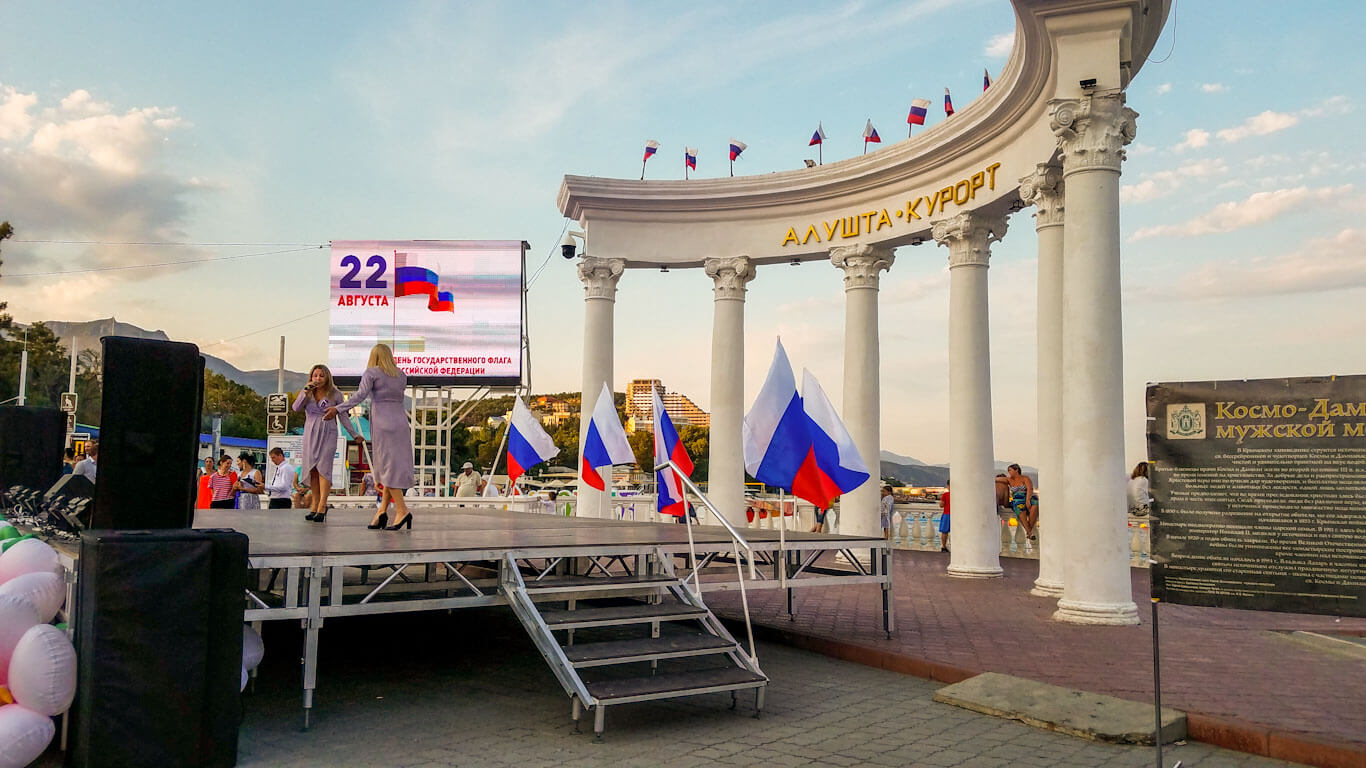
“Whatever they might have said about Russian soldiers forcing people to participate in the referendum, it was all lies, pure lies. We did not see any soldiers on the streets, especially on the day of the referendum.
I gave an interview to foreign journalists before the referendum. But when they published it, they changed my words. I said we were very thankful to the Russian troops that were here, that protected us from the attacks of Ukrainian nationalists prior to the referendum. But they translated it that I said ‘Please, we want Ukrainian soldiers to defend us from those Russian soldiers.’
The Russian troops that were here were not on the streets on the day of the referendum but, at the time in general, they were there to protect civilians from an attack by Ukrainians.
On the day of the referendum, there were no soldiers, no military. The only security were there to prevent any illegal actions. No military people were there, no arms, no armored personnel carriers, no military equipment, nothing. Only members of the election commission and the people voting.”
“There were those who immediately after the referendum left Crimea for Ukraine because it was their personal wish. Nobody prevented them from going. Even the soldiers had an option: to stay and continue military service here, or to leave.
There were also some people who didn’t like that Crimea joined Russia, but didn’t leave for pragmatic reasons. Because the quality of life in Russia is much higher than in Ukraine. So they continue living in Crimea.”
“I’d like to tell people around the world, welcome to Crimea, come here yourselves and see and hear with your own eyes and ears, to understand that all the lies you hear about Crimea, that we are oppressed or under pressure from the military…this is all lies, this is all not true.
Also, that we are not allowed to speak Ukrainian is a lie. One of the state languages is Ukrainian. Russian and Tatar are also state languages.”
Klik hier voor het vervolg.
===================================
* Hillary Clinton stak als minister van buitenlandse zaken tijdens de Obama administratie maar liefst 4 miljard dollar in het organiseren van de opstand, die tot de afzetting van Janoekovytsj leidde…….
Zie ook:
‘Zelenski (president Oekraïne) ingepakt door neonazi’s en beloften aan EU gedaan door Porosjenko‘
‘Koning Willem Alexander vraagt Rusland om medewerking bij onderzoek naar rampvlucht MH17‘ (en zie de links in dat bericht naar meer informatie over rampvlucht MH17)
‘Oekraïne kondigt staat van beleg af vanwege ‘Russische agressie’ in de Zee van Azov‘
‘VS torpedojager arriveert in Zwarte Zee terwijl de boel daar op scherp staat……..‘
”Porosjenko (Oekraïne) roept de NAVO op tot oorlog tegen Rusland‘
‘Election ploy? Poroshenko declares martial law in Ukraine after Kerch standoff‘
‘Putin en Trump halen spanning uit de lucht >> de westerse wereld schreeuwt moord en brand……‘
‘De Krim, Georgië en Syrië >> de anti-Russische propaganda…..‘
‘Oekraïne en NAVO bezig met uitlokking WOIII………
‘VS levert neonazi-leger Oekraïne voor 250 miljoen dollar aan wapens‘
Voor meer berichten over Oekraïne, De Krim of rampvlucht MH17, klik op het betreffende label, direct onder dit bericht.