Bilderbergconferenties, de petrodollar, de oliecrisis en ‘de anti-kernenergie lobby uit onverdachte hoek’

(On the top right hand side of this page you can choose for a translation in the language of your choice in Google Translate)

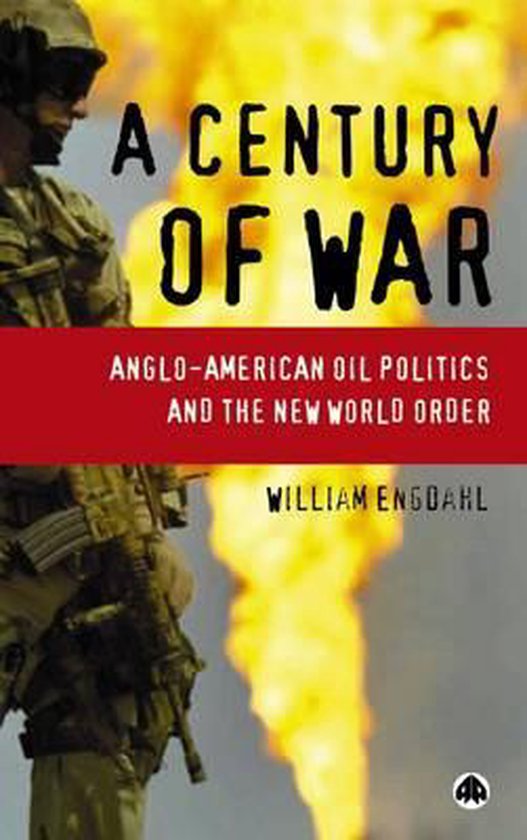
William Engdahl heeft een boek gepubliceerd met de titel ‘A Century of War: Anglo-American Oil Politics and the New World Order’ uit dit boek heeft hij een hoofdstuk genomen waarin hij onder andere beschrijft wie er verantwoordelijk was voor de Yom Kippoer oorlog (voorbereid door de VS en Groot-Brittannië), de daarna en daaraan gelinkte oliecrisis, het loslaten van de goudstandaard voor de dollar, het ontstaan van de petrodollar, andere smerige handelingen van Nixon en Kissinger, de macht van de Bilderbergconferenties, plus het verzet tegen kernenergie.
Wat betreft de laatste, dus verzet tegen kernenergie is het duidelijk dat Engdahl dat verzet onzin vindt. Het verzet tegen deze vorm van energie zou vooral ontstaan zijn bij de directies van een aantal oliemaatschappijen, die bovendien een flink aantal regeringen in hun zak hadden (en hebben) en zouden daardoor aan de wieg van de anti-kernenergielobby hebben gestaan. Uiteraard kan je je daar van alles bij voorstellen, immers met de vooruitzichten in de 50er en 60er jaren dat kernenergie een wondermiddel was voor elektriciteitsopwekking, zou daarmee tegelijkertijd een fiks deel van de winsten te niet worden gedaan, de enorme winsten die de oliemaffia maakte.

Echter daar valt nog wel het één en ander op aan te merken, zeker als je ziet dat de jeugd, de studenten en de arbeiders in de 60er en 70er jaren zich niet meer zo makkelijk als schapen lieten leiden door de oudere generaties en ‘het wettig gezag’. Het verzet tegen de atoombom is daarna gelinkt aan het verzet tegen kernenergie. Bovendien zag men destijds dat ongelukken met kerncentrales zoals het eerste grote ongeluk in een kerncentrale, die in de centrale van Windscale (later vanwege dat ongeluk omgedoopt tot: Sellafield) onder het tapijt werden geschoven. Voorts zag men niet alleen dat kernenergie werd misbruikt om kernwapens van te maken, maar ook dat door de productie van kernenergie het gebruikte water voor koeling in open wateren werd geloosd, waarbij organisaties als Greenpeace bij de punten waar dit in zee of rivieren terechtkomt teveel radioactiviteit meten, voorts vonden en vinden er dan nog ‘kleine ongelukjes’ plaats waarbij de centrales radioactief stoom ventileren op de buitenlucht….. Niet vreemd dan ook dat in de omgeving van kerncentrales (niet zelden) een sterk verhoogd aantal kankers was en is te vinden onder omwonenden…..

Ook de grote hoeveelheden radioactiviteit, die grotere ongelukken in het milieu terechtkwamen, verontrustten velen en dat volkomen terecht….. Zie wat dat betreft ook de leugen dat de 1,3 miljoen ton radioactief besmet water, die men in het Japanse Fukushima in de oceaan wil lozen geen gevaar vormt voor mens en milieu (1,3 miljoen ton >> daarvoor moet je achter de 5 nullen van die 1,3 miljoen ton nog eens 3 nullen plakken, immers een ton is 1.000 liter of 1.000 kilo, ofwel het gaat hier om 1.300.000.000 liter radioactief besmet water, in spreektaal: 1,3 miljard liter……). Ik zal hier later nog een bericht over brengen, waarin door deskundigen duidelijk wordt gemaakt dat ook het water dat men daar wil lozen een gevaar vormt voor mens, zeeleven en de rest van het milieu.

Intussen heeft de kernenergie-industrie een machtige lobby gevormd, niet alleen van degenen die deze manier van energie opwekken zaligmakend vinden, maar bijvoorbeeld ook van bedrijven die bij de bouw worden betrokken, zo heeft de bouwmaffia er alle belang bij dat er bijvoorbeeld in Nederland nieuwe kerncentrales worden gebouwd….. Alleen al het feit dat verzekeringsmaatschappijen kerncentrales niet willen verzekeren zou voor een ieder het teken moeten zijn om te stoppen met deze frankensteinwetenschap….. Niet voor niets dat men het aantal ernstige ziekten na een ongeval met een kerncentrale voor het overgrote deel uit de media houdt >> niets mag de wil tot het bouwen van kerncentrales in de weg staan…..

Het afbreken van kerncentrales is nog een heel stuk kostbaarder dan de bouw daarvan, vandaar ook dat men deze ondingen liever laat staan. Om de veiligheid van mensen te kunnen garanderen zou men veilige en bewaakte opslag van kernafval en de gebouwen van kerncentrales honderden zo niet duizenden jaren moeten kunnen garanderen en dat is totaal onmogelijk zoals je zal begrijpen, dus stop met de bouw van deze ondingen en het gebruik daarvan…..

Dat men in Nederland weer kerncentrales wil bouwen geeft ten overvloede aan dat de politiek schijt heeft aan de gezondheid van de burgers, niet voor niets ook dat de kabinetten Rutte zo enorm hebben bezuinigd op de gezondheidszorg dan wel dat hebben toegestaan aan de misdadige zorgverzekeraars die al heel wat ziekenhuizen hebben laten sluiten, vanwege een gebrek aan winstmaken….. (waarbij men zegt dat het sluiten van ziekenhuizen efficiëntie in de hand zal werken…. ha! ha! ha! de oplichters!!) Hoe heeft men ooit durven opperen dat de gezondheidszorg winst moet opleveren, dat moeten wel speciale inhumane, neoliberale psychopathische ploerten zijn geweest!!

Bij de totaal onverantwoorde bezuinigingen op de gezondheidszorg is een fiks aantal partijen betrokken geweest van de PVV tot de PvdA en alles daartussen in. Wat niet wil zeggen dat de PvdA een links partij is, het is een neoliberale partij die zelfs in de oppositie voor meer dan 94% meestemt met de wetsvoorstellen en akkoord gaat met andere zaken van het zittende kabinet. Het zal me niet verbazen als PvdA/GroenLinks, mocht deze coalitie werkelijk een kabinet kunnen vormen na de volgende verkiezingen aanstaande november, niet zal tornen aan de bouw van de kerncentrales. Vergeet niet dat EU grofgraaier en PvdA leugenaar Timmermans jarenlang heeft samengewerkt met zijn partijcollega en oplichter Samsom, die nog vlak voor de ramp met de kerncentrale van Fukushima stelde dat hij achter kernenergieopwekking stond, om dat onmiddellijk in te trekken nadat die ramp een feit was…..

Wat mij vooral opviel in het hieronder weergegeven artikel van Engdahl is de rol van de Bilderbergconferenties, volgens aartsleugenaar Rutte, godbetert ‘onze premier’, zijn deze samenkomsten niets anders zijn dan praatclubjes, echter Engdahl bewijst wat mij betreft dat deze club van schoften grote invloed hebben in de westerse maatschappijen en dat men daar de ‘politieke koers’ uitzet voor de toekomstige jaren, zoals de wens om de wereldbevolking fiks uit te dunnen…. (al wisten velen van ons dat allang) Logisch ook, zoals ik al vaker aangaf op deze plek: als deze Bilderbergconferenties alleen maar praatclubjes vormen >> waarom mag er dan niet worden geopenbaard over wat er wordt besproken??

‘Journalisten’ die mogen deelnemen aan de Bilderbergconferenties moeten alvorens toegang te krijgen beloven dat ze er niets over zullen publiceren dan wel zeggen >> deze zogenaamde journalisten moeten zich de oren van de kop en de ogen uit diezelfde kop schamen…..

Ach ja, het overgrote deel van de journalisten die werken voor de reguliere westerse (massa-) media is intussen gecorrumpeerd en deze figuren hebben dan ook niets meer te maken met objectieve en onafhankelijke berichtgeving, wat zover gaat dat men vanuit die beroepsgroep de gelauwerde onderzoeksjournalist Julian Assange heeft gedemoniseerd en dat in veel gevallen nog doet….. Het demoniseren van NB hun collega Julian die gvd al meer dan 4,5 jaar in isolatiefolter zit voor het openbaren van de waarheid >> het publiceren van vreselijke oorlogsmisdaden begaan door het terreurleger van de VS…… Dezelfde VS die nu het Internationaal Strafhof (International Criminal Court >> ICC) onder druk zet om Putin en anderen in Rusland te vervolgen voor…. oorlogsmisdaden!!! Volgens zeggen zouden bovendien veel journalisten in de VS werken voor de CIA en de NSA…. (het is wel zeker dat dit ook in andere westerse landen een feit is)

Gezien de berichtgeving in de reguliere westerse media over de oorlog van de NAVO onder leiding van de VS tegen Rusland, een oorlog die in Oekraïne wordt uitgevochten, kan je niet anders dan de conclusie trekken dat die media in de zak zitten van de geheime diensten, de politieke lobbyisten van de VS en de NAVO (wat betreft Nederland zijn dat de figuren uit de regering en ons parlement), de wapenfabrikanten en de rechtse denktanks, zoals die in Nederland >> HCSS en Clingendael, als ik me niet vergis beiden gefinancierd met ons belastinggeld….. (HCSS >> Den Haag Centrum voor Strategische Studies [ha! ha! de naam is al een leugen], in het Engels >> The Hague Centre for Strategic Studies)

Overigens hebben diezelfde media al vanaf de eerste oorlog van de VS tegen Irak laten zien dat ze niets meer met onafhankelijke journalistiek te maken hebben, vandaar ook dat ze al jaren hebben geschreeuwd om censuur op de sociale media, daar men op die plek nog wel onafhankelijke journalistiek kan vinden…… Dezelfde media waar men de reguliere media de les leest over hun afhankelijke berichtgeving, zo zijn deze media ofwel staatsmedia, dan wel media die worden bekostigd door grote reclamemakers als Albert Heijn en waarbij het overgrote deel van de niet-staatsmedia in het bezit zijn van plutocraten die bijvoorbeeld belang hebben bij oorlog vanwege hun aandelenportefeuilles in de wapenindustrie, of wat dat je van aandelenportefeuilles in de farmaceutische maffia >> zie wat dat betreft de volkomen eenzijdige berichtgeving in die media ten tijde van de Coronacrisis (overigens men blijft in die media hameren op de veiligheid van vaccins en over de doeltreffendheid van de PCR-test en de flutthuistesten, terwijl zowel de vaccins als de testen (en de mondmaskers) al op zoveel manieren onderuit zijn gehaald, maar ja de winsten voor die plutocraten over de aandelen farmacie waren dan ook overweldigend……)

Lees het artikel van Engdahl en als over mijn schrijven: vorm je eigen mening!!

(als je het Engels niet machtig bent, zet dan de tekst om in Nederlands met behulp van Google translate dat je rechts bovenaan deze pagina ziet staan, eerst door in het menu op Engels te klikken, waarna je weer kan klikken op die vertaalapp, waarna je dan bovenaan in het menu Nederlands ziet staan, klik daarop en de hele tekst staat in het Nederlands, de vertaling is van een redelijk goede kwaliteit.)

Saudi Arabia and the Hidden Petrodollar Origins

F. William Engdahl info@williamengdahl.com via aweber.com

Hello Dear Readers,

Recently the world’s largest oil producer, Saudi Arabia, along with UAE, joined BRICS, a group of nations increasingly at odds with a heavy-handed US foreign policy. The true significance of the move cannot be appreciated without knowing the actual background of how in the early 1970’s Washington coerced Saudi Arabia and OPEC to sell their oil to the world for dollars and dollars only. That is now beginning to change and the consequences are huge for the world geopolitical and economic configuration.

The following selection from my international bestselling book, A Century of War: Anglo-American Oil Politics and the New World Order, goes into the largely hidden history of the 1973 oil shock and the behind-the-scenes actions of Washington and Wall Street to secure the dollar with world trade in oil. From 1971 to 1975 Washington went from a gold-backed dollar system to essentially a petroleum-backed dollar, the so-called petrodollar. It was all done via control of Saudi Arabia and OPEC oil sales in dollars only. It was ingenious, and enormously destructive to world economic development.


If you haven’t yet done so, please also consider support for my online voice. The relentless censorship of the Internet and social media by the private corporate social media companies since the 2020 covid fake pandemic, and now the war in Ukraine, is alarming and damaging and can only be compared with book burnings in the Germany of the 1930s, or the Medieval Inquisitions with torture of heretics.

I thank you again for your interest and support,

William Engdahl
www.williamengdahl.com

Reader Reviews of A Century of War:

★★★★★ “Shocking – read this to learn how the world really operates” – Utah Blaine

★★★★★ “This book will change the way you view the world” – Guy Denutte

★★★★★ MUST READ” – g-the-amateur

★★★★★ “Full spectrum research !“ – Rev4u

★★★★★ “Read this book!“ – Charles Guiliani

★★★★★ “A must read for long term investors“ – Ahmed M. Alrayes

★★★★★ “A treasure house of Geo-Political information.“ – R. King

© F. William Engdahl CHAPTER NINE:

Running the world economy in reverse: Who made the 1970’s oil shocks?

Nixon pulls the plug

By the end of President Richard Nixon’s first year in office, 1969, the U.S. economy had again gone into recession. In order to combat the downturn, U.S. interest rates by 1970 were sharply lowered. As a consequence of the falling interest rates, speculative ‘hot money’ began once more to leave the dollar in record amounts, seeking higher short-term profit in Europe and elsewhere.

One result of by now almost decade-long American refusal to devalue the dollar, and her reluctance to take serious action to control the huge unregulated Eurodollar market, was an increasingly unstable short-term currency speculation. As most of the world’s bankers well knew, King Canute could pretend to hold the waves back for only so long.

As a result of Nixon’s expansionary domestic U.S. monetary policy in 1970, the capital inflows of the previous year reversed, and the U.S. incurred a net capital outflow of $6.5 billions. But, as U.S. recession persisted, as interest rates continued to drop into 1971, and money supply to expand, these outflows reached then-huge dimensions, totaling $20 billions. Then, in May of 1971, the United States recorded its first monthly trade deficit as well, triggering a virtual international panic sell-off of the U.S. dollar. The situation was indeed becoming desperate.

By 1971 U.S. official gold reserves represented less than one quarter of her official liabilities, meaning that theoretically if all foreign dollar holders demanded gold instead, Washington would have been unable to comply without drastic measures. 1

The Wall Street establishment had persuaded President Nixon to abandon fruitless efforts to hold the dollar against a flood of international demand to redeem for gold. But, unfortunately, they did not want the required dollar devaluation against gold which had been intensely sought for almost a decade.

On August 15, 1971 Nixon took the advice of a close circle of key advisers which included his chief Budget adviser, George Shultz, and a policy group then at the Treasury Department including Paul Volcker, and Jack F. Bennett, who later went on to become a director of Exxon. That sunny quiet August day, in a move which rocked the world, the President of the United States announced formal suspension of dollar convertibility into gold, effectively putting the world fully onto a dollar standard with no gold backing, and by this, unilaterally ripping apart the central provision of the 1944 Bretton Woods system. No longer could foreign holders of U.S. dollars redeem their paper for U.S. gold reserves.

Nixon’s unilateral action was reaffirmed in protracted international talks that December in Washington, between the leading European governments, Japan and a few others, which resulted in a bad compromise known as the Smithsonian Agreement. With an exaggeration which exceeded even that of his predecessor, Lyndon Johnson, Nixon announced after the Smithsonian talks, that they were, ‘the conclusion of the most significant monetary agreement in the history of the world.’ The U.S. had formally devalued the dollar a mere 8 percent against gold, placing gold at $38/fine ounce instead of the long-standing $35, hardly the 100 percent devaluation being asked by allied countries. The agreement also officially permitted a band of currency value fluctuation of 2.25 percent instead of the original 1 percent of the IMF Bretton Woods rules.

By declaring to world dollar holders their paper would no longer be redeemed for gold, Nixon ‘pulled the plug’ on the world economy, setting into motion a series of events which was to rock the world as never before. Within weeks, confidence in the Smithsonian agreement had begun to collapse.

De Gaulle’s defiance of Washington in April 1968 on the issue of gold and adhering to the rules of Bretton Woods, had not been sufficient to force through the badly needed reordering of the international monetary system, but it had sufficiently poisoned the well of Washington’s ill-conceived IMF Special Drawing Rights scheme to cover over the problems of the dollar.

The suspension of gold redemption and the resulting international ‘floating exchange rates’ of the early 1970’s solved nothing. It only bought some time.

An eminently workable solution would have been for the U.S. to set the dollar to a more realistic level. From France, de Gaulle’s former economic adviser, Jacques Rueff, continued to plead for a $70/oz. gold price, instead of the $35 level the U.S. unsuccessfully defended. This would calm world speculation and allow the U.S. to redeem her destabilizing Eurodollars balances abroad, without plunging the domestic U.S. economy into any severe chaos, Rueff argued. If done right, it could have given a tremendous spur to U.S. industry as its exports would cost less in foreign currency. American industrial interests would again have predominated over financial voices in U.S. policy circles. But reason was not to prevail.

The Wall Street rationale was that the power of their financial domain must be untouched, even if at expense of economic production or American national prosperity.

Gold itself has little intrinsic value. It has certain industrial uses. But historically, because of its scarcity, it has served as a standard of value against which different nations have fixed the terms of their trade and therefore their currencies. When Nixon decided no longer to honor U.S. currency obligations in gold, he opened the floodgates to a worldwide Las Vegas speculation binge of a dimension never before experienced in history. Instead of calibrating long-term economic affairs to fixed standards of exchange, after August 1971 world trade was simply another arena of speculation on which direction various currencies would fluctuate.

The real architects of the Nixon strategy were in the influential City of London merchant banks. Sir Siegmund Warburg, Edmond de Rothschild, Jocelyn Hambro and others, saw a golden opportunity in Nixon’s dissolution of the Bretton Woods gold standard the summer of 1971. London was once again to become a major center of world finance, and again on ‘borrowed money,’ this time with American Eurodollars.

After August 1971, dominant U.S. policy, under White House National Security Adviser, Henry A. Kissinger, was to control, not to develop, economies throughout the world. U.S. policy officials began proudly calling themselves ‘neo-Malthusians.’ Population reduction in developing nations, rather than technology transfer and industrial growth strategies, began to be the dominating priority during the 1970s, yet another throwback to nineteenth-century British colonial thinking. How this transformation took place we shall soon see.

The ineffective basis of the Smithsonian Agreement led to further deterioration into 1972, as massive capital flows again left the dollar for Japan and Europe, until February 12, 1973 when Nixon finally announced a second devaluation of the dollar, of 10 percent against gold, pricing gold where it remains to this day for the Federal Reserve, at $42.22/ounce.

At this point all the major world currencies began a process of what was called the ‘managed float.’ Between February and March of 1973, the value of the U.S. dollar against the German Deutschmark dropped another 40 percent. Permanent instability had been introduced into world monetary affairs in a way not seen since the early 1930’s. But this time strategists in New York, Washington and the City of London were preparing an unexpected surprise to regain the upper hand and recover from the devastating loss of the monetary pillar of their system.

An unusual meeting in Saltsjoebaden

The design behind Nixon’s August 15, 1971 dollar strategy did not emerge until October 1973, more than two years later, and even then, few persons outside a handful of insiders grasped the connection. The August 1971 de-monetization of the dollar was used by the London-New York financial establishment to buy precious time, while policy insiders prepared a bold new monetarist design, a ‘paradigm shift’ as some preferred to term it. Certain influential voices in the Anglo-American financial establishment had devised a strategy to create again a strong dollar, and once again to increase their relative political power in the world, just when it appeared they were in decisive rout.

In May 1973, with the dramatic fall of the dollar still vivid, a group of 84 of the world’s top financial and political insiders met at the secluded island resort of the Swedish Wallenberg banking family, at Saltsjoebaden, Sweden. This gathering of Prince Bernhard’s Bilderberg Group, heard an American participant outline a ‘scenario’ for an imminent 400 percent increase in OPEC petroleum revenues. The purpose of the secret Saltsjoebaden meeting was not to prevent the expected oil price shock, but rather, plan how to manage the about-to-be-created flood of oil dollars, a process U.S. Secretary of State Kissinger later called ‘recycling the petro-dollar flows.’

The American speaker to the Bilderberg on “Atlantic-Japanese Energy Policy” was clear enough. After stating the prospect that future world oil needs would be supplied by a small number of Middle East producing countries, the speaker declared, prophetically: ‘The cost of these oil imports would rise tremendously, with difficult implications for the balance of payments of consuming countries. Serious problems would be caused by unprecedented foreign exchange accumulations of countries such as Saudi Arabia and Abu Dhabi.’ The speaker added, ‘A complete change was underway in the political, strategic and power relationships between the oil producing, importing and home countries of international oil companies and national oil companies of producing and importing countries.’ He then projected an OPEC Middle East oil revenue rise, which would translate into just over 400 percent, the same level Kissinger was soon to demand of the Shah.

Present at Saltsjoebaden that May were Robert O. Anderson of Atlantic Richfield Oil Co.; Lord Greenhill, chairman of British Petroleum; Sir Eric Roll of S.G. Warburg, creator of Eurobonds; George Ball of Lehman Brothers investment bank, and the man who some ten years earlier as Assistant Secretary of State, told his banker friend Siegmund Warburg to develop London’s Eurodollar market; David Rockefeller of Chase Manhattan Bank; Zbigniew Brzezinski, the man soon to be President Carter’s National Security Adviser; Italy’s Gianni Agnelli and Germany’s Otto Wolff von Amerongen among others. Henry Kissinger had been a regular participant at the Bilderberg gatherings. 2

The Bilderberg annual meetings were first begun, in utmost secrecy, in May, 1954 by an anglophile group which included George Ball, David Rockefeller, Dr. Joseph Retinger, Holland’s Prince Bernhard, George C. McGhee (then of the U.S. State Department and later a senior executive of Mobil Oil). Named for the place of their first gathering, the Hotel de Bilderberg near Arnheim, the annual Bilderberg meetings gathered top elites of Europe and America for secret deliberations and policy discussion. Consensus was then ‘shaped’ in subsequent press comments and media coverage, but never with reference to the secret Bilderberg talks themselves. This Bilderberg process has been one of the most effective vehicles of postwar Anglo-American policy-shaping.

What the powerful men grouped around Bilderberg had evidently decided that May, was to launch a colossal assault against industrial growth in the world, in order to tilt the balance of power back to the advantage of Anglo-American financial interests, and the dollar. In order to do this, they determined to use their most prized weapon–control of the world’s oil flows. Bilderberg policy was to trigger a global oil embargo, in order to force a dramatic increase in world oil prices. Since 1945, world oil trade had by international custom been priced in dollars as American oil companies dominated the postwar market. A sharp sudden increase in the world price of oil, therefore, meant an equally dramatic increase in world demand for U.S. dollars to pay for that necessary oil.

Never in history had such a small circle of interests, centered in London and New York, controlled so much of the entire world’s economic destiny. The Anglo-American financial establishment had resolved to use their oil power in a manner no one could imagine possible. The very outrageousness of their scheme was to their advantage, they clearly reckoned.

Kissinger’s Yom Kippur oil shock

On October 6, 1973, Egypt and Syria invaded Israel, igniting what became known as the ‘Yom Kippur’ war. Contrary to popular impression, the ‘Yom Kippur’ war was not the simple result of miscalculation, blunder or an Arab decision to launch a military strike against the state of Israel. The entire events surrounding outbreak of the October war were secretly orchestrated by Washington and London, using the powerful diplomatic secret channels developed by Nixon’s White House National Security Adviser, Henry Kissinger.

Kissinger effectively controlled the Israeli policy response through his intimate relation with Israel’s Washington ambassador, Simcha Dinitz. As well, Kissinger cultivated channels to the Egyptian and Syrian side. His method was simply to misrepresent to each party the critical elements of the other, ensuring the war and its subsequent Arab oil embargo.

U.S. intelligence reports including intercepted communications from Arab officials confirming the buildup for war, were firmly suppressed by Kissinger, who was by then Nixon’s intelligence ‘czar.’ The war and its aftermath, Kissinger’s infamous ‘shuttle diplomacy,’ were scripted in Washington, along the precise lines of the Bilderberg deliberations of the previous May in Saltsjoebaden, some six months before outbreak of the war. Arab oil-producing nations were to be the scapegoat for the coming rage of the world, while the Anglo-American interests responsible, stood quietly in the background. 3

In mid-October 1973 the German Government of Chancellor Willy Brandt told the U.S. Ambassador to Bonn that Germany was neutral in the Middle East conflict, and would not permit the U.S. to resupply Israel from German military bases. With an ominous foreboding of similar exchanges which would occur some 17 years later, on October 30, 1973 Nixon sent Chancellor Brandt a sharply worded protest note, most probably drafted by Kissinger:

We recognize that the Europeans are more dependent upon Arab oil than we, but we disagree that your vulnerability is decreased by disassociating yourselves from us on a matter of this importance…You note that this crisis was not a case of common responsibility for the Alliance, and that military supplies for Israel were for purposes which are not part of alliance responsibility. I do not believe we can draw such a fine line…’ 4

Washington would not permit Germany to declare its neutrality in the Mideast conflict. But, significantly, Britain was allowed to clearly state its neutrality, thus avoiding the impact of the Arab oil embargo. Once again London had maneuvered itself skillfully around an international crisis it had been instrumental in precipitating.

One enormous consequence of the ensuing 400 percent rise in OPEC oil prices was that investments of hundreds of millions of dollars by British Petroleum, Royal Dutch Shell and other Anglo-American petroleum concerns in the risky North Sea could produce oil at a profit. It is a curious fact of the time that the profitability of these new North Sea oil fields was not at all secure until after Kissinger’s oil shock. Of course, this could have only been a fortuitous coincidence. Or was it?

By October 16, the Organization of Petroleum Exporting Countries, following a meeting on oil price in Vienna, had raised their price by a then-staggering 70 percent, from $3.01/barrel to $5.11. That same day, the members of the Arab OPEC countries, citing the U.S. support for Israel in the Mideast war, declared an embargo on all oil sales to the United States and Netherlands–the major oil port of Western Europe.

Saudi Arabia, Kuwait, Iraq, Libya, Abu Dhabi, Qatar and Algeria announced on October 17, 1973 that they would cut their production below the September level by 5 percent for October and an additional 5 percent per month, ‘until Israeli withdrawal is completed from the whole Arab territories occupied in June 1967 and the legal rights of the Palestinian people are restored.’ The world’s first ‘oil shock,’ or as the Japanese termed it, ‘Oil Shokku’ was underway.

Significantly, the oil crisis hit full force just as the President of the United States was becoming personally embroiled in what came to be called the ‘Watergate affair,’ leaving Henry Kissinger as de facto President, running U.S. policy during the crisis in late 1973.

When the Nixon White House sent a senior official to the U.S. Treasury in 1974 order to devise a strategy to force OPEC into lowering the oil price, he was bluntly turned away. In a memo the official stated, ‘It was the banking leaders who swept aside this advice and pressed for a ‘recycling’ program to accommodate to higher oil prices. This was the fatal decision…’

The U.S. Treasury, under Secretary Jack Bennett, the man who helped steer Nixon’s fateful August 1971 dollar policy, had established a secret accord with the Saudi Arabian Monetary Agency, SAMA, an agreement finalized in a February 1975 memo from U.S. Assistant Treasury Secretary Jack F. Bennett to Secretary of State Kissinger. Under the terms of the agreement, the huge new Saudi oil revenue windfall was to be invested in significant sums into financing the U.S. government deficits. A young Wall Street investment banker with the leading Eurobond firm of White Weld & Co. based in London, by the name of David Mulford, was sent to Saudi Arabia to become the principal ‘investment adviser’ to SAMA, to guide the Saudi petrodollar investments to the correct banks, naturally in London and New York. The Bilderberg scheme was operating fully as planned. 5

Kissinger, already firmly in control of all U.S. intelligence estimates as Nixon’s all-powerful National Security Adviser, secured control of U.S. foreign policy as well, persuading Nixon to name him Secretary of State in the weeks just prior to outbreak of the October Yom Kippur war. Kissinger, symptomatic of his central role in events, retained both titles as head of the White House National Security Council and as Secretary of State, something no individual had done before or after him. No other single person during the last months of the Nixon presidency wielded as much absolute power as did Henry Kissinger. To add insult to injury, Kissinger was given the 1973 Nobel Peace Prize.

Following a meeting in Teheran on January 1, 1974, yet a second price increase of more than 100 percent more was added, bringing OPEC benchmark oil prices to $11.65. This was done on the surprising demand by the Shah of Iran, who had been secretly told to do so by Henry Kissinger.

The Shah had only months earlier opposed the OPEC increase to $3.01 for fear this would force Western exporters to charge more for the industrial equipment the Shah sought to import for Iran’s ambitious industrialization. Washington and Western support for Israel in the October war had fed OPEC anger at the meetings. And Kissinger’s own State Department had not even been informed of Kissinger’s secret machinations with the Shah. 6

From 1949 until the end of 1970, Middle East crude oil prices had averaged approximately $1.90/barrel. They had risen to $3.01 in early 1973, the time of the fateful Saltsjoebaden meeting of the Bilderberg group which discussed an imminent 400 percent future rise in OPEC’s price. By January 1974 that 400 percent increase was fait accompli.

The economic impact of the oil shock

The social impact of the oil embargo on the United States in late 1973 could be described as panic. All throughout 1972 and early 1973, the large multinational oil companies, led by Exxon, had pursued a curious policy of creating short domestic supply of crude oil, allowed to do so under a series of odd decisions made by President Nixon on advice of his aides. When the embargo then hit in November 1973, therefore, the impact could not have been more dramatic. At the time, the White House was responsible for control of U.S. oil imports under provisions of a 1959 U.S. Trade Agreements Act.

In January 1973, Nixon had appointed then-Treasury Secretary George Shultz to be the Assistant to the President for Economic Affairs as well. Shultz oversaw White House oil import policy in this post. His Deputy Treasury Secretary, William E. Simon, a former Wall Street bond trader, was made chairman of the important Oil Policy Committee which determined U.S. oil import supply in the critical months leading up to the October embargo.

In February 1973, Nixon was persuaded to set up a special ‘energy triumvirate’ which included Shultz, White House aide John Ehrlichman, and National Security Adviser Henry Kissinger, to be known as the White House Special Energy Committee. The scene was quietly being set for the Bilderberg plan, though almost no one in Washington or elsewhere realized the fact. Domestic U.S. stocks of crude oil by October 1973, were already at alarmingly low levels. The OPEC embargo triggered a gasoline buying panic among the public, calls for rationing, endless gas lines and a sharp economic recession. 7

The most severe impact of the oil crisis hit the United States’ largest city, New York. In December 1974, nine of the world’s most powerful bankers, led by David Rockefeller’s Chase Manhattan, Citibank, and the London-New York investment bank, Lazard Freres, told the Mayor of New York, an old-line machine politician named Abraham Beame, that unless he turned over control of the city’s huge pension funds to a committee of the banks, called the Municipal Assistance Corporation, the banks and their influential friends in the media would ensure financial ruin to the city. Not surprisingly, the overpowered Mayor capitulated, New York City was forced to slash spending for roadways, bridges, hospitals and schools in order to service their bank debt, and to lay off tens of thousands of city workers. The nation’s greatest city was turned into a scrap heap beginning then. Felix Rohatyn, of Lazard Freres, became head of the new bankers’ collection agency, dubbed by the press as ‘Big MAC.’

In Western Europe the shock of the oil price rise and the embargo on supplies was equally dramatic. From Britain to the Continent, country after country felt the effects of the worst economic crisis since the 1930’s. Bankruptcies and unemployment rose to alarming levels across Europe.

Germany’s government imposed an emergency ban on Sunday driving, in a desperate effort to save imported oil costs. By June 1974 the oil crisis effects had contributed to the dramatic collapse of Germany’s Herstatt-Bank and a crisis in the D-mark as a result. As Germany’s imported oil costs increased by a staggering 17 billion D-marks in 1974, with half a million people reckoned to be unemployed because of the oil shock and its effects, inflation levels reached an alarming 8 percent. The shock effects of a sudden 400 percent increase in the price of Germany’s basic energy feedstock were devastating to industry, transport, and agriculture. Keystone industries such as steel, shipbuilding, and chemicals all went into a deep crisis at this time as a result of the oil shock.

Willy Brandt’s government was effectively defeated by the domestic impact of the oil crisis, as much as by the Stasi affair revelations against his close adviser, Guenther Guillaume. By May 1974 Brandt had offered his resignation to Bundespresident Heinemann, who then appointed Helmut Schmidt Chancellor. Most governments across Europe fell in this period, victim to the consequences of the oil shock on their economies.

But the economic impact on the developing economies of the world–for at this time they still could be rightly called developing, rather than the fatalistic Third World designation so in vogue today–the impact of an overnight price increase of 400 percent in their primary energy source was staggering. The vast majority of the world’s less-developed economies, without significant domestic oil resources, were suddenly confronted with an unexpected and unpayable 400 percent increase in costs of energy imports, to say nothing of costs chemicals and fertilizers for agriculture derived from petroleum. During this time, commentators began speaking of ‘triage,’ the wartime idea of survival of the fittest, and introduced the vocabulary of ‘Third World’ and ‘Fourth World’ (the non-OPEC countries).

India in 1973 had a positive balance of trade, a healthy situation for a developing economy. By 1974, India had total foreign exchange reserves of $629 millions with which to pay–in dollars–an annual oil import bill of almost double that or $1,241 million. Sudan, Pakistan, Philippines, Thailand and throughout Africa and Latin America country after country was faced in 1974 with gaping deficits in their balance of payments. As a whole, developing countries in 1974 incurred a total trade deficit of $35 billions according to the IMF, a colossal sum in that day, and, not surprisingly, a deficit precisely 4 times as large as in 1973, or just in proportion to the oil price increase.

Following the several years of strong industrial and trade growth of the early 1970’s, the severe drop in industrial activity throughout the world economy in 1974-75 was greater than any such decline since the war.

But while Kissinger’s 1973 oil shock had a devastating impact on world industrial growth, it had an enormous benefit for certain established interests–the major New York and London banks, and the Seven Sister oil multinationals of the U.S. and Britain. Exxon replaced General Motors as the largest American corporation in gross revenues by 1974. Her sisters were not far behind, including Mobil, Texaco, Chevron and Gulf.

The bulk of OPEC dollar revenues, Kissinger’s ‘recycled petrodollars,’ was deposited with the leading banks of London and New York, the banks which dealt in dollars as well as international oil trade. Chase Manhattan, Citibank, Manufacturers Hanover, Bank of America, Barclays, Lloyds, Midland Bank, all enjoyed the windfall profits of the oil shock. We shall later see how they recycled their ‘petro-dollars’ during the 1970’s, and how it set the stage for the great debt crisis of the 1980’s. 8

Taking the bloom off the ‘nuclear rose’

One principal concern of the authors of the 400 percent oil price increase, was how to ensure their drastic action did not drive the world to accelerate an already strong trend towards construction of a far more efficient and ultimately less expensive alternative energy source–nuclear electricity generation.

Kissinger’s former dean at Harvard and his boss when Kissinger briefly served as a consultant to John Kennedy’s National Security Council was McGeorge Bundy. Bundy left the White House in 1966 in order to play a critical role in shaping the domestic policy of the United States as president of the largest private foundation, the Ford Foundation. By December 1971 Bundy had established a major new project for the foundation, the Energy Policy Project under direction of S. David Freeman, with an impressive $4 million checkbook, and a three year time limit. Precisely in the midst of debate during the 1974 oil shock, Bundy’s Ford study, titled, ‘A Time to Choose: America’s Energy Future,’ was released, in order to shape the public debate in the critical time of the oil crisis.

For the first time in American establishment circles the fraudulent thesis was proclaimed that, ‘Energy growth and economic growth can be uncoupled; they are not Siamese twins.’ Freeman’s study advocated bizarre and demonstrably inefficient ‘alternative’ energy sources such as windpower, solar reflectors and burning recycled waste. The Ford report made a strong attack on nuclear energy, arguing that the technologies involved could theoretically be used to make nuclear bombs. ‘The fuel itself or one of the byproducts, plutonium, can be used directly or processed into the material for nuclear bombs or explosive devices,’ they asserted.

The Ford study correctly noted that the principal competitor to the hegemony of petroleum in the future was nuclear energy, warning against the ‘very rapidity with which nuclear power is spreading in all parts of the world and by development of new nuclear technologies, most notably the fast breeder reactors and the centrifuge method of enriching uranium.’ The framework of the U.S. financial establishment’s anti-nuclear ‘green’ assault had been defined by Bundy’s project. 9

By the early 1970’s nuclear technology had clearly established itself as the preferred future choice for efficient electric generation, vastly more efficient (and environmentally friendly) than either oil or coal. At the time of the oil shock, the European Community was already well into a major nuclear development program. Plans of member governments as of 1975 called for completion of between 160 and 200 new nuclear plants across Continental Europe by 1985.

In 1975, the Schmidt government in Germany, reacting rationally to the implications of the 1974 oil shock, passed a program which called for an added 42 GigaWatts of German nuclear plant capacity, for a total of approximately 45 percent of German total electricity demand by 1985, a program exceeded in the EC only by France’s, which projected 45 GigaWatts new nuclear capacity by 1985. Italy’s Industry Minister Carlo Donat Cattin in the fall of 1975, instructed Italy’s nuclear companies, ENEL and CNEN to draw up plans for construction of some 20 nuclear plants for completion by the early 1980’s. Even Spain, just then emerging from four decades of Franco rule, had a program calling for construction of 20 nuclear plants by 1983. A typical 1 GigaWatt nuclear facility is generally sufficient to supply all electricity requirements for a modern industrial city of one million people.

The rapidly growing nuclear industries of Europe, especially France and Germany, were beginning for the first time to emerge as competent rivals to American domination of the nuclear export market by the time of the 1974 oil shock. France had secured a Letter of Intent from the Shah of Iran, as had Germany’s KWU, to build a total of four nuclear reactors in Iran, while France had signed with Pakistan’s Bhutto government to create a modern nuclear infrastructure in that country. Negotiations also reached a successful conclusion in February 1976, between the German government and Brazil, for cooperation in the peaceful uses of nuclear energy which included German construction of eight nuclear reactors as well as facilities for reprocessing and enrichment of Uranium reactor fuel. German and French nuclear companies, with full support of their governments, entered in this period into negotiations with select developing sector countries, fully in the spirit of Eisenhower’s 1953 Atoms for Peace declaration.

Clearly, the Anglo-American energy grip, based on their tight control of the world’s major energy source, petroleum, was threatened if these quite feasible programs went ahead.

Nuclear energy represented in the postwar period precisely the same quality of higher technological level, which oil had been over coal when Lord Fisher and Winston Churchill argued at the end of the last century for Britain’s navy to convert to oil from coal. The major difference was that Britain and her cousins in the United States in the 1970’s, held the grip on world oil supplies. World nuclear technology threatened to open unbounded energy possibilities, especially if plans for commercial nuclear fast breeders were realized, as well as thermonuclear fusion.

In the immediate wake of the 1974 oil shock, two industry organizations were established, both based significantly enough in London. In early 1975 an informal semi-secret group was established, the Nuclear Suppliers Group, or ‘London Club’ as it was known. The group included Britain, the US, Canada together with France, Germany, Japan and the USSR. It was an initial Anglo-American effort to secure self-restraint on nuclear export. It was complemented in May 1975 by formation of another secretive organization which grouped the world’s major suppliers of nuclear uranium fuel, the London ‘Uranium Institute,’ dominated by traditional British regions including Canada, Australia, South Africa and the UK. These ‘inside’ organizations were necessary but by no means sufficient for the Anglo-American interests to contain the nuclear ‘threat’ in the early 1970’s.

As one prominent anti-nuclear American from the Aspen Institute put their problem, ‘We must take the bloom off the ‘nuclear rose.’‘ And take it off they did.

Developing the Anglo-American green agenda

It was not exactly accidental that a growing part of the population in Western Europe, especially in Germany, following the oil shock recession of 1974-5, began talking for the first time in the postwar period about ‘limits to growth,’ or threats to the environment, and began to question their faith in the principle of industrial growth and technological progress. Very few people realized the extent to which their new ‘opinions’ were being carefully manipulated from the top by a network established by the same Anglo-American finance and industry circles behind the Saltsjoebaden oil shock strategy.

Beginning the 1970’s an awesome propaganda offensive was launched from select Anglo-American think-tanks and journals, intended to shape a new ‘limits to growth’ agenda, which would insure the ‘success’ of the dramatic oil shock strategy. The American oilman present at the May 1973 Saltsjoebaden meeting of the Bilderberg group, Robert O. Anderson, was a central figure in the implementation of the ensuing Anglo-American ecology agenda. It was to become one of the most successful frauds in history.

Anderson and his Atlantic Richfield Oil Co. funneled millions of dollars through their Atlantic Richfield Foundation into select organizations to target nuclear energy. One of the prime beneficiaries of Anderson’s largesse was a group called Friends of the Earth, which was organized in this time with a $200,000 grant from Anderson. One of the earliest targets of Anderson’s Friends of the Earth was to finance an assault on the German nuclear industry, through such anti-nuclear actions as the anti-Brockdorf demonstrations in 1976, led by Friends of the Earth leader Holger Strohm. Friends of the Earth French director was the Paris partner of the Rockefeller family law firm, Coudert Brothers, one Brice LaLonde, who in 1989 became Mitterrand’s Environment Minister. It was Friends of the Earth which was used to block a major Japan-Australia uranium supply agreement. In November 1974 Japanese Prime Minister Tanaka came to Canberra to meet Australian Prime Minister Gough Whitlam. The two made a commitment potentially worth billions of dollars, for Australia to supply Japan’s needs for future uranium ore and enter a joint project to develop uranium enrichment technology. British uranium mining giant, Rio Tinto Zinc, secretly deployed Friends of the Earth in Australia to mobilize opposition to the pending Japanese agreement, resulting some months later in the fall of Whitlam’s government. Friends of the Earth had ‘friends’ in very high places in London and Washington.

But Robert O. Anderson’s major vehicle to spread the new ‘limits to growth’ ideology among American and European establishment circles, was his Aspen Institute for Humanistic Studies. With Anderson as Chairman, and Atlantic Richfield head Thornton Bradshaw as vice-chairman, the Aspen Institute was a major financial conduit in the early 1970’s for creation of the establishment’s new anti-nuclear agenda.

Among the better-known trustees of Aspen at this time were World Bank President and the man who ran the Vietnam war, Robert S. McNamara. Lord Bullock of Oxford University and Richard Gardner, an anglophile American economist who later was U.S. Ambassador to Italy, and Wall Street banker, Russell Peterson of Lehman Brothers Kuhn Loeb Inc., were among the carefully selected trustees of Aspen at this time, as were EXXON board member Jack G. Clarke, Gulf Oil’s Jerry McAfee, Mobil Oil director George C. McGhee, the former State Department official who was present in 1954 at the founding meeting of the Bilderberg group. Involved with Anderson’s Aspen as well from this early period, was Hamburg’s Die Zeit publisher Marion Countess Doenhoff, as well as former Chase Manhattan Bank chairman and High Commissioner to Germany, John J. McCloy.

Robert O. Anderson brought in Joseph Slater from McGeorge Bundy’s Ford Foundation to serve as Aspen’s president. It was indeed a close-knit family in the Anglo-American establishment of the early 1970’s. The initial project Slater launched at Aspen was the preparation of an international organizational offensive against industrial growth and especially nuclear energy, using the auspices (and the money) of the United Nations. Slater secured support of Sweden’s UN Ambassador Sverker Aastrom, who steered through the UN a proposal, over strenuous objections from developing countries, for an international conference on the environment.

From the outset, the June 1972 Stockholm United Nations’ Conference on the Environment was run by operatives of Anderson’s Aspen Institute. Aspen board member, Maurice Strong, a Canadian oilman from Petro-Canada, chaired the Stockholm conference. Aspen as well provided financing to create under UN auspices, an international zero-growth network called the International Institute for Environment and Development, whose board included Robert O. Anderson, Robert McNamara, Strong and British Labour Party’s Roy Jenkins. The new organization immediately produced a book, ‘Only One Earth,’ by Rockefeller University associate Rene Dubos and British malthusian Barbara Ward (Lady Jackson). The International Chambers of Commerce were persuaded at this time as well to sponsor Maurice Strong and other Aspen figures in seminars targeting international businessmen on the emerging new environmentalist ideology.

The Stockholm 1972 conference created the necessary international organizational and publicity infrastructure such that by the time of the Kissinger oil shock of 1973-4, a massive anti-nuclear propaganda offensive could be launched, with the added assistance of millions of dollars readily available from oil-linked channels of the Atlantic Richfield Company, the Rockefeller Brothers’ Fund and other such elite Anglo-American establishment circles. Among the groups which were funded by these people in this time were organizations including the ultra-elitist World Wildlife Fund whose chairman was the Bilderberg’s Prince Bernhard, and later Royal Dutch Shell’s John Loudon. (10).

Indicative of this financial establishment’s overwhelming influence in the American and British media, is the fact that during this period, no public outcry was launched to investigate the probable conflict of interest involved in Robert O. Anderson’s well-financed anti-nuclear offensive, and the fact that his Atlantic Richfield Oil Co. was one of the major beneficiaries from the 1974 price increase of oil. Anderson’s ARCO had invested tens millions of dollars into high-risk oil infrastructure in Alaska’s Prudhoe Bay and Britain’s North Sea, together with Exxon, British Petroleum, Shell and the other Seven Sisters.

Had the 1974 oil shock not raised the market price of oil to $11.65/barrel or thereabouts, Anderson’s, as well as British Petroleum and Exxon and the others’ investments in the North Sea and Alaska would have brought financial ruin. To ensure a friendly press voice in Britain, Anderson at this time purchased ownership of the London Observer. Virtually no one asked if Anderson and his influential friends might have known in advance that Kissinger would create the conditions for a 400 percent oil price rise. 11

Not to leave any zero growth stone unturned, Robert O. Anderson also contributed significant funds to a project initiated by the Rockefeller family at the Rockefeller’s estate at Bellagio, Italy with Aurelio Peccei and Alexander King. This Club of Rome, and the U.S. Association of the Club of Rome, in 1972 gave widespread publicity to their publication of a scientifically fraudulent computer simulation prepared by Dennis Meadows and Jay Forrester, titled, ‘Limits to Growth.’ Adding modern computer graphics to the discredited essay of Malthus, Meadows and Forrester insisted that the world would soon perish for lack of adequate energy, food and other resources. As did Malthus, they chose to ignore the impact of technological progress on improving the human condition. Their message was one of unmitigated gloom and cultural pessimism.

One of the most targeted countries for this new Anglo-American anti-nuclear offensive in this time was Germany. While France’s nuclear program was equally if not more ambitious, Germany was deemed an area where Anglo-American intelligence assets had greater likelihood of success given their history in the postwar occupation of the Federal Republic. Almost as soon as the ink had dried on the Schmidt government’s 1975 nuclear development program, an offensive was launched.

A key operative in this new project was to be was a young woman whose mother was German and stepfather American and who had lived in the U.S. until 1970, working for U.S. Senator Hubert Humphrey, among other things. Petra K. Kelly had developed close ties in her U.S. years to one of the principal new Anglo-American anti-nuclear organizations created by McGeorge Bundy’s Ford Foundation, the Natural Resources Defense Council. The Natural resources Defense Council included Barbara Ward (Lady Jackson) and Laurance Rockefeller among its board at the time. In Germany, Kelly began organizing legal assaults against construction of the German nuclear program during the mid-1970’s, resulting in costly delays and eventual large cuts in the entire German nuclear plan.

Population control becomes US ‘national security’

In 1798 an obscure English clergyman, professor of political economy in the employ of the British East India Company’s East India College at Haileybury, was given instant fame by his English sponsors for his ‘Essay on the Principle of Population.’ The essay itself was a scientific fraud, plagiarized largely from a Venetian attack on the positive population theory of American Benjamin Franklin.

The Venetian attack on Franklin’s essay had been written by Giammaria Ortes in 1774. Malthus’ adaptation of Ortes’ ‘theory’ was refined with a facade of mathematical legitimacy which he called the ‘law of geometric progression,’ which held that human populations invariably expanded geometrically, while the means of subsistence were arithmetically limited or linear. The flaw in Malthus’ argument, as demonstrated irrefutably by the spectacular growth of civilization, technology and agriculture productivity since 1798, was Malthus’ deliberate ignoring of the contribution of advances in science and technology to dramatically improve such factors as crop yields, labor productivity and such. 12

By the mid-1970’s, indicative of the effectiveness of the new propaganda onslaught from the Anglo-American establishment, American government officials were openly boasting in public press conferences that they were committed ‘neo-Malthusians,’ something for which they would have been laughed out of office a mere decade or so earlier. But nowhere did the new embrace of British malthusian economics in the United States show itself more brutally than in Kissinger’s National Security Council.

On April 24, 1974, in the midst of the oil crisis, White House National Security adviser, Henry Alfred Kissinger, issued a National Security Council Study Memorandum 200 (NSSM 200), on the subject of ‘Implications of Worldwide Population Growth for U.S. Security and Overseas Interests.’ It was directed to all cabinet secretaries, the military Joint Chiefs of Staff as well as the CIA and other key agencies. On October 16, 1975, on Kissinger’s urging, President Gerald Ford issued a memorandum confirming the need for ‘U.S. leadership in world population matters,’ based on the contents of the classified NSSM 200 document. The document made malthusianism, for the first time in American history, an explicit item of security policy of the government of the United States. More bitter the irony, was the fact that it was initiated by a German-born Jew. Even during the Nazi years government officials in Germany were more guarded about officially espousing such goals.

NSSM 200 argued that population expansion in select developing countries which also contain key strategic resources necessary to the U.S. economy, posed potential U.S. ‘national security threats.’ The study warned that under pressure from an expanding domestic population, countries with needed raw materials will tend to demand better prices and higher terms of trade for their exports to the United States. In this context, the NSSM 200 identified a target list of 13 countries singled out as ‘strategic targets’ for U.S. efforts at population control. The list, drawn up in 1974, no doubt, as with all other major decisions of Kissinger, also involving close consultation with the British Foreign Office, is instructive.

Kissinger explicitly stated in the memorandum, ‘how much more efficient expenditures for population control might be than (would be funds for) raising production through direct investments in additional irrigation and power projects and factories.’ British 19th century Imperialism could have expressed it no better. By the middle 1970’s the government of the United States, with this secret policy declaration, had committed itself to an agenda which would contribute to its own economic demise as well as untold famine, misery and unnecessary death throughout the developing sector. The 13 target countries named by Kissinger’s study were Brazil, Pakistan, India, Bangladesh, Egypt, Nigeria, Mexico, Indonesia, Philippines, Thailand, Turkey, Ethiopia and Colombia. 13

Footnotes:

(1) Argy, Victor. ‘The Postwar International Money Crisis.’ George Allen & Unwin. London, 1981.

(2) ‘Saltsjoebaden Conference.’ Bilderberg meetings, 11-13 May, 1973. The author obtained an original copy of the official discussion from this meeting. Normally confidential, the document was bought in a Paris used bookstore, apparently coming from the library of a member. In a September, 2000 private conversation, H.E. Sheikh Yaki Yamani told the author about his conversation with the Shah of Iran in early 1974. When Yamani, on instructions from the Saudi King, asked the Shah why Iran demanded such a large OPEC price increase, the Shah replied, ‘For the answer to your question, I suggest you go to Washington and ask Henry Kissinger.’ The agenda for the 1973 Bilderberg meeting was prepared by Robert Murphy, the man who in 1922 as U.S. Consul in Munich, first met Adolf Hitler and sent back favorable recommendations to his superiors in Washington. Murphy later shaped U.S. policy in postwar Germany as Political Adviser. Walter Levy, who delivered the Saltsjoebaden energy report, was intimately tied to the fortunes of big oil. In 1948 as oil economist for the Marshall Plan Economic Co-operation Administration, Levy had tried to block a government inquiry into charges the oil companies were overcharging.

(3) Golan, Matti. ‘The Secret Conversations of Henry Kissinger: Step-by-step diplomacy in the Middle East.’ New York. Bantam Books Inc., 1976.

(4) Kissinger, Henry A. ‘Years of Upheaval.’ Little, Brown & Co., Boston, 1982.

(5) Memorandum reproduced in ‘International Currency Review.’ Vol. 20, # 6. January 1991. London. p. 45.

(6) Akins, James. Private conversations regarding his tenure as Director of Fuels & Energy Office of U.S. State Department at that time, later Ambassador to Saudi Arabia.

(7) Goodwin, Craufurd D., et al. ‘Energy Policy in Perspective.’ Washington D.C., The Brookings Institution, 1981.

(8) For a revealing view of the intimate inter-relation of Kissinger and the British Foreign Office during the entire period of the early 1970’s oil shock, it is useful to cite a section from a remarkably frank address given by Kissinger on May 10, 1982 before the Royal Institute of International Affairs in London. Following several minutes of effusive praise for the two centuries of skillful British ‘balance of power’ diplomacy, Kissinger then approvingly cites the postwar U.S.-British ‘special relationship,’ adding, ‘Our postwar diplomatic history is littered with Anglo-American ‘arrangements’ and ‘understandings,’ sometimes on crucial issues, never put into formal documents…The British were so matter-of-factly helpful that they became a participant in internal American deliberations, to a degree probably never before practiced between sovereign nations. In my period in office, the British played seminal role in certain American bilateral negotiations…In my White House incarnation then, I kept the British Foreign Office better informed and more closely engaged than I did the American State Department…’ Kissinger then cites as example, his U.S. negotiations over the future of Rhodesia: ‘In my negotiations over Rhodesia, I worked from a British draft with British spelling even when I did not fully grasp the distinction between a working paper and a Cabinet-approved document. The practice of collaboration thrives to our day…’ — Kissinger, Henry A. ‘Reflections on a Partnership: British and American Attitudes to Postwar Foreign Policy.’ Royal Institute of International Affairs, Chatham House, London. May 10, 1982.

(9) Ford Foundation Energy Policy Project. ‘A Time to choose: America’s Energy Future.’ Ballinger Publishing Co. Cambridge Massachusetts. 1974.

(10) In June 1973, on the personal initiative of Chase Manhattan Bank chairman David Rockefeller, an influential new international organization, largely built on the foundation of the Bilderberg group, was established. It was called the Trilateral Commission, and its first executive director was Bilderberg attendee Zbigniew Brzezinski. The Trilateral Commission attempted for the first time in postwar Anglo-American history to draw Japanese finance and business elites into the Anglo-American policy consensus formation. In 1976 Henry Kissinger changes places with Brzezinski as Trilateral director while Brzezinski assumed Kissinger’s job as National Security Adviser to the new President Jimmy Carter, himself a member of the semi-secret Trilateral Commission group as were many of his key cabinet secretaries.

(11) The background for this part is the result of extensive interview and corporate industry research by the author over a more than 16-year period.

(12) For a critique of Malthus’ economics, see List, Friedrich, ‘The National System of Political Economy,’ Augustus M. Kelley reprint, New Jersey. 1977

(13) National Security Study Memorandum 200. ‘Implications of Worldwide Population Growth for U.S. Security and Overseas Interests.’ U.S. National Archives. December 10, 1974.

==================================================

Voor meer berichten over het Coronavirus, Oekraïne, of andere labels die je direct onder dit bericht kan vinden: klik op het label van je keuze.
Israëlische gevangenbewaarders mishandelen een groot aantal Palestijnse gevangenen

See 2019 leaked footage showing #Israeli prison guards assaulting more than 50 #Palestinian prisoners with batons. “Couldn’t find all the guards involved” – BS! Just imagine the BRUTALITY we can’t see or what they do to WOMEN & CHILDREN. Why are #ZIonists MUCH WORST than #NaZIs?

6 Bookmarks

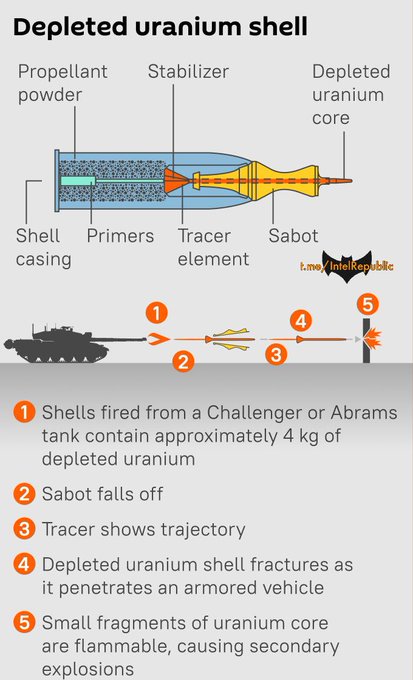
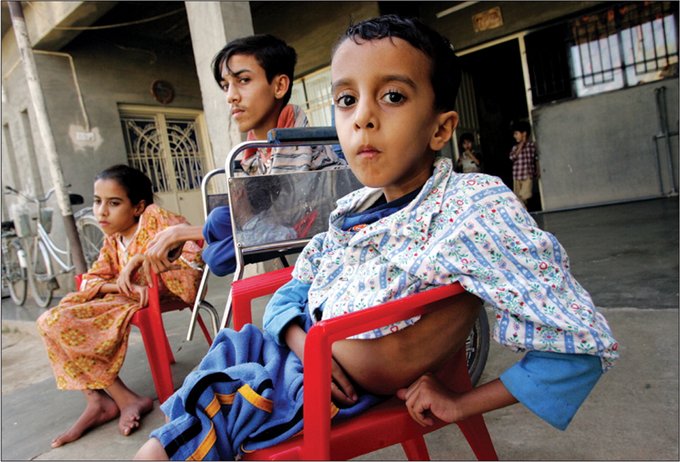
Biden stuurt Oekraïne munitie met verarmd uranium: gebruik daarvan is zonder meer een ernstige oorlogsmisdaad

Biden will send depleted uranium munition to Ukraine next week. these radioactive rounds can be fired from Abrams tanks a new war crime package we all know the devastating effects from depleted Uranium CANCER.” In Iraq children are born with defects vk.com/wall385287235_

Image

Image

3 Bookmarks

Syrie: veel doden bij opstand tegen door de VS gesteunde groep

Het volgende bericht komt van ZeroHedge, geplaatst op 31 augustus 2023.

Rare Uprising Against US-Backed Forces In Syria Leaves Many Killed

by Tyler Durden
Thursday, Aug 31, 2023 – 04:00 AM

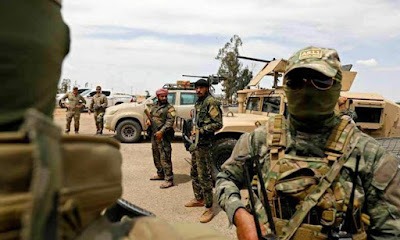
There’s been a rare armed uprising in a region of Syria currently occupied by American forces, which has resulted in dead and wounded. Regional reports have tallied at least 13 to as many as 25 people, both militants and civilians, have been killed.

It happened Wednesday in Deir Ezzor province, which for years has had some 1,000 or more US soldiers occupying what is Syria’s only oil and gas rich province. The US has trained and supported Kurdish-led “Syrian Democratic Forces” while also cutting off Damascus and most of the Syrian population from its own resources.

AFP file image

AFP file image

Al Jazeera reports of the Wednesday violence, “Clashes in eastern Syria between Arab tribal fighters and US-backed Kurdish-led fighters have left several people, including civilians, dead and others wounded, opposition activists and pro-government media have said.”

It’s being called the worst violence there since 2015, when there were still fierce counter-terror operations against ISIS.

According to more details:

The clashes first broke out on Monday, a day after the US-backed, Kurdish-led Syrian Democratic Forces (SDF) detained the commander and several members of the Deir Az Zor Military Council, a group that had been allied with the SDF, at a meeting they invited them to in the northeastern city of Hassakeh.

The Britain-based Syrian Observatory for Human Rights, an opposition war monitor, reported that 10 Arab tribesmen and three SDF fighters were killed in clashes in the villages of Hrejieh and Breeha.

Additionally there were reports of at least eight civilians, including a child, killed in the village of Hrejieh.

Much of the Arab component of the US-backed forces in the region has long been in tension with the area’s Kurdish leadership. The Syrian Kurds dominate the SDF, while the Arabs tend to be made up of remnant “Free Syrian Army” factions. While Washington has long sought to present the SDF as a broad coalition of anti-Assad “opposition” fighters, the reality is that the Kurds and their interests totally dominate.

#Syria#Rojava: Clashes have allegedly broken out between the SDF and tribal groups in Deir ez-Zor after the SDF arrested Deir ez-Zor Military Council (DeZMC) leader Abu Khawla. Tribes affiliated with Abu Khawla have since given the SDF a 12-hour ultimatum to release the council leader and his men, with casualties already reported amongst both factions. Abu Khawla was accused of corruption as well as the assembly of armed groups outside of the SDF, with previous clashes taking place between the DeZMC and SDF in July.

This has led to fears among the tribes near the Iraq border that the SDF and US will in the end “erase” the eastern region’s “Arab identity.”

There’s also the possibility that pro-Assad forces are covertly encouraging the Arab tribes to rise up and throw off the American occupation. For years, the Pentagon’s chief enemy in the region has been ‘pro-Iran’ and Shia aligned forces, but if there’s a broader push to overthrow the US occupation from the Arab tribes, Washington’s days occupying Syria are numbered.

https://twitter.com/PopularFront_/status/1696628751784632532?s=20

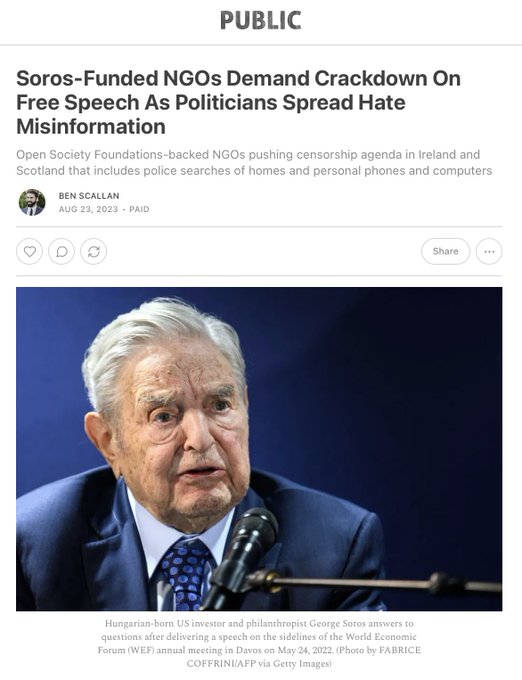
Soros heeft weer eens gelogen dit keer om censuur af te kunnen dwingen

Exactly. X will be filing legal action to stop this. Can’t wait for discovery to start!
Politicians & George Soros-funded NGOs say “hate incidents” are rising, but they’re not. The data show the opposite: higher-than-ever and rising levels of tolerance of minorities. The reason they’re spreading hate misinformation is to justify a draconian crackdown on free speech.

Image

1,327 Bookmarks

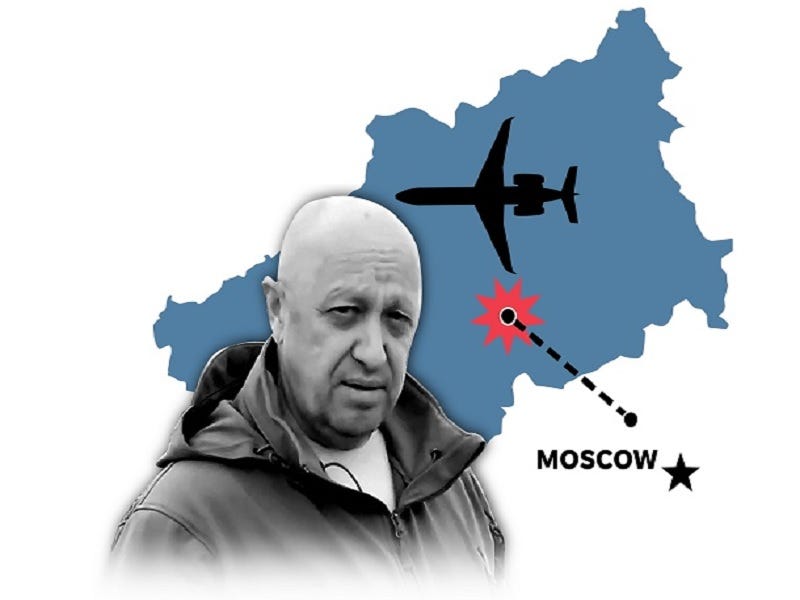
Prigozjins dood: reden voor de westerse massamedia om Putin aan te duiden als dader alsof deze baat heeft bij diens dood

(On the top right hand side of this page you can choose for a translation in the language of your choice in Google Translate)

Na eerder Jevgeni Viktorovitsj Prigozjin, de leider van de Wagner Groep, te hebben gedemoniseerd veranderde deze houding van de reguliere westerse media toen deze optrok naar Moskou om daar naar eigen zeggen de minister van defensie af te zetten wegens incompetentie. Plotseling werd Prigozjin op het schild gehesen door die media daar hij volgens deze anti-Russische media Putin wilde afzetten en daarmee een coup wilde doorvoeren……. Nadat Putin en Prigozjin tot een vergelijk kwamen begon men de laatste weer als vertegenwoordiger van het kwaad te zien…..

Deze houding aangaande Prigozjin begint al weer om te slaan, nadat bekend werd gemaakt dat hij en zijn staf om zijn gekomen bij het neerstorten van het vliegtuig dat zij gebruikten…. Ongelofelijk dat zoveel mensen meegaan in wat de reguliere media beweren, zelfs al springen ze van de hak op de tak, immers dat zou voor een ieder die een beetje zijn/haar gezond verstand gebruikt het teken moeten zijn dat de hele anti-Russische propaganda stinkt van hier tot Tokio…….

Waarom zou Putin baat hebben bij de dood van Prigozjin, terwijl deze de belangen van Rusland, vooral in Afrika voor de volle 100% diende en dat bovendien in het belang van de regeringen die hij hielp tegen terreur of deze nu wel of niet van islamitische oorsprong was…… Bovendien helpt Rusland de landen die gebruik maakten en maken van de Wagner Groep tegen westerse agressie of van door het westen georganiseerde terreur, kortom tegen het neokolonialistisch handelen van het westen in Afrika.

Deze redenering doortrekkend kan je eenvoudig vaststellen dat het westen en dan met name Frankrijk en de VS, die militaire bases hebben in Afrika, het meeste baat hebben bij de dood van Prigozjin. Bij een verdachte dood of actie die tot de dood van één of meerdere personen heeft geleid is het altijd zaak om te kijken wie er (het meest) baat heeft bij de dood van een bepaald persoon of meerdere personen, dan wel de actie die tot deze dood heeft geleid. Vreemd dan ook dat in de radiozenders die ik vanmorgen hoorde over de dood van Prigozjin, te weten >> de BBC, NPO Radio1, BNR, WDR 5 en de VRT, niemand deze mogelijkheid hoorde noemen…..

Het zou me dan ook niet verbazen als juist nu of binnen een beperkt aantal dagen de ECOWAS* zal ingrijpen in Niger, waar men de corrupte president en bewezen terroristenvriend Bazoum heeft afgezet**. (Bazoum is terroristenvriend van: ISIS, Al Qaida en andere terreurgroepen) Niet dat de Wagner Groep werkzaam is in Niger, maar ECOWAS wil op zeker geen inmenging van die groep die wel werkzaam is in Mali, Burkina Faso en Libië***, (directe) buurlanden van Niger….. Waar Mali en Burkina Faso ook een staatsgreep zagen tegen de corrupte en westerse bipslikkende regeringen van die landen….. De bevolkingen van Mali, Burkina Faso en Niger staan voor het overgrote deel dan ook achter de gepleegde staatsgrepen en dat kunnen de leiders van het westen (en hun plutocratische bazen) al helemaal niet velen…..

In het westen is men dan ook niet blij met de inmenging van de Wagner Groep en die van China in Afrika, beiden landen die géén koloniaal verleden hebben met Afrika, in tegenstelling tot westerse landen waarvan Frankrijk wel de meest agressieve was en is in het gebied waarin ook Niger ligt (zoals in Mali en Burkina Faso) en waar de Franse belangen niet worden gediend door een Afrikaanse regering >> regeringen van landen waar Franse bedrijven het land leegroven met gebruikmaking van door het westen in stand gehouden corruptie…..

Het westen heeft een grote bek over Chinese en Russische hulp aan Afrikaanse landen, waarbij men keihard liegt dat China en Rusland die landen leegroven en daar in geval van de Wagner Groep massamoorden zou plegen…… Men kan niet één bewijs aanvoeren voor die leugens (maar ja dan zouden het logischerwijs geen leugens zijn), sterker nog >> China zuigt die landen niet leeg en als zo’n land moeite heeft om zaken te betalen, onderhandelt men simpelweg opnieuw en dat ten gunste van zo’n land……

Wat het voorgaande betreft ook het volgende: de Russische president Putin heeft middels een videoverbinding met het BRICS overleg in Zuid-Afrika nogmaals bevestigd dat de landen die zouden worden getroffen door het wegvallen van graan uit Oekraïne, door Rusland zullen worden voorzien van graan en dat gratis, zonder transportkosten en zonder enige voorwaarde!! (bij westerse hulp worden landen gedwongen allerlei maatregelen te nemen die het westen goed uitkomen en ze bouwen daarbij een enorme schuld op die ze nooit kunnen aflossen……)

Vreemd trouwens dat de westerse landen, die gezien hun houding en handelen ten aanzien van Afrika toch al niet populair zijn bij de bevolkingen op dat continent, zelfs sancties nemen tegen landen als Niger, terwijl die sancties als eerste altijd de bevolking treffen, ofwel >> hoe optimaal gehaat kan je je als westen maken??!!!

Het volgende artikel werd geschreven door Andrew Korybko en werd eerder geplaatst op Substack.

(als je het Engels niet machtig bent, zet dan de tekst om in Nederlands met behulp van Google translate dat je rechts bovenaan deze pagina ziet staan, eerst door in het menu op Engels te klikken, waarna je weer kan klikken op die vertaalapp, waarna je dan bovenaan in het menu Nederlands ziet staan, klik daarop en de hele tekst staat in het Nederlands, de vertaling is van een redelijk goede kwaliteit.)

Prigozhin’s Plane Crash: Conspiracies & Consequences

24 aug 2023

Some in the Alt-Media Community have been pushing an old video on social media where Putin says that he doesn’t forgive betrayal, while the Mainstream Media has reminded everyone of US officials’ prior warnings that Prigozhin’s life was in danger. Both camps strongly imply that the Russian leader was responsible for the Wagner chief’s death, but their conspiracy theory doesn’t stand up to scrutiny.

Wagner chief Yevgeny Prigozhin and elite members of his group’s leadership were killed in a plane crash Wednesday evening outside Moscow in circumstances that have yet to be fully determined. Before debunking the popular conspiracy theory that President Putin was responsible and discussing the possible consequences of this incident, it’s important to clarify the deceased’s relationship to the Russian state. Here are a few relevant analyses that will then be summarized for the reader’s convenience:

* “Prigozhin Blinked After Putin Mercifully Gave Him A Final Chance To Save His Life

* “Prigozhin Was The West’s ‘Useful Idiot’

* “How Putin Averted A Civil War In Russia After Wagner’s Coup Attempt

* “Lukashenko’s Suggestion To Learn From Wagner Doesn’t Mean That The Coup Was ‘Maskirovka’

* “There’s Nothing Conspiratorial About Putin Meeting With Wagner Leaders After The Failed Coup

In brief, Wagner’s long-running rivalry with the Defense Ministry finally spiraled out of control in late June, but President Putin peacefully resolved the crisis by de facto pardoning those involved. Some then went to Belarus while others traveled to Africa. This outcome aligned with Russia’s national interests but was spun by some members of the Alt-Media Community (AMC) as proof of a “false flag coup”. What’s indisputable, however, is that Wagner continued functioning as an instrument of the Russian state.

Prigozhin had just published a video from the Sahel in the days before he died where he declared that he was “making Russia even greater on all continents! And Africa even more free.” The regional context concerned the spate of anti-French revolts there in recent years that took the form of patriotic military coups, with the most recent one being in Niger, which is now threatened by a French-backed Nigerian-led ECOWAS invasion. Here are some analyses about Russia’s growing role in that part of the world:

* “Africa’s Role In The New Cold War

* “Axios Exposed France’s Infowar Against Russia In Africa

* “Analyzing President Putin’s Vision Of Russian-African Relations

* “Russia’s Newfound Appeal To African Countries Is Actually Quite Easy To Explain

* “American Officials Told Politico Their Plan For Waging Hybrid War Against Wagner In Africa

And here are a couple pieces about the new West African Crisis:

* “The Nigerien Coup Could Be A Game-Changer In The New Cold War

* “West Africa Is Gearing Up For A Regional War

* “The Mainstream Media’s New Narrative Is That Niger Is Now A Global Epicenter Of Terrorism

* “France Reportedly Thinks That The US Backstabbed It During Nuland’s Trip To Niger

* “Why’s US Media Talking About Nigerien General Moussa Barmou All Of A Sudden?

These last ten analyses are relevant to Wednesday’s incident since Wagner’s growing role in helping Sahelian states safeguard their sovereignty was speculated by some to be the reason why the West allegedly assassinated that group’s leader. While no evidence has yet to emerge in support of that theory, the previously shared analysis from early July regarding President Putin’s meeting with Wagner leaders explains why their African operations would still continue even without Prigozhin at the helm.

Having detailed the most relevant developments leading up to Prigozhin’s plane crash, it’s now time to draw attention to the AMC’s and their putative Mainstream Media (MSM) rivals’ conspiracy theory implying that President Putin had a hand in his death. The first has been pushing an old video on social media where the Russian leader says that he can’t forgive betrayal while the second has reminded everyone of US officials’ prior warnings that Prigozhin’s life was in danger.

Each camp strongly suggests that the Russian leader was responsible for Wednesday’s incident, with the AMC hinting that this was due to personal reasons while the MSM wants their targeted audience to believe that it was yet another “political killing” in a long line of many. Each requires accepting that President Putin supposedly lied when he said on national television that “I will keep my promise” to let those involved in late June’s events decide their own futures without fear of state retribution.

Not only that, but this conspiracy theory’s adherents also think that he then ordered Prigozhin’s death in one of the most dramatic ways possible, which irresponsibly risked harming innocent civilians on the ground. There are compelling reasons to doubt this version of events. For starters, the outcome of what happened and the optics connected with it are both disadvantageous to Russia’s national interests, and it’s absurd to imagine that President Putin plotted to undermine his own country like this.

Eliminating Prigozhin and elite members of this group’s leadership would be a blatant violation of the promise that he gave them on national television, and this could incite Wagner’s rank-and-file along with their supporters in the armed forces and civil society to consider anti-state actions in response. Those who are influenced by this conspiracy theory might convince themselves that they could be next, hence why they have to “act first out of self-defense”, thus setting into motion a self-fulfilling prophecy.

It’s therefore in the West’s interests to weaponize this false perception for the purpose of manipulating highly trained forces and their sympathizers into functioning as “useful idiots” for destabilizing Russia through either another coup/mutiny attempt, terrorism, and/or a Color Revolution. Even if these scenarios don’t come to pass, the optics are still very damaging to Russia’s reputation at the leadership and state levels.

The MSM can maximally amplify speculation that President Putin signed Prigozhin’s death warrant to sow suspicions about his sincerity in signaling earlier this summer that he’s still interested in politically resolving the NATO-Russian proxy war in Ukraine. Likewise, this can also be done to mislead the international community about Russia’s political stability by making them falsely think that there’s a bloody power struggle taking place behind the scenes among competing military-intelligence factions.

On that note, it’s time to segue into the consequences of Prigozhin’s plane crash, beginning with what’s unlikely to happen before sharing a few words about what could soon follow. As was earlier written, Wagner’s African operations probably won’t be affected since it was always unrealistic to imagine that he and a few elite members were micromanaging dozens of tactical teams on the ground across various countries in real time. Morale might take a temporary hit, but the rank-and-file will eventually recover.

The West’s Hybrid War plot that was described in the preceding paragraphs isn’t expected to transpire, but even if some movement is made in that direction, then the threat to Russia’s security and stability would be manageable so nobody should prepare for “Balkanization”, civil war, or regime change. That said, the ongoing investigation will surely explore whether Wednesday’s incident was due to foul play, including scenarios of Kiev’s involvement but also possibly a rogue military-intelligence faction.

It’s premature to jump to conclusions in order to avoid functioning as the West’s “useful idiots” by either giving Kiev credit for kills that it wasn’t responsible for or sowing seeds of suspicion about Russian stability respectively, but both also can’t confidently be ruled out at this time either. After all, if there was a bomb on board like some speculate, then that would represent a major security lapse. Even if a rogue military-intelligence faction was involved, however, there’s no chance that they’ll destabilize Russia.

All told, while it remains unclear exactly what caused Prigozhin’s plane crash, President Putin certainly didn’t have a hand in it, but some in the AMC and especially the MSM will still imply otherwise. In the event that foul play was responsible, then Russia’s security services will definitely get to the bottom of it, though the state might decide that its interests are best served by not acknowledging this if it happened. In any case, this incident won’t destabilize Russia nor hinder its African activities or special operation.

===============================================

* ECOWAS >> staat voor de Economische Gemeenschap van West-Afrikaanse Staten, waarvan de aangesloten staten Niger een ultimatum hebben gesteld (onder druk van de VS en de rest van terreurorganisatie NAVO) een ultimatum waarin wordt geëist dat Bazoum moet worden hersteld in zijn functie daar men anders militair zal ingrijpen….. Intussen blijkt dat de aangesloten landen het niet eens zijn over wat te doen nu er niet aan het door de ECOWAS gestelde ultimatum is voldaan, al verwacht men wel actie van onder andere Nigeria, een land dat als Congo al jaren haar eigen burgers niet eens kan beschermen tegen terreur van onder andere Boko Haram…..

————————————————-

** Zie: ‘Niger: de afgezette president werkte samen met ISIS en Al Qaida, echter daarover wenst men in het westen niets te zeggen‘ (5 augustus 2023)

————————————————-

*** De Wagner Groep is wekrzaam in de volgende Afrikaanse landen: Mali, Burkina Faso, Libië, Soedan en de Centraal-Afrikaanse Republiek.

————————————————-

Voorts zie:Russische economie draait veel beter dan verwacht terwijl de westerse volkeren zuchten onder de sancties tegen dat land‘ (28 juli 2022)

EU ministers van Buitenlandse Zaken en de Europese Commissie demoniseren China vanwege de Zijderoute (BRI) en hulp aan Montenegro……‘ (12 juli 2021)

BBC met anti-Chinese propaganda over de ontwikkelingshulp die China biedt met de Zijderoute

Raymond Knops (‘Christen’Unie staatssecretaris) straft Sint Maarten vanwege klacht mensenrechtenschending bij VN‘ (17 april 2021) En lees de berichten onder de links in dat artikel, berichten over het neokoloniale gedrag van Nederland onder de kabinetten Rutte!!

Cameratoezicht met gezichtsherkenning geïntroduceerd in Australië‘ Eén van de berichten die aangeven dat gezichtsherkenningssoftware niet de reguliere westerse media, maar wel onmiddellijk de alternatieve media haalt en dat zou zeker ook gebeuren als dit in andere (arme) landen zou worden ingevoerd; overigens experimenteert de politie van de VS ook met deze software…. Dat China deze techniek ontwikkelde en gebruikt was wel groot nieuws in de reguliere westerse (massa-) media, waarvoor men China demoniseerde en dat doet men nog steeds in die massamedia……

VS bespioneert haar EU lakeien en steelt daarbij bedrijfsgeheimen: ach de VS is een bondgenoot dus waarom zou je je druk maken………

Marietje Schaake (D66 dir. Cyber Policy Center Stanford University) roert volkomen lachwekkend de anti-Chinese propaganda trommel

Jan Paternotte (D66 Tweede Kamer) maakt zich druk om Chinese spionage, terwijl de VS alweer door de mand valt als spion

Een gelekt memo uit 2017 geeft aan dat de VS werkelijk mensenrechten misbruikt om landen als China te demoniseren‘ (!!!!)

AIVD onderzoek naar spionage door Huawei, Huib Modderkolk uit de bocht met 5 km/u…. OEF!!!‘ (een bericht van mei 2019…..)

VS waarschuwt Groot-Brittannië het G5 netwerk niet aan te laten leggen door Huawei, maar door VS firma’s‘ zie voorts ook:

‘Intel processors al 10 jaar zo lek als een mandje, Intel niet een bedrijf uit Rusland of China, maar uit….. de VS!

De Griekse crisis, een uiterst scherpe analyse van Peter Mertens over de onaanvaardbare inmenging in de Griekse binnenlandse aangelegenheden!‘ Griekenland is lang behandelt als een ontwikkelingsland, terwijl de banken uit ons deel van Europa de corrupte Griekse regeringen kapitalen op de pof hebben geleverd, waar de Griekse bevolking voor moest bloeden en waardoor velen zelfs geeen kankertherapie meer konden betalen en dat ook niet kregen daar de EU de financiële boel in handen had…… Zie wat dat betreft ook de berichten onder de volgende 2 links:

Paul Tang met kritiek op beleid PvdA partijcollega Dijsselbloem t.a.v. Griekenland…………

Esther de Lange: CDA is tegen kwijtschelden Griekse schulden, ‘we mogen niet slap zijn, dat mag alleen als het om de banken gaat…..’ ha! ha! ha! ha! ha!

COVID-19 doden versus hongerdoden (en die door luchtvervuiling)

Rutte prees de VOC-mentaliteit tijdens Sail en kreeg daar nog applaus voor ook!!!‘ (1 oktober 2015)

Vluchtelingenhulp door de overheid wordt uit ontwikkelingshulp betaald…….. Zodat er genoeg vluchtelingen overblijven, die dezelfde hachelijke vlucht zullen ondernemen……..‘ (23 september 2015)

Brunel uit Nigeria, neokoloniaal uitgelegd door Joop van der Vinne………‘ (30 augustus 2015)

Nederlandse export naar Nigeria ‘booming’, ofwel neokolonialisme anno 2015!‘ (4 april 2015)

Nigeria, Hammelburg: ‘je kan het eigenlijk geen omkoping noemen, dus kom gerust zaken doen, kansen te over!!!’‘ (31 maart 2015) Hammelburg is wekelijks met belachelijke columns te horen op BNR, deze kwast geeft zich uit als buitenlanddeskundige en schaarde zich in het verleden achter de illegale VS oorlog in Vietnam…..

Bob Steetskamp: ‘er liggen veel kansen voor Nederlandse ondernemers in Nigeria……’‘ (7mei 2014)

Nigeria het walhalla van de (Nederlandse) neokolonialistische ondernemers‘ (1 april 2014)

Dick Venema op avontuur in Afrika‘ (14 oktober 2012)

————————————————-

Voor meer berichten over neokolonialisme, of Afrika: klik op het bewuste label direct onder dit bericht.

Saoedische grenstroepen hebben meer dan 650 Somalische en Ethiopische vluchtelingen vermoord

(On the top right hand side of this page you can choose for a translation in the language of your choice in Google Translate)

BBC World Service (radio) meldde afgelopen maandag in het nieuws van 12.00 u. dat Saoedische grenstroepen al meer dan 650 vluchtelingen uit Ethiopië en Somalië hebben vermoord, toen zij de grens van Saoedi-Arabië (S-A) en Jemen probeerden over te steken, onder de vermoorden ook vrouwen en kinderen…..

Foto (RTE) bij The Guardian Nigeria artikel: ‘Saudi border guards killed hundreds of Ethiopian migrants

Human Rights Watch (HRW) heeft één en ander gemeld, overigens heeft HRW dat vorig jaar ook al gedaan, maar ja het gaat hier om mensen die het westen niet eens ziet als mensen maar als dieren waarover je kan beschikken en als ze dan niet mee willen werken kunnen ze doodvallen, zeg maar zoals men in het westen over Russen denkt…..*

Het voorgaande geeft ten overvloede aan dat de zogenaamde westerse democratieën eindelijk alle banden met de reli-fascistische dictatuur S-A moeten verbreken. Zeker als je daarbij ook nog eens ziet dat S-A al jarenlang bezig is met een genocide op sjiieten in Jemen, waarmee twee jaar geleden al meer dan 500.000 mensen waren vermoord, waaronder meer dan 100.000 kinderen (dat laatste volgens een VN rapportage)……

Hoe hypocriet dan ook als je ziet dat men zich in het westen zo druk maakt om de leugens die de reguliere westerse media en het overgrote deel van de westerse politici verspreiden over Rusland en dat op een manier dat je van massa-hersenspoeling moet spreken…… Zelfs al zouden die leugens waar zijn, zouden ze nog niet kunnen tippen aan de barbaarsheid die het Saoedische terreurbewind ten toon spreid in buurland Jemen!! Om nog maar te zwijgen over het steunen van terreurgroepen als ISIS en Al Qaida door datzelfde terreurbewind…..

Overigens ook over die genocide wordt ofwel gezwegen in het westen dan wel men liegt ook hierover keihard in de reguliere westerse media en politiek…. Gistermorgen een ‘mooi voorbeeld’ op WDR 5:

in het nieuws van 9.00 u., waar men sprak over de Saoedische massamoord op vluchtelingen, werd plompverloren gesteld dat er al jaren een conflict gaande is in Jemen, een conflict tussen de regering en opstandelingen….. GGGVD!! Er is al jaren een vreselijke oorlog gaande tussen de Saoedische terreurcoalitie en de Houthi’s die de sjiieten in Jemen proberen te beschermen tegen wat is uitgedraaid op een genocide tegen die islamitische geloofsgroep (die terreurcoalitie wordt onder andere militair en politiek gesteund door de VS, Groot-Brittannië en Frankrijk, waarbij andere westerse landen S-A voorzien van wapens of zoals de kabinetten Rutte dat hypocriet deden en doet met wapenonderdelen…..**)

Abd Rabbuh Mansur Al-Hadi, was de president van Jemen, die allang geen mandaat meer had, hij vluchtte aanvankelijk naar S-A, maar nam onder druk van dat land zijn functie weer op zodat hij S-A om hulp kon vragen tegen de Houthi’s…… Sinds vorig jaar is hij opgevolgd door een andere stroman van S-A te weten >> Rashad Muhammad al-Alimi en ook hij heeft geen mandaat om Jemen te regeren…..

Hoe is het mogelijk dat de westerse reguliere media als het gaat om de oorlog in Oekraïne, desnoods zelfs de dood van een huisdier melden als deze om het leven kwam door Russische handelen, maar aan de massamoord begaan door het Saoedische terreurbewind op de Jemenitische sjiieten amper of geen aandacht schenken??!!! Ach ja hetzelfde geldt voor de massamoorden op etnische Russen in Oekraïne, na de door de VS georganiseerde, geregisseerde en met 5 miljard dollar gefinancierde opstand en staatsgreep tegen de democratisch gekozen president Janoekovytsj…… En dan durft de VS te beweren dat het democratie en vrijheid wil verspreiden…..*** ha! ha! ha! ha!

Het volgende artikel over de massamoorden op vluchtelingen door het Saoedische terreurbewind komt van de BBC World Service site, waarin men stelt dat in meerdere massamoorden op vluchtelingen ten minste 655 mensen werden vermoord (nogmaals >> inclusief kinderen), echter het werkelijke aantal kan met gemak ook duizenden vermoorden groot zijn…..

(als je het Engels niet machtig bent, zet dan de tekst om in Nederlands met behulp van Google translate dat je rechts bovenaan deze pagina ziet staan, eerst door in het menu op Engels te klikken, waarna je weer kan klikken op die vertaalapp, waarna je dan bovenaan in het menu Nederlands ziet staan, klik daarop en de hele tekst staat in het Nederlands, de vertaling is van een redelijk goede kwaliteit.)

Hundreds of migrants killed by Saudi border guards – report

  • By Paul Adams
    Diplomatic correspondent


Saudi border guards are accused of the mass killing of migrants along the Yemeni border in a new report by Human Rights Watch.

The report says hundreds of people, many of them Ethiopians who cross war-torn Yemen to reach Saudi Arabia, have been shot dead.

Migrants have told the BBC they had limbs severed by gunfire and saw bodies left on the trails.

Saudi Arabia has previously rejected allegations of systematic killings.

The Human Rights Watch (HRW) report, titled They Fired On Us Like Rain, contains graphic testimony from migrants who say they were shot at and sometimes targeted with explosive weapons by Saudi police and soldiers on Yemen’s rugged northern border with Saudi Arabia.

Migrants contacted separately by the BBC have spoken of terrifying night-time crossings during which large groups of Ethiopians, including many women and children, came under fire as they attempted to cross the border in search of work in the oil-rich kingdom.

“The shooting went on and on,” 21-year-old Mustafa Soufia Mohammed told the BBC.

He said some in his group of 45 migrants were killed when they came under fire as they tried to sneak across the border in July last year.

“I didn’t even notice I was shot,” he said, “but when I tried to get up and walk, part of my leg was not with me.”

The Ethiopian migrant Mustafa Soufia MohammedImage caption, Mustafa Soufia Mohammed says he came under fire at the Saudi-Yemeni border

It was a brutal, chaotic end to a three-month journey fraught with danger, starvation and violence at the hands of Yemeni and Ethiopian smugglers.

A video filmed hours later shows his left foot almost completely severed. Mustafa’s leg was amputated below the knee and now, back with his parents in Ethiopia, he walks with crutches and an ill-fitting prosthetic limb.

“I went to Saudi Arabia because I wanted to improve my family’s life,” the father-of-two said, “but what I hoped for didn’t materialise. Now my parents do everything for me.”

Another Ethiopian migrant, who we are calling Ibsaa to protect his identity, said he was shot at the border by men wearing Saudi military uniforms.

“They beat us, killed some and took those who survived to the hospital. The bodies of those killed were left scattered on the ground,” he told the BBC.

“I was shot between my thighs near my groin, and my legs are paralyzed now. I can’t even walk. I thought I would die.”

‘Killing fields’

Some survivors show signs of deep trauma.

In the Yemeni capital, Zahra can barely bring herself to speak about what happened.

She says she is 18, but looks younger. We are not using her real name to protect her identity.

Her journey, which had already cost around $2,500 (£1,950) in ransoms and bribes, ended in a hail of bullets at the border.

One bullet took all the fingers of one hand. Asked about her injury, she looks away and cannot answer.

According to the UN’s International Organization for Migration, more than 200,000 people a year attempt a perilous journey, crossing by sea from the Horn of Africa to Yemen and then travelling on to Saudi Arabia.

Human rights organisations say many experience imprisonment and beatings along the way.

The sea crossing is dangerous enough. More than 24 migrants were reported missing last week after a shipwreck off the coast of Djibouti.

In Yemen, the main migrant routes are littered with the graves of people who have died along the way.

Dozens of migrants were killed two years ago when fire tore through a detention centre in the capital, Sanaa, run by the country’s Houthi rebels who control most of northern Yemen.

But the abuses outlined in the latest HRW report are different in scale and nature.

“What we documented are essentially mass killings,” the report’s lead author, Nadia Hardman, told the BBC.

“People described sites that sound like killing fields – bodies strewn all over the hillside,” she said.

The report, which covers the period from March 2022 to June this year, details 28 separate incidents involving explosive weapons and 14 of shootings at close range.

“I have seen hundreds of graphic images and videos sent to me by survivors. They depict pretty terrifying injuries and blast wounds.”

Migrants look at covered bodies during a burial on the Saudi-Yemeni borderImage source, Social Media Image caption, The report says it is impossible estimate how many migrants have been killed along the border

The remoteness of the border crossings and the difficulty of tracking down survivors make it impossible to know precisely how many people have been killed, say the authors.

“We say a minimum of 655, but it’s likely to be thousands,” Hardman said. “We have factually demonstrated that the abuses are widespread and systematic and may amount to a crime against humanity,” she said.

Reports of widespread killings perpetrated by Saudi security forces along the northern border first surfaced last October in a letter by UN experts to the government in Riyadh.

They highlighted “what appears to be a systematic pattern of large-scale, indiscriminate cross-border killings, using artillery shelling and small arms fired by Saudi security forces against migrants.”

Despite the horrific nature of the allegations, the letter went largely unreported.

Saudi denials

The Saudi government said it took the allegations seriously but strongly rejected the UN’s characterisation that the killings were systematic or large-scale.

“Based on the limited information provided,” the government replied, “authorities within the Kingdom have discovered no information or evidence to confirm or substantiate the allegations.”

But last month, the Mixed Migration Centre, a global research network, published further allegations of killings along the border, based on its own interviews with survivors.

Its report contains graphic descriptions of rotting corpses scattered throughout the border area, captured migrants being asked by Saudi border guards which leg they want to be shot through, and machine guns and mortars being used to attack large groups of terrified people.

The report from Human Rights Watch is the most detailed yet, with multiple eyewitness reports and satellite imagery of the crossing points where many of the killings are said to have taken place, as well as makeshift burial sites.

A row of graves in the Yemeni city of SaadaImage caption, Migrant routes in Yemen are littered with graves

The report also identifies a detention centre at Monabbih, just inside Yemen, where migrants are held before being escorted to the border by armed smugglers.

According to one migrant interviewed by HRW, Yemen’s Houthi rebels are in charge of security at Monabbih and work alongside the smugglers.

A satellite photo shows bright orange tents packed closely together inside a fenced-off compound.

Fresh burials

While the HRW report covers events up to June this year, the BBC has uncovered evidence that the killings are continuing.

In the northern city of Saada, footage seen by the BBC shows migrants injured at the border arriving in a hospital as late as Friday. In a nearby cemetery, burials were taking place.

The BBC has approached the Saudi government for comment about the allegations made by UN rapporteurs, the Mixed Migration Centre and Human Rights Watch, but has not received a response.

=======================================

* Meer dan 8 jaar lang heeft het Oekraïense nazi-leger etnische Russen uitgemoord, zonder dat het westen daar kritiek op had, sterker nog het westen werkte mee om de vredesbesprekingen in Minsk te laten mislukken, er was maar één partij die geloofde dat deze vredesonderhandelingen oprecht waren en dat was Rusland!! De oud-president van Frankrijk, Hollande heeft dat toegegeven en ook dat Merkel, destijds Duitse bondskanselier, hiervan mede op de hoogte was…. Volgens een VN rapport dat medio 2022 werd uitgebracht heeft het nazi-leger van Oekraïne (uiteraard niet zo genoemd in het rapport) vanaf 2014 meer dan 14.000 mensen vermoord, waarbij natuurlijk ook een groot aantal (ersntig) gewonden is gevallen en die meer dan 1 miljoen mensen op de vlucht heeft doen slaan richting Rusland…….. Waar waren alle Rusland haters destijs, figuren die zo’n grote bek hebben over dat land en niet eens in de gaten hebben dat de reguliere westerse media allen met hetzelfde verhaal komen, terwijl er normaal gesproken meerdere afwijkende meningen waren te vinden in die media, overigens spreek ik dan over de periode vóór de eerste inval van de VS in Irak, te weten in 1990……

———————————————–

** Vanwege een wapenembargo tegen S-A leverden de voormalige kabinetten Rutte 2 en 3 en levert het huidige kabinet Rutte 4 alleen wapenonderdelen……

———————————————–

*** Oekraïne is dan ook allesbehalve een democratie, dit is bekend bij de reguliere westerse media en het overgrote deel van de westerse politici. Zo is een groot aantal politieke partijen verboden, is het verboden om een vakbond op te richten en ligt de Oekraïense pers aan de leiband van de Zelensky kliek, waarbij deze zogenaamde president (niet democratisch gekozen, want veel politieke partijen waren en zijn zoals gezegd verboden) zoete broodjes bakt met de leiders van het Oekraïense nazi-leger en zelfs zover gaat dat hij een Oekraïense nazi-leider eert van voor en tijdens de Tweede Wereldoorlog >> Stepan Bandera…….

———————————————

Zie ook: ‘Als persvrijheid echt zo belangrijk is voor de VS en GB dient men Julian Assange vrij te laten en de belachelijke aanklachten te laten vallen

Capitol Hill: één van de plekken in de VS gevuld met oorlogszuchtige psychopatenEn zie de berichten onder links in dat artikel!!

Van Dueren, de Nederlandse ambassadeur ‘in Jemen’ slaat de plank bijna volledig mis……‘ Zie de wat oudere berichten onder de links in dat schrijven

Free Julian Assange NOW!! (en stop de oneindige oorlog die de VS voert over een groot deel van de wereld)‘ En zie de links in dat bericht!!

Canada heeft de diplomatieke banden hersteld met Saoedi-Arabië…..‘ Terwijl de corrupte hypocriete Canadese premier Trudeau een enrom grote bejk heeft over Rusland….. ha! ha! ha! ha! Wat een oplichter!!

VS roemt andermaal persvrijheid terwijl dat land deze zelf blijvend geweld aandoet‘ (en zie de links in dat bericht o.a. naar artikelen over Julian Assange!!)

‘OPEC verlaagt onder druk Saoedi-Arabië de oliewinning met 2 miljoen vaten: energie sancties van EU tegen Rusland komen terug als boemerang‘ Vannacht (toen ik dit schrijven toevoegde aan de link was het 12 oktober 2022) hoorde ik op CBC Radio 1 Charlottetown, dat Biden sancties wil nemen tegen de Golfstaten vanwege de verlaging van de olieproductie….. ha! ha! ha! ha! Ja deze oorlogsmisdadiger heeft een blauwtje gelopen bij de Saoedische kroonprins en massamoordenaar Mohammad bin Salman (MBS), toen Biden volkomen tegen zijn verkiezingsbelofte in om van Saoedi-Arabië een MBS paria’s te maken. Biden bezocht MBS ten einde een verlaging van de olieprijs te bewerkstelligen en gaf hem een een vriendschappelijke vuist alsof het zijn beste vriend was…..:

Biden wil relatie met bondgenoot Saoedi-Arabië 'herevalueren' na productieverlaging OPEC+Twee oplichters en massamoordenaars die allang levenslang in de Scheveningse gevangenis hadden moeten zitten en dat zonder uitzicht op enige vermindering van straf!! Lees ook:

De VS moet zich niet schamen over bezoek Biden aan Saoedi-Arabië: hypocrisie van de hoogste plank

Van Sparrentak (GL in EU) is voor censuur op het net en ‘groene minister Baerbock’ vloog vandaag voor de 89ste keer sinds haar aantreden‘ (!!!!) Censuur hoort in een dictatuur, dat geeft ten overvloede nog eens aan hoe ‘links’ GroenLinks werkelijk is……..

Democratische partij VS omarmt Bush en wil dat ook kleine bedrijven profiteren van ‘duurzame oorlogsvoering’: oorlogswinstmakers

VS buitenlandbeleid: je moet worden vertrouwd door het volk tegen wie je liegt

Ursula von der Leyen: een corrupte vijand van de democratie

Top hypocriet Michael McFaul (ex-ambassadeur VS in Rusland): “Er zijn geen onschuldige Russen”

Biden weigert een resolutie voor de senaat om de genocide in Jemen te stoppen, dezelfde Biden die Rusland door het ICC wil laten berechten‘ (!!!!!!)

Jemen: 4,7 miljoen mensen lijden aan ondervoeding, verder overstromingen, echter amper aandacht ‘vanwege Oekraïne……’

De VS moet zich niet schamen over bezoek Biden aan Saoedi-Arabië: hypocrisie van de hoogste plank

Oekraïne: om Rusland te straffen haalt Joe Biden de banden aan met de reli-fascistische dictatuur Saoedi-Arabië….. ha! ha! ha! ha!

Rusland uit UNHRC gezet waarvan Saoedi-Arabië eerder voorzitter was…….

Massa executie van 81 mensen in Saoedi-Arabië: aandacht in (hysterische) westerse media nul komma nada!!‘ Nee, alleen wat Rusland doet is belangrijk nieuws en dat meestal met berichten die niet onafhankelijk zijn bevestigd, terwijl zelfs de gelogen oorlogsmisdaden van Rusland nog niet in de schaduw kunnen staan van de wel bewezen oorlogsmisdaden gepleegd door de VS en Saoedi-Arabië…….

Avaaz pleit voor censuur op de sociale media terwijl het de genocide steunt die wordt uitgevoerd door de Saoedische terreurcoalitie in Jemen

Daniel Hale: een klokkenluider die 10 jaar gevangenisstraf wacht voor het openbaren van VS drone terreur‘ In Jemen……..

Hoe schunnig de machthebbers in de VS ook handelen, openbaring daarvan verandert niets‘ Onder andere met aandacht voor Jemen.

Washington sluit websites van nieuwsorganisaties in het Midden-Oosten: machtsmisbruik en illegale censuur op grote schaal

De drone-oorlogen van Joe Biden: de oorlog in Afghanistan en de genocide in Jemen zullen nog lang voortduren…..‘ Zelfs na de terugtrekking van de VS uit Afghanistan gaat deze terreurentriteit door met dorne aanvallen op doelen in in dat land…….

Saoedi-Arabië en VS nu ook verantwoordelijk voor difterie in Jemen, aandacht van media alleen voor ‘Houthi raketten……’

Saoedi-Arabië beschuldigt Houthi’s en Iran van raketbeschieting en noemt dit een oorlogsverklaring…………

VS senator beschuldigt zijn ‘land’ van oorlogsmisdaden in Jemen…….

CIA valt nogmaals door de mand als wapenleverancier van IS…..‘ (!!!!)

VS gezant voor Jemen liegt over de blokkades die al aan aan paar honderdduizend Jemenieten het leven hebben gekost….‘ (en zie de links in dat bericht!!)

Joe Biden (VS president) zegt oorlog in Jemen te willen stoppen, echter ‘de oorlog tegen terreur’ in Jemen gaat gewoon door

EU staat niet voor mensenrechtenbevordering en het behouden dan wel brengen van vrede

De verkoop van dood en verderf: de VS is alweer dominant in de verkoop van wapens‘ (en zie de links in dat bericht!!)

Al Qaida Jemen krijgt VS wapens van Saoedi-Arabië

Saoedische terreurcoalitie schendt wapenstilstand in Jemen op grote schaal, terwijl het westen naar Venezuela wijst…..

Rapport maakt duidelijk dat VAE 23 gevangenen hebben vermoord in Jemenitische gevangenissen

Robin Ramaekers (VTM ‘oorlogscorrespondent’) vertelt Radio1 luisteraars van de NOS over Jemen……

Facebook censureert foto’s van verhongerende Jemenitische kinderen als ‘sexual content’

Verenigde Arabische Emiraten bewapenen ISIS en Al Qaida‘ (in Jemen)

VS blokkeert VN resolutie tot een staakt het vuren in Jemen, waar VS vriend Saoedi-Arabië een genocide uitvoert‘ (!!!!)

VS heeft vliegend oorlogstuig van Saoedische terreurcoalitie gratis van brandstof voorzien…..

ISIL weapons traced to US and Saudi Arabia

‘Topgeheim’ NSA document bewijst dat Syrische ‘rebellen’ worden aangestuurd door Saoedi-Arabië, met medeweten van VS…….

VS steun voor terreurgroepen IS (ISIS) en Al Qaida tot november 2018

Marina de Regt (VU en Midden-Oosten Instituut) slaat de Jemenitische plank volledig mis

VS dreigt Iran met militair geweld op beschuldiging van terreur die de VS zelf op grote schaal uitoefent


Witte Huis juristen waarschuwden Obama al in 2015 voor aanklachten wegens oorlogsmisdadenOfwel Obama en Joe Biden, zijn vicepresident destijds Joe Biden, werden toen al voor de zoveelste keer beschuldigd van oorlogsmisdaden!! En dan durft Biden het Interantionaal Strafhof, dat hij zelf niet erkent, op te dragen de Russische prsident Putin te vervolgen voor oorlogsmisdaden…… Als het niet zo triest was zou je je kapotlachen…..

(met mogelijkheid tot vertaling in ‘Dutch’): ‘U.S. and U.K. Continue to Participate in War Crimes, Targeting of Yemeni Civilians


Willem Alexander en Koenders op handels- en rouwavontuur in Saoedi-ArabiëOnder andere over de goede banden van het Nederlandse koningshuis met de dictatuuur in Saoedi-Arabië!!

Jemen 300.000 cholera patiënten en de valse berichtgeving door de westerse reguliere media…….

Trump’s No Good Very Bad Armsdeal With Saudi Arabia

Saoedische coalitie valt in Jemen de laatste haven voor humanitaire goederen aan…… Weer ziekenhuis met hulp van VS gebombardeerd………

Saoedi-Arabië woedend over VN rapport waarin de waarheid wordt verteld over S-A en de oorlog in Jemen

Saoedi-Arabië geeft toe in Jemen gruwelijke oorlogsmisdaden te hebben begaan…. ‘ En daarmee is ten overvloede nog eens duidelijk gemaakt dat ook de VS meewerkt aan oorlogsmisdaden, waarvan de ergste wel het uitvoeren van een genocide is…..

Jemen, de gemartelde, vermoorde of ‘verdwenen’ Jemenieten, onder verantwoording van de Saoedische coalitie……


VS en Groot-Brittannië weigeren een onmiddellijk staakt het vuren op haven t.b.v. door genocide geterroriseerd Jemen…..

Jemen: BBC propaganda voor genocide door Saoedische coalitie……..

Mike Pompeo (ex-CIA, VS min. van BuZa en ‘christen’) liegt openlijk over genocide in Jemen‘ (zie ook de links in dat bericht)

Jemen: de vergeten genocide en haar kinderslachtoffers………‘ (zie ook de links onder dat bericht)

VS Navy SEALs vermoordden burgers in Jemen, waaronder een jongen van 15……

Jemen: door Saoedische terreur intussen meer dan 1.450 mensen overleden aan cholera……

Trump’s No Good Very Bad Armsdeal With Saudi Arabia


(met mogelijkheid tot vertaling in ‘Dutch’): ‘U.S. and U.K. Continue to Participate in War Crimes, Targeting of Yemeni Civilians


BBC leugens, ofwel ‘fake news’ over de smerige oorlog tegen het volk van Jemen……


Koenders (PvdA) en wat hij liever niet wil dat u weet over Jemen, Saoedi-Arabië en de VS………..

Koenders: ernstige zorgen over mensenrechtensituatie Jemen‘ Een ongelofelijk staaltje hypocriet gelul, maar ja daarin is de PvdA hufter dan ook een kei!!

Navalny: overtuigd van zijn onschuld en zijn belang voor de Russische politiek? Lees het echte verhaal

(On the top right hand side of this page you can choose for a translation in the language of your choice in Google Translate)

Het volgende artikel dat werd gedeeld door Sonja van den Ende en werd geschreven door Jacques Baud, het verscheen eerder op The Postal Magazine.

(als je het Engels niet machtig bent, zet dan de tekst om in Nederlands met behulp van Google translate dat je rechts bovenaan deze pagina ziet staan, eerst door in het menu op Engels te klikken, waarna je weer kan klikken op die vertaalapp waarna je dan bovenaan in het menu Nederlands ziet staan, klik daarop en de hele tekst staat in het Nederlands, de vertaling is van een redelijk goede kwaliteit.)

Alexei Navalny: The Real Story


We are happy to have this opportunity to speak with Colonel Jacques Baud about Alexei Navalny, a man touted in the West as a “hero.” Colonel Baud sets the record straight.

The Postil (TP): Now that an Oscar has gone to the documentary Navalny, and given your own excellent book (The Navalny Case: Conspiracy to Serve Foreign Policy), which rigorously undermines everything that this documentary presents as the “truth,” please help us understand, and get beyond, this “mystique” of Alexei Navalny. What is it about Alexei Navalny that appeals to the West?

Jacques Baud (JB): Like other characters picked by the West (like Juan Guaido in Venezuela or Svetlana Tikhanovskaya in Belarus), he gives the image of a new, good looking, younger, more dynamic leadership. He is very present on social networks, where he has the vast majority of his audience. He therefore speaks to a young audience (mainly 15-30 years old) which is very influential and sensitive to Western propaganda on social networks. Like his Venezuelan and Belarusian counterparts, he has no real experience of politics.

A more demanding audience sees this as a disadvantage, but for a younger audience, they have not been “compromised” in the political system.
In Russia, he is relatively unknown outside the big cities like Moscow and St. Petersburg. Generally speaking, the Russian public is more demanding than the Western public and more traditional in its preferences. This is why it appeals to a public that is not very politically active. In the West, we have a totally wrong perception of its importance on the domestic political scene. As with Juan Guaido, the West overestimates the popular support for this marginal opposition.

For the United States, the advantage of selecting challengers who are unknown to the general public is that it is easier to create myths. We have today in the West, especially in the 15-30 age group, individuals who have very little general culture, no real-life experience, not the slightest bit of knowledge about foreign cultures and who see the world through Instagram. Especially in the United States, when you see how any influencer can trigger collective hysteria, you see that it is not difficult to create heroes artificially.

The Western media present him as the “leader” of the opposition in Russia. However, even the fact checkers of the very Atlanticist French newspaper Libération, recognized that he is simply the most visible opponent. He is part of the so-called “off-system” opposition, composed of small groups often located at the extremes of the political spectrum that are too small to form parties.

In 2010, on recommendation of Garry Kasparov, Navalny was invited to the United States to attend the Yale World Fellows Program. This is a 15-week non-degree training program at Yale University, offered to foreign nationals, identified by US neocons as “future leaders” in their respective countries. It is his only credential and his only real “accomplishment.”
In Russia, Navalny advocates for the rights of small shareholders in large companies. He created an Anti-Corruption Fund (FBK), which won him sympathy in the West, but also a lot of mistrust in Russia. For his accusations against Russian personalities seem to be more driven by politics than by facts. In 2014, he was convicted of libel against Duma deputy Alexei Lisovenko. In 2016, the Public Prosecutor’s Office of the Swiss Confederation dropped a complaint improperly filed by Alexei Navalny against Artyom Chaika, son of Yuri Chaika the Prosecutor General of Russia. (In 2020, Yuri Chaika, Prosecutor General of Russia was removed from office by Vladimir Putin, for suspicions of corruption, without apparent ties to his son’s case). In 2017, the Russian billionaire Alisher Usmanov, filed a complaint against Navalny for defamation and won. In 2018, Navalny lost a defamation suit against businessman Mikhail Prokhorov.

TP: How well-connected is Navalny to Western power-brokers?

JB: Navalny and his organization are largely supported financially by former Russian tycoons, such as Mikhail Khodorkovsky. Besides this, the Navalny affair is part of a US-led influence scheme that combines resources from NATO’s Center of Excellence on Strategic Communication, the UK Integrity Initiative (II), the US National Endowment for Democracy (NED), and others, such as Conspiracy Watch in France.

The II was created in the aftermath of the 2014 Ukrainian crisis, and in November 2018, the British government confirmed that it was funding it. It is run under the aegis of the British Foreign Office (FCO), responsible for the Secret Intelligence Service (MI-6) and the Government Communications Headquarters (GCHQ) in charge of cyberwarfare, associated with this initiative. It is funded by the British Ministry of Defense and Army, the Lithuanian Ministry of Defense and NATO, and aims to combat Russian disinformation in Europe. The II uses the BBC and Reuters to promote an “official” narrative, while the II is built around private intelligence and IT marketing networks, agencies such as Bellingcat, and relies on national “clusters” made up of correspondents in each participating country.
The NED was created in 1983 in order to take over some of the CIA’s tasks, so that the latter could concentrate on more ” robust ” activities. It is an NGO (or, more accurately, a “quasi-NGO”) funded mainly by the US government and Congress. Shortly after its creation, The New York Times described it as follows:

On its website, the NED does not specify who receives its funding, but a 2006 US embassy cable from Moscow indicates that it funds Navalny’s Democratic Alternative movement. An analysis of the projects financed by the agency suggests that Navalny and his associates receive about $1.8 million per year.

Furthermore, on October 9th, 2020, John Brennan, former director of the CIA, tweeted:

Imagine the prospects for world peace, prosperity and security if Joe Biden were President of the United States and Alexei Navalny were President of Russia. We’re almost halfway there …

In short: “We are working on it!”

Without going into all the details here, Navalny as a politician is of no interest to anyone, neither in the West nor in Russia. I don’t even think that the United States seriously believes that he could be an alternative to Vladimir Putin. In reality, he’s just a small cog in a larger project to subvert Russia. Let me remind you that the objective of the United States is the disintegration (officially: decolonization) of Russia. The Navalny affair is symptomatic of a great country (the United States) that has become incapable of rising higher than its main competitors and has been reduced to seeking to destroy those who seek to surpass it. In fact, Navalny is the symbol of the United States’ weakness.

TP: He has a long history of criminality, is a convicted felon, and is serving time. What political faction, if any, does Navalny represent in the Russian political scene?

JB: Politically, his image is not very bright. In 2007, he was expelled from the center-right party “Yabloko” because of his regular participation in the ultra-nationalist “Russian March” and his “nationalist activities” with racist tendencies. He is an activist for ultra-nationalist causes. At that time, he shot a video where he mimes shooting Chechen migrants in Russia is eloquent. In October 2013, he supported and encouraged the race riots in Biryulyovo, castigating the “hordes of legal and illegal immigrants.” In 2017, the progressive American media outlet Salon, claims that “if he were American, liberals would hate Navalny far more than they hate Trump or Steve Bannon.” In 2017, the left-wing American media outlet Jacobin, even referred to him as the “Russian Trump.” In fact, as the American Foreign Policy Magazine of the American University of Princeton noted in December 2018, he emerged thanks to far-right groups, and his ideas make him more akin to what is called “populist” in the West. I suggest you watch this excellent interview with two Russian left-wing activists by Aaron Maté of The Grayzone, which illustrates the gap between reality and what our media is saying about Navalny.

Approval rate of Vladimir Putin

Figure 1 – Vladimir Putin’s popularity rating has remained relatively stable since February 2022. An inflection was observed after the withdrawal of Russian-speaking forces from the Kharkov region in September. Generally speaking, the Russian population supports his government’s actions.
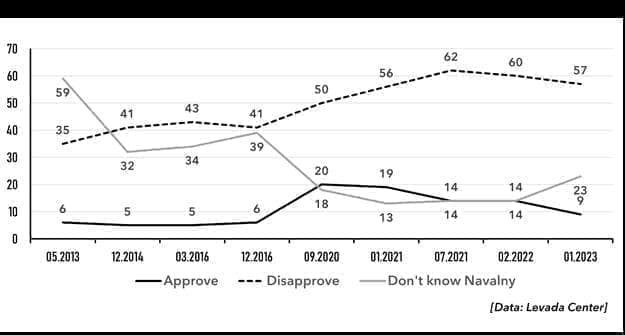

Of course, our media suggest that there was “a first Navalny” and that he has since changed. Thus, in February 2021, in a TV program devoted to Navalny, a Swiss journalist claimed that “from his ultra-nationalist beginnings and his anti-migrant declarations, there is almost nothing left in Navalny.” This is pure disinformation. In April 2017, Navalny told the British newspaper The Guardian that he had not changed his mind. In October 2020, a journalist from the German magazine Der Spiegel asked him, “A party had expelled you because of your participation in a Russian nationalist march in Moscow. Have your views now changed?” Navalny replied: “I have the same views as when I entered politics.”

In order to better demonize Vladimir Putin, the West claims that he is a nostalgic of the USSR and maintains a confusion between today’s Russia and the USSR of the Cold War. This confusion makes it possible to hide the fact that the main opposition to Vladimir Putin (even if moderate) is the Communist Party. Moreover, I remind you here that the USSR included Ukraine and that the Soviet leaders who committed the most crimes (such as Josef Stalin, Leon Trotsky, Moisei Uritsky, Genrikh Yagoda or Lavrentiy Beria), were neither of Russian nor Orthodox culture.

Attempts are being made to portray Navalny as the victim of the Russian “regime” because of his beliefs and his political influence. The French media RFI suggests that he has been banned from running in the 2018 presidential election for political reasons. This is incorrect. In fact, the reasons are legal, exactly as practiced in other countries: Navalny was then serving a probation sentence in connection with the Yves Rocher affair.
Navalny began his career as an entrepreneur in the 2000s. Following a common practice in Boris Yeltsin’s Russia between 1990 and 2000, he bought up companies in order to privatize their profits (an illegal practice that led to Vladimir Putin’s fight against certain oligarchs, who ended up taking refuge in Great Britain or Israel). In the first case (Kirovles), Navalny received a 5-year suspended prison sentence.

But the most “controversial” case is the one involving the French cosmetics house Yves Rocher. It’s a relatively complex affair, with a tangle of companies and accounts, some of them offshore. The best description of the case can be found in the Yves Rocher press release and on Wikipedia (in Russian!) In short, it’s a case of embezzlement through abuse of an official position, pitting the Russian state against Oleg Navalny. In 2008, Oleg Navalny, Alexei’s brother, was a manager at the Russian Post Office’s automated sorting center in Podolsk. To facilitate the delivery of Yves Rocher products to the sorting center, he pressed the French company to use the services of a private logistics company: Glavpodpiska (GPA), which belongs to the Navalny family. There is clearly a conflict of interest and a situation of corruption, which has led to an official investigation. It is important to note here that Oleg Navalny is the main defendant, while Alexei Navalny is “only” an accomplice. This is why Oleg has been sentenced to 3 and a half years’ imprisonment and Navalny to 3 and a half years’ suspended sentence.

Oleg and Alexei Navalny appealed this decision to the European Court of Human Rights (ECHR), arguing that the sentence was politically motivated. Contrary to what some Western media claim, the ECHR did not invalidate this judgment, as it did not judge the substance of the case, but its form. On 17 October 2017, the ECHR issued its verdict, partially upholding the two brothers on certain points of law and concluding that the Russian justice system should pay them compensation. However, it rejected the allegation that their conviction was politically motivated (paragraph 89).

In fact, after Navalny was charged in the case against the French firm “Yves Rocher,” he was placed under probation, under the terms of which he had to report twice a month to the Russian corrections authority, until the end of his probationary period (December 30, 2020).

Navalny’s failure to comply with this obligation led to his arrest in early 2021. He had already broken this rule 6 times in 2020 (twice in January, once in February, March, July and August), but the Russian authorities had then shown leniency. As the Swiss TV correspondent in Moscow observes, Navalny “has never been sentenced to prison, unlike many other opponents.” So, despite his many offences, and contrary to what is claimed in the West, Navalny has benefited from unusual leniency. So much so, in fact, that some (conspiracy theorists) in Russia believe he is being used by the Kremlin to weaken the main opposition parties.

In order to claim that the revocation of his suspension is politically motivated, some say that Navalny was physically unable to fulfill his obligations. France 24 declared that he was unable to do so “because he was simply hospitalized in Germany.” France 5 explained that “he was in a coma,” and Swiss television (RTS) that “he was convalescing in Germany after his poisoning.” These are simply lies.

In fact, his obligation to report was suspended by the Russian authorities for the duration of his hospitalization at the Charité in Berlin. The Charité hospital doctors’ report, published on December 22, 2020, confirmed that he had been discharged from hospital on September 23, 2020 and that his symptoms had disappeared on October 12, 2020.

On December 28, the Russian prison authorities sent Navalny a warning (copied to his lawyer and press officer) to report for duty, but he ignored it.

In fact, since September, Navalny has been involved in the final editing phase of his film on Putin’s Palace. That’s why he won’t be returning to Russia until the end of January 2021. The Russian penitentiary authorities could hardly have disregarded this new offence of almost 3 months and revoked his suspended sentence. Navalny no doubt hoped to benefit once again from the authorities’ leniency; but with the broadcasting of his film, and his calls for sanctions against Russia, this was probably naive on his part… Because under these circumstances, even if the Russian authorities had wanted to show – once again – leniency towards him, this would have been incomprehensible to Russian public opinion.

TP: The documentary presents him as a serious threat to Putin. Is there something that these documentary filmmakers know which leads them to this conclusion?

JB: No, Aleksey Navalny is neither the main, nor the most important, nor the most dangerous opponent in Russia, he’s simply the most visible. He has only marginal significance in Russian politics.

Navalny has adopted the concept of “smart voting” or “tactical voting” in order to attract votes from the extremes of both the right and the left – which are not sufficiently numerous separately to field candidates in the elections. The principle of Navalny’s “smart voting” is to give your ballot to anyone but a member of the United Russia Party (Vladimir Putin’s party). It therefore works on a logic that is not based on preference, but on hatred…
The opposition associated with him is far from democratic and unified. It gathers disparate factions of the non-parliamentary opposition ranging from the extreme right to the former Stalinist communist party.

It comprises individuals who are opposed to the system, but who have neither a common vision nor a program for the future of the country. It is also a young opposition, which is informed by social networks and is relatively unstable. It is therefore essentially an opposition that seeks to overthrow Vladimir Putin without being able to provide an alternative. This explains why this heterogeneous opposition has only a very minor support in Russia. Navalny’s electoral strategy shows that he has no plans for Russia, and that the aim here is not to seek the best for Russia, but to destabilize the current government. This is why the West supports Navalny.

In fact, the Western narrative tends to suggest that the Russian population’s choice is limited to Vladimir Putin and Aleksey Navalny. This situation is very similar to what was observed in France during the presidential elections of 2017 and 2022: Emmanuel Macron was facing Marine Le Pen, the candidate of the extreme right. Then the choice of the voters was very simple: they picked the one they hated the least. In the case of Russia, the problem is even simpler, because Vladimir Putin’s popularity is considerably higher than Macron’s, while Navalny is almost unknown.

Thus, the only effect of promoting Navalny is to diminish the importance of the systemic opposition, the only one able to counter Putin. So I think Vladimir Putin should thank the Western propaganda media for weakening his opposition!

Navalny’s popularity in Russia peaked in 2020-2021, after his alleged poisoning and the movie on Putin’s alleged palace. But looking at the number of protesters across Russia at this point, one has to admit that the support to Navalny is marginal.

Navalny approbation rate


Figure 2 – Navalny’s approval rate 2013-2023. His alleged poisoning and the issue of the movie on “Putin’s Palace” helped to make Navalny better known to the Russian public. Today, Navalny remains politically insignificant. (Data: Levada Center)
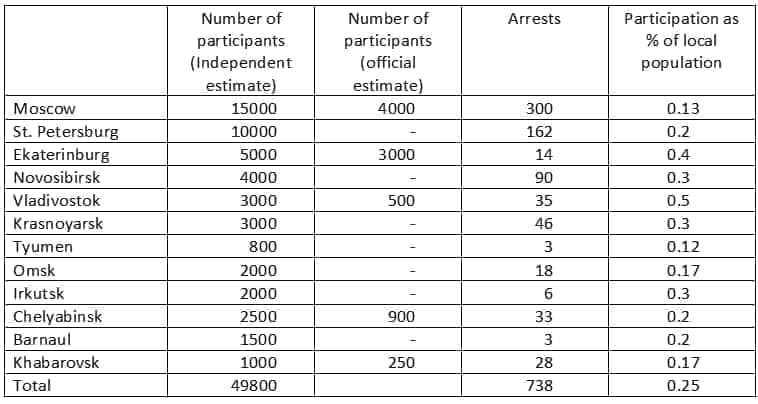
Number of protesters across Russia on January 23, 2021

Figure 3 – Number of protesters in the demonstrations in favor of Navalny, after his arrest in January 2021, as his popularity was at the highest. These figures were compiled by the independent Russian media ZNAK. If compared to the millions of protesters in France in 2018-2019 and in early 2023 (not to mention the number of casualties!), demonstrations in Russia are anecdotal. (Source: znak.ru)
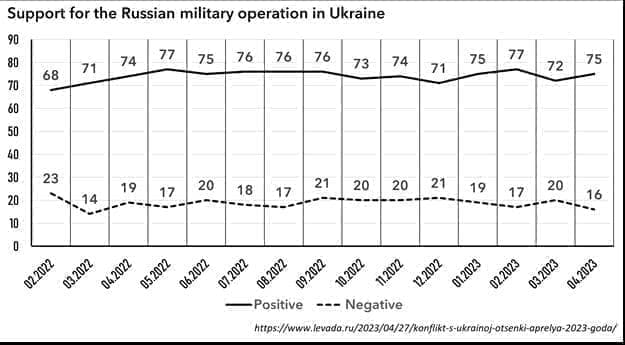
TP: Then, there is the well-known incident of Navalny’s “poisoning.” Could you shed some light on this?

JB: On August 20, 2020, during his flight from Tomsk to Moscow, Alexei Navalny is taken by violent stomach pains. The flight is diverted to Omsk so that he can be hospitalized urgently. At this stage, no analysis or indication allows to determine the exact nature of Navalny’s ailment, but his spokeswoman claims that he was deliberately poisoned. Rumors on social networks about a bad combination of alcohol and drugs are quickly dismissed as “defamatory” by our media. They readily prefer – without any evidence – a more fanciful version: a poisoning with “Novitchok” ordered by Putin.

As soon as Mr. Navalny arrived at the hospital in Omsk, Russian doctors diagnosed a metabolic disorder. About ten minutes after his arrival at the hospital, they administered atropine, in order to avoid complications in case of intubation, as explained by the Russian opposition media Meduza. The problem is that since atropine is a product also used as an antidote for nerve agent poisoning, some conspiracy theorists have deduced that the doctors “knew” that he had been poisoned with Novichok, an extremely dangerous nerve agent that was allegedly used against ex-agent Sergei Skripal, in 2018.

But if this had been the case, the medical staff in Omsk would have received him with proper protective equipment! On Radio Free Europe/Radio Liberty, Dr Aleksandr Sabayev explained that the doctors quickly realized that it was a metabolic problem and administered atropine at a much lower dose than that used in cases of poisoning.

In fact, we know what Russian doctors found in Navalny’s blood and urine, thanks to a photo of a document published by the Russian opposition website Meduza. Since no signs of nerve agent were found, our media simply did not report it!

On December 12, The Times of London, followed by the New York Post and DW, claimed that the Kremlin had attempted a second poisoning of Navalny in the Omsk hospital before he left for Germany, accusing Russian doctors of “complicity.” These media are simply liars and invent a conspiracy theory. In fact, the report of the German Charité Hospital, published in The Lancet on December 22, reveals that Navalny had a German doctor by his side in Omsk, 31 hours after the onset of his symptoms – that is, as early as Friday, August 21 – and that by the time he was transported to Germany “his condition had improved slightly.” Thus, according to the German doctors, their Russian colleagues not only stabilized Navalny, but their treatment was effective. So Navalny’s relatives and our media lied (once again).

There is little evidence to assess the relevance of the Western accusations of 2018 and 2020. The analyses carried out by the German, French and Swedish military laboratories in September 2020 remain classified and have not been published nor shared with Russia, despite its requests. As it stands, therefore, we have only the scientific results published by the doctors who treated Navalny in Omsk and Berlin, the declassified version of the OPCW report and – to a certain extent – the government’s answers of 19 November 2020 and 15 February 2021 to questions from German parliamentarians.

The analyses of the military laboratories suggest in vague terms the presence of Novitchok (but their content is unverifiable). The observations of civilian doctors tend to contradict their conclusions, while the government’s answers seem much less categorical than the media and hide behind military secrecy when the facts seem to contradict the declarations.
On August 24, the Charité hospital declared in a press release that the clinical analyses “indicate intoxication by a substance of the cholinesterase inhibitor group.” However, the doctors in Omsk had not detected any. So: conspiracy? No, not necessarily. As the opposition media Meduza says, the German doctors were looking for evidence of poisoning, while the Russian doctors were looking for the cause of Navalny’s illness. Since they were not looking for the same thing, their results were different, but not inconsistent.

In October 2020, the Swedes released the results of their analyses, noting that “The presence of [REDACTED] has been confirmed in the patient’s blood.” The name of the substance is blacked out, so we don’t know what it is. But we can assume that if it were Novichok (as Western countries expected), there would be no reason to conceal it. On January 14, 2021, the Swedish government refused explicitly to declassify this result in order “not to harm relations between Sweden and a foreign power,” without specifying whether it was Germany or the United States. So, we don’t know what’s going on, but we do know that Sweden is a country where honor is a fiction subject to political interest: already in the Julian Assange affair, the Swedish government had literally “fabricated” the rape accusations against him, according to Nils Melzer, the United Nations Special Rapporteur on Torture.

On December 22, 2020, the analyses of Navalny’s fluids published by the Lancet as an appendix to the Charité doctors’ report is one of the few documents available containing scientific data. They allow us to draw a number of conclusions. For example, the presence of cholinesterase inhibitors could simply be explained by the antidepressants Navalny took himself, most likely in combination with alcohol. This would explain why his symptoms are totally different from those of Sergei and Yulya Skripal in 2018, who are claimed to have been victims of the same poison. It should be noted that neither the Skripals’ nor Navalny’s symptoms are consistent with neurotoxic poisoning.

Furthermore, the German doctors’ documents reveal that when the French, Swedish and OPCW took their samples – 15 days after Navalny’s arrival in Germany – his cholinesterase levels were close to normal.

At this stage, these French, Swedish and OPCW laboratories were only able to detect “cholinesterase inhibitors,” but not the substances found at La Charité, such as lithium or drugs, which were thought to have caused them to appear. In the absence of published results, we don’t know exactly what they found, but it’s likely that having no other explanation for the presence of these inhibitors, they were led to conclude that it was Novitchok.

By keeping their results secret, these laboratories had probably not anticipated that the German doctors would publish the results of their analyses. Thanks to the latter, the hypothesis that Navalny was the victim of accidental poisoning appears more likely than deliberate poisoning.
Navalny must obviously have known this, just as he must have known that these results were going to be published; and it was probably to disqualify their conclusions that, the day before the Lancet article was published, Navalny staged his telephone conversation with an “FSB agent.”

TP: Is Navalny yet another “anti-Putin” tool of the West? Or is the documentary simply capitalizing on the emotionalism surrounding the war in Ukraine?

NB: In fact, since the early 1990s, the central tenet of American strategy has been to maintain its supremacy on the international stage. This is the Wolfowitz Doctrine. Until the early 2000s, the United States had the advantage of having as an adversary a Russia rebuilding after the fall of communism, and a China that did not yet have the economic importance it has today.

The Bush administration’s withdrawal from disarmament agreements in 2002 created mistrust in Russia. This explains why President Putin is seeking to assert his country’s position and its right to security. This led to Vladimir Putin’s speech in Munich in 2007, which the United States took as a declaration of war.

This situation has led the United States to adopt a destabilization strategy that includes support for non-systemic opposition.

The American strategy against Russia is very comprehensive and includes a wide spectrum of means. It is described in detail in a set of two documents drawn up by the RAND Corporation, the Pentagon’s main think tank: Extending Russia: Competing from Advantageous Ground and Overextending and Unbalancing Russia. The war in Ukraine is the most visible since February 2022, but there are also the tensions between Armenia and Azerbaijan, the Transnistrian region, the destabilization of Syria, etc. The support for Navalny is part of this overall strategy.

The paradox is that Russia got involved in Ukraine to protect the people of Donbass, which is a very popular cause in Russia. The same goes for Crimea, which was an autonomous entity just before Ukraine became independent in December 1991. Moreover, Vladimir Putin’s popularity, already very high, has been further boosted by the terrorist attacks carried out in Russia by Ukraine and supported by all Western countries.

So, Navalny is part of a comprehensive effort to discredit and ultimately to isolate Russia on the international stage. However, the impact of this campaign on the internal situation in Russia is debatable. The patriotic sense of the Russian population is very high and even Navalny’s partisans tend to support the government. For instance, I noticed that non-systemic opposition websites very often show different views from those of the West. Although there is still a domestic opposition to the Special Military Operation, we can see that it remains very stable and marginal.

TP: Thank you so very much for your time. Any last words?

JB: It’s ironic to see European politicians taking up the cause of Navalny, an extreme right-wing nationalist, who approves of the annexation of Crimea (and declared in the pro-western Moscow Times that he wouldn’t give it back if he came to power ), who has never expressed a concrete project for Russia, who has sought to enrich himself through embezzlement, and who represents none of the values that Europe claims to defend!…

Related Articles: