De kindslaven van Nestlé

Weer is Nestlé betrapt op het gebruik van kinderen als slaven die het werk op de cacao plantages uitvoeren, dit gaat al vanaf 2001 door en telkens belooft dit ploertenbedrijf dat het actie zal ondernemen en een eind zal maken aan deze schandalige uitbuiting van kinderen, kinderen die NB op school zouden moeten zitten!!

Het is dan ook duidelijk dat voor Nestlé de winsten ver voorgaan op de arbeidsvoorwaarden en het misbruiken van kinderen onder andere in Ivoorkust…..

Vandaag de dag worden 1,5 miljoen kinderen misbruikt als slaaf, niet alleen door Nestlé, maar ook door Mars en Hershey, in het hieronder opgenomen schrijven van SumOfUs wordt het verhaal verteld van Tenimba die als 11 jarige werd verleid om te gaan werken voor Nestlé… In plaats van goed betaald te krijgen, zoals hem was beloofd, werd hij 2 jaar lang als slaaf uitgebuit >> totaal geen inkomen en erbarmelijke arbeidsomstandigheden…..

Tenimba en 7 andere slachtoffers dagen de genoemde bedrijven voor de rechter in de hoop gerechtigheid.

Boycot de producten van Nestlé dat o.a. de volgende zaken op de markt brengt :

  • Nestlé
  • Nescafé
  • Nespresso.
  • Vittel.
  • Mövenpick.
  • Maggi.
  • Nuts.
  • KitKat.

Wat betreft Vittel bronwater moet nog opgemerkt worden dat Nestlé daarmee de bevolking van arme landen uitbuit >> men koopt de rechten van bronnen door gebruikmaking van corruptie, waarna de arme bewoners hun drinkwater voor een kapitaal moeten kopen van dit schoftenbedrijf……* Daar men de prijs meestal niet kan betalen, wordt water gebruikt waar men ziek van wordt, waardoor de kindsterfte in die landen fiks oploopt….. Alleen al wat dat betreft zou Nestlé door het Internationaal Strafhof (ICC) in Den Haag strafrechtelijk moeten worden vervolgd….. Kan men meteen de top en ex-top van dit bedrijf vervolgen voor het tot slaaf maken van kinderen!!

SumOfUs vraagt om geld voor het voeren van processen door Tenimba en de andere 7 slachtoffers, dus als je wat geld overhebt….. In de eerste link onder het schrijven van SumOfUs vind je ook de volgende namen van bedrijven die zich naast Nestlé schuldig maken aan kindslavernij: Cargill, Mars, Hershey, Mondelez, Olam and Barry Callebaut. Boycot die producten en geeft het door!! (moet je nagaan: de ‘grootste klanten’ van deze bedrijven zijn kinderen >> hoe cynisch…..) De genoemde bedrijven zijn als ik me niet vergis allen beursgenoteerd, mocht je familie, vrienden en kennissen hebben die aandelen bezitten in deze bedrijven, wijs ze dan op het schrijven van SumOfUs. Eén bedrijf wordt niet genoemd terwijl het al lang bekend is voor gebruikmaking van kinderslavenarbeid: Ferrero Roche……

(On the top right hand side of this page you can choose for a translation in the language of your choice, first choose ‘Engels’ [English] so you can recognise your own language [the Google translation is first in Dutch, a language most people don’t understand, while on the other hand most people recognize there language translated in English])

(als je het Engels niet machtig bent, kopieer dan de Engelse tekst en plak die in deze vertaalapp, de app werkt snel en de vertaling is van een redelijk goede kwaliteit)

Nestlé’s child slaves

Fatah Sadaoui, SumOfUs us@sumofus.org

A pair of hands holding cocoa beans.

Tenimba was just 11 when a trafficker lured him from his home in Mali to a cocoa plantation in Ivory Coast. He was promised good pay and care. Instead he worked every day for two years with no pay, no medical care, and no safety measures.

Today there are over 1.5 million child laborers like Tenimba, losing their childhood to supply cocoa to some of the world’s wealthiest brands, like Nestlé, Mars, and Hershey.

But Tenimba and 7 other former child slaves are fighting for justice, and have just brought a new lawsuit against these chocolate giants, hoping to get justice for themselves and hundreds of thousands of others.

They’re up against the most expensive lawyers money can buy — and they’re asking for your help. Will you help fund their lawsuit and save these children from slavery?

If you’ve saved your payment information with SumOfUs, your donation will go through immediately:

Donate €21 now Donate another amount

Nestlé, Mars, and Hershey know all about their child slavery problem. They’ve been promising to end it since 2001. Yet with each deadline that passes, they kick the can down the road, all while hundreds of thousands of kids are forced to trade their youth to provide these giants with cocoa — and billions in profits.

This lawsuit could change things — it’s a class action, which means more child laborers could join in and sue for reparations. Mounting costs and reputation damage could finally break these chocolate giants, forcing them to actually, at long last, address the problem.

This is a true David vs. Goliath story — former child slaves against the giant international corporations that profited from their exploitation. We’ve funded their battle before — helping them make it all the way to the Supreme Court. But they need us again — and this time we can prevail.

Will you chip in to help them win this fight and get justice for all of Big Chocolate’s child laborers? Every extra penny we raise will fuel our campaigning to end human rights abuses in supply chains around the world.

If you’ve saved your payment information with SumOfUs, your donation will go through immediately:

Donate €21 now Donate another amount

Thanks for all that you do,
Fatah and the SumOfUs team


More information:

Nestle, Cargill, Mars, Hershey, Mondelez, Olam and Barry Callebaut Respond to New Cocoa Slavery Case With Blatant, Objectively Verifiable Lies, International Rights Advocates, 8 August 2021

Press Release: Child Slaves Who Were Trafficked and Forced to Harvest Cocoa in Cote D’Ivoire Sue the Cocoa Companies that Enslaved Them: Nestle, Cargill, Mars, Mondelēz, Hershey, Barry Callebaut, and Olam, International Rights Advocates, 12 February 2021

Department of Labor Study on Child Labor, International Rights Advocates, 12 April 2020

Nestlé & Cargill v. Doe Series: Meet the “John Does” – the Children Enslaved in Nestlé & Cargill’s Supply Chain, Just Security, 21 December 2020

Cocoa’s child laborers, The Washington Post, 5 June 2019

Mars, Nestlé and Hershey to face child slavery lawsuit in US, The Guardian, 12 February 2021

SumOfUs is a worldwide movement of people like you, working together to hold corporations accountable for their actions and forge a new, sustainable path for our global economy.

===============================

* Zie wat betreft toegang tot schoon drinkwater o.a.: ‘Nestlé: ‘water is geen mensenrecht…………’

Wereldwatervoorziening dreigt in handen te komen van een gevaarlijk klein aantal grote bedrijven

Nestlé buit kleine stad in VS uit, 200 dollar per jaar voor meer dan 550 miljoen liter water……..

Nestlé jaagt wereldwijd op waterbronnen en -voorzieningen……..

758 miljoen mensen hebben geen toegang tot schoon drinkwater

De Wereldbank, echt een hééééél integer instituut…………..

—————————————–

Zie ook: ‘Unilever, Nestlé en Procter & Gamble zijn bedrijven die mensen uit hun huis en van hun grond laten zetten, alleen om de wereld nog verder te vernietigen voor geldelijk gewin‘ Naast aandacht voor het totaal niet duurzame palmolie, ook in dit bericht aandacht voor het privatiseren van drinkwater (en zie de links in dat bericht!!)

Paas-chocola, palmolie en soja vernietigen de laatste regenwouden‘ Het gaat uiteraard om alle chocola zoals je zal begrijpen……

Ferrero Roche maakt massaal gebruik van kinderslavenarbeid….!!!!

‘Nutella was nog nooit zo lekker………’ Door Ferrero Roche kinderslavenarbeid!!

Ploumen (PvdA minister), Cargill, Coca-Cola en verantwoorde landjepik……..‘ (2014)
Remy Duker verkoopt zijn chocola duur en die kleine cacao boertjes moeten niet denken, dat ze van hun opbrengst kunnen leven……

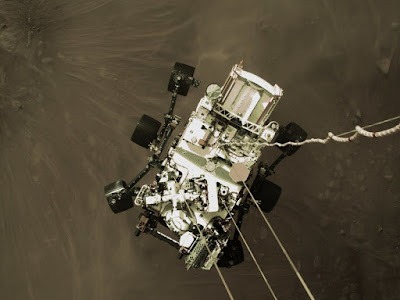
Mars Rover rijdt op plutonium, iets waar de media geen aandacht aan besteden

Te zot voor woorden: CounterPunch (CP) komt met een artikel waarin bekend wordt gemaakt dat de Mars Perseverance Rover, het nieuwste karretje op Mars, plutonium heeft als energievoorziening…… De NASA stelt dat de kans dat het fout gaat met deze energievoorziening, de meest dodelijke van alle radioactieve stoffen, als een kans is van 1 op 960……. Gezien kansberekeningen voor rampen geeft dit cijfer aan dat de kans groot is dat het misgaat en dan moet vooral niet vergeten worden dat de NASA er het grootste belang bij heeft deze kansberekening naar het publiek toe zo hoog mogelijk te houden (om onrust te voorkomen), anders gezegd: de kans dat er iet mis kan gaan moet nog een heel stuk onder dat getal van 960 worden gezocht……

Karl Grossman, de schrijver van het hieronder opgenomen artikel stelt dat de gokkers in Las Vegas heel blij zouden zijn, als hun kans om iets te winnen 1 op 960 zou zijn. Bij loterijen is de kans berekening op winst een oneindig aantal groter dan 1 op 960 en toch zijn er mensen die deze winnen aldus Grossman, echter dat is m.i. een manke vergelijking, immers de loterijen zijn er juist op gericht dat de hoofdprijs wordt gewonnen, terwijl de NASA het karretje niet naar Mars heeft gestuurd om te verongelukken tijdens het transport of tijdens werkzaamheden op die planeet…..

Naast het feit dat het in feite schandalig is dat we vanaf de aarde levensgevaarlijke zaken naar andere planeten transporteren of het heelal in sturen, moet er juist rekening worden gehouden met wat er mis kan gaan op aarde, zo kan een lancering uitlopen op een catastrofe als de raket ontploft na lancering……. Als dit misgaat zonder radioactieve stoffen aan boord is e.e.a. nog te overzien, echter zou de raket zijn ontploft die de huidige Mars Rover vervoerde, was de zaak wel bijzonder gevaarlijk en ingewikkeld geworden, ga maar na wat plutonium alleen al aanricht als een mens daarmee onbeschermd in aanraking komt……. Het voorgaande geldt uiteraard ook voor de natuur waar dergelijke levensgevaarlijke radioactieve stoffen terecht zouden zijn gekomen……

In het artikel van CP worden een paar gevallen in herinnering gebracht waar het inderdaad fout ging met door kernenergie aangedreven satellieten enz.

Het is dan ook zaak dat men stopt met dergelijke gevaarlijke experimenten, als men niet anders kan dan atoomenergie inzetten voor een ruimteproject, zou daar ten allen tijde een verbod over uit moeten worden gesproken, zoek maar naar alternatieven als zonne-energie en als die niet toereikend zijn, wacht dan maar een paar jaar tot de technologie zover is ontwikkeld dat men zonder kernenergie hetzelfde kan bereiken!!!

February 23, 2021

Plutonium in Space: What Are the Odds of a Catastrophe?

by Karl Grossman

Photograph Source: NASA – Public Domain

With all the media hoopla last week about the Perseverance rover, going almost totally unreported was that its energy source is plutonium—considered the most lethal of all radioactive substances—and nowhere in media that NASA projected 1-in-960 odds of the plutonium being released in an accident on the mission.

A ‘1-in-960 chance’ of a deadly plutonium release is a real concern—gamblers in Las Vegas would be happy with those odds,” says Bruce Gagnon, coordinator of the Global Network Against Weapons and Nuclear Power in Space (GNAWNPS).

Indeed, big-money lotteries have odds far higher than 1-in-960 and routinely people win those lotteries.

Further, NASA’s Supplementary Environmental Impact Statement (SEIS) for the $3.7 billion mission acknowledges that an “alternative” power source for Perseverance could have been solar energy. Solar energy using photovoltaic panels has been the power source for a succession of Mars rovers.

For an accident releasing plutonium on the Perseverance launch—and 1 in 100 rockets undergo major malfunctions on launch mostly by blowing up—NASA in its SEIS described these impacts for the area around the Cape Kennedy under a heading “Impacts of Radiological Releases on the Environment.”

It states: “In addition to the potential human health consequences of launch accidents that could result in a release of plutonium dioxide, environmental impacts could also include contamination of natural vegetation, wetlands, agricultural land, cultural, archaeological and historic sites, urban areas, inland water, and the ocean, as well was impacts on wildlife.”

It adds: “In addition to the potential direct costs of radiological surveys, monitoring, and potential cleanup following an accident, there are potential secondary societal costs associated with the decontamination and mitigation activities due to launch area accidents. Those costs may include: temporary or longer term relocation of residents; temporary or longer term loss of employment; destruction or quarantine of agricultural products, including citrus crops; land use restrictions; restrictions or bans on commercial fishing; and public health effects and medical care.”

NASA was compelled to make disclosures about the odds of an accident releasing plutonium, alternatives to using nuclear power on the Perseverance and consequences of a plutonium release under the National Environmental Policy Act.

Its SEIS can be viewed online at https://mars.nasa.gov/mars2020/files/mep/Mars2020_Final_EIS.pdf

Meanwhile, the U.S. is now producing large amounts of Plutonium-238, the plutonium isotope used for space missions. The U.S. stopped producing Plutonium-238 in 1988, and it began obtaining it from Russia, in recent years no longer happening. A series of NASA space shots using Plutonium-238 are planned for coming years.

Plutonium-238 is 280 times more radioactive than Plutonium-239, the plutonium isotope used in atomic bombs and as a “trigger” in hydrogen bombs.

There are 10.6 pounds of Plutonium-238 on Perseverance.

We might have dodged a plutonium bullet on the Perseverance mission. The Atlas V rocket carrying it was launched without blowing up. And the rocket didn’t fall back from orbit with Perseverance and its Plutonium-238 disintegrating on re-entry into the Earth’s atmosphere and plutonium dispersed.

But with NASA planning more space missions involving nuclear power including developing nuclear-powered rockets for trips to Mars and launching rockets carrying nuclear reactors for placement on the Moon and Mars, space-based nuclear Russian roulette is at hand.

The acknowledgement that “an accident resulting in the release of plutonium dioxide from the MMRTG [Multi-Mission Radioisotope Thermoelectric Generator] occurs with a probability of 1 in 960” is made repeatedly in the SEIS.

The amount of electricity produced by the MMRTG on Perseverance is miniscule—some 100 watts, similar to a light bulb.

A solar alternative to the use of plutonium on the mission is addressed at the start of the SEIS in a “Description and Comparison of Alternatives” section.

First is “Alternative 1” which proposes that the rover use a plutonium-fueled MMRTG “to continually provide heat and electric power to the rover’s battery so that the rover could operate and conduct scientific work on the planet’s surface.”

That is followed by “Alternative 2” which states: “Under this alternative, NASA would discontinue preparations for the Proposed Action (Alternative 1) and implement a different power system for the Mars rover. The rover would use solar power to operate instead of a MMRTG.”

The worst U.S. accident involving the use of nuclear power in space came in 1964 when the U.S. satellite Transit 5BN-3, powered by a SNAP-9A plutonium-fueled radioisotope thermoelectric generator, failed to achieve orbit and fell from the sky. It broke apart as it burned up in the atmosphere. That accident was long linked to a spike in global lung cancer rates where the plutonium was spread by Dr. John Gofman, an M.D. and Ph. D., a professor of medical physics at the University of California at Berkeley. NASA, after the SNAP-9A (SNAP for Systems Nuclear Auxiliary Power) accident became a pioneer in developing solar photovoltaic power. All U.S. satellites now are energized by solar power, as is the International Space Station.

The worst accident involving nuclear power in space in the Soviet/Russian space program occurred in 1978 when the Cosmos 954 satellite with a nuclear reactor aboard fell from orbit and spread radioactive debris over a 373-mile swath from Great Slave Lake to Baker Lake in Canada. There were 110 pounds of highly-enriched uranium fuel on Cosmos 954.

I first began writing widely about the use of nuclear power in space 35 years ago when I broke the story in The Nation magazine about how the next mission of the ill-fated shuttle Challenger was to loft the Ulysses space probe fueled with 24.2 pounds of Plutonium-238 (to conduct orbits around the sun).

If the Challenger had blown up on that mission, scheduled for May 1986, instead of blowing up on January 28, 1986, and the plutonium released, it would not have been six astronauts and teacher-in-space Chris McAuliffe dying but many more people.

Pursuing the issue, I authored the books The Wrong Stuff: The Space Program’s Nuclear Threat to Our Planet and Weapons in Space, and wrote and presented the TV documentary Nukes In Space: The Nuclearization and Weaponization of the Heavens and other TV programs. And I have written many hundreds of articles.

The absence in media reporting on the Perseverance Mars rover of the dangers involving the nuclear material on it and the chances of that plutonium being dispersed is not new.

In The Wrong Stuff I include a section on “The Space Con Job.”

I quote extensively from an article published in the Columbia Journalism Review after the Challenger accident by William Boot, its former editor, titled “NASA and the Spellbound Press.” He wrote: “Dazzled by the space agency’s image of technological brilliance, space reporters spared NASA thorough scrutiny that might have improved chances of averting tragedy—through hard-hitting investigations drawing Congress’s wandering attention to the issue of shuttle safety.”

He found “gullibility” in the press. “The press,” he wrote, has been “infatuated by man-in-space adventures.” He related that “U.S. journalists have long had a love affair with the space program.” He said “many space reporters appeared to regard themselves as participants, along with NASA, in a great cosmic quest. Transcripts of NASA press confernces reveal that it was not unusual for reporters to use the first person plural. (‘When are we going to launch?)”

Also, in The Wrong Stuff I wrote about an address on “Science and the Media” by the New York Times space reporter John Noble Wilford in 1990 at Brookhaven National Laboratory. In it he declared: “I am particularly intrigued by science and scientists… My favorite subject is planetary science.” After his talk, I interviewed him and he acknowledged that “there’s still a lot of space reporters who are groupies.” Still, he went on, “some of the things that NASA does are so great, so marvelous, so it’s easy to forget to be critical.”

On NBC’s Today show, the attitude of the reporters was as celebratory on the morning of the landing as the label of the video aired showing “Jubilation at NASA Control.” Never was there a mention of nuclear power or plutonium or the acknowledged risks of an accident and dispersal of plutonium.

I am disheartened that the media shows little inclination to mention the words ‘plutonium’ or ‘probabilities of accidental release’ in their so-called reporting of the Mars rover arrival. You have to question who they work for,” says Bruce Gagnon of the Global Network.

We daily hear the excited anticipation of the nuclear industry as stories reveal the growing plans for hosts of launches of nuclear devices—more rovers on Mars, mining colonies on the moon, even nuclear reactors to power rockets bound for Mars. The nuclear industry is rolling the dice while people on Earth have their fingers crossed in the hope technology does not fail—as it often does,” said Gagnon, of the Maine-based international organization that since its formation in 1992 has been challenging the use of nuclear power and the deployment of weapons in space. The U.S. has favored nuclear power as an energy source for space-based weapons.

Further, said Gagnon, “the media, while ignoring the Mars rover plutonium story, is also guilty of not reporting about the years of toxic contamination at the Department of Energy nuclear labs where these space nuclear devices are produced. The Idaho Nuclear Laboratory and Los Alamos Nuclear lab in New Mexico have long track records of worker and environmental contamination during this dirty space nuke fabrication process.”

Declared Gagnon: “The public will need to do more than cross our fingers in hopes that nothing goes wrong. We need to speak out loudly so Congress, NASA and the DoE hear that we do not support the nuclearization of the heavens. Go solar or better yet—stay home and use our tax dollars to take care of the legions of people without jobs, health care, food, or heat. Mars can wait.”

Karl Grossman, professor of journalism at State University of New York/College at Old Westbury, and is the author of the book, The Wrong Stuff: The Space’s Program’s Nuclear Threat to Our Planet, and the Beyond Nuclear handbook, The U.S. Space Force and the dangers of nuclear power and nuclear war in space. Grossman is an associate of the media watch group Fairness and Accuracy in Reporting (FAIR). He is a contributor to Hopeless: Barack Obama and the Politics of Illusion.

Het label USSF direct onder dit bericht staat voor Unites States Space Force.