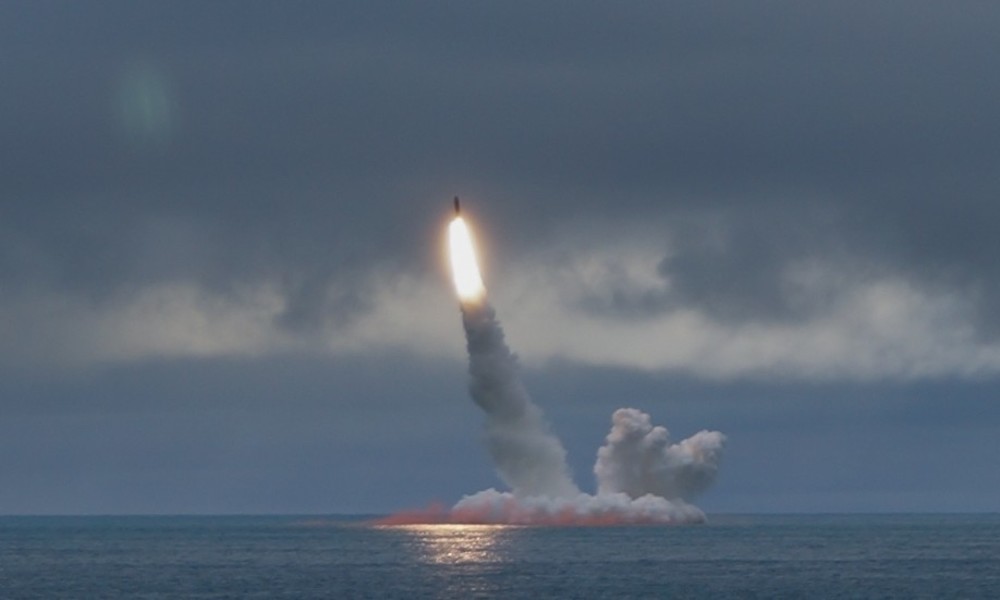
VS kernwapenbudget wellicht verdriedubbeld als het START-verdrag niet wordt verlengd: ofwel de wereld weer dichterbij een kernoorlog

De VS
zal hoogstwaarschijnlijk weigeren het START-verdrag met Rusland te
verlengen. Eerder, al bijna 2 jaar geleden, beschuldigde de VS Rusland zonder
enig bewijs het INF-verdrag voor
middellangeafstandsraketten te hebben geschonden met haar nieuwste
kernraketten…. Rusland heeft de VS meermaals uitgenodigd deze
nieuwe raketten te komen inspecteren en zo te kunnen zien dat deze
raketten het INF-verdrag niet schenden, echter de VS weigerde keer op
keer en bleef domweg stellen dat deze raketten het INF-verdrag schenden…… Daarna heeft de VS zich vorig jaar op 2 augustus
teruggetrokken uit dit verdrag……

Wel is
zeker dat het raketschild dat de VS heeft gebouwd in Polen en
Roemenië, NB aan de ‘westelijke voordeur’ van Rusland, raketten
bevat die wel waren verboden door het INF-verdrag…… Middels
smerige opzet van de VS, immers het bewuste raketschild zou Europa
beschermen tegen raketten uit Iran, dook de VS met dat schild onder het
INF-verdrag……

Alsof
Iran de behoefte heeft om andere landen aan te vallen, laat staan de
EU landen van Europa…… De schandalige truc is dat de VS deze
raketten, die een bereik hebben tot 5.000 kilometer, letterlijk binnen een mum van tijd kan voorzien van meerdere kernkoppen (per raket) en daarmee grote
Russische steden als Moskou en Sint Petersburg kan aanvallen…… Ga maar na wat de VS zou zeggen en doen als
Rusland een dergelijk raketschild in Mexico zou bouwen…… Zie de
Cubacrisis van oktober 1962, ofwel Rusland zou gedwongen worden te
stoppen met de bouw daar de VS anders een kernoorlog zou beginnen
tegen Rusland, zoals dit bijna het geval was tijdens die
Cubacrisis……

Over het
beginnen van een kernoorlog gesproken: al onder Nobelprijs voor de
Vrede winnaar Obama, liet de VS weten dat het zich het recht voorbehoudt gebruik te maken van
kernwapens bij een eerste aanval op een ander land.,….. Dit terwijl na het eerst
gebruik van atoombommen door de VS op de Japanse steden Hiroshima en Nagasaki, augustus 1945 (een oorlogsmisdaad van een schandalig formaat), kernwapens werden gezien als
afschrikkingswapen, ofwel alleen te gebruiken als de VS (en andere kernwapenstaten), zelf werd
aangevallen met kernwapens…… De Trump administratie heeft deze
verandering ‘van inzicht’ door ‘vredesduif Obama’ ingevoerd herhaald en ook Groot-Brittannië, nog
onder hare kwaadaardigheid en premier May, stelde zich op deze lijn……. Toen
Rusland een aantal maanden later hetzelfde liet weten waren de
westerse politici en de reguliere westerse media woedend, zonder ook maar met één
woord te reppen over de stappen van Obama en May………

Zoals
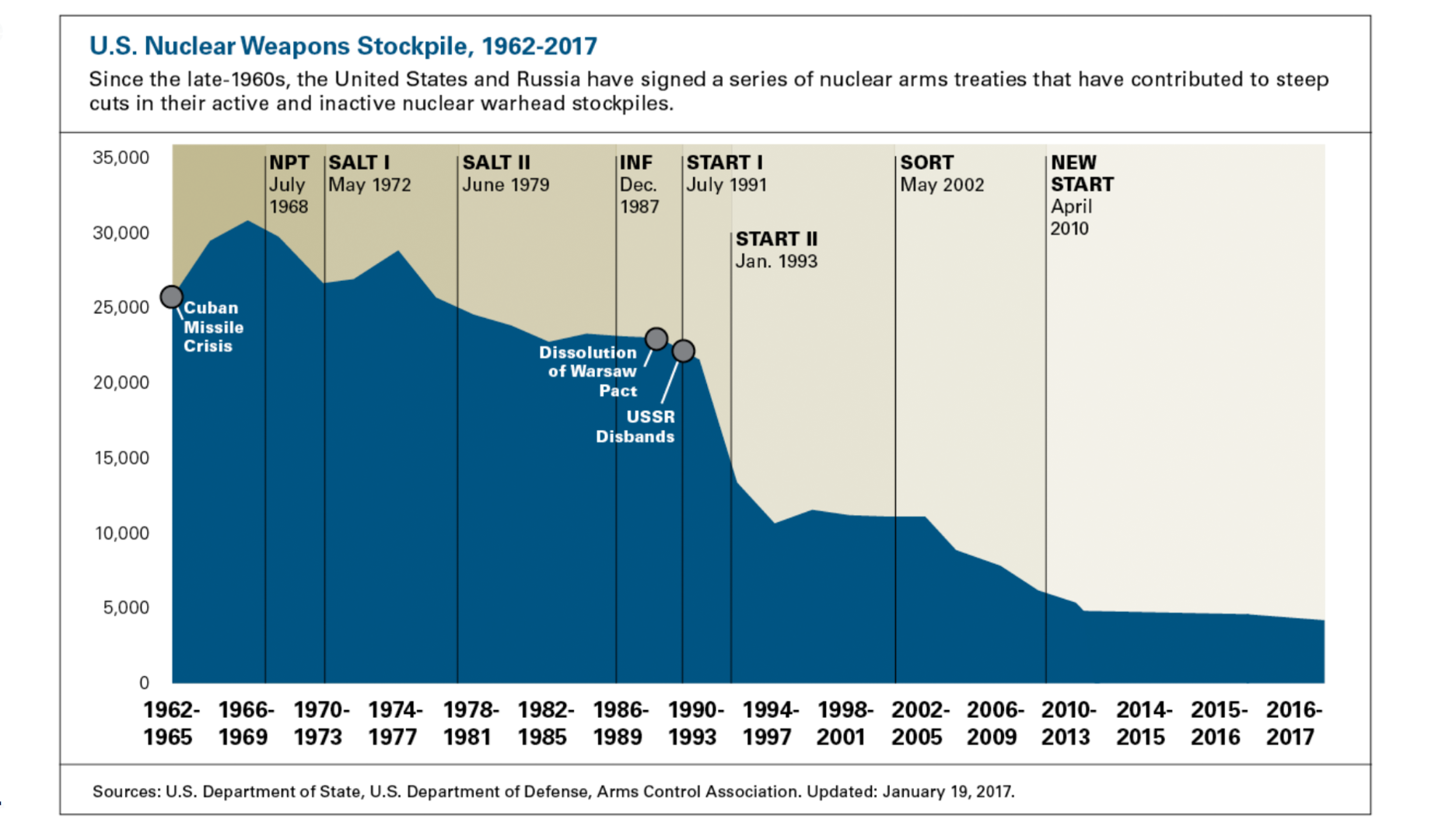
gezegd het is zeker dat de VS het START-verdrag niet zal verlengen en
daarmee zal het budget van de VS voor kernwapenvernieuwing
waarschijnlijk zelfs verdriedubbelen……

Het
volgende artikel werd vandaag gepubliceerd op RT Duitsland en gaat
verder in op de gevolgen van het niet nakomen van het
START-verdrag voor de VS en haar ‘schatkist’ (gevuld met lucht,
Ap)…… Hierin o.a. ook aandacht voor China dat zich niet wenst te
verbinden aan kernwapenverdragen en stelt dat de VS en Rusland eerst hun
kernwapenvoorraad sterk terug moeten brengen.

Falls
New START ausläuft: US-Atomwaffenbudget könnte sich verdreifachen


29.08.2020
• 12:53 Uhr
Falls New START ausläuft: US-Atomwaffenbudget könnte sich verdreifachen

Moskau
möchte den New-START-Vertrag verlängern, aber nicht, wenn die USA
unangemessene Forderungen stellen. Sollte der Vertrag im Februar
auslaufen, wären damit auch für die USA zusätzlich zu den bereits
geplanten 1,2 Billionen für Atomwaffen enorme Kosten verbunden.

Falls das New-START-Abkommen zur
Begrenzung strategischer Atomwaffen im Februar 2021 ausläuft, könnte
sich das Atomwaffenbudget der USA verdreifachen. Das ergab eine
Kalkulation
des Congressional Budget Office (CBO),
dem Haushaltsbüro des
Kongresses. 

Dieses untersuchte die Kosten, die dem
US-Verteidigungsministerium bei einer Aufstockung der strategischen
Nuklearstreitkräfte auf ein Niveau entstehen könnten, das in etwa
den Grenzen der drei früheren Rüstungskontrollverträge entspricht.

Zwar könnten auch keine oder kaum
zusätzlichen Kosten über die ohnehin vom
US-Verteidigungsministerium eingeplanten Modernisierungsausgaben
entstehen, so die Studie. 

Doch wäre die Größe der
Atomwaffenarsenale der Vereinigten Staaten und Russlands zum ersten
Mal seit Jahrzehnten unbegrenzt, wenn der New-START-Vertrag im
Februar 2021 auslaufen würde. Somit werden in der Studie auch die
Aufrüstungsszenarien auf die Niveaus des Vertrags von Moskau (dem
Vorgänger des New-START-Abkommens, auch SORT genannt, Strategic
Offensive Reductions Treaty), START II und START I überschlagen,
wobei jeweils verschiedene Möglichkeiten der Aufrüstung gegeben
wären.

Wenn die Vereinigten
Staaten sich dafür entscheiden würden, ihr Militär als Reaktion
auf das Auslaufen des Vertrags aufzustocken, könnten bescheidene
Erweiterungen relativ kostengünstig und schnell durchgeführt
werden. Größere Erweiterungen könnten jedoch recht kostspielig
sein und mehrere Jahrzehnte in Anspruch nehmen.

Die erste Variante, eine Ausweitung
von derzeit 1.550 Sprengköpfe und 800 Trägersysteme (gemäß New
START) auf die im Moskauer Abrüstungsvertrag festgelegten
Obergrenzen (1.700 bis 2.200 Sprengköpfe), würde die eingeplanten
Kosten laut dem CBO nicht weiter erhöhen, da das
US-Verteidigungsministerium bereits den Einsatz einer neuen
Generation strategischer nuklearer Trägersysteme vorsieht. Die
reinen Produktionskosten der Umsetzung dieser Pläne werden sich
demnach in den nächsten Jahrzehnten auf 240 Milliarden US-Dollar
belaufen.

Eine Ausweitung auf die früheren
START-II- oder START-I-Grenzwerte kann entweder durch die Erhöhung
der Anzahl der Sprengköpfe pro Trägersystem oder durch eine
Erhöhung der Anzahl der Trägersysteme erfolgen, daher gibt das CBO
eine Preisspanne für die jeweiligen Aufrüstungsszenarien an.

Eine Ausweitung der Streitkräfte
auf die START-II-Grenzwerte von bis zu 3.500 Sprengköpfen würde
einmalig 100 bis 172 Milliarden Dollar an Beschaffungskosten und drei
bis acht Milliarden Dollar an jährlichen Kosten verursachen. Eine
Ausweitung auf die START-I-Grenzwerte von 1991 würde noch mehr
Trägersysteme und Sprengköpfe (6.000 Sprengköpfe und 1.600
Trägersysteme) erfordern. Laut dem CBO würde das in der
“Spar-Variante” einmalig mindestens 88 bis 149 Milliarden
Dollar kosten, bei der flexibleren Aufrüstungsvariante (mehr
Trägersysteme) fielen Kosten in Höhe von einmalig bis zu 439
Milliarden Dollar plus zusätzliche jährliche Betriebs- und
Unterhaltungskosten von 24 bis 28 Milliarden US-Dollar an.
Falls New START ausläuft: US-Atomwaffenbudget könnte sich verdreifachen

(Voor vergroting van deze staat, klik op de zoomfunctie op je webpagina, meestal te vinden onder de 3 liggende streepjes aan de rechtbovenkant, of zie het origineel)

Enorme Kosten zu bereits
hohen geplanten Ausgaben

Höhere Ausgaben für Atomwaffen
gerieten womöglich in Widerspruch zu anderen US-Rüstungsausgaben.
Laut dem CBO werden die USA in den nächsten drei Jahrzehnten 1,2
Billionen US-Dollar für Atomwaffen ausgeben. Das Pentagon rechnet
bisher nicht mit dem Auslaufen von New START.

Der 2010 vom damaligen
US-Präsidenten Barack Obama und dem damaligen russischen Präsidenten
Dmitri Medwedew unterzeichnete New-START-Vertrag ist das einzige
verbleibende Abkommen zur nuklearen Rüstungskontrolle zwischen den
beiden Ländern und würde am 5. Februar kommenden Jahres auslaufen.
Es enthält jedoch auch die Option auf eine Verlängerung um weitere
fünf Jahre, ohne dass die Zustimmung der Legislative eines der
beiden Länder erforderlich wäre. Russland bot eine Verlängerung
ohne irgendwelche Bedingungen an.

US-Unterhändler Marshall
Billingslea deutete an, dass die USA bereit seien, über eine
Verlängerung zu sprechen, allerdings nur, wenn es einen politisch
verbindlichen Rahmen für Änderungen an New START gebe.

Führende Vertreter der
US-Regierung hatten argumentiert, jeder neue Vertrag zur Begrenzung
der nuklearen Rüstung müsse alle Arten von Sprengköpfen abdecken,
bessere Verifikationsprotokolle und Transparenzmaßnahmen enthalten
und auf China ausgedehnt werden. Billingslea forderte unter anderem
Änderungen beim Austausch von Telemetrie-Informationen der
Raketenflugtests sowie zu der Durchführung von Inspektionen.

Vizeaußenminister Sergei Rjabkow,
der die Verhandlungen in Wien für Russland führte, sagte der
Agentur
Interfax
am Sonntag: “Wir sehen nicht, dass hier die Chancen noch steigen
werden. Vielmehr nehmen sie ab.”

Die USA stellten weiter Forderungen
an Russland, die so nicht hinnehmbar seien. Auch der russische
Außenminister Sergei Lawrow betonte russischen Agenturen zufolge,
die Bedingungen der Amerikaner seien einfach “unrealistisch”.
“Die Amerikaner sind besessen von ihrer Einschätzung, dass der
Vertrag unvollständig ist.”

Die USA hatten bislang darauf
bestanden, China mit an den Verhandlungstisch zu holen. Rjabkow
erklärte außerdem, dass dann auch Großbritannien und Frankreich
mit eingebunden werden müssten. Da diese keine Bereitschaft gezeigt
hätten, sollten sich Russland und die USA auf bilaterale Gespräche
konzentrieren.

Beide Länder besitzen zusammen
rund 90 Prozent der weltweiten Atomwaffen. Der Vertrag begrenzt die
russischen und amerikanischen Nukleararsenale auf je 800
Trägersysteme und 1.550 einsatzbereite Atomsprengköpfe. Wird der
Vertrag nicht verlängert oder keine neue Vereinbarung geschlossen,
gäbe es erstmals seit Jahrzehnten kein Abkommen mehr, das den
Bestand an strategischen Atomwaffen begrenzt.

Mehr zum Thema
China:
“Falsches Spiel” – Werden nicht an
Rüstungskontrollgesprächen mit USA und Russland teilnehmen 

USA ändern Haltung zu Rüstungskontrolle: Zuerst Einigung mit Russland,dann China involvieren

Marshall
Billingslea: Drei Szenarios für die Wiederaufnahme nuklearer
Waffentests durch die USA 

StrategischeStabilitätsgespräche zwischen Russland und den USA in Wien – ohneChina


Tags:
Atomwaffen,
New START
Vertrag
, Pentagon,
Russland,
Rüstungskontrolle,
Rüstungswettlauf,
USA, International

===============================

Voor meer berichten over het INF-verdrag, het START-verdrag en/of het raketschild, klik op het betreffende label, direct onder dit bericht.

VS in feite meer dan failliet: record schuld van meer dan 22 triljard dollar

Je
zal meteen denken: zo heet wordt de soep niet gegeten, immers wat men
in de VS onder 1 triljoen verstaat is hier 1 biljoen, echter ook dat
bedrag is van zo’n enorm waanzinnige grootte, dat je niet anders kan
dan de VS als failliet zien…….

Opvallend
overigens, gezien Trumps uitspraken tijdens de presidentsverkiezingen
in 2016, dat de Trump administratie met haar vele wisselingen, de schuld met 2 biljoen heeft laten stijgen, al moet gezegd worden dat het
tempo van schuldenvergroting onder Obama een stuk sneller ging……
Trump beloofde dat hij het mes in de uitgaven zou zetten, echter daar
blijkt niets van terecht te komen, zoals het bijna met al zijn
beloften is gegaan of gaat.

De
VS kan zich deze enorme schuldenlast alleen veroorloven daar grote
‘schuldeisers’, zoals China het wel uit het hoofd laten om de VS
failliet te laten gaan, daar dan de waarde van de enorme hoeveelheid
VS dollars in China ook door de bodem zakt……… Niet alleen dat, maar ook de olie wordt in dollars berekend, precies als het internationaal betalingssysteem SWIFT met dollars werkt…… 

Gelukkig komt aan het voorgaande langzaam een eind, al gaat het niet snel, de oorlog tegen Libië was er niet alleen voor olie en gas, maar ook daar Khadaffi zoveel goud had dat hij een ‘petro-dinar’ wilde invoeren, die op den duur de dollar moest vervangen…… Een plan dat had kunnen slagen, daar de ‘petro-dinar’ in tegenstelling tot de petrodollar, gedekt zou worden door een bepaalde hoeveelheid goud en niet door in feite lucht zoals dit met de dollar wel het geval is….. Het goud is met de illegale oorlog tegen Libië verdwenen, hoogstwaarschijnlijk richting VS of GB, dan wel Frankrijk……. 

Aan de poten van het SWIFT systeem wordt intussen fiks gezaagd, dit als gevolg van de hernieuwde VS sancties tegen Iran. Rusland, China en India schijnen zo’n systeem binnen afzienbare tijd te lanceren. 

Moet
je nagaan: de VS heeft een grote bek over het Venezolaanse
economisch beleid van Maduro, dat Venezuela naar de rand van de
afgrond zou hebben gebracht…… Ware het niet dat die economische
teloorgang alles te maken heeft met de smerige economische oorlog die
de VS NB zelf tegen in feite het Venezolaanse volk voerde en
voert….. Zo van: ben je ontevreden door tekorten: ga de straat op en gooi jullie regering om,
precies de opzet van die economische oorlog….. 

Een economische oorlog waar men
door het onderdruk zetten van VS bedrijven, vooral de voorraden niet langer of alleen nog mondjesmaat aan te vullen….. In eerste instantie werd deze oorlog in het geniep gevoerd…… Het betrof hier levensmiddelenbedrijven in de VS en
supermarktketens in handen van VS bedrijven, met winkels in
Venezuela…… Eén en ander was al
praktijk onder Obama en zelfs hare kwaadaardigheid H. Clinton heeft
hier haar best voor gedaan…… Hetzelfde gebeurde met grote VS
farmaceuten en fabrikanten van medische apparatuur…… 

Nu de VS de wereld met leugens heeft overtuigd dat Maduro weg moet, hebben ook landen als Canada en zelfs de EU sancties getroffen tegen het bewind van Maduro, waarmee de boycot, die zoals gezegd eerder nog stiekem werd uitgevoerd door de VS, nu officieel is en waardoor het Venezolaanse volk nog harder wordt getroffen……… En dan het gore lef hebben om de producten die je eerst tegenhield, nu als humanitaire hulp aan te voeren…….

Hoeveel
bewijs wil je nog voor je kan concluderen dat we hier alweer met
smerige VS terreur te maken hebben, terreur tegen het Venezolaanse
volk??!!!

Terug naar de schuld van de VS: de
vraag is niet of de enorme schuld zich niet tegen de VS zal keren,
maar wanneer dat staat te gebeuren….. Als de VS op dit moment in de
schoenen van Venezuela stond, was de inflatie nog veel groter dan die
in Venezuela…….

Lees
het volgende ontluisterende artikel, geschreven door Tyler Durden en
eerder gepubliceerd op Zero Hedge, door mij overgenomen van
Anti-Media:

US
National Debt Tops $22 Trillion for the First Time

Afbeeldingsresultaat voor US National Debt Tops $22 Trillion for the First Time

February
12, 2019 at 9:29 pm

Written
by 
Tyler
Durden

(ZH
For 8 years, we took every opportunity to point out that under Barack
Obama’s administration, US debt was rising at a alarmingly rapid
rate, 
having
nearly doubled, surging by $9.3 trillion 
during
his term.

And
while the absolute pace is slower, the trajectory of US debt under
the Trump administration looks set to be no different.

We
note this because as of close of Monday, the 
US
Treasury reported
 (USTD) that
total US debt has risen above $22 trillion for the first time;
or 
$22,012,840,891,685.32 to
be precise (11 months after topping $21 trillion).

Reaching
this unfortunate milestone so rapidly is the latest sign that our
fiscal situation is not only unsustainable but accelerating,” 
said
Michael A. Peterson, chief executive officer of the Peter G. Peterson
Foundation, a nonpartisan organization working to address the
country’s long-term fiscal challenges.

Putting
this in context, total US debt has now risen by over $2 trillion
since Trump took office…
but
notably slower than Obama’s pace of borrowing…

We
doubt today’s milestone will be celebrated on Trump’s twitter
account.

And
while some can argue – especially adherents of the socialist Magic
Money Tree, or MMT, theory – that there is no reason why the
exponential debt increase can’t continue indefinitely… the CBO’s* long-term forecast of debt issuance is, basically, 
apocalyptic as
the following chart confirms…

But
it gets worse, as Double Line’s Jeff Gundlach recently noted…

Jeffrey Gundlach


@TruthGundlach

Currently $122 Trillion US unfunded liabilities per Debtclock. That’s 564% of Fiscal ‘18 GDP. To fund would require 10% of GDP for 56+ yrs.


1,684

2:16 AM – Jan 28, 2019

Twitter Ads info and privacy

And
worse still – The Fed ain’t buying like it was during Obama’s
reign…

Net
borrowing needs will continue to increase due to the expected
increase in the deficit combined with funding needs coming from the
Fed’s debt run off,” said Margaret Kerins, global head of
fixed-income strategy at BMO Capital Markets Corp (BMO CM).

Given
the global backdrop with Brexit and China’s economy slowing down,
there is really a bid for safety, liquidity and quality — which
means Treasuries — and that’s keeping yields in check to some
degree.”

Of
course, at some point the market will finally start focusing on
America’s long-term – and very much unsustainable – debt
picture as the CBO has warned year after year. When it does, and when
there is another major selloff in stocks, US Treasurys will no longer
be the “safe haven.” If and when that happens, that will be the
signal that the time to get out of Dodge has finally arrived.

The
debt eclipsing $22 trillion “is another sad reminder of the
inexcusable tab our nation’s leaders continue to run up and will
leave for the next generation,” 
said
Judd Gregg and Edward Rendell, co-chairmen of the nonpartisan
Campaign to Fix the Debt, a project of the nonpartisan Committee for
a Responsible Federal Budget.

Especially
if The Dems win in 2020 and GND is unleashed. (GND: Green New Deal)

By Tyler
Durden
 /
Republished with permission / 
Zero
Hedge
 / Report
a typo

* CBO: Congressional Budget Office

Op 15 februari een fout in de kop hersteld; daar stond eerder te lezen ‘triljoen’ waar dat uiteraard ‘triljard’ moet zijn, mijn excuus. (duidelijk geval van duizelig zijn door de enorme getallen…)

Basisinkomen en geluk: een doel voor de hele mensheid

Black
Agenda Report bracht vorige week woensdag een artikel, eerder gepubliceerd op Truthdig en geschreven door Ellen Brown, waarin zij betoogt dat een universeel basisinkomen (UBI) geen probleem is en niet ten koste zal gaan van belastingverhogingen voor de hogere of de middeninkomens. 

Het betreft hier een uiterst intelligent schrijven van Brown, een artikel dat van groot belang kan zijn voor iedereen op onze kleine aarde: het uitroeien van armoede en een oplossing voor de tijd dat machines en computers het overgrote deel van de arbeid die de mens verricht zullen overnemen. 

Praatjes dat de automatisering alleen maar meer banen zullen opleveren, zijn volkomen naast de waarheid…… Neem de betaalautomaten: deze automaten hebben duizenden bankmedewerkers de baan als loketmedewerker gekost….. Of wat dacht je van de automatisering in de landbouw, werk dat vroeger door tienduizenden arbeiders werd gedaan, kan nu in veel gevallen zelfs met 2 machines worden verricht, het in de grond stoppen van zaden en de oogst…… 

Met een basisinkomen kunnen we eindelijk aan het geluk van de mens werken, wel zal men daarvoor in het onderwijs ruimte vrij moeten maken voor lessen hoe om te gaan met vrije tijd, iets waar mensen niet goed in zijn en waar de meesten van ons pas achter komen bij werkloosheid en na pensionering….. (en dat is toch uitermate triest…)

Lees het volgende artikel en geeft het door:

Universal
Basic Income Is Easier Than It Looks

Universal Basic Income Is Easier Than It Looks

Ellen
Brown
09
Jan 2019

A
universal income program can help correct the debt bubble problem
without fear of “overheating” the economy.

It
could actually be funded year after year without driving up taxes or
prices.”


Calls
for a Universal Basic Income (UBI) have been increasing, most
recently as part of the “Green New Deal” (GND) introduced by Rep.
Alexandria Ocasio-Cortez, D-N.Y., and 
supported
in the last month 
by
at least 40 members of Congress. A UBI is a monthly payment to all
adults with no strings attached, similar to Social Security. 
Critics
say
 the
Green New Deal asks too much of the rich and upper-middle-class
taxpayers who will have to pay for it, but taxing the rich is
not 
what
the resolution proposes 
.
It says funding would primarily come from the federal government,
“using a combination of the Federal Reserve, a new public bank or
system of regional and specialized public banks,” among other
vehicles.

The
Federal Reserve alone could do the job. It could buy “Green”
federal bonds with money created on its balance sheet, just as the
Fed funded the purchase of $3.7 trillion in bonds in its
“quantitative easing” program to save the banks. The Treasury
could also do it. The Treasury has the constitutional power to issue
coins in any denomination, 
even
trillion dollar coins 
.
What prevents legislators from pursuing those options is the fear of
hyperinflation from excess “demand” (spendable income) driving
prices up. But in fact the consumer economy is chronically short of
spendable income, due to the way money enters the consumer economy.
We actually 
needregular
injections of money to avoid a “balance sheet recession” and
allow for growth, and a UBI is one way to do it.

Funding
would primarily come from the federal government, “using a
combination of the Federal Reserve, a new public bank or system of
regional and specialized public banks,”

The
pros and cons of a UBI are hotly debated and have been 
discussed
elsewhere 
.
The point here is to show that it could actually be funded year after
year without driving up taxes or prices.New money is continually
being added to the money supply, but it is added as debt created
privately by banks. (How banks, rather than the government, create
most of the money supply today is explained on the Bank of England
website 
here .)
A UBI would replace money-created-as-debt with debt-free money—a
“debt jubilee” for consumers—while leaving the money supply for
the most part unchanged; and to the extent that new money was added,
it could help create the demand needed to fill the gap between actual
and potential productivity.

The
Debt Overhang Crippling Economies

The
“bank money” composing most of the money in circulation is
created only when someone borrows, and today businesses and consumers
are burdened with debts that are higher than ever before. In 2018,
credit card debt alone exceeded $1 trillion, student debt exceeded
$1.5 trillion, auto loan debt exceeded $1.1 trillion, and
non-financial corporate debt hit $5.7 trillion. When businesses and
individuals pay down old loans rather than taking out new loans, the
money supply shrinks, causing a “balance sheet recession.” In
that situation, the central bank, rather than removing money from the
economy (as the Fed is doing now), needs to add money to fill the gap
between debt and the spendable income available to repay it.

Debt
always grows faster than the money available to repay it. 
One
problem is the interest 
,
which is not created along with the principal, so more money is
always owed back than was created in the original loan. Beyond that,
some of the money created as debt is 
held
off the consumer market by “savers” 
and
investors who place it elsewhere, making it unavailable to companies
selling their wares and the wage-earners they employ. The result is a
debt bubble that continues to grow until it is not sustainable and
the system collapses, in the familiar death spiral euphemistically
called the “business cycle.” As economist Michael Hudson shows in
his 2018 book, “

and Forgive Them Their Debts 
,” this
inevitable debt overhang was corrected historically with periodic
“debt jubilees”—debt forgiveness—something he argues we need
to do again today.

For
governments, 
a
debt jubilee could be effected 
by
allowing the central bank to buy government securities and hold them
on its books. For individuals, one way to do it fairly across the
board would be with a UBI.

Why
a UBI Need Not Be Inflationary

In
a 2018 book called “
The
Road to Debt Bondage: How Banks Create Unpayable Debt 
,”
political economist Derryl Hermanutz proposes a central-bank-issued
UBI of $1,000 per month, credited directly to people’s bank
accounts. Assuming this payment went to all U.S. residents over 18,
or about 250 million people, the outlay would be about $2.5 trillion
annually. For people with overdue debt, Hermanutz proposes that it
automatically go to pay down those debts. 
Since
money is created as loans and extinguished when they are repaid, that
portion of a UBI disbursement would be extinguished along with the
debt
.

People
who were current on their debts could choose whether or not to pay
them down, but many would also no doubt go for that option. Hermanutz
estimates that roughly half of a UBI payout could be extinguished in
this way through mandatory and voluntary loan repayments. That money
would not increase the money supply or demand. It would just allow
debtors to spend on necessities with debt-free money rather than
hocking their futures with unrepayable debt.

He
estimates that another third of a UBI disbursement would go to
“savers” who did not need the money for expenditures. This money,
too, would not be likely to drive up consumer prices, since it would
go into investment and savings vehicles rather than circulating in
the consumer economy. That leaves only about one-sixth of payouts, or
$400 billion, that would actually be competing for goods and
services; and that sum could easily be absorbed by the “output gap”
between actual and forecasted productivity.

$2
trillion could be injected into the economy 
every
year
 without
creating price inflation.”

According
to a July 2017 paper from the Roosevelt Institute called “
What
Recovery? The Case for Continued Expansionary Policy at the Fed 
”:
“GDP remains well below both the long-run trend and the level
predicted by forecasters a decade ago. In 2016, real per capita GDP
was 10% below the Congressional Budget Office’s (CBO) 2006
forecast, and shows no signs of returning to the predicted level.”

The
report showed that the most likely explanation for this lackluster
growth was inadequate demand. Wages have remained stagnant; and
before producers will produce, they need customers knocking on their
doors.

In
2017, the U.S. Gross Domestic Product was $19.4 trillion. If the
economy is running at 10 percent below full capacity, $2 trillion
could be injected into the economy 
every
year
 without
creating price inflation. It would just generate the demand needed to
stimulate an additional $2 trillion in GDP. In fact a UBI might pay
for itself, just as the 
G.I.
Bill produced a sevenfold return 
from
increased productivity after World War II.

The
Evidence of China

That
new money can be injected year after year without triggering price
inflation is evident from a look at China. In the last 20 years, its
M2 money supply has grown from just over 10 trillion yuan to 80
trillion yuan ($11.6T), a nearly 800 percent increase. Yet the
inflation rate of its Consumer Price Index (CPI) remains 
a
modest 2.2 percent
.

Why
has all that excess money not driven prices up? The answer is that
China’s Gross Domestic Product has grown at the same fast clip as
its money supply. When supply (GDP) and demand (money) increase
together, prices remain stable.

Whether
or not the Chinese government would approve of a UBI, 
it
does recognize 
that
to stimulate productivity, the money must get out there 
first;
and since the government owns 80 percent of China’s banks, it is in
a position to borrow money into existence as needed. For
“self-funding” loans—those that generate income (fees for rail
travel and electricity, rents for real estate)—repayment
extinguishes the debt along with the money it created, leaving the
net money supply unchanged. When loans are not repaid, the money they
created is not extinguished; but if it goes to consumers and
businesses that then buy goods and services with it, demand will
still stimulate the production of supply, so that supply and demand
rise together and prices remain stable.

Without
demand, producers will not produce and workers will not get hired,
leaving them without the funds to generate supply, in a vicious cycle
that leads to recession and depression. And that cycle is what our
own central bank is triggering now.

The
Fed Tightens the Screws

Rather
than stimulating the economy with new demand, the Fed has been
engaging in “quantitative tightening.” On Dec. 19, 2018, it
raised the Fed funds rate for the ninth time in three years, despite
a “brutal” stock market in which the Dow Jones Industrial Average
had already lost 3,000 points in 2 ½ months. The Fed is still
struggling to reach even its modest 2 percent inflation target, and
GDP growth is trending down, with estimates at only 2-2.7 percent for
2019. So why did it again raise rates, 
over
the protests 
of
commentators, including the president himself?

For
its barometer, the Fed looks at whether the economy has hit “full
employment,” which it considers to be 4.7 percent unemployment,
taking into account the “natural rate of unemployment” of people
between jobs or voluntarily out of work. At full employment, workers
are expected to demand more wages, causing prices to rise. But
unemployment is now officially at 3.7 percent—
beyond technical
full employment—and neither wages nor consumer prices have shot up.
There is obviously something wrong with the theory, as is evident
from a 
look
at Japan 
,
where prices have long refused to rise despite a serious lack of
workers.

The
official unemployment figures are actually misleading. Including
short-term discouraged workers, the rate of U.S. unemployed or
underemployed workers as of May 2018 was 7.6 percent, 
double
the widely reported rate 
.
When long-term discouraged workers are included, 
the
real unemployment figure was 21.5 percent 
.
Beyond that large untapped pool of workers, there is the seemingly
endless supply of cheap labor from abroad and the expanding labor
potential of robots, computers and machines. In fact, the economy’s
ability to generate supply in response to demand is far from reaching
full capacity today.

When
long-term discouraged workers are included, the real unemployment
figure was 21.5 percent.”

Our
central bank is driving us into another recession based on bad
economic theory. Adding money to the economy for productive,
non-speculative purposes will not drive up prices so long as
materials and workers (human or mechanical) are available to create
the supply necessary to meet demand; and they are available now.
There will always be price increases in particular markets when there
are shortages, bottlenecks, monopolies or patents limiting
competition, but these increases are not due to an economy awash with
money. Housing, health care, education and gas have all gone up, but
it is not because people have too much money to spend. In fact it is
those necessary expenses that are driving people into unrepayable
debt, and it is this massive debt overhang that is preventing
economic growth.

Without
some form of debt jubilee, the debt bubble will continue to grow
until it can again no longer be sustained. A UBI can help correct
that problem without fear of “overheating” the economy, so long
as the new money is limited to filling the gap between real and
potential productivity and goes into generating jobs, building
infrastructure and providing for the needs of the people, rather than
being diverted into the speculative, parasitic economy that feeds off
them.

Ellen
Brown is an attorney, chairman of the Public Banking Institute, and
author of twelve books including “Web of Debt” and “The
Public Bank Solution.”

This
article previously appeared in 
Truthdig .

COMMENTS?

Please
join the conversation on Black Agenda Report’s Facebook page at
http://facebook.com/blackagendareport

Or,
you can comment by emailing us at comments@blackagendareport.com