
Gisteren was het in de VS ‘Indigenous People Day’ en niet toevallig dat Lewis
Borck een artikel over deze volkeren schreef. Borck is dan ook de schrijver van het hieronder opgenomen artikel, eerder gepubliceerd op The Conversation (Creative Commons), waarin hij de ‘American Dream’ onder de loep heeft genomen. Borck kwam tot de conclusie dat de
werkelijke American Dream, met o.a. gelijkheid en zelfbestuur (dus zonder
een enorme overheid) al bestond onder de oorspronkelijke bevolking
van Noord-Amerika.
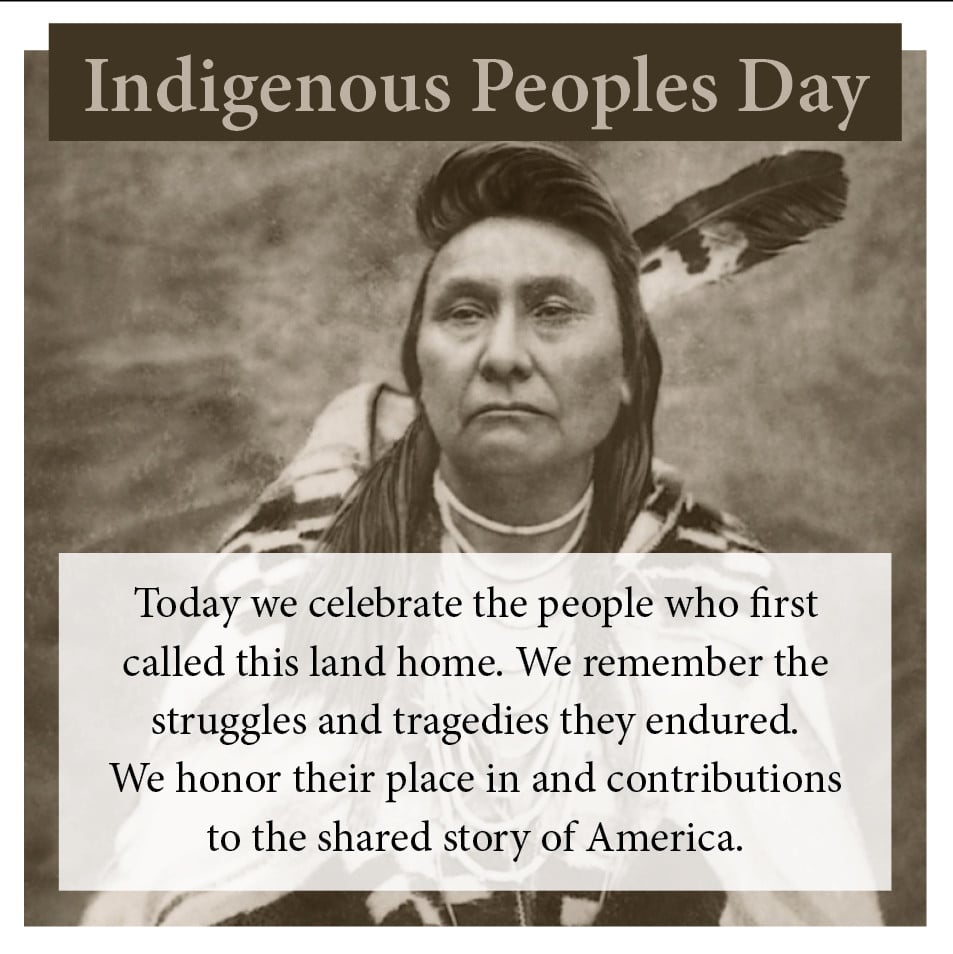
Men
dacht dat met een dergelijke vorm van zelfbestuur, men geen grote
bouwwerken kon maken, anders dan over een periode van honderden
jaren. Deze mythe is intussen doorgeprikt daar men een groot bouwwerk
vond dat in een paar jaar tijd werd gebouwd, door samenwerking van
stammen, die in feite nog jagers verzamelaars waren.
In aanvang was de macht nog verdeeld onder elites en deze macht was gebaseerd op religieuze gronden. Echter deze vorm van bestuur werd losgelaten, waarschijnlijk daar men inzag dat een dergelijke machtsuitoefening onrecht en (zware) corruptie in de hand werkt. Daarop werd de religieuze leiders hun macht afgenomen, hetzelfde gebeurde met die elites, waarna voor een vorm van zelfbestuur werd gekozen, die in feite nog steeds te zien is bij de oorspronkelijke volkeren van de VS (althans de afstammelingen van degenen die de genocide van de witte kolonisten hebben overleefd). Volgens zeggen zou men elke vorm van machtsvorming door elites en religie met succes hebben bestreden.
Kortom
er zijn wel degelijk veel voorbeelden die aangeven dat (lokaal en
regionaal) zelfbestuur op basis van een roulerend leiderschap dan wel een wisselend collectief wel degelijk werkt…….
Onlangs
werd hetzelfde gezegd over een stad in Mexico waar men de corrupte
politici, al evenzo corrupte politie en georganiseerde misdaad verjaagde. Intussen werkt dit
zelfbestuur geweldig en is de stad welvarend geworden……*
Indigenous
People Invented the American Dream — Columbus Invaded It
(let op de eerste gekleurde persoon aan de rechterkant van de psychopathische veroveraars ‘ontdekkingsreizigers’, gezien diens houding is deze afgebeeld als een aap, al werden deze oorspronkelijke volkeren een enorm stuk slechter behandeld dan apen, althans als je dierproeven op deze arme dieren niet meerekent……)
October
7, 2018 at 10:34 pm
Written
by The
Conversation
(CONVERSATION) — When
President Barack Obama created Deferred
Action for Childhood Arrivals, the 2012 program that
offered undocumented
young people brought to the U.S. as children a path into society,
for a moment the ideals of the American Dream seemed, at least for
this group, real.
We
call these kids, many of whom are now adults, “Dreamers,”
because they are chasing the American Dream – a national
aspiration for upward economic mobility built on physical mobility.
Fulfilling your dreams often means following them wherever they may
lead – even into another country.
The
Trump administration’s decision to cancel
DACA –
which is currently on hold while it is litigated
in the courts –
and build
a U.S.-Mexico border wall has
endangered those dreams by subjecting 800,000 young people to
deportation.
But
the notion
underlying both Trump’s DACA repeal and the wall –
which is that “illegal”
immigrants, most of them from Mexico, are stealing
U.S. jobs and
hurting society – reflects a profound misunderstanding of American
history.
On Indigenous
Peoples Day,
it’s worth underscoring something that many archaeologists know:
Many of the values that inspire the American
Dream –
liberty, equality and the
pursuit of happiness –
date back to well before
the creation of the U.S.-Mexico border and
before freedom-seeking Pilgrim immigrants arrived at Plymouth Rock in
1620.
They
originate with native North Americans.
A
Native American Dream
The
modern rendition of the American Dream can be traced back to 1774,
when Virginia’s governor, John Murray, the fourth earl of
Dunmore, wrote that
even if Americans “attained Paradise, they would move on if they
heard of a better place farther west.”
The
actual term “American Dream” was popularized in 1931 by the
businessman and historian James
Truslow Adams.
For him, its realization depended on not just being able to better
oneself but also, through movement and human interaction, seeing your
neighbors bettered as well.
The
first peoples to come to the Americas also came in search of a better
life.
That
happened 14,000 years ago in the last Ice Age when nomadic
pioneers,
ancestors to modern Native Americans and First Nations, arrived from
the Asian continent and roamed freely throughout what now comprises
Canada, the United States and Mexico. Chasing mammoth,
ancient bison and the elephant-like Gomphothere,
they moved constantly to secure the health of their communities.

The
indigenous communities of the Americas knew none of these modern-day
national borders. USGS
A
more recent example of the power of migration reappears about 5,000
years ago, when a
large group of people from what is today central Mexico spread
into the American Southwest and farther north, settling as far up as
western North America. With them they brought corn, which now drives
a significant part of the American economy,
and a way of speaking that birthed over 30 of the 169 contemporary
indigenous languages still
spoken in the United States today.
The
Hohokam
This
globalist world view was alive and well 700 years ago as well when
people from what is now northern Arizona fled a decades-long drought
and rising authoritarianism under religious leaders.
Many
migrated hundreds of miles south to southern Arizona, joining the
Hohokam – ancestors
to modern O’odham nations –
who had long thrived in the harsh Sonoran desert by irrigating
vast fields of agave, corn, squash, beans and cotton.
When
the northern migrants arrived to this hot stretch of land around the
then-nonexistent U.S.-Mexico frontier, Hohokam religious and
political life was controlled by a handful of elites. Social
mechanisms restricting the accumulation of power by individuals had
slowly broken down.
For
decades after their arrival, migrants and locals interacted. From
that exchange, a Hohokam cultural revolution grew. Together, the two
communities created a commoners’ religious social movement
that archaeologists
call Salado,
which featured a feasting practice that invited all village members
to participate.
As
ever more communities adopted this equitable
tradition,
political power – which at the time was embedded in religious power
– became more equally spread through society.
Elites
lost their control and, eventually, abandoned their temples.
America’s
Egalitarian Mound-Builders
The
Hohokam tale unearths another vaunted American ideal that originates
in indigenous history: equality.
Long
before it was codified in the Declaration
of Independence,,
equality was enacted through the building of large mounds.
Massive
earthen structures like these are often acts of highly hierarchical
societies – think of the pyramids of the ancient Egyptians,
constructed by masses
of laborers as
the final resting place of powerful
pharaohs,
or those of the rigid,
empire-building Aztecs.
But
great power isn’t always top-down. Poverty
Point,
in the lower Mississippi River Valley of what’s now Louisiana, is a
good example. This massive site, which consists of five mounds, six
concentric semi-elliptical ridges and a central plaza, was built some
4,000 years ago by hunter-fisher-gatherers with little entrenched
hierarchy.

Poverty
Point: a city built on cooperation. Herb Roe/Wikipedia, CC BY-SA
Originally,
archaeologists believed that
such societies without the inequality and authoritarianism that
defined the ancient Egyptian, Roman, and Aztec empires could not have
constructed something so significant – and, if so, only over
decades or centuries.
But
excavations in the last 20 years have revealed that large sections of
Poverty Point were actually
constructed in only a few months.
These Native Americans organized in groups to undertake massive
projects as a communal cooperative, leaving a built legacy of
equality across America’s landscape.
The
Consensus-Building Haudenosaunee
The
Haudenosaunee, or Iroquois,
offer a more modern example of such consensus-based decision-making
practices.
These
peoples – who’ve lived on both sides of the St. Lawrence river in
modern-day Ontario and the U.S. Great Lakes states for hundreds,
if not thousands, of years –
built their society on collective labor arrangements.
They
ostracized people who exhibited “selfish” behavior, and women and
men often worked together in large
groups.
Everyone lived together in communal longhouses. Power was also
shifted constantly to prevent hierarchy from forming, and decisions
were made by coalitions of kin groups and communities.
Many
of these participatory political practices continue
to this day.
The
Haudenosaunee sided with the British during the 1776 American
Revolution and
were largely driven off their land after the war. Like many
native populations,
the Haudenosaunee Dream turned into a nightmare of invasion, plague
and genocide as
European migrants pursued their American Dream that excluded others.
Native
Americans at Standing Rock
The
long indigenous history of rejecting authoritarianism continues,
including the 2016 battle for environmental
justice at Standing Rock,
South Dakota.
There,
a resistance movement coalesced around a horizontally
organized youth group that
rejected the planned Dakota
Access oil pipeline.

Native
American pioneers continue to fight for the same ideals that inspire
the American Dream, including equality and freedom. John
Duffy/Wikimedia, CC BY-SA
The
movement centered on an environmental cause in part because nature is
sacred to the Lakota – and to many
other indigenous communities –
but also because communities of color often bear
the brunt of economic and urban development decisions.
Standing
Rock was the indigenous fight against repression and for the American
Dream, gone 21st century.
Redefining
the North American Dream
Anthropologists
and historians haven’t always recognized the quintessentially
Native American ideals present in the American Dream.
In
the early 19th century, the prominent social philosopher Lewis Henry
Morgan called
the Native Americans he studied “savages.” And
for centuries, America’s native peoples have seen their cultural
heritage attributed to seemingly everyone but their ancestors –
even to an invented “lost”
white race.
America’s
indigenous past was not romantic. There were petty disputes, bloody
intergroup conflicts and
slavery, namely along
the Northwest Coast and American
Southeast.
But
the ideals of freedom and equality – and the right that Americans
can move across this vast continent to seek it out – survive
through the millennia. Societies based on those values have prospered
here.
So
the next time a politician invokes American values to promote
a policy of closed borders or selfish
individualism,
remember who originally espoused the American Dream – and first
sought to live it, too.
By Lewis
Borck and D.
Shane Miller / Creative
Commons / The
Conversation / Report
a typo
=========================================
