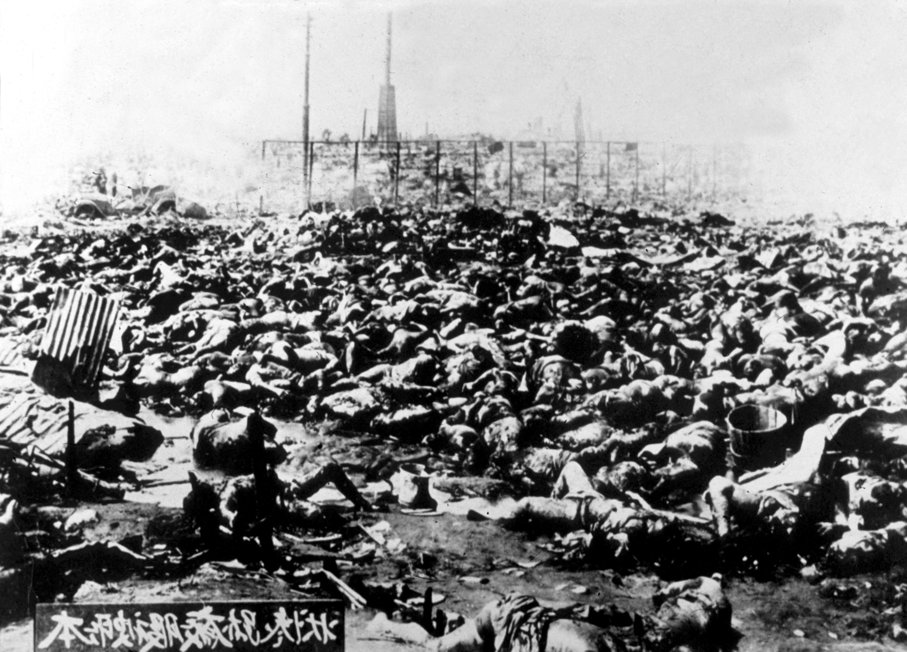
Hiroshima 6 augustus 1945: atoombom slachtoffers winnen rechtszaak

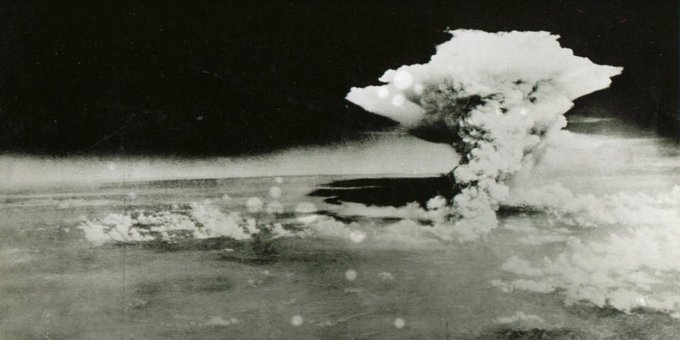
Een paar weken voor de herdenking van het afwerpen van een atoombom op Hiroshima hebben slachtoffers van deze uiterst barbaarse daad in Japan een rechtszaak gewonnen. Ook de slachtoffers die buiten de aangewezen grens leefden waarop men claims kon indienen, hebben recht op compensatie aldus de rechter. Het gaat hier om slachtoffers die werden getroffen door de fall out ontstaan door deze vreselijke oorlogsmisdaad, die fall out noemt men ‘black rain’ (‘zwarte regen’)….

Black rain bestaat uit (radioactieve) fallout deeltjes, koolstof deeltjes door de branden die de stad teisterden en andere gevaarlijke stoffen…… Deze Zwarte Regen kwam terecht op de huid en kleding van mensen, werd ingeademd en besmette water en voedsel, waardoor wijdverspreid radioactieve vergiftiging optrad (ook wel stralingsvergiftiging genoemd)……

Ondanks dat uit meerdere onderzoeken is gebleken dat de VS de uraniumbom op Hiroshima en de plutoniumbom op Nagasaki niet hadden hoeven in te zetten, wordt onze kinderen op school nog steeds de leugen geleerd als zou de VS deze bommen hebben afgeworpen om de oorlog te beëindigen, terwijl het werkelijke doel het testen was van deze wapens, testen waarbij mensen werden gezien als proefdieren, het overgrote deel van de 110.000 slachtoffers die tijdens de aanvallen meteen werden vermoord waren burgers……. (anderen spreken over meer dan 200.000 doden die direct met de ontploffing van de atoombommen zouden zijn vermoord, dan wel in de 24 uur daarna…..) Overigens zijn ook langer na de VS aanval nog minstens 100.000 mensen overleden als gevolg van stralingsziekte en kankers veroorzaakt door radioactieve besmetting, voorts zijn er tienduizenden kinderen geboren met ernstige geboorteafwijkingen, ook al het gevolg van deze enorme oorlogsmisdaden……

Japan stond al op het punt om te capituleren, daar de VS bombardementen op steden als Tokio ook het leven kostte aan enorme aantallen burgers, bombardementen waarbij vuurbommen werden gebruikt, zoals op de Duitse stad Dresden…. Dat het ging om een test blijkt ook wel uit het gebruik van 2 verschillende bommen, die de VS heeft ingezet (wat onze schooljeugd ‘ook al niet ‘wordt verteld)…. Voorts was de inzet van deze wapens een waarschuwing aan het adres van de Sovjet-Unie (dat overigens zelf ook al werkte aan de ontwikkeling van een atoombom)…. Men stelde dat Japan wilde capituleren als keizer Hirohito maar onaantastbaar zou blijven en dat zou de VS niet hebben gewild, echter na het afwerpen van de atoombommen ging de VS alsnog akkoord met het onaantastbaar houden van de Japanse keizer….. Al stellen meerdere geschiedkundigen dat Japan ondanks de weerstand van de VS wat betreft de keizer toch wel zou hebben gecapituleerd…….

Schande dat de VS nooit excuses heeft gemaakt door deze oorlogsmisdaden, waar enkele presidenten zover gingen dat ze stelden dat de VS groot gelijk had met het afwerpen van atoombommen op burgersteden, uiteraard de president die toestemming gaf voor het bombarderen van Hiroshima en Nagasaki >> Harry Truman…. Maar ook viespeuk Clinton heeft als president laten weten dat de VS geen excuses hoefde te maken aan de slachtoffers…… Uiteraard speelt ook hier mee dat men bang is dat excuses zullen leiden tot grote eisen tot herstelbetalingen, zoals ook Nederland uit hetzelfde motief nog steeds geen excuus heeft gemaakt voor de koloniale oorlog tegen het Indonesische volk tijdens de ‘Politionele acties’ in dat land……..

De verwachting was dat na de uitspraak van de Japanse rechter de rechtse regering van Japan o.l.v. premier Yoshihide Suga in beroep zou gaan tegen die uitspraak, echter niets van dat, hij heeft zelfs gezegd dat mensen die getroffen zijn door de Fukushima ramp, mensen die ziek zijn geworden van de radioactieve straling uit die kerncentrale, ook recht kunnen doen gelden op die rechterlijke uitspraak. (terwijl Japan blijft volhouden dat er geen mensen zijn omgekomen bij die ramp….)

De overlevenden van de atoomaanvallen op de steden Hiroshima en Nagasaki hebben zich verenigd in de organisatie Hibakusha en Setsuko Thurlow, één van de bekendste en meest uitgesproken leden van die groep, heeft in 2017 de Nobelprijs voor de Vrede geaccepteerd voor de Internationale Campagne tot afschaffing van Kernwapens (International Campaign to Abolish Nuclear Weapons >> ICAN), dit deed hij overigens samen met de directeur van die organisatie, Beatrice Fihn. Nog ‘een leuk feitje’ over die campagne: Nederland en België hebben ICAN niet getekend, omdat het NAVO-lidstaten zijn die VS kernwapens op hun grondgebied hebben….. Schande!! En dan noemt men Den Haag ‘stad van vrede en recht…..’ ha! ha! ha! ha! ha!

Lees het volgende artikel van Linda Pentz Gunter, eerder gepubliceerd op CounterPunch:

CounterPunch

A Hard Rain Did Fall: a Big Win in Court for Hiroshima Victims

“Thirsty woman catching black rain in her mouth” de Akiko Takakura/WikimediaCommons.

Just weeks before the 2021 commemoration of the August 6, 1945 US
atomic bombing of the city of Hiroshima, a Japanese court ruled that
victims of the radioactive “black rain” who were living beyond the
officially recognized contamination zone at the time, should be included
in the group considered bomb “survivors” or “Hibakusha” and receive the
same benefits.

A Hiroshima high court acknowledged in its July 14, 2021 ruling that
many more people suffered as a result of exposure to “black rain” than
have hitherto been recognized as victims.

“Black rain” was described in a CNN story
as a “mixture of fallout particles from the explosion, carbon residue
from citywide fires, and other dangerous elements. The black rain fell
on peoples’ skin and clothing, was breathed in, contaminated food and
water, and caused widespread radiation poisoning.”

When the verdict was first released last month, it appeared that the
Japanese government, under Prime Minister Yoshihide Suga, might appeal
the decision. Instead, Suga declared his government, the defendants in
the case, would not appeal it and even suggested that relief might be
extended to other affected people beyond the plaintiffs. According to
the Asahi Shimbun, this may even include those exposed to radiation as a result of the 2011 Fukushima nuclear disaster on the Japan coast.

The court ruling was important because it recognized and acknowledged
not only the heaths effects of the radioactive “black rain” atomic bomb
fallout, but also the internal exposure to radiation through the
ingestion of contaminated water and food experienced by the 84
plaintiffs in the case.

The ruling of course comes very late in the day as many Hibakusha are
already deceased. Indeed, one of the plaintiffs, 79-year-old Seiji
Takato, told CNN he was worried that if there was no verdict soon, “we would all die if this (case were) prolonged”.

The plaintiffs will now receive the same benefits as residents of the state-designated black rain zone. According to the Kyodo News,
these will include “free health checkups and atomic bomb survivors’
certificates entitling them to medical benefits in the event that they
develop 11 specific illnesses caused by radiation.”

The United States, the country which dropped the two atomic bombs —
on Hiroshima on August 6, 1945 and then on Nagasaki three days later —
has taken neither responsibility for the devastating health
consequences, nor offered an apology or compensation.

Indeed, President Truman, in office when the bombings were
authorized, told the Japanese, chillingly, that their sacrifice and
suffering were “urgent and necessary.” President Clinton declared that
the US “owes no apology to Japan”. He, like other US presidents before
and since, clung to the disputable notion that the atomic bombings saved
at least one million American lives, an argument ably dispatched by Ward Wilsonon these pages in 2018.

To date, Barack Obama is the only sitting US president to have
visited Hiroshima, when he traveled there in 2016, but he too failed to
apologize for the atrocity. There have been plenty of lively debates
on this question: Would an apology open up old wounds, focus too much
on the past and be an admission of wrongdoing? Would it also open the
door to a floodgate of demands
for monetary compensation? Or is an official apology an essential
atonement, albeit merely symbolic at this late stage? Could an apology
lead in turn to meaningful international engagement on global peace?

Slowly, the Hibakusha have been gaining recognition. One of its most
famous and outspoken members, Setsuko Thurlow, accepted the Nobel Peace
Prize awarded the International Campaign to Abolish Nuclear Weapons
(ICAN) alongside its executive director, Beatrice Fihn, in 2017.

The award came on the heels of the instrumental role the Hibakusha played in persuading the UN to create the Treaty on the Prohibition of Nuclear Weapons (TPNW), now ratified
by 55 countries and counting, five more than the number that ensured it
became law this past January. None of the nuclear weapons states, nor
Japan, has signed or ratified the treaty.

At the end of the day, the lesson here is the mantra adopted by the nuclear researchers, whistleblowers and watchdogs at Fairewinds Energy Education: “Radiation knows no borders.”

As Fairewinds wrote in the context of the “black rain” verdict:
“Radioactive microscopic particles generated from mining uranium ore,
reprocessing atomic fuel, bomb tests, and disastrous meltdowns travel
well beyond the arbitrary boundaries and demarcation lines that
governments establish to limit their liability and to maintain control
over others.”

These warnings serve as a compelling reason to neither test nor use
atomic weapons and also as a powerful admonition against the continued
use of “civil” nuclear power.

This first appeared in Beyond Nuclear.


Linda Pentz Gunter is the editor and curator of BeyondNuclearInternational.org and the international specialist at Beyond Nuclear. She can be contacted at linda@beyondnuclear.org.

=============================

Nog een toevoeging na plaatsing: een video aangaande de zogenaamde noodzaak de atoombommen af te werpen op steden, overgenomen van Brasscheck TV:


Zie ook: ‘Vandaag 75 jaar geleden de derde grootste oorlogsmisdaad van de VS: de atoombom op Nagasaki

Internationale Dag van de Vrede: weg met alle kernwapens!!’

De kans op een ander Hiroshima is na 75 jaar groter dan ooit

Atomic
Bombing at 75: Truman’s ‘Human Sacrifice’ to Subdue Moscow

Hiroshima Cover-up: How the War Department’s Timesman Won a Pulitzer

Hiroshima en Nagasaki 74 jaar later: tijd om eindelijk de bom te bannen en de VS agressie tegen Rusland te onderzoeken

Hiroshima, monument van VS agressie

Bijna 70 atoomtesten later: straling op Marshalleilanden hoger dan in Tsjernobyl‘ 

The Plutonium Files: experimenten op mensen met radioactieve straling, zelfs met plutonium

Hiroshima en Nagasaki, aanvallen zijn niet te verdedigen enorme oorlogsmisdaden >> The Indefensible Hiroshima Revisionism That Haunts America To This Day

In de VS berichtte men in 1945, dat Hiroshima ‘a military base’ was…….

Hiroshima, één van de grootste oorlogsmisdaden ooit, 71 jaar later redenen te over voor herdenking!

De
werkelijke reden voor de VS atoomaanvallen op Hiroshima en Nagasaki….
Niet om de oorlog met Japan ten einde te brengen…….

Atoomaanvallen op Hiroshima en Nagasaki, één van de grootste oorlogsmisdaden uit de menselijke geschiedenis

Overlevenden atoomaanval op Hiroshima vragen om een verbod op kernwapens

Hashima en de Japanse ontkenning van wreedheden tijdens WOII

—————————-

Zie voor verdere VS-terreur vanaf 1945:

VS vermoordde meer dan 20 miljoen mensen sinds het einde van WOII……..‘ (tot het jaar 2000, daar zijn er deze eeuw nog eens meer dan 5 miljoen aan toegevoegd….)

VS buitenlandbeleid sinds WOII: een lange lijst van staatsgrepen en oorlogen……….

List of wars involving the United States

CIA 70 jaar: 70 jaar moorden, martelen, coups plegen, nazi’s beschermen, media manipulatie enz. enz………

Overlevenden atoomaanval op Hiroshima vragen om een verbod op kernwapens

Overlevenden
van de atoomaanval op Hiroshima (hibakusha) hebben gisteren de herdenking van de atoomaanval op die stad, 73 jaar geleden, gebruikt om de wereld op
te roepen een verbod in te stellen op kernwapens.

De
burgemeester van Hiroshima, Kazumi Matsui stelde volkomen
terecht dat de kans op een atoomramp groot is gezien de toestand in
de wereld, zeker als je het aantal van 14.000 kernkoppen (!!
knettergek!) over de wereld in gedachten houdt……….

Matsui
riep zijn regering op om het verdrag tot de ban van kernwapens te
tekenen, dit verdrag werd vorig jaar door een aantal VN leden getekend. De International Campaign to Abolish Nuclear Weapons
(ICAN), heeft voor haar inzet de Nobelprijs voor de Vrede
ontvangen……

Let
op, hier gaat Nederland weer ‘een mooie rol spelen’: Nederland heeft
dit verdrag niet getekend, onthield zich niet van stemming, maar
stemde als enige tegen, de VS kernwapens zouden nodig zijn voor ozne
veiligheid…… ha! ha! ha! ha! ha! ha! ha! Hier de tekst die
daarover te vinden is op de site van ICAN:
The
Netherlands, which hosts US nuclear weapons on its
territory, participated in the negotiation of the UN Treaty on
the Prohibition of Nuclear Weapons but voted against its adoption on
7 July 2017. It was the only nation to do so
.
It claims that US
nuclear weapons are essential for its security.

Kortom
voor de zoveelste keer staan we publiekelijk voor paal en dan durven
de Nederlandse reguliere media Rutte de hemel in te prijzen als een
geweldig staatsman…… ha! ha! ha! ha! ha!* 

Lees
het volgende artikel van Jessica Corbett, waarin ondermeer de redenen
te lezen zijn die de hibakusha geven om als de donder deze
massavernietigingswapens te verbieden:

Hiroshima
Survivors Call for Nuclear Weapons Ban 73 Years After US Bombing

August
6, 2018 at 9:45 am

Written
by 
Jessica
Corbett

(CD— While
European and Iranian leaders 
work
to salvage
 the
Iran nuclear deal after President Donald Trump 
withdrew the
United States in May and 
reimposed his
first round of sanctions on Monday, activists, surviviors, and
Hiroshima Mayor Kazumi Matsui marked the 73rd anniversary of the U.S.
dropping an atomic bomb on the Japanese city by calling for the total
elimination of the world’s nuclear weapons.

Today,
with more than 14,000 nuclear warheads remaining, the likelihood is
growing that what we saw in Hiroshima after the explosion that day
will return, by intent or accident, plunging people into agony,”
Matsui warned in a “
moving” peace
declaration
delivered
at a “
somber
ceremony in Japan on Monday.

Sharing
statements from 
hibakusha,
or those who survived the American bombing in 1945, the mayor
continued:

The hibakusha,
based on their intimate knowledge of the terror of nuclear weapons,
are ringing an alarm against the temptation to possess them. Year by
year, as 
hibakusha decrease
in number, listening to them grows ever more crucial.
One 
hibakusha who
was 20 says, “If nuclear weapons are used, every living thing will
be annihilated. Our beautiful Earth will be left in ruins. World
leaders should gather in the A-bombed cities, encounter our tragedy,
and, at a minimum, set a course toward freedom from nuclear weapons.
I want human beings to become good stewards of creation capable of
abolishing nuclear weapons.”

[…]

Another hibakusha who
was 20 makes this appeal: “I hope no such tragedy ever happens
again. We must never allow ours to fade into the forgotten past. I
hope from the bottom of my heart that humanity will apply our wisdom
to making our entire Earth peaceful.” If the human family forgets
history or stops confronting it, we could again commit a terrible
error. That is precisely why we must continue talking about
Hiroshima. Efforts to eliminate nuclear weapons must continue based
on intelligent actions by leaders around the world.

Nuclear
deterrence and nuclear umbrellas flaunt the destructive power of
nuclear weapons and seek to maintain international order by
generating fear in rival countries. This approach to guaranteeing
long-term security is inherently unstable and extremely dangerous.
World leaders must have this reality etched in their hearts as they
negotiate in good faith the elimination of nuclear arsenals, which is
a legal obligation under the Nuclear Non-Proliferation Treaty.
Furthermore (NNPT), they must strive to make the Treaty on the Prohibition
of Nuclear Weapons (TPNW) a milestone along the path to a
nuclear-weapon-free world.

Matsui
also urged the Japanese government to join the 
historic United
Nations 
treaty
to ban nuclear weapons
,
which was adopted by dozens of nations last year and 
earned
the International Campaign to Abolish Nuclear Weapons (ICAN) a Nobel
Peace Prize. Replicas of the award and diploma 
are
on display
 at
the Hiroshima Peace Memorial Museum until Monday, and next will be
sent to Nagasaki, the city the U.S. bombed three days later.

ICAN
turned to Twitter on Monday to share Matsui’s words and urge all
nations to join the U.N. treaty:

ICAN


@nuclearban

Replying to @nuclearban

Mayor Matsui spoke of the hopes of (survivors) for a nuclear-free world & the importance of memory: “If the human family forgets history or stops confronting it, we could again commit a terrible error. That is precisely why we must continue talking about Hiroshima.”

ICAN


@nuclearban

This Peace Declaration paints a painfully vivid image of the devastation of a nuclear bomb, but also reminds us that there is reason for hope: the provides a path to a world free of nuclear weapons, and all nations must join the Treaty → http://www.nuclearban.org  🕊


Support the Nuclear Ban Treaty

The Treaty on the Prohibition of Nuclear Weapons was adopted by 122 nations on July 7, 2017.

nuclearban.org

Paul
Kawika Martin, senior director for policy and political affairs at
the U.S.-based group Peace Action, said in a 
statement,
“Besides paying respect and commemorating the lives lost in the
atomic bombings of Hiroshima and Nagasaki, marking the anniversaries
offers the world an opportunity to reflect on the threat still posed
by nuclear weapons, and more importantly, an opportunity to organize
for their reduction and elimination.”

As
the only country to ever use nuclear weapons in war,” Martin
continued, “and as a signatory to the Nonproliferation Treaty, the
United States has both a moral and legal obligation to negotiate in
good faith with other nuclear-armed nations for the reduction and
elimination of the world’s nuclear arsenals, including our own.
Unfortunately, the Trump administration is instead moving forward
with plans to spend $1.7 trillion adjusted for inflation on nuclear
weapons over the next three decades.”

Several
other activists and anti-nuclear organizations used social media on
Monday to remember the bombing and demand that every nation work
toward outlawing such weapons:

CND


@CNDuk

73 years ago today, the United States dropped an atomic bomb called “Little Boy” on in Japan. 100,000 to 180,000 people were killed out of a population of 350,000.http://cnduk.org/hiroshima-nagasaki 

Twitter Ads info and privacy

Derek Johnson


@derekjGZ

Right now as you read this, men like Donald Trump and Vladimir Putin threaten every city on Earth with nuclear weapons that’d make Hiroshima look like a campfire — and one day, sooner or later, these weapons will be used. Unless we eliminate all of them. Everywhere.

Stephen Schwartz

@AtomicAnalyst

At this instant 73 years ago (8:15am August 6, local time), Hiroshima was destroyed by Little Boy, a 15-kiloton atomic bomb, which killed an estimated 66,000-80,000 men, women, and children, including 12 American POWs. By the end of 1945, as many as 140,000 people were dead.

View image on Twitter

View image on Twitter

View image on Twitter

Meanwhile,
students at Fukuyama Technical High School in Japan have unveiled a
virtual reality experience that enables users to see Hiroshima on the
day of the bombing. Their hope is that the VR project will discourage
future use of nuclear weapons.

Even
without language, once you see the images, you understand,” Mei
Okada, one of the students working on the
project, 
told the Associated
Press
.
“That is definitely one of the merits of this VR experience.”

Haruka Nuga | 奴賀春香@HarukaNuga

Got to meet these amazing Japanese students during my latest trip to Hiroshima that are using VR to recreate Hiroshima atomic bombing to share a message of peace. (from @AP) https://apnews.com/91622445eac44e4fa59335a9cee2bd62 

https://storage.googleapis.com/afs-prod/media/media:fd8f16a518ce4c35a8dd0448b828b1a7/800.jpeg


Japanese students use VR to recreate Hiroshima bombing

FUKUYAMA, Japan (AP) — It’s a sunny summer morning in the city of Hiroshima, Japan. Cicadas chirp in the trees. A lone plane flies high overhead. Then a flash of light, followed b

apnews.com

By Jessica
Corbett
 / Creative
Commons
 / Common
Dreams
 / Report
a typo

Zie ook:

The Treaty

Full text of the treaty

Status of signature/ratification

Government positions

Photos of the negotiations

Which nations were involved in negotiating the treaty?

Which nations voted in favour of adopting it?

The Nuclear Ban Monitor

====================================

Hier nog een artikel met video’s gisteren gepubliceerd op Brasscheck TV, hierin wordt onder meer gesteld dat andere bombardementen, zoals die op Tokio, meer slachtoffers eisten, echter de gevolgen voor de overlevende slachtoffers na de aanvallen op Hiroshima en Nagasaki, waren (en zijn) voor de overlevenden vreselijk en onvergelijkbaar:

THE
HIROSHIMA LIE

THE
REAL REASON JAPAN SURRENDERED

WHAT
HAPPENED AFTER THE WAR

On
this day in 1945, the US military under the direction of President
Truman dropped a nuclear bomb on a civilian target killing over
80,000 people instantly.

Was
the attack on Hiroshima a military necessity?

No
and here’s why.

Two
facts:

1.
In terms of death and destruction, the Hiroshima nuclear attack
wasn’t the biggest attack on a Japanese city. The conventional
fire bombing of Tokyo killed far more.

2.
The Russians were poised to mount a massive invasion.

The
Imperial Family agreed to surrender because they were advised that
while the Japanese military might be able to hold off an American
invasion, it could not withstand a combined US and Russian attack.

By
the way, what was Japan fighting for?

To
line the pockets of the Imperial Family, the richest family in Japan.
That’s it.

They
planned the war, they ordered the war, they profited from it and they
were willing to sacrifice the civilian population to carry out their
goals.

For
example, billions of dollars worth of stolen gold and valuable art
(much of it scouted out years in advance) was shipped directly to the
Imperial compound in Tokyo. None of it has been returned.

As
a condition for surrender, the Imperial Family was allowed to remain
in power unpunished and they remain in power today.

Can
you imagine what would have happened to those murderous, thieving
bastards if the Russians had gotten to them first?

But
as always, the US government was ready to make a “deal” – in
this case to have a base to fight Communism.

After
the war, the US government also protected – and hired – veterans
of Japan’s Unit 731.

You’ve
heard of Nazi medical atrocities, but the Japanese program was
exponentially larger and its crimes were largely covered up with the
help of the US government which wanted access to the data and the
practitioners.

* Terzijde: zonder de kabinetten Rutte hadden we er veel beter voor gestaan, minder werklozen, geen giga huurverhogingen…. Huurverhogingen die ervoor hebben gezorgd dat nu een groot aantal mensen bijna continu in de financiële problemen zitten, enz. enz. (vanmorgen werd nog bekend gemaakt dat het leven duurder is geworden, de grootste oorzaken: de huurverhogingen per 1 juli jl. en de prijsverhoging van fossiele brandstoffen….) 

Zie ook:

In de VS berichtte men in 1945, dat Hiroshima ‘a military base’ was…….

Hiroshima, één van de grootste oorlogsmisdaden ooit, 71 jaar later redenen te over voor herdenking!

De werkelijke reden voor de VS atoomaanvallen op Hiroshima en Nagasaki…. Niet om de oorlog met Japan ten einde te brengen…….

Hiroshima en Nagasaki, aanvallen zijn niet te verdedigen enorme oorlogsmisdaden >> The Indefensible Hiroshima Revisionism That Haunts America To This Day

Atoomaanvallen op Hiroshima en Nagasaki, één van de grootste oorlogsmisdaden uit de menselijke geschiedenis

Hashima en de Japanse ontkenning van wreedheden tijdens WOII

en zie voor VS-terreur na WOII:

VS vermoordde meer dan 20 miljoen mensen sinds het einde van WOII……..

VS buitenlandbeleid sinds WOII: een lange lijst van staatsgrepen en oorlogen……….

List of wars involving the United States

CIA 70 jaar: 70 jaar moorden, martelen, coups plegen, nazi’s beschermen, media manipulatie enz. enz………

Noord-Korea verkeerd begrepen: het land wordt bedreigd door de VS, dat alleen deze eeuw al minstens 4 illegale oorlogen begon……..

Hiroshima en Nagasaki, aanvallen zijn niet te verdedigen enorme oorlogsmisdaden >> The Indefensible Hiroshima Revisionism That Haunts America To This Day

In de afgelopen 9 dagen viel de herdenking van de VS atoomaanvallen 72 jaar geleden op de Japanse steden Hiroshima en Nagasaki, respectievelijk op 6 en 9 augustus 1945. Al 72 jaar vindt de discussie plaats over de noodzaak van die aanvallen.

     Afbeeldingsresultaat voor hiroshima en nagasaki voor en na 1945

Volgens oorlogsmisdadiger Truman, destijds president van de VS, zou de aanval een half miljoen levens van VS militairen hebben gered. Experts hebben echter berekend dat een aanval op het ‘vaste land’ van Japan, 40.000 militairen het leven hebben gekost, althans als die invasie werkelijk nodig was…….

Afbeeldingsresultaat voor hiroshima en nagasaki voor en na 1945

Precies dat betwijfelden NB een aantal verantwoordelijke VS topmilitairen, die destijds bevel voerden over de strijd tegen Japan. Volgens hen was Japan in feite al verslagen en had men in de onderhandelingen met Japan (over beëindiging van de oorlog) iets toegefelijker moeten zijn. Als de VS een onvoorwaardelijke overgave van Japan niet als noodzaak hadden gezien en daarmee het aanblijven van de Japanse keizer hadden goedgekeurd, was de oorlog zonder verder bloedvergieten beëindigd…… Uiteindelijk ging Truman wel akkoord met deze Japanse voorwaarden, echter na de steden Hiroshima en Nagasaki te hebben vernietigd, waarbij 250.000 mensen omkwamen…….. (dit nog buiten de slachtoffers die later aan de gevolgen van die oorlogsmisdaden zijn overleden >> na een meestal vreselijke lijdensweg….)

Gerelateerde afbeelding

Hier een artikel van Information Clearing House gepubliceerd op 11 augustus jl, onder het artikel kan u klikken voor het gehele ICH artikel (waaronder u voor een vertaling kan klikken):

Seventy
years ago this week the US vaporized 250,000 civilians, and yet still the bombings are seen as an act of mercy

Here
we are, 70 years after the nuclear obliteration of Hiroshima and
Nagasaki, and I’m wondering if we’ve come even one step closer to a
moral reckoning with our status as the world’s only country to use
atomic weapons to slaughter human beings. Will an American president
ever offer a formal apology? Will our country ever regret the
dropping of “Little Boy” and “Fat Man,” those two bombs that
burned hotter than the sun? Will it absorb the way they instantly
vaporized thousands of victims, incinerated tens of thousands more,
and created unimaginably powerful shockwaves and firestorms that
ravaged everything for miles beyond ground zero? Will it finally come
to grips with the “black rain” that spread radiation and killed
even more people — slowly and painfully — leading in the end to a
death toll for the two cities 
conservatively
estimated
 at
more than 250,000?

By
1945, most Americans didn’t care that the civilians of Hiroshima and
Nagasaki had not committed Japan’s war crimes. American wartime
culture had for years drawn on a long history of “yellow peril”
racism to paint the Japanese not just as inhuman, but as subhuman. As
Truman put it in his diary, it was a country full of 
savages” 
“ruthless, merciless, and fanatic” people so loyal to the emperor
that every man, woman, and child would fight to the bitter end. In
these years, magazines routinely 
depicted Japanese
as monkeys, apes, insects, and vermin. Given such a foe, so went the
prevailing view, there were no true “civilians” and nothing short
of near extermination, or at least a powerful demonstration of
America’s willingness to proceed down that path, could ever force
their surrender. As Admiral William “Bull” Halsey 
said in
a 1944 press conference, “The only good Jap is a Jap who’s been
dead six months.”

On
August 9, 1945, President Harry Truman delivered a 
radio
address
 from
the White House. “The world will note,” he said, “that the
first atomic bomb was dropped on Hiroshima, a military base. That was
because we wished in this first attack to avoid, insofar as possible,
the killing of civilians.” He did not mention that a second atomic
bomb had already been dropped on Nagasaki.

Truman
understood, of course, that if Hiroshima was a “military base,”
then so was Seattle; that the vast majority of its residents were
civilians; and that perhaps 100,000 of them had already been killed.
Indeed, he knew that Hiroshima was chosen not for its military
significance but because it was one of only a handful of Japanese
cities that had not already been firebombed and largely obliterated
by American air power.

Twenty
years ago, the Smithsonian’s National Air and Space Museum 
planned
an ambitious exhibit
 to
mark the 50th anniversary of the end of World War II. At its center
was to be an extraordinary artifact — the fuselage of the 
Enola
Gay
,
the B-29 Superfortress used to drop the atomic bomb on Hiroshima. But
the curators and historical consultants wanted something more than
yet another triumphal celebration of American military science and
technology. Instead, they sought to assemble a thought-provoking
portrayal of the bomb’s development, the debates about its use, and
its long-term consequences. The museum sought to include some
evidence challenging the persistent claim that it was dropped simply
to end the war and “save lives.”

For
starters, visitors would have learned that some of America’s
best-known World War II military commanders opposed using atomic
weaponry. In fact, 
six
of the seven
 five-star
generals and admirals of that time believed that there was no reason
to use them, that the Japanese were already defeated, knew it, and
were likely to surrender before any American invasion could be
launched. Several, like Admiral William Leahy and General Dwight
Eisenhower, also had moral objections to the weapon. Leahy considered
the atomic bombing of Japan “barbarous” and a violation of “every
Christian ethic I have ever heard of and all of the known laws of
war.”

Truman
did not seriously consult with military commanders who had objections
to using the bomb.  He did, however, ask a panel of military
experts to offer an estimate of how many Americans might be killed if
the United States launched the two major invasions of the Japanese
home islands scheduled for November 1, 1945 and March 1, 1946. Their
figure: 40,000 — far below the half-million he would cite after the
war. Even this estimate was based on the dubious assumption that
Japan could continue to feed, fuel, and arm its troops with the U.S.
in almost complete control of the seas and skies.

The
Smithsonian also planned to inform its visitors that some key
presidential advisers had urged Truman
to drop his demand for “unconditional surrender” and allow Japan
to keep the emperor on his throne, an alteration in peace terms that
might have led to an almost immediate surrender. Truman rejected that
advice, only to grant the same concession after the
nuclear attacks. 

So
here we are, 70 years later, and we seem, if anything, farther than
ever from a rejection of the idea that launching atomic warfare on
Japanese civilian populations was an act of mercy. Perhaps some
future American president will finally apologize for our nuclear
attacks, but one thing seems certain: no Japanese survivor of the
bombs will be alive to hear it.

Hier de link naar het originele artikel, waaronder u ook kan klikken voor een vertaling:

The Indefensible Hiroshima Revisionism That Haunts America To This Day

PS: dat de keizer van Japan aan mocht blijven na de oorlog, is net zo vreemd als het aanblijven van het grootste deel van de repressieve fascistische overheid daar en die in Duitsland, al moet ik zeggen, dat het sparen van een enorme hoeveelheid mensenlevens, dit dubbel en dwars waard zou zijn geweest……. Overigens zou dit niet in de weg hebben gestaan voor vervolging en berechting na WOII van bijvoorbeeld rechters, politie en legeronderdelen (als de SS).

Zie ook:

In de VS berichtte men in 1945, dat Hiroshima ‘a military base’ was…….

Hiroshima, één van de grootste oorlogsmisdaden ooit, 71 jaar later redenen te over voor herdenking!

De werkelijke reden voor de VS atoomaanvallen op Hiroshima en Nagasaki…. Niet om de oorlog met Japan ten einde te brengen…….

Atoomaanvallen op Hiroshima en Nagasaki, één van de grootste oorlogsmisdaden uit de menselijke geschiedenis

Overlevenden atoomaanval op Hiroshima vragen om een verbod op kernwapens

Hashima en de Japanse ontkenning van wreedheden tijdens WOII

en zie voor verdere VS-terreur na WOII:

VS vermoordde meer dan 20 miljoen mensen sinds het einde van WOII……..

VS buitenlandbeleid sinds WOII: een lange lijst van staatsgrepen en oorlogen……….

List of wars involving the United States

CIA 70 jaar: 70 jaar moorden, martelen, coups plegen, nazi’s beschermen, media manipulatie enz. enz………

Noord-Korea verkeerd begrepen: het land wordt bedreigd door de VS, dat alleen deze eeuw al minstens 4 illegale oorlogen begon……..

De werkelijke reden voor de VS atoomaanvallen op Hiroshima en Nagasaki…. Niet om de oorlog met Japan ten einde te brengen…….

Het volgende artikel vond ik 17 maart jl. op het blog van Stan van Houcke. Het artikel komt oorspronkelijk van Global Research en maakt gehakt van de leugen, dat het bombarderen van twee dichtbevolkte Japanse steden met een atoombom, nodig was om een eind te maken aan de oorlog met Japan (WOII). Een grotere oorlogsmisdaad is bijna niet te bedenken……..

De echte reden voor de atoomaanvallen was al bekend, maar goed te zien, dat e.e.a. nu ruimschoots terug te vinden is in (officiële) documenten.

Zelfs veel hooggeplaatste militairen spraken zich destijds uit tegen het gebruik van dit barbaarse wapen……….

Jammer dat de meeste mensen die getuige waren van deze vreselijke oorlogsmisdaad (ook de ‘getuigen op afstand’ zoals in Nederland), intussen zijn overleden….. Hen werd, precies als latere generaties, de leugen ingeprent, dat dit de enige manier was om de oorlog met Japan te beëindigen…….

U kunt in het volgende artikel o.a. lezen, dat de VS, voorafgaand aan het tot 2 keer toe bombarderen met atoombommen, van een dichtbevolkte Japanse stad, een wapenstilstand met Japan weigerde, daar Japan de keizer niet wilde afzetten, laat staan vervolgen. Met die voorwaarde ging de VS na de 2 aanvallen met atoombommen toch akkoord……… Daarmee was het overduidelijk, dat de VS deze aanvallen met atoombommen heeft gebruikt, om de effecten daarvan te zien en te onderzoeken…… De Japanse burgers werden in feite als proefdier gebruikt……. 

cof

Hier het artikel (dat overigens op 2 november 2012 werd gepubliceerd):

The
Real Reason America Used Nuclear Weapons Against Japan. It Was Not To
End the War Or Save Lives.

By Washington’s
Blog
 / globalresearch.ca / Nov
2, 2012

Like
all Americans, I was taught that the U.S. dropped nuclear bombs on
Hiroshima and Nagasaki in order to end WWII and save both American
and Japanese lives.

But
most of the top American military officials at the time
said 
otherwise

The
U.S. Strategic Bombing Survey group, assigned by President Truman to
study the air attacks on Japan, produced a report in July of 1946
that 
concluded (52-56):

Based
on a detailed investigation of all the facts and supported by the
testimony of the surviving Japanese leaders involved, it is the
Survey’s opinion that certainly prior to 31 December 1945 and in
all probability prior to 1 November 1945, Japan would have
surrendered even if the atomic bombs had not been dropped
, even
if Russia had not entered the war, and even if no invasion had been
planned or contemplated.

General
(and later president) Dwight Eisenhower – then 
Supreme
Commander of all Allied Forces
,
and the officer who created most of America’s WWII military plans
for Europe and Japan – said:

The
Japanese were ready to surrender and it wasn’t necessary to
hit them with that awful thing.

Newsweek,
11/11/63, 
Ike
on Ike

Eisenhower
also 
noted (pg.
380):

In
[July] 1945… Secretary of War Stimson, visiting my headquarters in
Germany, informed me that our government was preparing to drop an
atomic bomb on Japan. I was one of those who felt that there were a
number of cogent reasons to question the wisdom of such an act. …the
Secretary, upon giving me the news of the successful bomb test in New
Mexico, and of the plan for using it, asked for my reaction,
apparently expecting a vigorous assent.

During
his recitation of the relevant facts, I had been conscious of a
feeling of depression and so I voiced to him 
my
grave misgivings, first on the basis of my belief that Japan was
already defeated and that dropping the bomb was completely
unnecessary, and secondly because I thought that our country should
avoid shocking world opinion by the use of a weapon whose employment
was, I thought, no longer mandatory as a measure to save American

lives. It was my
belief that Japan was, at that very moment, seeking some way to
surrender with a minimum loss of ‘face’
.
The Secretary was deeply perturbed by my attitude….

Admiral
William Leahy
 –
the highest ranking member of the U.S. military from 1942 until
retiring in 1949, who was the first de facto Chairman of the Joint
Chiefs of Staff, and who was at the center of all major American
military decisions in World War II – 
wrote (pg.
441):

It
is my opinion that the use of this barbarous weapon at Hiroshima and
Nagasaki was of no material assistance in our war against Japan. The
Japanese were already defeated and ready to surrender because of the
effective sea blockade and the successful bombing with conventional
weapons
.

The
lethal possibilities of atomic warfare in the future are frightening.
My own feeling was that in being the first to use it, we had adopted
an ethical standard common to the barbarians of the Dark Ages. I was
not taught to make war in that fashion, and wars cannot be won by
destroying women and children.

General
Douglas MacArthur 
agreed (pg.
65, 70-71):

MacArthur’s
views about the decision to drop the atomic bomb on Hiroshima and
Nagasaki were starkly different from what the general public supposed
…. When I asked General MacArthur about the decision to
drop the bomb, I was surprised to learn he had not even been
consulted. What, I asked, would his advice have been? He replied that
he saw no military justification for the dropping of the bomb.
 The
war might have ended weeks earlier, he said, if the United States had
agreed, as it later did anyway, to the retention of the institution
of the emperor.

Moreover (pg.
512):

The
Potsdam declaration in July, demand[ed] that Japan surrender
unconditionally or face ‘prompt and utter destruction.’ MacArthur
was appalled. He knew that the Japanese would never renounce their
emperor, and that without him an orderly transition to peace would be
impossible anyhow, because his people would never submit to Allied
occupation unless he ordered it. Ironically, when the surrender did
come, it was conditional, and the condition was a continuation of the
imperial reign. Had the General’s advice been followed, the resort
to atomic weapons at Hiroshima and Nagasaki might have been
unnecessary.

Similarly,
Assistant Secretary of War John McLoy 
noted (pg.
500):

I
have always felt that if, in our ultimatum to the Japanese government
issued from Potsdam [in July 1945], we had referred to the retention
of the emperor as a constitutional monarch and had made some
reference to the reasonable accessibility of raw materials to the
future Japanese government, it would have been accepted. Indeed, I
believe that even in the form it was delivered, there was some
disposition on the part of the Japanese to give it favorable
consideration. When the war was over I arrived at this conclusion
after talking with a number of Japanese officials who had been
closely associated with the decision of the then Japanese government,
to reject the ultimatum, as it was presented. 
I
believe we missed the opportunity of effecting a

Japanese
surrender, completely satisfactory to us, without the necessity of
dropping the bombs
.

Under
Secretary of the Navy Ralph Bird said:

I
think that the Japanese were ready for peace, and they already had
approached the Russians and, I think, the Swiss. And that

suggestion of [giving] a
warning
[of
the
atomic
bomb] was a face-saving proposition for them, and one that they could
have readily accepted.

***

In
my opinion, the Japanese war was really won before we ever used the
atom bomb
. Thus, it wouldn’t have been necessary for us to
disclose our nuclear position and stimulate the Russians to develop
the same thing much more rapidly than they would have if we had not
dropped the bomb.

War
Was Really Won Before We Used A-Bomb
,
U.S. News and World Report, 8/15/60, pg. 73-75.

He
also 
noted (pg.
144-145, 324):

It
definitely seemed to me that the Japanese were becoming weaker and
weaker. They were surrounded by the Navy. They couldn’t get any
imports and they couldn’t export anything. Naturally, as time went
on and the war developed in our favor it was quite logical to hope
and expect that with the proper kind of a warning the Japanese would
then be in a position to make peace, which would have made
it unnecessary for us to drop the bomb and have had
to bring Russia in.

General
Curtis LeMay, the tough cigar-smoking Army Air Force “hawk,” 
stated
publicly
shortly
before the nuclear bombs were dropped on Japan:

The
war would have been over in two weeks. . . . The atomic bomb had
nothing to do with the end of the war at all.

The
Vice Chairman of the U.S. Bombing Survey Paul Nitze 
wrote (pg.
36-37, 44-45):

[I]
concluded that even without the atomic bomb, Japan was likely
to surrender in a matter of months
. My own view was that Japan
would capitulate by November 1945.

***

Even
without the attacks on Hiroshima and Nagasaki, it seemed highly
unlikely, given what we found to have been the mood of the Japanese
government, that a U.S. invasion of the islands [scheduled for
November 1, 1945] would have been necessary.

Deputy
Director of the Office of Naval Intelligence Ellis Zacharias wrote:

Just
when the Japanese were ready to capitulate, we went ahead and
introduced to the world the most devastating weapon it had ever seen
and, in effect, gave the go-ahead to Russia to swarm over Eastern
Asia.

Washington
decided that Japan had been given its chance and now it was time to
use the A-bomb.

I
submit that it was the wrong decision. It was wrong on strategic
grounds. And it was wrong on humanitarian grounds.

Ellis
Zacharias, 
How
We Bungled the Japanese Surrender
,
Look, 6/6/50, pg. 19-21.

Brigadier
General Carter Clarke – the military intelligence officer in charge
of preparing summaries of intercepted Japanese cables for President
Truman and his advisors – 
said (pg.
359):

When
we didn’t need to do it, and we knew we didn’t need to do it, and
they knew that we knew we didn’t need to do it, we used them as an
experiment for two atomic bombs.

Many
other high-level military officers concurred. 
For
example
:

The
commander in chief of the U.S. Fleet and Chief of Naval Operations,
Ernest J. King, stated that the naval blockade and prior bombing of
Japan in March of 1945, had rendered the Japanese helpless and that
the use of the atomic bomb was both unnecessary and immoral. Also,
the opinion of Fleet Admiral Chester W. Nimitz was reported to have
said in a press conference on September 22, 1945, that “The Admiral
took the opportunity of adding his voice to those insisting that
Japan had been defeated before the atomic bombing and Russia’s
entry into the war.” In a subsequent speech at the Washington
Monument on October 5, 1945, Admiral Nimitz stated “The Japanese
had, in fact, already sued for peace before the atomic age was
announced to the world with the destruction of Hiroshima and before
the Russian entry into the war.” It was learned also that on or
about July 20, 1945, General Eisenhower had urged Truman, in a
personal visit, not to use the atomic bomb. Eisenhower’s assessment
was “It wasn’t necessary to hit them with that awful thing . . .
to use the atomic bomb, to kill and terrorize civilians, without even
attempting [negotiations], was a double crime.” Eisenhower also
stated that it wasn’t necessary for Truman to “succumb” to [the
tiny handful of people putting pressure on the president to drop atom
bombs on Japan.]

British
officers were of the same mind. For example, General Sir Hastings
Ismay, Chief of Staff to the British Minister of Defence, 
said to
Prime Minister Churchill that “when Russia came into the war
against Japan, the Japanese would probably wish to get out on almost
any terms short of the dethronement of the Emperor.”

On
hearing that the atomic test was successful, Ismay’s private
reaction was one of “revulsion.”

Why
Were Bombs Dropped on Populated 
Cities Without
Military Value?

Even
military officers who favored use of nuclear weapons mainly favored
using them on unpopulated areas or Japanese military targets … not
cities.

For
example, Special Assistant to the Secretary of the Navy Lewis Strauss
proposed to Secretary of the Navy James Forrestal that a 
non-lethal
demonstration
 of
atomic weapons would be enough to convince the Japanese to surrender
… and the Navy Secretary agreed (pg. 145, 325):

I
proposed to Secretary Forrestal that the weapon should be
demonstrated before it was used. Primarily it was because it was
clear to a number of people, myself among them, that the war was very
nearly over. The Japanese were nearly ready to capitulate… My
proposal to the Secretary was that the weapon should be demonstrated
over some area accessible to Japanese observers and where its effects
would be dramatic. I remember suggesting that a satisfactory place
for such a demonstration would be a large forest of cryptomeria trees
not
far
from Tokyo. The cryptomeria tree is the Japanese version of our
redwood… I anticipated that a bomb detonated at a suitable height
above such a forest… would lay the trees out in windrows from the
center of the explosion in all directions as though they were
matchsticks, and, of course, set them afire in the center. It seemed
to me that a demonstration of this sort would prove to the Japanese
that we could destroy any of their cities at will… 
Secretary
Forrestal agreed wholeheartedly with the recommendation

It
seemed to me that such a weapon was not necessary to bring
the war to a successful conclusion
, that once used it would find
its way into the armaments of the world…

General
George Marshall 
agreed:

Contemporary
documents show that Marshall felt “these weapons might first be
used against straight military objectives such as a large naval
installation and then if no complete result was derived from the
effect of that, he thought we ought to designate a number of large
manufacturing areas from which the people would be warned to
leave–telling the Japanese that we intend to destroy such
centers….”

As
the document concerning Marshall’s views suggests, the question of
whether the use of the atomic bomb was justified turns … on whether
the bombs had to be used against a largely civilian target rather
than a strictly military target—which, in fact, was the explicit
choice since although there were Japanese troops in the cities,
neither Hiroshima nor Nagasaki was deemed militarily vital by U.S.
planners. (This is one of the reasons neither had been heavily bombed
up to this point in the war.) Moreover, targeting [at Hiroshima and
Nagasaki] was aimed explicitly on non-military facilities surrounded
by workers’ homes.

Historians
Agree that the Bomb Wasn’t Needed

Historians
agree that nuclear weapons did not need to be used to stop the war or
save lives.

As
historian Doug Long 
notes:

U.S.
Nuclear Regulatory Commission historian J. Samuel Walker has studied
the history of research on the decision to use nuclear weapons on
Japan. In his conclusion he writes, “
The
consensus among scholars is that the bomb was not needed to avoid an
invasion of Japan and to end the war within a relatively short time.
It is clear that alternatives to the bomb existed and that Truman and
his advisors knew it
.”
(J. Samuel Walker, 
The
Decision to Use the Bomb: A Historiographical Update,
 Diplomatic
History, Winter 1990, pg. 110).

Politicians
Agreed

Many
high-level politicians agreed. For example, Herbert Hoover 
said (pg.
142):

The
Japanese were prepared to negotiate all the way from February 1945…up
to and before the time the atomic bombs were dropped; …if such
leads had been followed up, there would have been no occasion
to drop the [atomic] bombs
.

Under
Secretary of State Joseph Grew 
noted (pg.
29-32):

In
the light of available evidence I myself and others felt that if such
a categorical statement about the [retention of the] dynasty had been
issued in May, 1945, the surrender-minded elements in the [Japanese]
Government might well have been afforded
by
such a statement a valid reason and the necessary strength to come to
an early clearcut decision.

If
surrender could have been brought about in May, 1945, or even in June
or July, before the entrance of Soviet Russia into the [Pacific] war
and the use of the atomic bomb, the world would have been the gainer.

Why
Then Were Atom Bombs Dropped on Japan?

If
dropping nuclear bombs was unnecessary to end the war or to save
lives, why was the decision to drop them made? Especially over the
objections of so many top military and political figures?

One
theory is that scientists 
like
to play with their toys
:

On
September 9, 1945, Admiral William F. Halsey, commander of the Third
Fleet, was publicly quoted extensively as stating that the atomic
bomb was used because the scientists had a “toy and they wanted to
try it out . . . .” He further stated, “The first atomic bomb was
an unnecessary experiment . . . . It was a mistake to ever drop it.”

However,
most of the Manhattan Project scientists who developed the atom bomb
were opposed to using it on Japan.

Albert
Einstein – an important catalyst for the development of the atom
bomb (but not directly connected with the Manhattan Project) – 
said
differently
:

A
great majority of scientists were opposed to the sudden employment of
the atom bomb.” In Einstein’s judgment, the dropping of the bomb
was a political – diplomatic decision rather than a military or
scientific decision.

Indeed,
some of the Manhattan Project scientists 
wrote
directly to the secretary of defense
 in
1945 to try to dissuade him from dropping the bomb:

We
believe that these considerations make the use of nuclear bombs for
an early, unannounced attack against Japan inadvisable. If the United
States would be the first to release this new means of indiscriminate
destruction upon mankind, she would sacrifice public support
throughout the world, precipitate the race of armaments, and
prejudice the possibility of reaching an international agreement on
the future control of such weapons.

Political
and Social Problems
,
Manhattan Engineer District Records, Harrison-Bundy files, folder #
76, National Archives (also contained in: Martin Sherwin, 
A
World Destroyed
,
1987 edition, pg. 323-333).

The
scientists questioned the ability of destroying Japanese cities with
atomic bombs to bring surrender when destroying Japanese cities with
conventional bombs had not done so, and – like some of the military
officers quoted above – recommended a demonstration of the atomic
bomb for Japan in an unpopulated area.

The
Real Explanation?

History.com notes:

In
the years since the two atomic bombs were dropped on Japan, a number
of historians have suggested that the weapons had a two-pronged
objective …. It has been suggested that the second objective was to
demonstrate the new weapon of mass destruction to the Soviet Union
.
By August 1945, relations between the Soviet Union and the United
States had deteriorated badly. The Potsdam Conference between U.S.
President Harry S. Truman, Russian leader Joseph Stalin, and Winston
Churchill (before being replaced by Clement Attlee) ended just four
days before the bombing of Hiroshima. The meeting was marked by
recriminations and suspicion between the Americans and Soviets.
Russian armies were occupying most of Eastern Europe. Truman
and many of his advisers hoped that the U.S. atomic monopoly might
offer diplomatic leverage with the Soviets. In this fashion, the
dropping of the atomic bomb on Japan can be seen as the first shot of
the Cold War.

New
Scientist 
reported in
2005:

The
US decision to drop atomic bombs on Hiroshima and Nagasaki in 1945
was meant to kick-start the Cold War rather than end
the Second World War, according to two nuclear historians who say
they have new evidence backing the controversial theory.

Causing
a fission reaction in several kilograms of uranium and plutonium and
killing over 200,000 people 60 years ago was done more to
impress the Soviet Union than to cow Japan
, they say. And the US
President who took the decision, Harry Truman, was culpable, they
add.

He
knew he was beginning the process of annihilation of the species,”
says Peter Kuznick, director of the Nuclear Studies Institute at
American University in Washington DC, US. “It was not just a war
crime; it was a crime against humanity.”

***

[The
conventional explanation of using the bombs to end the war and save
lives] is disputed by Kuznick and Mark Selden, a historian from
Cornell University in Ithaca, New York, US.

***

New
studies of the US, Japanese and Soviet diplomatic archives suggest
that Truman’s main motive was to limit Soviet expansion in
Asia
, Kuznick claims. Japan surrendered because the Soviet Union
began an invasion a few days after the Hiroshima bombing, not because
of the atomic bombs themselves, he says.

According
to an account by Walter Brown, assistant to then-US secretary of
state James Byrnes, Truman agreed at a meeting three days before the
bomb was dropped on Hiroshima that Japan was “looking for peace”.
Truman was told by his army generals, Douglas Macarthur and Dwight
Eisenhower, and his naval chief of staff, William Leahy, that there
was no military need to use the bomb.

Impressing
Russia was more important than ending the war in Japan,” says
Selden.

John
Pilger 
points
out
:

The
US secretary of war, Henry Stimson, told President Truman he was
“fearful” that the US air force would have Japan so “bombed
out” that the new weapon would not be able “to show its
strength”. He later admitted that “no effort was made, and none
was seriously considered, to achieve surrender merely in order not to
have to use the bomb”. His foreign policy colleagues were eager
“to browbeat the Russians with the bomb held rather ostentatiously
on our hip”
. General Leslie Groves, director of the
Manhattan Project
 that made the bomb, testified:
“There was never any illusion on my part that Russia was our enemy,
and that the project was conducted on that basis.”
 The day
after Hiroshima was obliterated, President Truman voiced his
satisfaction with the “overwhelming success” of “the
experiment”.

We’ll
give the 
last
word
 to
University of Maryland professor of political economy – and former
Legislative Director in the U.S. House of Representatives and the
U.S. Senate, and Special Assistant in the Department of State – 
Gar
Alperovitz
:

Though
most Americans are unaware of the fact, increasing numbers of
historians now recognize the United States did not need to use the
atomic bomb to end the war against Japan in 1945. Moreover, this
essential judgment was expressed by the vast majority of top American
military leaders in all three services in the years after the war
ended: Army, Navy and Army Air Force. Nor was this the judgment of
“liberals,” as is sometimes thought today. In fact, leading
conservatives were far more outspoken in challenging the decision as
unjustified and immoral than American liberals in the years following
World War II.

***

Instead
[of allowing other options to end the war, such as letting the
Soviets attack Japan with ground forces], the United States rushed to
use two atomic bombs at almost exactly the time that an August 8
Soviet attack had originally been scheduled: Hiroshima on August 6
and Nagasaki on August 9. The timing itself has obviously raised
questions among many historians. The available evidence, though not
conclusive, strongly suggests that the atomic bombs may well have
been used in part because American leaders “preferred”—as
Pulitzer Prize–winning historian Martin Sherwin has put it—to end
the war with the bombs rather than the Soviet attack. Impressing the
Soviets during the early diplomatic sparring that ultimately became
the Cold War also appears likely to have been a significant factor.

***

The
most illuminating perspective, however, comes from top World War II
American military leaders. The conventional wisdom that the atomic
bomb saved a million lives is so widespread that … most Americans
haven’t paused to ponder something rather striking to anyone
seriously concerned with the issue: Not only did most top U.S.
military leaders think the bombings were unnecessary and unjustified,
many were morally offended by what they regarded as the unnecessary
destruction of Japanese cities and what were essentially noncombat
populations. Moreover, they spoke about it quite openly and publicly.

***

Shortly
before his death General George C. Marshall quietly defended the
decision, but for the most part he is on record as repeatedly saying
that it was not a military decision, but rather a political
one
.

========================

Zie ook:

http://www.collective-evolution.com/2015/05/09/the-real-reason-america-dropped-the-atomic-bomb-it-was-not-to-end-the-war/ 

In de VS berichtte men in 1945, dat Hiroshima ‘a military base’ was…….

Hiroshima, één van de grootste oorlogsmisdaden ooit, 71 jaar later redenen te over voor herdenking!

Hiroshima en Nagasaki, aanvallen zijn niet te verdedigen enorme oorlogsmisdaden >> The Indefensible Hiroshima Revisionism That Haunts America To This Day

Atoomaanvallen op Hiroshima en Nagasaki, één van de grootste oorlogsmisdaden uit de menselijke geschiedenis

Overlevenden atoomaanval op Hiroshima vragen om een verbod op kernwapens

Hashima en de Japanse ontkenning van wreedheden tijdens WOII

en zie voor verdere VS-terreur na WOII:

VS vermoordde meer dan 20 miljoen mensen sinds het einde van WOII……..

VS buitenlandbeleid sinds WOII: een lange lijst van staatsgrepen en oorlogen……….

List of wars involving the United States

CIA 70 jaar: 70 jaar moorden, martelen, coups plegen, nazi’s beschermen, media manipulatie enz. enz………

Noord-Korea verkeerd begrepen: het land wordt bedreigd door de VS, dat alleen deze eeuw al minstens 4 illegale oorlogen begon……..

Voor meer berichten n.a.v. het bovenstaande, klik op één van de labels, die u onder dit bericht terug kan vinden, dit geldt niet voor de labels: Halsey, MacArthur, Manhattan Project, Marshall en Potsdam,

In de VS berichtte men in 1945, dat Hiroshima ‘a military base’ was…….

Nooit geweten, dat in de VS de totaal overbodige atoomaanval op Hiroshima aan het eind van WOII, o.a. werd afgedaan als een aanval op een militaire basis, een leugen van formaat… Bij BBC World Service liet men vorige week één van de officiele berichtgevingen (uit 1945) horen, waarin dit werd gesteld……

Desondanks was dit voor de BBC redactie geen reden, om niet te zeggen, dat deze aanval zinloos was. Integendeel, de presentator die mensen vroeg naar die enorme oorlogsmisdaad en die audio-opnames uit die tijd aan elkaar lulde, stelde ‘doodleuk’ dat het doel: het bekorten van de oorlog werd bereikt, met de atoomaanvallen op Hiroshima en een paar dagen later op Nagasaki…… Atoomaanvallen die zoals gezegd tot de grootst denkbare oorlogsmisdaden in de menselijke geschiedenis behoren….. Ongelofelijk!!

De onderhandelingen met Japan dreigden te snel te worden getekend door de Japanners, die als eis stelden, dat de keizer niet zou worden vervolgd, of gedwongen zou worden af te treden, iets waar de VS, zoals we weten al mee akkoord was gegaan. Te snel? Ja te snel, de VS wilde hoe dan ook de atoombom uittesten (op mensen), niet voor niets werden de twee vluchten waarbij de atoombom werd afgeworpen respectievelijk op Hiroshima en Nagasaki, geflankeerd door vliegtuigen met wetenschappers aan boord, die de gebeurtenissen op de grond nauwgezet volgden…… Met ander woorden, deze zware oorlogsmisdaden waren totaal overbodig. Het feit dat de VS al 80 steden had platgegooid, voor Hiroshima en Nagasaki werden platgegooid, was de reden, waarom de Japanners wilden opgeven. Bovendien verloor Japan het contact met de militairen overzee……………

Kortom een leugen van atoomexplosieve grootte, schande!!!

Zie ook:

Hiroshima, één van de grootste oorlogsmisdaden ooit, 71 jaar later redenen te over voor herdenking!

De werkelijke reden voor de VS atoomaanvallen op Hiroshima en Nagasaki…. Niet om de oorlog met Japan ten einde te brengen…….

Hiroshima en Nagasaki, aanvallen zijn niet te verdedigen enorme oorlogsmisdaden >> The Indefensible Hiroshima Revisionism That Haunts America To This Day

Atoomaanvallen op Hiroshima en Nagasaki, één van de grootste oorlogsmisdaden uit de menselijke geschiedenis

Overlevenden atoomaanval op Hiroshima vragen om een verbod op kernwapens

Hashima en de Japanse ontkenning van wreedheden tijdens WOII

en zie voor verdere VS-terreur na WOII:

VS vermoordde meer dan 20 miljoen mensen sinds het einde van WOII……..

VS buitenlandbeleid sinds WOII: een lange lijst van staatsgrepen en oorlogen……….

List of wars involving the United States

CIA 70 jaar: 70 jaar moorden, martelen, coups plegen, nazi’s beschermen, media manipulatie enz. enz………

Noord-Korea verkeerd begrepen: het land wordt bedreigd door de VS, dat alleen deze eeuw al minstens 4 illegale oorlogen begon……..

Voor meer berichten over de atoomaanval op Hiroshima en Nagasaki, klik op het label met die namen, onder dit bericht.