Post NL stelde vanmorgen op BNR middels woordvoerder Tahira Limon, dat Post NL geen blaam treft, waar het gaat om ontduiken van de CAO, niet uitbetalen van overuren en te lage inschaling van de chauffeurs door onderaannemers…… Daarnaast ontduiken die onderaannemers de belasting en dwingen ze de chauffeurs drugs dan wel andere verboden zaken te vervoeren.
Sinds een paar jaar zou Post NL intensief samenwerken met de politie, echter een onderzoek van FNV trof eerdergenoemde zaken aan bij 80 van deze onderaannemers (alle onderaannemers, die overigens niet alleen voor Post NL werken)…….
Volgens Limon herkent Post NL zich niet in de kritiek van de FNV, hoewel maar 25% van de pakketbezorgers die voor Post NL werken, in dienst zijn bij dat bedrijf, ofwel 75% van de pakketbezorgers werken voor de zwaar frauderende onderaannemers die Post NL heeft gecontracteerd………
Kortom Post NL heeft het gore lef te stellen dat de FNV liegt, terwijl deze vakbond een diepgravend onderzoek uitvoerde………
Gezien de omgang van Post NL met personeel in het (recente) verleden, kan je niet anders concluderen dan dat Post NL de kluit alweer belazert….. Het is wel duidelijk dat Post NL haar onderaannemers niet controleert en dat de genoemde samenwerking met de politie zwaar te wensen overlaat…….
Dit alles nog naast het feit dat Post NL, samen met ex-VVD minister en opperhufter Kamp onder Rutte 2, eerder durfde te stellen dat postbezorging van vitaal belang is en in Nederlandse handen moet blijven*, terwijl deze 2 de postmarkt nog verder de nek omdraaiden met verhogingen van de postzegelprijs en een verdere teruggang in de service, zoals het terugbrengen van de bezorgdagen en de verwijdering van brievenbussen…… Voor 12 januari a.s. staat er alweer een postzegel prijsverhoging op het programma…… Als je last hebt van concurrentie (door het internet) moet je niet de prijzen verhogen, maar juist de service uitbreiden, zo simpel als de som 1 + 1 is.
De hoogste tijd, niet alleen voor een strafrechtelijk onderzoek naar de vuile praktijken bij de onderaannemers en de kennis daarvan bij Post NL en andere pakketbezorgers, maar ook naar het smerige samenspel van Post NL (middels topgraaier Herna Verhagen), Kamp en diens opvolger, die tot de totale sloop leidt van de Nederlandse postmarkt!!
* Naar aanleiding van de wil tot het overnemen van Post NL, door Bpost, dat eerder zelfs postbodes aantrok voor het werk in België, postbodes die door Post NL de straat op werden geschopt, daar ze te duur zouden zijn…….. Eén en ander ondanks de belofte bij privatisering, dat de postbodes hun werk zouden behouden, daarnaast werden beloften gedaan dat de postbezorging en de service op peil zouden blijven…… Beloften die al lang geleden werden gebroken, waar deze breuk van beloften werd gefaciliteerd door de lamlendige politieke oplichters in ons land….. Voor de goede orde: deze beloften werden schriftelijk vastgelegd!!
PS: benieuwd wanneer de eerste kleine boefjes pakketbezorgers zullen overvallen om te zien of deze drugs vervoeren……
Kreeg
gisteren een verontrustend bericht van FoodWatch dat me echter totaal niet
verbaasde. De organisatie heeft onderzoek gedaan wat er in
vruchtendrank zit, vruchtendrank dat vooral aan kinderen wordt gegeven. In meer dan
de helft van de onderzochte dranken werd een vijfde of minder
vruchtensap aangetroffen met uitschieters naar minder dan 1%……..
Er blijkt vooral veel suiker in de vruchtendrankjes voor kinderen te worden toegevoegd, terwijl suiker
niet alleen slecht is voor een aantal organen en de tanden (een goed
gebit is van groot belang voor een goede gezondheid), maar het kan
zelfs kanker veroorzaken…….. Daarnaast is er nog het effect van
obesitas bij veel gebruik van deze gifstof en dat kan weer leiden tot diabetes type 2…. Uiteraard kan obesitas tot veel meer aandoeningen leiden, zoals hartkwalen…..
FoodWatch
geeft een paar voorbeelden, echter ik moet zeggen dat ik in feite
niets nieuws las, het is toch al jaren bekend dat je vooral belazerd
wordt als je vruchtensap koopt?? Maakt niet uit, vooral de
vruchtendranken die kinderen drinken zouden minstens voor 80% uit fruit moeten
bestaan, zonder toegevoegd extra goedkope suiker, er zouden dan
immers meer dan voldoende vruchten in de drank zijn verwerkt, die
zelf suiker bevatten, ofwel fructose…..
Opvallend dat m.n. de NVWA, het meer dan rammelende instituut dat over o.a. de voedselveiligheid gaat, het ook hier volkomen laat afweten…….
Lees het volgende artikel van FoodWatch en geeft het door, laat je niet langer belazeren door de grote supermarkten en let op wat je kinderen drinken (ik zie regelmatig kinderen zelfs met dranken als Red Bull, of goedkopere alternatieven rondlopen, een grote bak suiker en cafeïne….. En dan vreemd opkijken dat kinderen onhandelbaar zijn….)
ALDI en Lidl hebben beloofd dat ze dit jaar stoppen met de verkoop van energiedranken aan kinderen van onder de 15 jaar.
Drink
jij het? 90% suikerwater, minder dan 1% aardbei
Aardbeidrink
voor kinderen met 90% suikerwater, 9,4% appelsap en 0,6% aardbeisap.
Dat is toch niet normaal? Helaas wel: het schap staat vol met
dergelijke misleidende vruchtendrinkpakjes voor kinderen. Dit blijkt
uit onderzoek van onze nieuwe medewerkster Elif Stepman naar
174 drinkpakjes bij de grote 5 supermarkten.
Meer
dan de helft van de vruchtendrinkpakjes (58%) bevat één vijfde of
minder vruchtensap tot soms zelfs minder dan één procent sap. De
drankjes zijn veelal suikerwater met aroma.
Ondanks
dat er weinig fruit in de drinkpakjes voor kinderen zit, is het
gezonde imago van fruit dé verkooptruc voor de
drinkpakjesfabrikanten: ruim driekwart van de drinkpakjes heeft fruit
in de naam.
Neem
bijvoorbeeld Jumbo Fruitdrink aardbei. Het is vooral suikerwater,
aangevuld met 10% vruchtensap. Dit sap bestaat uit 9,4% appelsap en
slechts 0,6% aardbei.
Veel
drinkpakjes zijn vooral suikerwater met een paar druppeltjes
‘excuussap’.
Lokvruchten versus
vulvruchten
Bij
16 van de 80 vruchtendrinkpakjes (20%) zat de in de naam vermelde
vrucht er 1% of nog minder in. Dit betrof vooral aardbei (6x),
framboos (4x) en perzik (4x). Voorbeelden van drinkpakjes met weinig
‘naamgevende’ vruchten zijn naast de hierboven vermelde Jumbo
Fruitdrink aardbei,
bijvoorbeeld Wicky
Aardbei met
10% vruchtensap waarvan 0,6% aardbei, Roosvicee
Fruitig drankje aardbei met
2% aardbei van de 15% vruchtensap, Dubbelfris
Framboos cranberry met appel met
1% framboos en 1% cranberry van de 15% vruchtensap en Plus
Tintelfruit appel perzik met 21% appelsap en 1% perzik.
Gezond
imago sap zet consument op verkeerde been
Maar zelfs als het geheel
vruchtensap is dan is dat niet gelijk gezond. Als van fruit
vruchtensap wordt gemaakt blijven veel goede voedingsstoffen, zoals
de vezels, achter in de fruitpers. Je drinkt dus vooral het
suikerwater uit de vrucht. Een stuk fruit is daarom veel gezonder dan
vruchtensap. Gelukkig
kiezen steeds meer scholen en ouders voor water in de pauze, met een
stuk echt fruit.
Minister
erkent: vruchtendranken niet altijd eerlijk
Ook
oud Minister Schippers stelde destijds in het Actieplan
Etikettering: “De
informatie op verpakkingen is niet altijd eerlijk en objectief,
bijvoorbeeld de suggesties op de verpakkingen van vruchtendranken.”
En “Verder
is bepaald dat de productbenaming bestaat uit de opsomming van de
gebruikte vruchtensoorten in afnemende volgorde. De productbenaming
kan zowel op de voorzijde als op de achterzijde van een verpakking
vermeld zijn.” Dus
hoewel de minister erkent dat de informatie op de verpakking van
vruchtendranken vaak niet eerlijk is, stelt ze ook dat het wettelijk
volstaat om een ‘eerlijke’ benaming – waarbij de meest
gebruikte vruchten worden genoemd – op
de achterkant weg te stoppen.
Foodwatch
is deze maand een e-mailactie gestart tegen de ‘vrijbrief’ van de
NVWA aan voedselfabrikanten om consumenten te misleiden. Het
winkelschap ligt boordevol producten die consumenten op het verkeerde
been zetten; fruitige drankjes met minder dan 1% fruit, volkoren
producten vol bloem en gezonde claims op suikerrijke producten.
In
de Europese wetgeving is vastgelegd dat misleiding van de consument
verboden is en lidstaten hierop moeten toezien. Toch is het vaak nog
onduidelijk waar de grens ligt tussen marketing en misleiding en
bovendien wordt er in Nederland ook amper handhavend opgetreden.
Symbolisch hiervoor is dat de NVWA letterlijk op haar website
aangeeft: “Meldingen over misleiding neemt de NVWA niet direct in
behandeling omdat er geen sprake is van risico’s voor de
volksgezondheid.” Dat is een vrijbrief aan misleidende
voedselfabrikanten. Én het is ook in strijd met het beleid van de
overheid dat er juist op gericht is ‘de gezonde keus
makkelijker’ te maken. foodwatch vindt dit onacceptabel en
is een e-mailactie gestart.
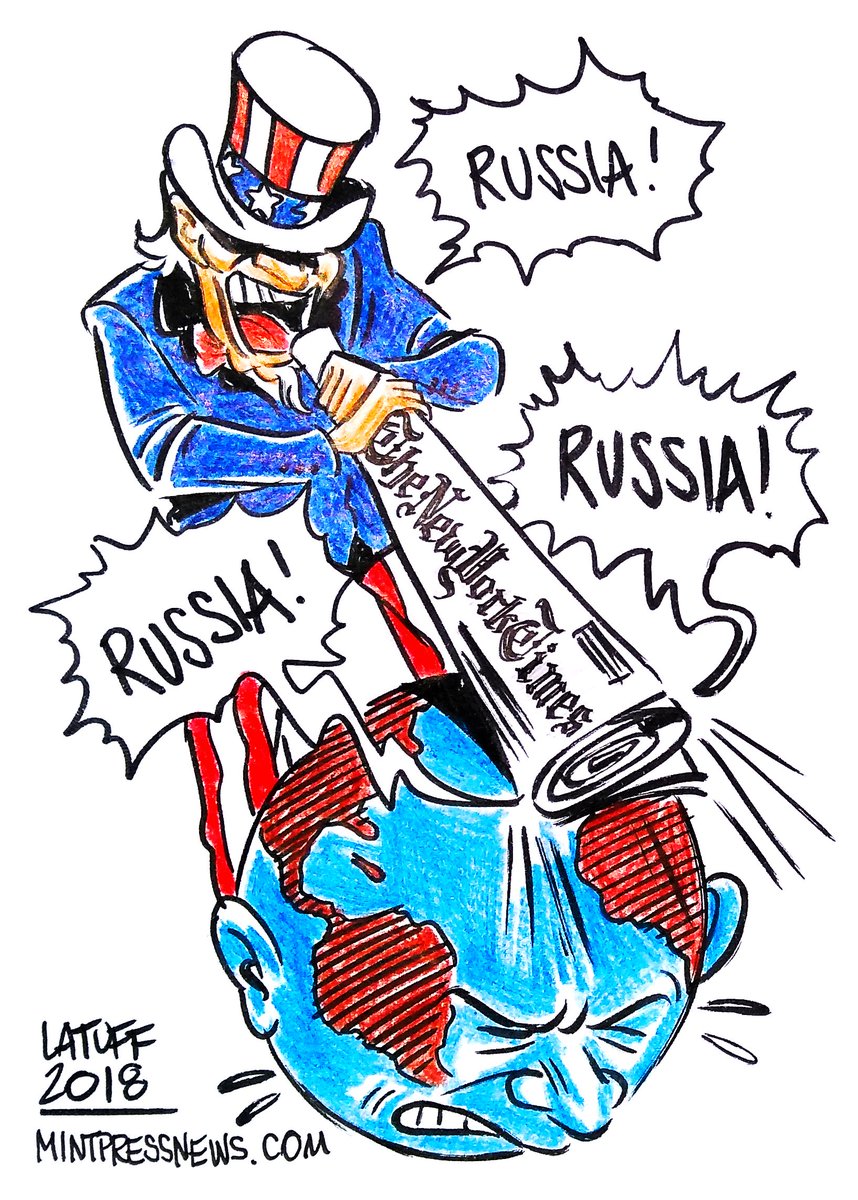
The New York Times, the so-called paper of record, is the biggest promoter of Cold War propaganda and real fake news — a true mouthpiece for the war machine and establishment.
Het is werkelijk ongelofelijk wat je tegenwoordig aan kwalitatief slechte producten kan kopen, producten die binnen de kortste keren kapotgaan, van plastic wasknijpers (na 10 keer gebruiken breken ze eenvoudigweg, dus koop altijd houten knijpers, al is de kwaliteit daarvan ook vaak belabberd) tot internetradio’s en van LED lampen (zoals die van de HEMA, die binnen een half jaar de geest geven en als een ver weg staande witte reus aan de hemel van je kamer hangen >> waar volgens de beschrijving deze lampen 15 jaar blijven branden……) tot tablets (die na drie jaar eenvoudigweg de geest geven) en ga nog maar even door…….
Waarschijnlijk denk je: dan moet je maar kwaliteit kopen! Echter ik kan je verzekeren dat bijvoorbeeld apparaten van Apple niet zelden de geest geven, waar na een langdurige reparatie al evenzeer niet zelden maar weinig van het probleem is opgelost…….. Hetzelfde geldt voor producten van een gerenommeerd merk als Sony……
Groot ongemak voor de consument, die voor kleine zaken de bonnen al niet eens bewaart en die voor grotere zaken zelfs geen proces meer kan aanspannen, als e.e.a. niet naar wens wordt opgelost, daar de kosten hoger zijn dan de aanschafprijs, waar bovenop de het flopkabinet Rutte 3 ook de toegang tot het recht verder heeft beperkt (ook voor ‘de gewone hardwerkende Nederlander….’)…… Een kabinet waar men wat minder de mond vol heeft van het afschaffen van ‘de vermaledijde regeldruk’, maar dat daar wel volkomen achter staat……. Je weet wel regeldruk met o.a. beschermende maatregelen voor de consument en kwaliteitseisen voor diverse producten……
Buiten dat wordt daarmee ook nog eens een enorme hoeveelheid grondstoffen verspild, zoals olie t.b.v. plastics enz….
Kortom: je mag tegenwoordig gewoon belazerd worden door het bedrijfsleven, zonder dat de overheid ingrijpt en waar het klimaat andermaal de sigaar is…….. Inspecties van allerlei zaken zoals de veiligheid van producten zijn tot een onaanvaardbaar minimum teruggebracht, met veel dank aan het CDA, de VVD, D66, PvdA, CU en SGP……….
Het beleid dat hare hufterigheid Herna Verhagen van Post NL voert, leidt er niet alleen toe dat de postbezorging in hoog tempo wordt afgebroken, nu blijkt er ook nog eens een groot tekort te zijn aan de zwaar onderbetaalde postbezorgers…….. Daardoor komt de belofte in gevaar waarin wordt gesteld dat de post de volgende dag wordt bezorgd en zal de post nog verder aan populariteit inboeten……. (voor nog meer feiten die aangeven dat de afbraak van de postmarkt gebeurt door het uitkleden van de service en prijsverhoging op prijsverhoging, zie de links aan het eind van dit bericht)
Gistermorgen kwam e.e.a. in het nieuws. Post NL verwacht nu van de kantoormedewerkers dat zij ook postbezorging voor hun rekening gaan nemen…… ha! ha! ha! ha! ha! ha! ha! Hoorde gisteren tussen de bedrijven door een eikel op Radio1 zeggen, dat dit goed is voor de kantoormedewerkers, daar zij nu ook andere taken leren en dat dit goed is voor de loopbaanontwikkeling….. Beste bezoeker, je kon me wegdragen, ik kwam niet meer bij.
In een normaal bedrijf was Verhagen al 20 keer op straat geschopt, hoe kan je als topgraaier de ene na de andere blunder begaan, hoewel blunders? Het is een weloverwogen beleid om de postmarkt volledig de nek om te draaien, daarom wilde VVD oplichter Kamp niet dat Post NL werd verkocht aan Bpost, immers dat bedrijf weet met innovaties wel de postbezorging redelijk op peil te houden en betaalt haar werknemers een fatsoenlijk salaris, i.t.t. Post NL…… Het is zelfs zo zot dat Bpost een paar jaar geleden oud-postbodes van Post NL ging rekruteren, waarbij hen een fatsoenlijk salaris, huisvesting en mooie arbeidsvoorwaarden werden geboden….
De hoogste tijd dat men een strafrechtelijk onderzoek gaat instellen naar Post NL en Verhagen (en Kamp). Zoals Kamp destijds terecht opmerkte is de postbezorging van vitaal belang. Al helemaal als we in de toekomst met grote stroomstoringen te maken gaan krijgen (die worden al voorspeld door deskundigen), of als de vlam in de pan slaat en we in een oorlog op EU en eigen grondgebied verwikkelt raken…… Kamp noemde deze redenen niet, maar hoe kon hij na z’n uitlatingen dienaangaande gewoon doorgaan met zijn steun voor het de nek omdraaien van de postmarkt???
Overigens zijn er intussen 2 andere aanbieders op de postmarkt, waarvan er één, t.w. Sandd, ook particuliere post gaat bezorgen en dat tegen een aanzienlijk lager tarief! Daarnaast is Post NL in het bezit van netwerk VSP, die ‘reclameliteratuur’ verspreidt, het bedrijf buit de schoolkinderen die dat werk doen nog meer uit dan de postbezorgers….. Terwijl die postbezorgers heel goed deze reclametroep kunnen bezorgen…..
Kortom de postmarkt is nog lang niet dood en Verhagen moet als de sodemieter worden ontslagen!! (en dat zonder enige tegemoetkoming, het misdadige beleid van Verhagen dient op geen manier beloond te worden! Zie voor haar schandalig hoge inkomen de ‘PS’ onderaan dit bericht)
PS: trouwens helemaal niet vreemd dat de postbezorgers het laten afweten, als je ziet hoe schandalig weinig deze mensen verdienen…… (vergelijk dat eens met het onbeschofte bedrag dat Verhagen jaarlijks opstrijkt voor het afbreken van de postmarkt: € 1,4 miljoen….. Schunnig!!)
Karin Michels, directeur van het instituut ter voorkoming van tumoren aan de universiteit van Freiburg en professor aan de Harvard TH Chan School of Public Health, heeft aardig wat deining veroorzaakt met haar uitspraak dat kokosolie puur vergif is.
Volgens Michels verstopt kokosolie de kransslagaders van het hart en leidt het voor bijna alle gebruikers onherroepelijk tot een hartinfarct……… Moet zeggen dat het een wel erg harde uitspraak is en kan niets vinden over vergelijkbare onderzoeken…… Echter een gewaarschuwd mens telt voor twee, zoals het cliché zegt…..
Lullig genoeg wordt kokosolie vaak in diëten gebruikt, klik hier voor de resultaten op Google na invoer van de woorden ‘kokosolie dieet’, op de eerste pagina staat zegge en schrijven één resultaat waarin men zich afvraagt of kokosolie wel zo gezond is, zonder dat daar een negatief antwoord op volgt……
Bpost, het Belgische postbedrijf mocht PostNL niet overnemen, niet vanwege landsbelang maar vanwege het gepland de postmarkt de nek omdraaien, in innige samenwerking van hare kwaadaardigheid Herna Verhagen met VVD topbedrijvenlobbyist Kamp, tot begin 2017 minister van Economische Zaken……..
Aan deze sterfhuisconstructie wordt weer een nieuw hoofdstuk toegevoegd: de Beurs.nl berichtte afgelopen maandag over een nieuwe prijsverhoging die de Autoriteit Consument & Markt (ACM) toestaat, een verhoging met het belachelijk hoge percentage van 14,2%…….. Het is duidelijk dat de ACM er niet is voor de consument, maar voor de postaanbieders en dan m.n. de grootste: Post NL…..
Welk bedrijf dat in zwaar weer zit, zou de tarieven met een dergelijk percentage durven te verhogen? Immers met elke prijsverhoging verlies je (potentiële) klanten, wat met een percentage van meer dan 14% een groot aantal klanten moet zijn……. Hoewel oude mensen die digibeet zijn, niet anders kunnen dan elke prijsverhoging te slikken, ook al hebben ze geen nagels om de bips te krabben (zoals een groot aantal verarmde ouderen)…..
Het is meer dan schandalig dat de postmarkt de nek wordt omgedraaid, waar Verhagen en Kamp eerder met een uitgestreken bek durfden te stellen dat de postmarkt van essentieel belang is voor Nederland…. ha! ha! ha! ha! ha! (deze uitlatingen deden deze 2 oplichters NB toen Bpost Post NL wilde overnemen…..) Het is niet te hopen, maar mocht het nog eens tot een oorlog komen in ons land, zullen we weer afhankelijk zijn van een goed draaiende postbezorging (immers de elektriciteitsproductie is één van de eerste zaken die tijdens een oorlog door een vijand worden aangevallen, waardoor zaken als internet niet meer te gebruiken zijn)
Verhagen rept nimmer met een woord over Netwerk VSP, een volle dochter van Post NL en verantwoordelijk voor reclamedrukwerk, deze lucratieve bezigheid zou direct onder Post NL moeten vallen, daarmee zouden de cijfers van Post NL er veel beter uitzien….. Voor die dienst misbruikt Netwerk VSP (ofwel Post NL) kinderen……
Bovendien, ondanks dat Post NL al jaren klaagt over het teruglopen van de postmarkt, zijn er nu een aantal aanbieders extra werkzaam op de Nederlandse postmarkt, aanbieders als Sandd en Axender, die daar een stevige boterham mee verdienen….. Als ik het goed begrepen heb, zal ook Sandd zich op de gewone postmarkt storten en dat voor Post NL met zwaar concurrerende tarieven….. Sandd wel, Post NL niet……..
Dan de ‘service’ van Post NL: dit bedrijf bezorgd hier nog maar 4 keer in de week post (overeengekomen was 5 dagen) en wil dit aantal dagen nog verder terugbrengen…… De laatste postkantoren zoals die aan het Haagse Kerkplein worden gesloten, zaken die mensen nog verder weg zullen jagen van Post NL, zodat men volgend jaar weer kan klagen dat de postmarkt verder is teruggelopen en de prijzen verder zal verhogen, naast het verder terugbrengen van de service…… (een zich herhalend mechanisme, tot de postmarkt geheel is verdwenen) Ook het aantal brievenbussen wordt steeds verder verminderd…….
De hoogste tijd om de privatisering van de postmarkt eens stevig te onderzoeken, waar men bij Post NL meteen een strafrechtelijk onderzoek kan instellen, niet alleen naar het oplichten van klanten met belachelijke tarieven, maar ook de eerder genoemde verwijdering van meer en meer brievenbussen (waar vooral ouderen die slecht ter been zijn, het slachtoffer van worden), de verkoop van eertijds onze postkantoren (voor privatisatie tegen een godsvermogen aan belastinggeld gerenoveerd en na privatisatie verkocht), postkantoren die in feite letterlijk in bezit waren van de Nederlandse burgers……. Oh ja, kan men ook eens kijken hoe smerig Post NL haar personeel heeft behandeld, behandelt, uitbuit en op straat heeft geschopt, zaken waar de honden geen brood van lusten…….
En de ACM? Opdoeken dit peperdure lobbyorgaan voor bedrijven!!
Hier de 2 artikelen over Post NL die de Beurs.NL afgelopen maandag en gisteren bracht (zie ook de belachelijke prijsverhoging van de postzegel in de afgelopen amper 6 jaar tijd):
PostNL
mag tarieven stevig verhogen
Gepubliceerd
op 30
jul 2018 om 09:24
DEN
HAAG (AFN) – Het versturen van post kan komend jaar flink duurder
worden. PostNL mag de tarieven voor het basispakket aan postdiensten
in 2019 met 14,2 procent opschroeven, maakte de Autoriteit Consument
& Markt (ACM) bekend.
De
relatief hoge maximale stijging is te wijten aan het teruglopende
aantal brieven dat verstuurd wordt. Hoe minder post verstuurd wordt,
des te hoger de tarieven mogen zijn, stelt de ACM.
PostNL
doet op basis van de tariefruimte een eigen voorstel om de tarieven
te verhogen. Dat wordt dan vervolgens door de ACM weer beoordeeld.
De
laatste jaren zijn de postzegelprijzen flink gestegen. Een postzegel
kost momenteel nog 0,83 euro. In 2012 was dat nog 0,50 euro.
‘Tariefverhoging
cruciaal voor PostNL’
Gepubliceerd
op 31
jul 2018 om 09:23| Reacties:
2
AMSTERDAM
(AFN) – Het verhogen van de tarieven voor het versturen van post bij
PostNL is van cruciaal belang voor het bedrijf vanwege de dalende
volumes. Dat schrijft KBC Securities.
De
Autoriteit Consument & Markt (ACM) maakte maandag bekend dat
PostNL de tarieven voor het basispakket aan postdiensten in 2019 met
14,2 procent mag opschroeven. KBC spreekt van een aanzienlijke
verhoging. Naar verwachting zal PostNL in oktober bekendmaken hoe
groot de tariefverhoging zal zijn. PostNL doet op basis van de
tariefruimte een eigen voorstel om de tarieven te verhogen. Dat wordt
dan vervolgens door de ACM weer beoordeeld.
Het
advies voor PostNL staat op buy, met een koersdoel van 4,50 euro. Het
aandeel noteerde dinsdag kort na opening een min van 0,3 procent
lager op 3,39 euro
Regelmatig wordt er als oorzaak voor brand de oplader genoemd. Vanmiddag werd op BBC Scotland (radio rond 12.17 u. CET) de luisteraar gewaarschuwd geen goedkope opladers te kopen, daar deze regelmatig in de fik vliegen……
Onmiddellijk bedacht ik me dat het toch wel bijzonder vreemd is dat er producten verkocht mogen worden, die letterlijk levensgevaarlijk zijn…… Een brand kan niet alleen levens eisen, maar kosten de gemeenschap ook nog eens regelmatig een enorme bak geld, daar mensen niet verzekerd zijn en zelf niet de middelen hebben zich een nieuw interieur aan te schaffen (je kan een gezin met kinderen immers terecht niet in de kou laten staan)…..
Deze zaken in ogenschouw genomen, nogmaals: waarom mogen er levensgevaarlijke producten verkocht worden?? Het zoveelste bewijs dat we politiek al lang niet meer door een volksvertegenwoordiging worden bestuurd, maar door een bedrijvenvertegenwoordiging (ofwel lobbyisten voor het bedrijfsleven) en tja daar gaan de centen nu eenmaal kilometers ver voor op onze veiligheid en op de volksgezondheid!!
In Nederland is één van de verantwoordelijke partijen, het CDA…… Onder de kabinetten Balkenende heeft men de inspecties teruggebracht naar een onverantwoord laag aantal…. Een groot aantal inspecties werd ondergebracht bij de NVWA en dat met een fikse korting op het budget en personeel……. Alles in de strijd tegen de zogenaamde vermaledijde regeldruk, waar politici van deze partij en van de VVD (die zich tegen deze regeldruk verzetten), na het terugbrengen van de inspecties keihard durfden te zeggen, dat veiligheid nu eenmaal lang niet altijd is te geven en deze onder de eigen verantwoordelijkheid van het individu valt…… Je zou dat geteisem strafrechtelijk moeten vervolgen voor alle doden die sindsdien zijn gevallen, door het wegbezuinigen van inspecties……..
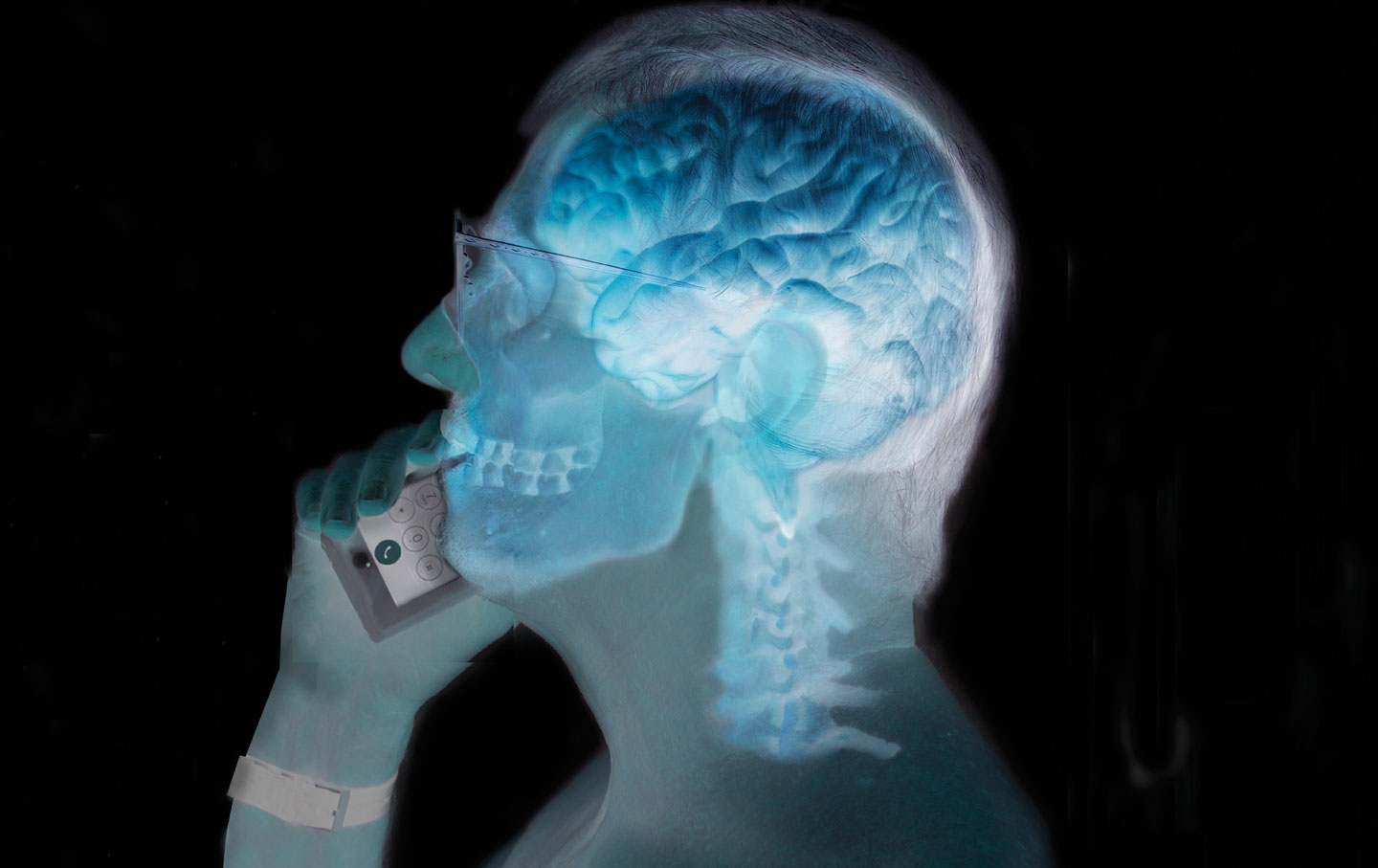
Met het uitrollen van 5G netwerk komt er steeds
meer twijfel aan de veiligheid van de straling voor de hersenen en
raken meer en meer wetenschappers ervan overtuigd dat de straling die
wordt aangewend voor de mobiele telefoon, kankerverwekkend
is, ofwel o.a. hersentumor bevorderend……. Met het 5G netwerk wordt die straling nog gevaarlijker……..
In het hieronder opgenomen artikel
geschreven door Mark Hertsgaard en Mark Dowie en eerder geplaatst op
The Nation (hier de link naar het origineel), wordt aangetoond dat
de fabrikanten van mobiele telefoons en de netwerkbeheerders willens en wetens
wetenschappers betaalden voor hen gunstige uitkomsten uit onderzoek
naar straling van mobile telefoons……. Echter zoals het onderzoek naar het gebruik van tabak en fossiele brandstoffen verging, vonden
een aantal van deze wetenschappers wel degelijk bewijzen voor negatieve beïnvloeding van de hersenen door de straling, overigens kan door diezelfde straling ook het
DNA beschadigd worden……
De Wereldgezondheidsorganisatie (WHO) waarschuwt en stelt dat straling van mobiele telefoons ‘mogelijk’ kankerverwekkend kan zijn……. Zo zie je nog maar eens de werking van lobbyisme in de WHO, de lobby van netwerkbeheerders en fabrikanten van mobiele telefoons…….
In feite zijn een paar miljard mensen alleen door de mobiele telefoon te gebruiken, onderdeel geweest van een gezondheidsonderzoek, daar nooit van te voren een onderzoek werd ingesteld naar negatieve gezondheidseffecten door het gebruik van deze telefoons……..
Lees het volgende ontluisterende
artikel ajb en neem het zekere voor het onzekere: gebruik je telefoon
met ‘oortjes’ en microfoon, dus niet tegen je hoofd en zegt het
voort! (en doe je telefoon niet in je broekzak…)
Let wel deze ‘geschreven video’ is een andere dan de gesproken tekst in de ‘video’ op het origineel
Things
didn’t end well between George Carlo and Tom Wheeler; the last time
the two met face-to-face, Wheeler had security guards escort Carlo
off the premises. As president of the Cellular Telecommunications and
Internet Association (CTIA), Wheeler was the wireless industry’s
point man in Washington. Carlo was the scientist handpicked by
Wheeler to defuse a public-relations crisis that threatened to
strangle his infant industry in its crib. This was back in 1993, when
there were only six cell-phone subscriptions for every 100 adults in
the United States. But industry executives were looking forward to a
booming future.
Remarkably,
cell phones had been allowed onto the US consumer market a decade
earlier without any government safety testing. Now, some customers
and industry workers were being diagnosed with cancer. In January
1993, David
Reynard sued the NEC America Company,
claiming that his wife’s NEC phone caused her lethal brain tumor.
After Reynard appeared on national TV, the story went viral. A
congressional subcommittee announced an investigation; investors
began dumping their cell-phone stocks; and Wheeler and the CTIA swung
into action.
A
week later, Wheeler announced that his industry would pay for a
comprehensive research program. Cell phones were already safe,
Wheeler told reporters; the new research would simply “re-validate
the findings of the existing studies.”
George
Carlo seemed like a good bet to fulfill Wheeler’s mission. He was
an epidemiologist who also had a law degree, and he’d conducted
studies for other controversial industries. After a study funded by
Dow Corning, Carlo had declared that breast implants posed only
minimal health risks. With chemical-industry funding, he had
concluded that low levels of dioxin, the chemical behind the Agent
Orange scandal, were not dangerous. In 1995, Carlo began directing
the industry-financed Wireless Technology Research project (WTR),
whose eventual budget of $28.5 million made it the best-funded
investigation of cell-phone safety to date.
Outside
critics soon came to suspect that Carlo would be the front man for an
industry whitewash. They cited his dispute
with Henry Lai,
a professor of biochemistry at the University of Washington, over a
study that Lai had conducted examining whether cell-phone radiation
could damage DNA. In 1999, Carlo and the WTR’s general counsel sent
a letter to the university’s president urging that Lai be fired for
his alleged violation of research protocols. Lai accused the WTR of
tampering with his experiment’s results. Both Carlo and Lai deny
the other’s accusations.
Critics
also attacked what they regarded as the slow pace of WTR research.
The WTR was merely “a confidence game” designed to placate the
public but stall real research, according to
Louis Slesin, editor of the trade publication Microwave
News.
“By dangling a huge amount of money in front of the cash-starved
[scientific] community,” Slesin argued, “Carlo guaranteed silent
obedience. Anyone who dared complain risked being cut off from his
millions.” Carlo denies the allegation.
Whatever
Carlo’s motives might have been, the documented fact is that he and
Wheeler would eventually clash bitterly over the WTR’s findings,
which Carlo presented to wireless-industry leaders on February 9,
1999. By that date, the WTR had commissioned more than 50 original
studies and reviewed many more. Those studies raised “serious
questions” about cell-phone safety, Carlo told a closed-door
meeting of the CTIA’s board of directors, whose members included
the CEOs or top officials of the industry’s 32 leading companies,
including Apple, AT&T, and Motorola.
Carlo
sent letters to each of the industry’s chieftains on October 7,
1999, reiterating that the WTR’s research had found the following:
“The risk of rare neuro-epithelial tumors on the outside of the
brain was more than doubled…in cell phone users”; there was an
apparent “correlation between brain tumors occurring on the right
side of the head and the use of the phone on the right side of the
head”; and “the ability of radiation from a phone’s antenna to
cause functional genetic damage [was] definitely positive….”
Carlo
urged the CEOs to do the right thing: give consumers “the
information they need to make an informed judgment about how much of
this unknown risk they wish to assume,” especially since some in
the industry had “repeatedly and falsely claimed that wireless
phones are safe for all consumers including children.”
The
World Health Organization classifies cell-phone radiation as a
“possible” carcinogen.
The
very next day, a livid Tom Wheeler began publicly trashing Carlo to
the media. In a letter he shared with the CEOs, Wheeler told Carlo
that the CTIA was “certain that you have never provided CTIA with
the studies you mention”—an apparent effort to shield the
industry from liability in the lawsuits that had led to Carlo’s
hiring in the first place. Wheeler charged further that the studies
had not been published in peer-reviewed journals, casting doubt on
their validity.
Wheeler’s
tactics succeeded in dousing the controversy. Although Carlo had in
fact repeatedly briefed Wheeler and other senior industry officials
on the studies, which had indeed undergone peer review and would soon
be published, reporters on the technology beat accepted Wheeler’s
discrediting of Carlo and the WTR’s findings. (Wheeler would go on
to chair the Federal Communications Commission, which regulates the
wireless industry. He agreed to an interview for this article but
then put all of his remarks off the record, with one exception: his
statement that he has always taken scientific
guidance from the US Food and Drug Administration (FDA), ‘which, he said, “has concluded, ‘the weight of scientific
evidence had not linked cell phones with any health problems.’”)
Why,
after such acrimony, Carlo was allowed to make one last appearance
before the CTIA board is a mystery. Whatever the reason, Carlo flew
to New Orleans in February 2000 for the wireless industry’s annual
conference, where he submitted the WTR’s
final report to
the CTIA board. According to Carlo, Wheeler made sure that none of
the hundreds of journalists covering the event could get anywhere
near him.
When
Carlo arrived, he was met by two seriously muscled men in plain
clothes; the larger of the two let drop that he had recently left the
Secret Service. The security men steered Carlo into a holding room,
where they insisted he remain until his presentation. When summoned,
Carlo found roughly 70 of the industry’s top executives waiting for
him in silence. Carlo had spoken a mere 10 minutes when Wheeler
abruptly stood, extended a hand, and said, “Thank you, George.”
The two muscle men then ushered the scientist to a curbside taxi and
waited until it pulled away.
In
the years to come, the WTR’s cautionary findings would be
replicated by numerous other scientists in the United States and
around the world, leading the World Health Organization in 2011 to
classify cell-phone radiation as a “possible” human carcinogen
and the governments of Great Britain, France, and Israel to issue
strong warnings on cell-phone use by children. But as the taxi
carried Carlo to Louis Armstrong International Airport, the scientist
wondered whether his relationship with the industry might have turned
out differently if cell phones had been safety-tested before being
allowed onto the consumer market, before profit took precedence over
science. But it was too late: Wheeler and his fellow executives had
made it clear, Carlo told The
Nation,
that “they would do what they had to do to protect their industry,
but they were not of a mind to protect consumers or public health.”
This
article does not argue that cell phones and other wireless
technologies are necessarily dangerous; that is a matter for
scientists to decide. Rather, the focus here is on the global
industry behind cell phones—and the industry’s long campaign to
make people believe that cell phones are safe.
As
happened earlier with Big Tobacco and Big Oil, the wireless
industry’s own scientists privately warned about the risks.
That
campaign has plainly been a success: 95 out of every 100 adult
Americans now own a cell phone; globally, three out of four adults
have cell-phone access, with sales increasing every year. The
wireless industry is now one of the fastest-growing on Earth and one
of the biggest, boasting annual sales of $440 billion in 2016.
Carlo’s
story underscores the need for caution, however, particularly since
it evokes eerie parallels with two of the most notorious cases of
corporate deception on record: the campaigns by the tobacco and
fossil-fuel industries to obscure the dangers of smoking and climate
change, respectively. Just as tobacco executives were privately told
by their own scientists (in the 1960s) that smoking was deadly, and
fossil-fuel executives were privately told by their own scientists
(in the 1980s) that burning oil, gas, and coal would cause a
“catastrophic” temperature rise, so Carlo’s testimony reveals
that wireless executives were privately told by their own scientists
(in the 1990s) that cell phones could cause cancer and genetic
damage.
Carlo’s
October 7, 1999, letters to wireless-industry CEOs are the
smoking-gun equivalent of the
November 12, 1982, memo that
M.B. Glaser, Exxon’s manager of environmental-affairs programs,
sent to company executives explaining that burning oil, gas, and coal
could raise global temperatures by a destabilizing 3 degrees Celsius
by 2100. For the tobacco industry, Carlo’s letters are akin to the
1969 proposal that
a Brown & Williamson executive wrote for countering anti-tobacco
advocates. “Doubt is our product,” the memo declared. “It is
also the means of establishing a controversy…at the public level.”
Like
their tobacco and fossil-fuel brethren, wireless executives have
chosen not to publicize what their own scientists have said about the
risks of their products. On the contrary, the industry—in America,
Europe, and Asia—has spent untold millions of dollars in the past
25 years proclaiming that science is on its side, that the critics
are quacks, and that consumers have nothing to fear. This, even as
the industry has worked behind the scenes—again like its Big
Tobacco counterpart—to deliberately addict its customers. Just as
cigarette companies added nicotine to hook smokers, so have wireless
companies designed cell phones to deliver a jolt of dopamine with
each swipe of the screen.
This Nation investigation
reveals that the wireless industry not only made the same moral
choices that the tobacco and fossil-fuel industries did; it also
borrowed from the same public-relations playbook those industries
pioneered. The playbook’s key insight is that an industry doesn’t
have to win the scientific argument about safety; it only has to keep
the argument going. That amounts to a win for the industry, because
the apparent lack of certainty helps to reassure customers, even as
it fends off government regulations and lawsuits that might pinch
profits.
Central
to keeping the scientific argument going is making it appear that not
all scientists agree. Again like the tobacco and fossil-fuel
industries, the wireless industry has “war gamed” science, as a
Motorola internal memo in 1994 phrased
it. War-gaming science involves playing offense as well as defense:
funding studies friendly to the industry while attacking studies that
raise questions; placing industry-friendly experts on advisory bodies
like the World Health Organization; and seeking to discredit
scientists whose views depart from the industry’s.
Funding
friendly research has perhaps been the most important component of
this strategy, because it conveys the impression that the scientific
community truly is divided. Thus, when studies have linked wireless
radiation to cancer or genetic damage—as Carlo’s WTR did in 1999;
as the WHO’s
Interphone study did in 2010;
and as the
US National Toxicology Program did in 2016—industry
spokespeople can point out, accurately, that other studies disagree.
“[T]he overall balance of the evidence” gives no cause for alarm,
asserted Jack Rowley, research and sustainability director for the
Groupe Special Mobile Association (GSMA), Europe’s wireless trade
association, speaking
to reporters about the WHO’s findings.
A
closer look reveals the industry’s sleight of hand. When Henry Lai,
the professor whom Carlo tried to get fired, analyzed 326
safety-related studies completed between 1990 and 2005, he learned
that 56 percent found a biological effect from cell-phone radiation
and 44 percent did not; the scientific community apparently was
split. But when Lai recategorized the studies according to their
funding sources, a different picture emerged: 67 percent of the
independently funded studies found a biological effect, while a mere
28 percent of the industry-funded studies did. Lai’s findings were
replicated by a
2007 analysis in Environmental
Health Perspectives that
concluded industry-funded studies were two and a half times less
likely than independent studies to find a health effect.
One
key player has not been swayed by all this wireless-friendly
research: the insurance industry. The
Nation has
not been able to find a single insurance company willing to sell a
product-liability policy that covered cell-phone radiation. “Why
would we want to do that?” one executive chuckled before pointing
to more than two dozen lawsuits outstanding against wireless
companies, demanding a total of $1.9 billion in damages. Some judges
have affirmed such lawsuits, including a judge
in Italy who refused to allow industry-funded research as evidence.
Even
so, the industry’s neutralizing of the safety issue has opened the
door to the biggest, most hazardous prize of all: the proposed
revolutionary transformation of society dubbed the “Internet of
Things.” Lauded as a gigantic engine of economic growth, the
Internet of Things will not only connect people through their
smartphones and computers but will connect those devices to a
customer’s vehicles and home appliances, even their baby’s
diapers—all at speeds faster than can currently be achieved.
Billions
of cell-phone users have been subjected to a public-health experiment
without informed consent.
There
is a catch, though: The Internet of Things will require augmenting
today’s 4G technology with 5G, thus “massively increasing” the
general population’s exposure to radiation, according to a
petition signed by 236 scientists worldwide who
have published more than 2,000 peer-reviewed studies and represent “a
significant portion of the credentialed scientists in the radiation
research field,” according to Joel Moskowitz, the director of the
Center for Family and Community Health at the University of
California, Berkeley, who helped circulate the petition.
Nevertheless, like cell phones, 5G technology is on the verge of
being introduced without pre-market safety testing.
Lack
of definitive proof that a technology is harmful does not mean the
technology is safe, yet the wireless industry has succeeded in
selling this logical fallacy to the world. In truth, the safety of
wireless technology has been an unsettled question since the
industry’s earliest days. The upshot is that, over the past 30
years, billions of people around the world have been subjected to a
massive public-health experiment: Use a cell phone today, find out
later if it causes cancer or genetic damage. Meanwhile, the wireless
industry has obstructed a full and fair understanding of the current
science, aided by government agencies that have prioritized
commercial interests over human health and news organizations that
have failed to inform the public about what the scientific community
really thinks. In other words, this public-health experiment has been
conducted without the informed consent of its subjects, even as the
industry keeps its thumb on the scale.
“The
absence of absolute proof does not mean the absence of risk,” Annie
Sasco, the former director of epidemiology for cancer prevention at
France’s National Institute of Health and Medical Research, told
the attendees of the 2012 Childhood Cancer conference. “The younger
one starts using cell phones, the higher the risk,” Sasco
continued, urging a public-education effort to inform parents,
politicians, and the press about children’s exceptional
susceptibility.
For
adults and children alike, the process by which wireless radiation
may cause cancer remains uncertain, but it is thought to be indirect.
Wireless radiation has been shown
to damage the blood-brain barrier,
a vital defense mechanism that shields the brain from carcinogenic
chemicals elsewhere in the body (resulting, for example, from
secondhand cigarette smoke). Wireless radiation has also been shown
to interfere
with DNA replication,
a proven progenitor of cancer. In each of these cases, the risks are
higher for children: Their skulls, being smaller, absorb more
radiation than adults’ skulls do, while children’s longer life
span increases their cumulative exposure.
The
wireless industry has sought to downplay concerns about cell phones’
safety, and the Federal Communications Commission has followed its
example. In 1996, the FCC established cell-phone safety levels based
on “specific absorption rate,” or SAR. Phones were required to
have a SAR of 1.6 watts or less per kilogram of body weight. In
2013, the
American Academy of Pediatrics advised the FCC that
its guidelines “do not account for the unique vulnerability and use
patterns specific to pregnant women and children.” Nevertheless,
the FCC has declined to update its standards.
The
FCC has granted the industry’s wishes so often that it qualifies as
a “captured agency,” argued journalist Norm Alster in a
report that
Harvard University’s Edmond J. Safra Center for Ethics published in
2015. The FCC allows cell-phone manufacturers to self-report SAR
levels, and does not independently test industry claims or require
manufacturers to display the SAR level on a phone’s packaging.
“Industry controls the FCC through a soup-to-nuts stranglehold that
extends from its well-placed campaign spending in Congress through
its control of the FCC’s congressional oversight committees to its
persistent agency lobbying,” Alster wrote. He also quoted the CTIA
website praising the FCC for “its light regulatory touch.”
The
revolving-door syndrome that characterizes so many industries and
federal agencies reinforces the close relationship between the
wireless industry and the FCC. Just as Tom Wheeler went from running
the CTIA (1992– 2004) to chairing the FCC (2013–2017), Meredith
Atwell Baker went from FCC commissioner (2009–2011) to the
presidency of the CTIA (2014 through today). To ensure its access on
Capitol Hill, the wireless industry made $26 million in campaign
contributions in 2016, according
to the Center for Responsive Politics,
and spent $87 million on lobbying in 2017.
Neutralizing
the safety issue has been an ongoing imperative because the research
keeps coming, much of it from outside the United States. But the
industry’s European and Asian branches have, like their US
counterpart, zealously war-gamed the science, spun the news coverage,
and thereby warped the public perception of their products’ safety.
The
WHO began to study the health effects of electric- and magnetic-field
radiation (EMF) in 1996 under the direction of Michael Repacholi, an
Australian biophysicist. Although
Repacholi
claimed on disclosure forms that he was “independent” of
corporate influence, in fact Motorola had funded his research: While
Repacholi was director of the WHO’s EMF program, Motorola paid
$50,000 a year to his former employer, the Royal Adelaide Hospital,
which then transferred the money to the WHO program. When journalists
exposed the payments, Repacholi denied that
there was anything untoward about them because Motorola had not paid
him personally. Eventually, Motorola’s payments were bundled with
other industry contributions and funneled through the Mobile and
Wireless Forum, a trade association that gave the WHO’s program
$150,000 annually. In 1999, Repacholi helped engineer a WHO statement
that “EMF exposures below the limits recommended in international
guidelines do not appear to have any known consequence on health.”
Two
wireless trade associations contributed $4.7 million to the
Interphone study launched
by the WHO’s International Agency for Cancer Research in 2000. That
$4.7 million represented 20 percent of the $24 million budget for the
Interphone study, which convened 21 scientists from 13 countries to
explore possible links between cell phones and two common types of
brain tumor: glioma and meningioma. The money was channeled through a
“firewall” mechanism intended to prevent corporate influence on
the IACR’s findings, but whether such firewalls work is debatable.
“Industry sponsors know [which scientists] receive funding;
sponsored scientists know who provides funding,” Dariusz
Leszczynski, an adjunct professor of biochemistry at the University
of Helsinki, has explained.
The
FCC grants the wireless industry’s wishes so often that it
qualifies as a “captured agency.”
To
be sure, the industry could not have been pleased with some of
the Interphone
study’s conclusions.
The study found that the heaviest cell-phone users were 80
percent more likely to develop glioma.
(The initial finding of 40 percent was increased to 80 to correct for
selection bias.) The Interphone study also concluded that individuals
who had owned a cell phone for 10 years or longer saw their risk of
glioma increase by nearly 120 percent.
However,
the study did not find any increased risk for individuals who used
their cell phones less frequently; nor was there evidence of any
connection with meningioma.
When
the Interphone conclusions were released in 2010, industry
spokespeople blunted their impact by deploying what experts on lying
call “creative truth-telling.” “Interphone’s conclusion of no
overall increased risk of brain cancer is consistent with conclusions
reached in an already large body of scientific research on this
subject,” John Walls, the vice president for public affairs at the
CTIA, told
reporters.
The wiggle word here is “overall”: Since some of the Interphone
studies did not find increased brain-cancer rates, stipulating
“overall” allowed Walls to ignore those that did. The misleading
spin confused enough news organizations that their coverage of the
Interphone study was essentially reassuring to the industry’s
customers. The
Wall Street Journal announced
“Cell Phone Study Sends Fuzzy Signal on Cancer Risk,” while the
BBC’s headline declared: “No Proof of Mobile Cancer Risk.”
The
industry’s $4.7 million contribution to the WHO appears to have had
its most telling effect in May 2011, when the WHO convened scientists
in Lyon, France, to discuss how to classify the cancer risk posed by
cell phones. The industry not only secured “observer” status at
Lyon for three of its trade associations; it placed two
industry-funded experts on the working group that would debate the
classification, as well as additional experts among the “invited
specialists” who advised the group.
Niels
Kuster, a Swiss engineer, initially filed a conflict-of-interest
statement affirming only that his research group had taken money from
“various governments, scientific institutions and corporations.”
But after Kuster co-authored a summary of the WHO’s findings in The
Lancet Oncology,
the medical journal issued
a correction expanding
on Kuster’s conflict-of-interest statement, noting payments from
the Mobile Manufacturers Forum, Motorola, Ericsson, Nokia, Samsung,
Sony, GSMA, and Deutsche Telekom. Nevertheless, Kuster participated
in the entire 10 days of deliberations.
The
industry also mounted a campaign to discredit Lennart Hardell, a
Swedish professor of oncology serving on the working group. Hardell’s
studies,
which found an increase in gliomas and acoustic neuromas in long-term
cell-phone users, were some of the strongest evidence that the group
was considering.
Hardell
had already attracted the industry’s displeasure back in 2002, when
he began arguing that children shouldn’t use cell phones. Two
scientists with industry ties quickly published
a report with
the Swedish Radiation Authority dismissing Hardell’s research. His
detractors were John D. Boice and Joseph K. McLaughlin of the
International Epidemiology Institute, a company that provided
“Litigation Support” and “Corporate Counseling” to various
industries, according
to its website.
Indeed, at the very time Boice and McLaughlin were denigrating
Hardell’s work, the institute was providing expert-witness services
to Motorola in a brain-tumor lawsuit against the company.
The
wireless industry didn’t get the outcome that it wanted at Lyon,
but it did limit the damage. A number of the working group’s
scientists had favored increasing the classification of cell phones
to Category 2A, a “probable” carcinogen; but in
the end, the group could only agree on
an increase to 2B, a “possible” carcinogen.
That
result enabled the industry to continue proclaiming that there was no
scientifically established proof that cell phones are dangerous. Jack
Rowley of the GSMA trade association said that “interpretation
should be based on the overall balance of the evidence.” Once
again, the slippery word “overall” downplayed the significance of
scientific research that the industry didn’t like.
Industry-funded
scientists had been pressuring their colleagues for a decade by then,
according to Leszczynski, another member of the Lyon working group.
Leszczynski was an assistant professor at Harvard Medical School when
he first experienced such pressure, in 1999. He had wanted to
investigate the effects of radiation levels higher than the SAR
levels permitted by government, hypothesizing that this might better
conform to real-world practices. But when he proposed the idea at
scientific meetings, Leszczynski
said,
it was shouted down by Mays Swicord, Joe Elder, and C.K.
Chou—scientists who worked for Motorola. As Leszczynski recalled,
“It was a normal occurrence at scientific meetings—and I attended
really a lot of them—that whenever [a] scientist reported
biological effects at SAR over [government-approved levels], the
above-mentioned industry scientists, singularly or as a group, jumped
up to the microphone to condemn and to discredit the results.”
Years
later, a
study that
Leszczynski described as a “game changer” discovered that even
phones meeting government standards, which in Europe were a SAR of
2.0 watts per kilogram, could deliver exponentially higher peak
radiation levels to certain skin and blood cells. (SAR levels reached
a staggering 40 watts per kilogram—20 times higher than officially
permitted.) In other words, the official safety levels masked
dramatically higher exposures in hot spots, but industry-funded
scientists obstructed research on the health impacts.
“Everyone
knows that if your research results show that radiation has effects,
the funding flow dries up.” —Dariusz Leszczynski, adjunct
professor of biochemistry at the University of Helsinki
“Everyone
knows that if your research results show that radiation has effects,
the funding flow dries up,” Leszczynski said in an interview in
2011. Sure enough, the Radiation and Nuclear Safety Authority of
Finland, where Leszczynski had a long career, discontinued research
on the biological effects of cell phones and discharged him a year
later.
According
to scientists involved in the process, the WHO may decide later this
year to reconsider its categorization of the cancer risk posed by
cell phones; the WHO itself told The
Nation that
before making any such decision, it will review the final report of
the National Toxicology Program, a US government initiative.
The results
reported by the NTP in
2016 seem to strengthen the case for increasing the assessment of
cell-phone radiation to a “probable” or even a “known”
carcinogen. Whereas the WHO’s Interphone study compared the
cell-phone usage of people who had contracted cancer with that of
people who hadn’t, the NTP study exposed rats and mice to
cell-phone radiation and observed whether the animals got sick.
“There
is a carcinogenic effect,” announced Ron Melnick, the designer of
the study. Male rats exposed to cell-phone radiation developed cancer
at a substantially higher rate, though the same effect was not seen
in female rats. Rats exposed to radiation also had lower birth rates,
higher infant mortality, and more heart problems than those in the
control group. The cancer effect occurred in only a small percentage
of the rats, but that small percentage could translate into a massive
amount of human cancers. “Given the extremely large number of
people who use wireless communications devices, even a very small
increase in the incidence of disease…could have broad implications
for public health,” the NTP’s draft report explained.
The
NTP study was to be peer-reviewed at a meeting on March 26–28, amid
signs that the program’s leadership is pivoting to downplay its
findings. The NTP had issued a public-health warning when the study’s
early results were released in 2016. But when the NTP released
essentially the same data in February 2018, John Bucher, the senior
scientist who directed the study, announced in a telephone press
conference that “I don’t think this is a high-risk situation at
all,” partly because the study had exposed the rats and mice to
higher levels of radiation than a typical cell-phone user
experienced.
Microwave
News’s
Slesin speculated
on potential explanations for
the NTP’s apparent backtracking: new leadership within the program,
where a former drug-company executive, Brian Berridge, now runs the
day-to-day operations; pressure from business-friendly Republicans on
Capitol Hill and from the US military, whose weapons systems rely on
wireless radiation; and the anti-science ideology of the Trump White
House. The question now: Will the scientists doing the peer review
endorse the NTP’s newly ambivalent perspective, or challenge it?
The
scientific evidence that cell phones and wireless technologies in
general can cause cancer and genetic damage is not definitive, but it
is abundant and has been increasing over time. Contrary to the
impression that most news coverage has given the public, 90 percent
of the 200 existing studies included in the National Institutes of
Health’s PubMed database on the oxidative effects of wireless
radiation—its tendency to cause cells to shed electrons, which can
lead to cancer and other diseases—have found a significant impact,
according to a survey of the scientific literature conducted by Henry
Lai. Seventy-two percent of neurological studies and 64 percent of
DNA studies have also found effects.
The
wireless industry’s determination to bring about the Internet of
Things, despite the massive increase in radiation exposure this would
unleash, raises the stakes exponentially. Because 5G radiation can
only travel short distances, antennas roughly the size of a pizza box
will have to be installed approximately every 250 feet to ensure
connectivity. “Industry is going to need hundreds of thousands,
maybe millions, of new antenna sites in the United States alone,”
said Moskowitz, the UC Berkeley researcher. “So people will be
bathed in a smog of radiation 24/7.”
There
is an alternative approach, rooted in what some scientists and
ethicists call the “precautionary principle,” which holds that
society doesn’t need absolute proof of hazard to place limits on a
given technology. If the evidence is sufficiently solid and the risks
sufficiently great, the precautionary principle calls for delaying
the deployment of that technology until further research clarifies
its impacts. The scientists’
petition discussed
earlier urges government regulators to apply the precautionary
principle to 5G technology. Current safety guidelines “protect
industry—not health,” contends the petition, which “recommend[s]
a moratorium on the roll-out of [5G]…until potential hazards for
human health and the environment have been fully investigated by
scientists independent from industry.”
No scientist can say with
certainty how many wireless-technology users are likely to contract
cancer, but that is precisely the point: We simply don’t know.
Nevertheless, we are proceeding as if we do know the risk, and that
the risk is vanishingly small. Meanwhile, more and more people around
the world, including countless children and adolescents, are getting
addicted to cell phones every day, and the shift to radiation-heavy
5G technology is regarded as a fait accompli. Which is just how Big
Wireless likes it.
Mark
HertsgaardTWITTERMark
Hertsgaard, The
Nation’s
environment correspondent and investigative editor, is the author of
seven books, including HOT:
Living Through the Next Fifty Years on Earth .
To
submit a correction for our consideration, click here.
===============================
Ach, de normale gang van zaken: geld verdienen gaat in de inhumane neoliberale maatschappij ver voor op de volksgezondheid………… (al moet gezegd worden dat deze gang van zaken zo oud is als de weg naar Rome….)
DeBeurs.nl bracht vanmorgen het bericht dat pensioenfondsen, verzekeraars en vermogensbeheerders een eigen gedragscode hebben opgesteld.
De aangeduide financiële organisaties zijn aangesloten bij Eumedion, het gaat hier om 65 Nederlandse en internationale institutionele beleggers, zoals pensioenfonds ABP, NN Investment Partners en Robeco. Samen hebben zij in totaal meer dan 5.000 miljard euro aan belegd vermogen onder beheer……..
De code die op 1 januari 2019 in werking treedt en is bedoeld om verantwoording af te leggen aan hun deelnemers en klanten over de wijze waarop zij als belegger invulling geven aan hun aandeelhoudersrechten en om waardecreatie te bevorderen van aan de beurs genoteerde ondernemingen…….. (bijvoorbeeld door te zeggen dat men weliswaar belegt in een fout bedrijf, maar dat je dit beter kan aanpakken als belegger, dan de aandelen uit zo’n onderneming te verkopen >> zo kan men bijvoorbeeld ‘verantwoord’ blijven beleggen in de oorlogsindustrie…….)
Daarnaast kan met deze code het door ons gespaarde pensioengeld nog meer vergokt worden aan de beurs, i.p.v. het ontwikkelen van grote projecten als woningbouw…… Om ons dit door de strot te duwen worden de fondsen op de hoogte gehouden over de voortgang en de waarde van de beleggingen. Uiteraard is dit een code die vooral voor beleggers van belang is, maar niet voor de gewone man/vrouw die spaart voor de oude dag…….. Vergeet niet dat pensioensparen ooit bedoeld was om te zorgen dat mensen aan het eind van hun loopbaan nog enigszins konden rondkomen en niet al het geld was opgemaakt (zoals nu bij het gros van de zzp’ers gebeurt…)
Uiteraard zouden deze beleggers onder controle van de staat moeten vallen en niet onder controle van een door de deelnemers opgericht platform……
Nogmaals en met andere woorden: met deze code zouden bedrijven beter aan ‘corporate governance’ (ofwel behoorlijk ondernemersbestuur) en duurzaamheid kunnen doen, daar de aangesloten beleggers samen een grotere vuist kunnen maken….. Alsof die institutionele beleggers nooit begrepen hebben dat ze niet moeten investeren in zaken als oorlogsvoering en de intensieve martelveehouderij….. Met deze code kan men in feite gewoon doorgaan op de oude voet…..
Te vrezen valt dat men de regels nog verder zal oprekken, immers er zijn nu al ‘wetenschappelijke plorken’ die durven te beweren dat dieren houden in een megastal veelal op een duurzame manier gebeurt………
Kortom een nieuwe wassen neus om de overheid en bijvoorbeeld milieuactivisten buiten de deur te houden………. Wassen neuzen die we al hadden zoals in de vorm van ‘maatschappelijk verantwoord ondernemen…’ (waar bijvoorbeeld oerwoudsloper Unilever zich dit etiket al eens opplakte)
Hier nog even het artikel van DeBeurs.nl:
Grote
beleggers komen met eigen gedragscode
Gepubliceerd
op 3 jul 2018 om 09:20
AMSTERDAM
(AFN) – Pensioenfondsen, verzekeraars en vermogensbeheerders hebben
een eigen gedragscode opgesteld. De deelnemers van
beleggersorganisatie Eumedion onderschrijven daarmee het toenemende
belang van betrokken en verantwoord aandeelhouderschap.
Bij
Eumedion zijn 65 Nederlandse en buitenlandse institutionele beleggers
aangesloten, waaronder Nederlands grootste pensioenfonds ABP, NN
Investment Partners en Robeco. Samen hebben ze in totaal meer dan
5000 miljard euro aan belegd vermogen onder beheer.
De
code treedt op 1 januari volgend jaar in werking en is door de
opstellers tevens bedoeld om verantwoording af te leggen aan hun
deelnemers en klanten over de wijze waarop zij als belegger invulling
geven aan hun aandeelhoudersrechten en op de lange termijn
waardecreatie van beursondernemingen bevorderen.
Ook
verlangt de code van institutionele beleggers de bereidheid om,
eventueel samen met andere institutionele beleggers, een
constructieve dialoog aan te gaan met de Nederlandse
beursondernemingen en met andere belanghebbenden.