ABP verliest 15% van de dekkingsgraad voor pensioenen dankzij de Coronacrisis

Afgelopen dinsdag op BNR rond 7.50 u. het bericht dat het ABP een enorm bedrag is kwijtgeraakt op de beurs….. De dekkingsgraad van dit pensioenfonds is gezakt van 97% naar 82% en dat in een aantal weken…… 

Nog in januari liet het ABP onder leeghoofd en bestuursvoorzitter Wortmann (CDA) weten dat er geen noodzaak was om de premie te verhogen….. Dat zou prima geweest zijn als het ABP sterk had beknot op het gokken met aandelen, echter door toestemming van Rutte 3 heeft het pensioenfonds (en andere pensioenfondsen) nog meer ingezet op aandelen ‘zekerheid…’ (‘niet zelden’ een contradictio in terminis, zeker als het om pensioenfondsen gaat, althans als je het woord ‘zekerheid’ serieus neemt…..)

Door de Coronacrisis zijn de aandelenbeurzen fiks gekelderd en hebben de pensioenfondsen enorme kapitalen verloren….

D66 plork Koolmees heeft de pensioenfondsen toestemming gegeven nog een jaar lang niet te korten op de pensioenuitkeringen, echter de werkelijkheid heeft deze zakkenwasser ingehaald, ook Koolmees was voor het sterk vergroten van ‘investeringen in aandelen…..’

Onbegrijpelijk dat men zo omgaat met de spaarpot waar velen hun leven lang voor hebben gewerkt….. Vergeet daarnaast niet dat de VVD, PvdA, CDA en D66 de grote diefstal uit de pensioenpot van het ABP goedkeurden onder het eerste kabinet Kok in de 90er jaren (Kok is de schofterige exorbitante zelfverrijker van de PvdA…)….. Ook onder de CDA kabinetten Lubbers werd er fikse gegraaid uit de door ambtenaren gespaarde gelden, in totaal ging het om bijna 40 miljard gulden…… Zie ook de video uit dat artikel:

De hoogste tijd dat men de bezem haalt door alle pensioenfondsen en politiek benoemde nitwits als Wortmann met een ferme schop onder de vieze bips op straat doet belanden, uiteraard zonder enige uitkering!! Tijd voor echte deskundigen die de pensioenfondsen gaan leiden en nog maar een klein deel van de gelden mogen gebruiken voor het gokken met aandelen en dat alleen op echt duurzame fondsen….. 

Je kan  er overigens donder op zeggen dat wanneer de financiële crisis die door de Coronacrisis wordt veroorzaakt zich in een dieper gat zal bevinden dan de laatste financiële crises, zoals die van 2008, ook de pensioenen zullen worden aangesproken voor het herstellen van de economie, de kans dat gepensioneerden in de nabije toekomst fiks zullen worden gekort is dan ook vrijwel zeker…… 

Anders gezegd: de gepensioneerden zijn weer in het pak genaaid door een stel onverantwoorde sukkels en schoften!! Tuig dat niet alleen speelt met de gespaarde pensioenen van de nu gepensioneerden, maar ook met die van de toekomstige gepensioneerden…… Daarbij zetten de ploertige politici van genoemde partijen deze groepen zelfs tegen elkaar op, als zouden de huidige gepensioneerden uitvreters zijn die het al veel te goed hebben, terwijl een groot deel van hen na de oorlog keihard heeft moeten werken tegen een hongerloon en velen van hen ronduit in armoede leven…… 

Velen van hen begonnen pas eind 60er jaren van de vorige eeuw wat beter te verdienen, echter bij lange na niet tegen de salarissen die nu betaald worden, vergeet daarbij niet dat velen van hen zelfs de lagere school nooit hebben mogen afmaken, daar er geld binnen moest komen…… Kinderarbeid was in de 20er, 30er en 40er jaren van de vorige eeuw dan ook nog heel normaal, ondanks dat dit verboden was met het ‘Kinderwetje’ van van Houten, NB ingevoerd in 1874….. (overigens heb ik vanaf m’n 8ste jaar gewerkt in mijn vrije tijd van school)

 
Kinderwetje van Van Houten - Wikipedia

Het Kinderwetje van van Houten

Voor meer berichten met het ABP, pensioen, Wortmann, Koolmees, Kok en/of Lubbers, klik op het betreffende label, direct onder dit bericht. 

Fed: ‘financiële methadon’ zal de grootste recessie ooit veroorzaken

Gerald
Celente, publicist van Trends Journal gaf vorige week
vrijdag een interview, waarin hij de wereld
waarschuwt voor het ongelimiteerd geld bijdrukken en het verlagen van
de rente, zaken die grote bedrijven met veel schulden en
aandelenhandelaren ten goede zullen komen…….

Ondanks
dat het goed is voor de aandelenmarkten en bedrijven met grote
schulden, die zo kunnen blijven uitbreiden, is de keerzijde een enorme schuldbubbel in de VS, een schuldenlast van houd je vast: 250 biljoen
dollar!! Vandaar dat Celente dan ook de vergelijking met methadon
maakt (eigenlijk bedoelt hij heroïne): ze blijven het lichaam van
een stier volspuiten, zodat deze blijft rennen, maar de economieën
elders worden er niet mee gestimuleerd en we zien nu dan ook een globale
economische afzwakking…..

Celente
wijst voorts op de waarschuwingen van het IMF en de Wereldbank voor een
recessie door deze enorme schuld….. Miljardair en oprichter van Bridgewater, Ray
Dalio, verklaarde onlangs dat hij nu als Celente vooral inzet op
goud…. Ofwel de directeur van het grootste hedgefonds ter wereld
maakt zich zorgen over een grote depressie (en tegelijkertijd uiteraard een recessie)…….

Mensen
zien wat er gebeurt terwijl de centrale banken geld blijven
bijdrukken en de rentes verlagen, waar de Fed e.e.a. niet langer
quantative easing* (QE) wil noemen (waar het natuurlijk wel QE is,
immers het ‘gereedschap’ daarvoor wordt wel degelijk gebruikt..)….

Verder
stelt Celente terecht dat veel mensen die niets meer bezitten en die
alle vertrouwen in regering en financiële markten zijn verloren in
opstand komen, daarbij noemde hij o.a. Libanon, jammer want daar zijn
de CIA en de Mossad bezig de boel op te stoken, zoals de CIA dat ook
pleegt te doen in Iran, Venezuela en Bolivia, plus alle andere landen waar de VS
de verkiezingen manipuleert, of mensen opstookt in verzet te gaan……. Daarbij worden uiteraard wapens en explosieven geleverd**, als dat niet
werkt kan de VS altijd nog een staatsgreep forceren en als ook dat
niet lukt, begint de VS op basis van een berg leugens een illegale
oorlog tegen zo’n land……..

Ook
noemt Celente Bolivia en verdomd alweer is de opstand daar ingegeven
door de CIA, immers het gaat veel te goed met Bolivia en dat is te
danken aan de opnieuw gekozen socialistische president Evo Morales, kijk daar
heeft de VS de schurft aan, een links land, waar het ook nog eens
goed gaat met de economie……***

Voorts
heeft Celente wel gelijk dat het water het volk aan de lippen staat
in landen als: Ecuador, Chili, Columbia, Spanje en Hong Kong (al heb
ik ook bij die laatste zware bedenkingen, immers er wordt daar in de
eerste plaats niet gedemonstreerd omdat men het het financieel slecht
vergaat en je kan er ook daar donder opzeggen dat de CIA een dikke
vinger in de pap heeft, immers men verwacht dat China uiteindelijk
zal ingrijpen en zo kan men China afschilderen als een nog demonischer staat…) Dit terwijl
de VS de ene illegale oorlog na de andere begint…..

Vergeet bij dit alles niet dat figuren als Celente een zekere politieke macht hebben en deze macht misbruiken om zaken zo te sturen dat zij er voordeel bij hebben….. (niet alleen in de VS, maar ook in het buitenland…)

Het volgende artikel komt van het rechtse Money and Markets en werd geschreven door J.T. Crowe:

Celente:
Fed’s ‘Monetary Methadone’ Causing ‘The Greatest Depression’

Posted
by 
JT
Crowe
 | Nov
5, 2019
 EconomyNews

Celente: Fed’s ‘Monetary Methadone’ Causing ‘The Greatest Depression’

Trends
Journal publisher Gerald Celente gave a rather stark interview Friday
in which he said central banks around the world are causing “The
Greatest Depression,” and that we’ve already passed Stage 1 as
unrest builds in more and more countries.

Celente, speaking
with Kitco News
,
first commented on the Federal Reserve’s latest interest rate cut,
the third since July — and third since 2008 — essentially calling
it a big mistake for everyone but stock traders and companies with
massive corporate debt.

It’s
positive for the equity markets and the huge debt that corporations
are taking in to keep expanding. But on the negative end, they’re
just building more debt into the already over $250 trillion debt
bubble,” he said. “So what it is, I call it ‘monetary
methadone;’ they’re just shooting in more money to keep the
addicted bull running. It’s not boosting economies around the world
— we’re looking at a global slowdown.

The
IMF
,
the World Bank, one after another are 
warning
of a recession.”

Celente
then pointed out that billionaire Bridgewater founder 
Ray
Dalio
 has
been following what Trends Journal has written about the beginning of
the gold bull run, and how he came out a couple of weeks later and
said he is bullish on gold.

This
is the head of the largest hedge fund in the world and then just a
few weeks ago, he said now he’s 
worried
about a Great Depression,

Celente said.

So
the people see it and it’s just artificially being boosted by
central banks injecting more cheap money, lowering interest rates,
and now we have the Federal Reserve — 
we’re
not going to call it ‘quantitative easing,’
 we’re
going to make up another story.

We’re
pumping in $60 billion a month to buy Treasurys — oh and by the
way, $120 billion a day into the repo markets.”

Celente
went on to say that what the Fed is doing is “only temporary” and
the crash won’t be held off forever.

You’re
seeing housing sales go back up, mortgage refis go back up because
the money is cheap,” he said. “But the earnings aren’t there,
the debt levels for the consumers are getting heavier and heavier, so
it’s artificially propping it up just like it did since the panic
of ’08. It hasn’t filtered back to society, it’s only gone to
the 1%. And I’m not making that number up. You have three people in
the United States, (Jeff) Bezos, (Warren) Buffett and (Bill) Gates,
who have more money than half of America’s population.

And
then you go around the world and, according to OxFam, what do they
have? Twenty-six people have 
more
dough than half the world’s population
 combined.
So, no, it’s not working. It’s only making it worse.”

So
where should investors go to protect their wealth?

I
call it the guns, gold and the getaway plan,” Celente quipped after
saying he’s no financial adviser. “Speaking for only myself, gold
is the No. 1 investment, and
 
I’ve
been saying that since I began buying gold in 1970.”

Celente
said he’s long on both physical gold and stocks, including the
“IRA, the GLD ETFs.”

I
have some silver, but gold is my priority,” he added. “I have
two-thirds gold.”

The
host then mentioned uprisings in a number of countries around the
world and asked what it all means, and Celente said it’s the
beginning of “The Greatest Depression.”

It’s
signalling the people have had it. Again, the money’s gone to the
1%. When people lose everything and have nothing left to lose, they
lose it, and they’re losing it,” Celente said. “This is part of
The Greatest Depression, it’s Stage 1, it’s already happened.
Millions of people taking to the street, protesting that they don’t
have enough money to live while they’re getting higher taxes,
costing more for everyday living. So they’ve had it and this is
extremely important: All these movements don’t have leaders.
Whether it’s Hong Kong, whether it’s Spain, whether it’s
Lebanon, what’s going on in Iraq with the massive demonstrations,
Ecuador, Chile, Bolivia, Columbia, one after another, no leaders
because the people feel it. And this is part of the Greatest
Depression.

When
we say it’s going to get worse, when The Great Depression hit,
there were 2 billion people on the planet. We’ve added 5.5 billion
more. They’re out of work, they’re living in poverty, violence
all around them, corruption. So this thing is exploding.”

These
five charts prove that the stock market is on the cusp of crashing by
70%, maybe more.
 
(let op, dergelijke artikelen willen je niet zelden strikken voor de aankoop van bepaalde aandelen of andere financiële producten, Money and Markets staat er bomvol mee)

=============================

*   Zie: ‘Lagarde (top ECB): “Je kan beter een baan hebben dan spaargeld”‘ (met een apart artikel over Quantative Easing [QE])

**  En niet zelden levert de VS scherpschutters om op het protesterende volk te schieten, om zo de schuld in de schoenen van het bewuste bewind te schuiven, het bewind dat men weg wil hebben, ofwel een false flag operatie…..

*** Zie: ‘Bolivia: bewijs op tafel dat VS aanstuurt op een coup

Lagarde (top ECB): “Je kan beter een baan hebben dan spaargeld”

Lagarde
heeft afgelopen vrijdag de baan van topgraaier Draghi als president van de 
Europese Centrale Bank (ECB) overgenomen, ook al heeft zij bepaald geen financieel economische opleiding gevolgd. Alle hoop van een aantal centrale banken in de EU
op een ander beleid dan dat van Draghi werd vrijwel onmiddellijk de
grond ingeboord. Vreemd overigens die verwachting, immers Lagarde is ook verantwoordelijk voor de gore spelletjes die het IMF sinds 2011 heeft gespeeld, in dat jaar werd ze directeur van deze inhumane neoliberale organisatie….. 

Overigens,  Lagarde is in feite een veroordeelde misdadiger, die haar straf van een jaar gevangenisstraf ontliep daar er anders een crisis in het IMF zou zijn ontstaan, dit nadat haar voorganger en verkrachter Strrauss-Kahn het veld moest ruimen….. Ongelofelijk daarom ook dat de ondemocratische EU Lagarde koos als topgraaier van de ECB…….

Lagarde nam haar functie bij de ECB op o.a. door Nederland en Duitsland te manen hun overschot
te investeren, voorts begon Lagarde te zeuren over onderlinge ‘solidariteit’, ofwel steek ook je kont diep in de schulden. Wat betreft het ‘beleid’ van Draghi: Lagarde gaat gewoon door op de doodlopende weg die Draghi eerder heeft bewandeld: obligaties
van landen opkopen en het verlagen van de rente tot nog verder onder
de – 0,5%, die nu al ingevoerd wordt (zo ongeveer de laatste actie van Draghi), ofwel een rente die nog verder onder het
‘nulpunt’ zal dalen, anders gezegd: negatieve rente (waarmee geld lenen zelfs geld zou moeten opleveren, al zal dat ‘natuurlijk niet’ voor het gewone volk opgaan…)….

Dat
daardoor een flink aantal mensen in de problemen komt interesseert
autocraat Lagarde net zo min als haar voorganger Draghi, schijt aan de pensioenen die mensen hun
werkende leven lang hebben opgebouwd, dokken en niet zeuren……. Ook de kleine spaarders kunnen wat Lagarde betreft doodvallen, ze durfde keihard te zeggen
dat je beter een baan kan hebben dan geld op de bank….. Moet je
nagaan: de misdadige dweil Lagarde gaat een inkomen verdienen van rond de 4 ton op
jaarbasis is en dat is exclusief een gigantische onkostenvergoeding……

Taaie
stof mensen, 
het hieronder opgenomen artikel van Tyler Durden, maar zeer de moeite van het lezen waard (het artikel werd eerder gepubliceerd op Zero Hedge). Daaronder een verduidelijking over QE ofwel Quantitative Easing, een artikel
van Investopedia, QE of het waanzinnige beleid van Draghi om zoveel
mogelijk obligaties van EU landen op te kopen (ook werden schulden van banken in Zuid-Europa opgekocht, waardoor de Grieken de regie in eigen land zijn kwijtgeraakt en nog steeds diep in  de ellende zitten…)…. 

De ECB heeft
overigens al aangekondigd, na de stop van één jaar, opnieuw bonussen ter waarde van
20 miljard euro op te willen kopen, ook al is het allesbehalve
duidelijk of dit ook maar iets heeft opgeleverd voor de EU, behalve
dan dat de drukpersen voor papiergeld overuren maakten en ons geld in
feite steeds minder waard werd ook al merken we daar nu nog weinig
van….. (dat gebeurt als de volgende crisis zich aandient en zoals je weet die komt eraan, de vraag is wanneer precies)

Lagarde:
“We Should Be Happier To Have A Job Than To Have Savings”

by Tyler
Durden

Mon,
11/04/2019 – 06:12

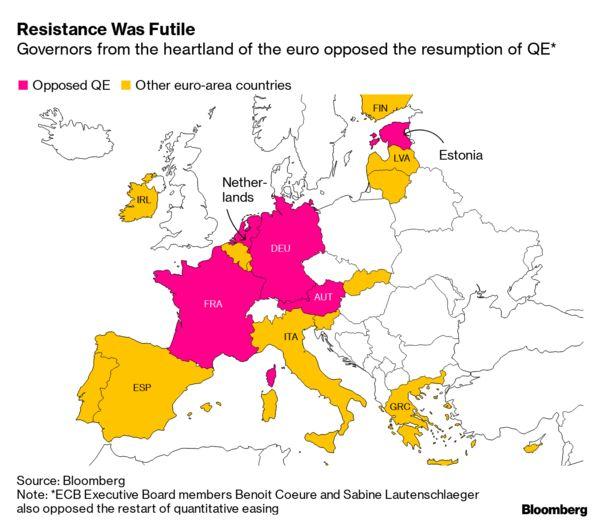
Any
hopes that the replacement of Mario Draghi, who on Halloween left the
ECB more polarized than ever, as the core European nations revolted
against the Italian’s profligately loose monetary policy in an
unprecedented public 
demonstration
of discord 
within
the European Central Bank…

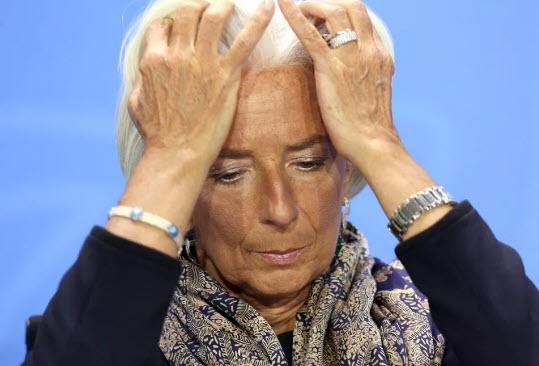
with the ECB’s new head, former IMF Director and 
convicted
criminal
,
Christine Lagarde would result in some easing of tensions, were
promptly crushed when Lagarde picked up where Draghi left
off, 
calling
on Germany and the Netherlands to use their budget surpluses to fund
investments that would help stimulate the economy, 
in
a sharp rebuke that will not win the former French finance minister
any friends in fiscally conservative Germany.

In
an appeal to Germany’s sense of solidarity, and in hopes that
Germany’s memory of hyperinflation has faded enough, Lagarde said
that there “isn’t enough solidarity” in the single
currency area, adding: “We share a currency, but we don’t share
much budgetary policy for now.”

“Those
that have the room for manoeuvre, those that have a budget surplus,
that’s to say Germany, the Netherlands, why not use that budget
surplus and invest in infrastructure? Why not invest in education?
Why not invest in innovation, to allow for a better rebalancing?”
asked Lagarde, blaming Germany and the Netherlands for living within
their means, and demanding they should no longer do so, 
just
because most other Europeans decided to pull a page out of the
American playbook, and live exorbitantly 
outside of
their means.

Lagarde’s
direct attempt at shaming Europe’s fiscal conservatives was nothing
short of shocking: normally ECB officials avoid naming individual
countries in public statements, because their mandate is to act in
the interests of the eurozone as a whole. But when Lagarde made her
speech she had not yet officially taken over at the Frankfurt-based
institution — she succeeds Mario Draghi on Friday.

We
somehow doubt this “explanation” will fly with the German
population, which sees itself as funding peripheral Europe’s
profligate ways for the past decade, even as it benefited from the
weak euro to supercharge the German export machine.

And
just to guarantee she is as resented by Germany as was Mario Draghi,
she said that the German and Dutch governments, which last year had
budget surpluses of 2% and 1.5% respectively, “
have
not really made the necessary efforts,” 
she
added, referring to establishment’s increasing desperation to force
anyone with an even remotely normal balance sheet to sink to the same
level as their insolvent peers.

As
for the punchline, Lagarde defended the negative interest rates
introduced by her predecessor Draghi, 
arguing
that people should be happier to have a job than a higher savings
rate. 
This,
as a reminder, comes at a time when virtually everyone who
is 
not named
“Draghi” or “Lagarde” thinks that 
negative
rates are catastrophic
,
and assure doom for the Eurozone.

When
asked about the impact of negative rates on savers, Ms Lagarde said
on Thursday that they should think about how much worse the situation
would be if the ECB had not cut rates as much as it had.

Would
we not be in a situation today with much higher unemployment and a
far lower growth rate, and isn’t it true that ultimately 
we
have done the right thing to act in favor of jobs and of growth
rather than the protection of savers?” 
she
asked.

The
unemployment rate in the 19-country eurozone has fallen from 12 per
cent in 2013 to 8.2 per cent last year. GDP growth in the single
currency zone was 1.8 per cent last year and the ECB expects it to
slow to 1.1 per cent this year.

Finally,
for those curious if the authorities will 
stop
at anything 
to
destroy the currency and send rates to even more negative levels if
it means kicking the can on a global, populist uprising, by just a
few months, weeks or days, here is the answer: “
We
should be happier to have a job than to have our savings
protected,” 
said
Lagarde.


“I
think that it is in this spirit that monetary policy has been decided
by my predecessors and I think they made quite a beneficial choice.”


Let’s
check back on that statement in a year, shall we?
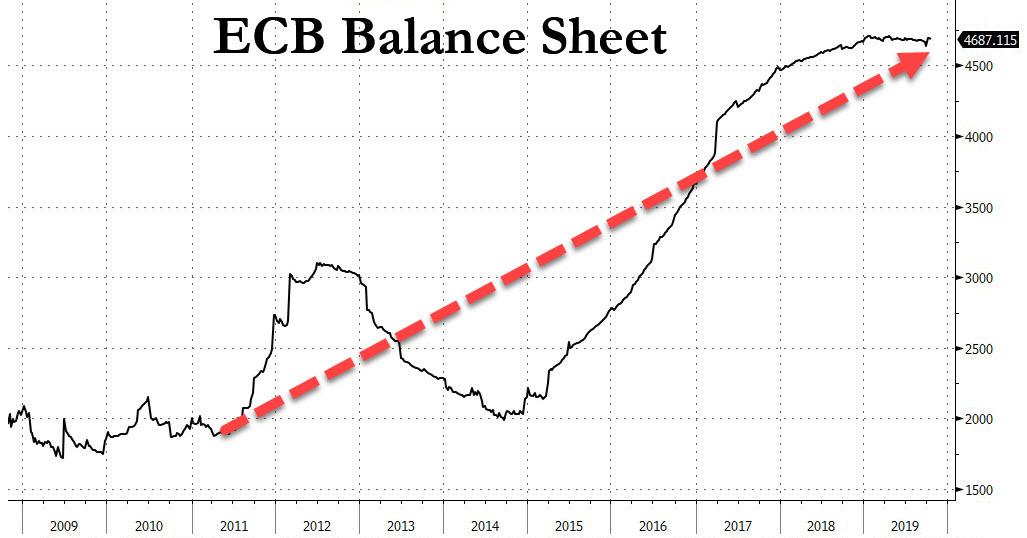
Of
course, there is no magic solution here: all the ECB has done is kick
the can, and ensure that the next crisis will be even worse than if
some semblance of a price-clearing reality had been allowed under
Draghi’s 8 years. Instead, the ECB’s balance sheet exploded to €4.7
trillion euros, as the world’s largest central
bank-cum-hedge fund 
bought every bond in sight in hopes
of keeping asset prices artificially elevated.
In
October, the ECB, less than a year after it ended QE
*
in a failed attempt to “renormalize” monetary policy,
announced it would cut rates to a record -0.5% and unveiled
open-ended plans to start buying €20bn of bonds starting in
November.

Needless
to say, the comments by the former French finance minister confirm
market expectations that she is likely to pursue similar monetary
policy strategy to Draghi who flooded the financial system with cheap
money to fight slowing growth and inflation while calling on
governments to do more through fiscal policy to take the burden off
the central bank.


In
the end, the consequences of Draghi’s monetary policy, as we
explained before, 
will
be catastrophic
,
but the former Goldman partner was wise enough to get off the
European Titanic before it hit the iceberg. It will now be Lagarde’s
task to save as many people as possible once the ship starts sinking,
and judging by her remarks, she is perfectly fine of not only going
down with the ship, but also being blamed for the collision.


Tags:
Business
Finance

===============================


*
Hieronder de uitleg over QE of: Quantitative Easing, geschreven door Jim
Chappelow en gepubliceerd op Investopedia (zie ook het eerste
staatje in het artikel van Durden):


Quantitative
Easing (QE)

REVIEWED
BY 
JIM
CHAPPELOW
Updated
Sep 6, 2019

What
Is Quantitative Easing? (QE)

Quantitative
easing is an unconventional 
monetary
policy
 in
which a central bank purchases 
government
securities
 or
other securities from the market in order to increase the money
supply and encourage lending and investment. When short-term
interest rates are at or approaching zero, normal 
open
market operations
,
which target interest rates, are no longer effective, so instead a
central bank can target specified amounts of assets to purchase.
Quantitative easing increases the 
money
supply
 by
purchasing assets with newly created bank reserves in order to
provide banks with more 
liquidity.

KEY
TAKEAWAYS

  • Quantitative
    easing (QE) is the name for a strategy that a central bank can use
    to increase the domestic money supply.

  • QE
    is usually used when interest rates are already near 0 percent and
    can be focused on the purchase of government bonds from banks.

  • QE
    programs were widely used following the 2008 financial crisis,
    although some central banks, like the Bank of Japan, had been using
    QE for several years prior to the financial crisis.

Understanding
Quantitative Easing

To
execute quantitative easing, 
central
banks
 increase
the supply of money by buying 
government
bonds
 and
other securities. Increasing the supply of money is similar to
increasing supply of any other asset—it lowers the cost of money.
A lower cost of money means 
interest
rates
 are
lower and banks can lend with easier terms. This strategy is used
when interest rates approach zero, at which point central banks have
fewer tools to influence economic growth.

If
quantitative easing itself loses effectiveness, 
fiscal
policy
 (government
spending) may be used to further expand the money supply. In effect,
quantitative easing can even blur the line between monetary and
fiscal policy, if the assets purchased consist of long term
government bonds that are being issued to finance counter-cyclical
deficit spending.

The
Drawbacks of Quantitative Easing

If
central banks increase the money supply, it can cause 
inflation.
In a worst-case scenario, the central bank may cause inflation
through QE without economic growth, causing a period of
so-called 
stagflation.
Although most central banks are created by their countries’
government and are involved in some regulatory oversight, central
banks can’t force the banks to increase lending or force borrowers
to seek loans and invest. If the increased money supply does not
work its way through the banks and into the economy, QE may not be
effective except as a tool to facilitate deficit spending (i.e.
fiscal policy).

Another
potentially negative consequence is that quantitative easing
can 
devalue the
domestic currency. For manufacturers, this may help stimulate growth
because exported goods would be cheaper in the global market.
However, a falling currency value makes imports more expensive,
which can increase the cost of production and consumer price levels.

Is
Quantitative Easing Effective?

During
the QE programs conducted by the 
U.S.
Federal Reserve
 starting
in 2008, the Fed increased the money supply by $4 trillion. This
means that the asset side of the 
Fed’s
balance sheet
 grew
significantly as it purchased bonds, mortgages, and other assets.
The Fed’s liabilities, primarily 
reserves at
U.S. banks, grew by the same amount. The goal was that the banks
would lend and invest those reserves to stimulate growth.

However,
as you can see in the following chart, banks held onto much of that
money as excess reserves. At its peak, U.S. banks held $2.7 trillion
in excess reserves, which was an unexpected outcome for the Fed’s QE
program.

(voor de staat die hier hoort te staan, zie het origineel)

Most
economists believe that the Fed’s QE program helped rescue the U.S.
(and world) economy following the 2008 financial crisis. However, the
magnitude of its role in the subsequent recovery is more debated and
impossible to quantify. Other central banks have attempted to deploy
QE 
to
fight recession
 and deflation with
similarly cloudy results.

Following
the 
Asian
Financial Crisis of 1997
,
Japan fell into an economic 
recession.
Beginning in 2000, the 
Bank
of Japan (BoJ)
 began
an aggressive QE program to curb deflation and to stimulate the
economy. The Bank of Japan moved from buying Japanese government
bonds to buying private debt and stocks. The QE campaign failed to
meet its goals. Ironically, the BoJ governors had concluded that “QE
was not effective” just months before launching their program
in 2000. 
Between
1995 and 2007
,
Japanese GDP fell from $5.45 trillion to $4.52 trillion in nominal
terms, despite the BoJ’s efforts.

The Swiss
National Bank (SNB)
 also
employed a QE strategy following the 2008 financial crisis.
Eventually, the SNB owned assets nearly equal to annual economic
output for the entire country, which made the SNB’s version of QE
the largest in the world as a ratio to 
GDP.
Although economic growth has been positive during the subsequent
recovery, how much the SNB’s QE program contributed to that recovery
is uncertain. For example, although it was the largest QE program in
the world as a ratio to GDP and interest rates were pushed below 0%,
the SNB was still unable to achieve its inflation targets.

In
August 2016, the 
Bank
of England (BoE)
 announced
that it would launch an additional QE program to help alleviate
concerns over “
Brexit.”
The plan was for the BoE to buy 
60
billion pounds
 of
government bonds and 10 billion pounds in corporate debt. If
successful, the plan should have kept interest rates from rising in
the U.K. and stimulated business investment and employment.


From
August 2016 through June 2018, the 
Office
for National Statistics
 in
the U.K. reported that gross fixed 
capital
formation
 (a
measure of business investment) was growing at an average quarterly
rate of 0.4 percent, which was lower than the average from 2009
through 2018. The challenge for economists is to detect whether
growth would have been worse without quantitative easing.

9/11: de VS heeft niets geleerd……

Jon
Jeter schreef op MintPress News een opiniestuk, waarin hij niet
alleen de ‘aanslagen’ op de Twin Towers in 2001 aanhaalt, maar zich
vooral richt op de andere 9/11, die van 1973 in Chili…. Chili waar de CIA
met hulp van massamoordenaar, oorlogsmisdadiger en Nobelprijswinnaar
voor de Vrede* (ha! ha! ha!) Henry Kissinger, de fascist, moordenaar,
verkrachter en martelbeul Pinochet middels een bloedige staatsgreep
aan het bewind hielpen…….. De democratisch gekozen** president Salvador Allende werd vermoord en daarmee begon
de grote ellende voor de Chilenen……

30.000
mensen werden gevangen gehouden en gemarteld, naar schatting 5.000
mensen werden vermoord door het fascistische Pinochet regime…..

Lees
in het volgende artikel hoe Pinochet de economie vakkundig naar de
kloten hielp, zodat in 1982 de buitenlandse schuld van Chili was
opgelopen tot 16 miljard dollar, in hedendaags waarde gaat het om een
bedrag 42 miljard (‘billion’) dollar….. Tegen 1989 was het
gemiddelde loon sinds 1973 met 40% gedaald……. In diezelfde tijd
verdubbelde de armoede tot 40% van de bevolking….. Het aantal
mensen met slechte huisvesting was tegen die tijd ook 40% van de
bevolking, een stijging met 13% sinds het laatste jaar dat
Allende regeerde…… Het aantal calorieën dat arme mensen dagelijks
gebruikten liep vanaf 1973 terug van 2.019 naar 1.629 in 1989…….

‘Gelukkig’
beeft Nederland nadat Joop de Uyl weg was, goede zaken gedaan in
Chili; ‘waar een klein land al niet groot in kan zijn………’ 

Inderdaad de VS heeft niets geleerd van de nasleep die 9/11 liet zien, integendeel deze grootste terreurentiteit op aarde is ‘voortvarend’ doorgegaan met het op grote schaal uitoefenen van terreur in landen waar het niets te zoeken heeft, e.e.a. heeft intussen aan fiks mer dan 2 miljoen mensen het leven gekost……. (al moet nog wel opgemerkt worden dat de aanslagen van 9/11 door de VS zelf zijn geregisseerd >> zie o.a. de links onderaan dit bericht….) 

A
Tale of Two 9/11s and the Lessons America Chooses Never to Learn

After
9/11, Bush famously asked “Why do they hate us?” The answers
might have been found on another 9/11, 28 years before, when the U.S.
in Chile took a decisive step down the road to empire.

by Jon
Jeter

Sept. 11

NEW
YORK —
 Of apartheid South Africa’s myriad atrocities,
one of the most medieval was a system in which white settlers plied
their farmworkers with alcohol in lieu of wages. Known by the
Afrikaans word for tot, or drink, the 
dop not only
kept workers docile — and wages low — but, in fostering
widespread and chronic dependency, the practice bordered on
enslavement, manacling workers to their addictions and hence their
oppression.

A
progressive white South African lawyer told me that shortly after
voters of all races went to the polls to repeal apartheid in 1994, he
managed to purchase a Cape Town vineyard as part of his lifelong
ambition to create award-winning wines. His first order of business
was to professionalize the operations; so, soon after he closed the
deal to buy the vineyard, he gathered up all 15 farmworkers and
announced that he would end the dop and pay their
wages, in full.

Seven
walked off in disgust, he said.

This
story is the perfect metaphor for America in the aftermath of the
terrorist attack that occurred 17 years ago today. An entire nation
stared into the abyss on 9-11 and, like a sloppy drunk waking up in a
pool of his own vomit, saw its image reflected in the wreckage as
though for the first time. But rather than facing our demons, owning
our failures, and acknowledging the outsized role we’ve played in
the suffering of others, we simply sidled up to the bar for another
drink. Like the inebriates who walked off a South African farm, ours
is an Empire in denial and poor health, doubling down on our most
self-destructive impulses, stumbling towards an inevitable, ugly end.

In
an interview months after 9-11, Osama bin Laden warned:

The
U.S. government will lead the American people — and the West in
general — into an unbearable hell and a choking life.”

 A
9/11 less remembered

Ironically,
if we could pinpoint the date that United States took its first drink
it would almost certainly be September 11, 1973, as General Augusto
Pinochet’s troops stormed Chile’s presidential palace. Organized
by Henry Kissinger and the CIA, the coup targeted Chile’s popular
socialist President Salvador Allende, who the Nixon administration
feared was another Fidel Castro in-the-making. As the attack
unfolded, workers in the basement of a Santiago publishing house shop
were hard at work printing what was to be the military junta’s
500-page economic plan.

Believing
himself to be a messianic figure, Pinochet put his faith in a coterie
of young Chilean advisers who had trained under Milton Friedman at
the University of Chicago’s School of Economics, the academic
vanguard of neo-classical economics. With his bloody crackdown on
dissidents, artists, college students and union leaders, Pinochet’s
repressive regime censored the press, banned labor unions and
political opposition parties, murdered an estimated 5,000 leftists,
tortured another 30,000 and handed the “Chicago Boys” – as they
came to be known – a blank check to remake Allende’s nationalized
economy, and return the country at South America’s southwestern
edge into the Empire’s orbit.

Nearly
15 years before economists coined the phrase “Washington
consensus,” and a decade before Reagan’s trickle-down policies
began dismantling the New Deal in the U.S., Chile was the guinea pig
for anti-Keynesian macroeconomic policies designed to fatten
corporations’ share of global wealth. Pinochet slashed duties on
imports, from an average tariff rate of 94 percent in 1973 to 10
percent by 1979. He privatized all but two dozen of Chile’s 300
state-owned banks, as well as utilities and entitlements such as
social security. By 1979, he had cut public spending almost in half
and public investment by nearly 14 percent. He lowered taxes,
restricted union activities and returned more than a third of the
land seized under Allende’s land-reform program.

      Chile Coup Anniversary 

A
woman with a tattoo of Chile’s late Salvador Allende places a
candle in front of Allende’s statue in Santiago, Chile, Sept. 11,
2018. Esteban Felix | AP

Monetary
policy was liberalized on two important fronts. First, Pinochet
allowed “hot money” — speculation on the currency market — to
flow in and out of the country without obstacle. And in 1979 he fixed
the exchange rate for Chile’s peso, requiring the central bank to
keep $1 in reserve for every 39 pesos printed. This kept the bank
from merely printing money to pay bills and curbed an inflation rate
that had soared to nearly 400 percent annually under Allende.

Pinochet’s
reforms worked like a fast-acting virus. A recession in 1975 caused
Chile’s economy to shrink by 13 percent, its greatest decline since
the Great Depression. The recovery that followed was fueled largely
by foreign cash, which poured into the country as investors gobbled
up utilities and stashed money in Chile’s currency markets. The
prices of imports fell sharply; between 1975 and 1982 the number of
foreign cars sold in Chile tripled. Domestic manufacturing shriveled
by 30 percent. Domestic savings plummeted. Wages fell, and the income
gap between rich and poor widened by a factor of 50.

By
1982, Chile had accumulated $16 billion in foreign debt — nearly
$42 billion in today’s dollars — and foreign investment
represented a quarter of the country’s gross domestic product. The
money flowing into the country flowed out just as easily, to pay
debts and bills for imported goods and through capital flight as
investors soured on Chile’s currency market. The economy had
overheated and was now in a meltdown.

With
a third of the workforce unemployed and unrest growing, by 1984
Pinochet began to “reform the reforms,” the Chilean economist
Ricardo Ffrench-Davis said in a 2003 interview.

Pinochet
allowed the peso to float and reinstated restrictions on the movement
of capital in and out of the country. He introduced banking
legislation, and ratcheted up spending on research and development
efforts through quasi-governmental institutions and other
collaborations between the public and private sectors — creating,
as one example, the billion-dollar salmon farming industry out of
whole cloth.

Still,
Chile’s economic woes persisted. By 1989, real wages had declined
by 40 percent from 1973, and the percentage of the population living
in poverty had doubled to 40 percent. The number of Chileans without
adequate housing had also climbed to 40 percent, up 13 percentage
points from Allende’s final year in office. The country’s poor
consumed 1,629 calories per-day-on average, compared to 2,019 in
1973.

Ill-fed,
and ill-housed, Chileans began to refer to the cadre of advisers not
as the Chicago Boys but as Si, Cago; Voy — which
translates to “Yes, I shit; I go.”

A
plebiscite in 1989 ended Pinochet’s rule and Chileans gradually
began to reorganize their economy. Since 1990, it has consistently
been Latin America’s strongest performer. But in its violent,
fascist crackdown on the left and its fealty to Wall Street bankers,
Chile under Pinochet presaged the entirety of the United States’
global class war against workers — in Argentina and Zambia; Flint
and Venezuela; Philadelphia to Greece; Haiti, Iraq, Ukraine,
Honduras; Russia in its post-Cold war transitional period, and South
Africa after the collapse of apartheid.

The
two 9/11s 28 years apart bracket the United States’ descent into
madness. Much like the vintner’s abolition of the dop,
the downing of the Twin Towers should’ve triggered some
soul-searching in the United States, and an examination of our
accumulation of stuff through the dispossession of
other human beings. As we mourn the losses on that Indian-summer day
in 2001, what we need to contemplate is redemption, not revenge —
and how we might begin to rejoin a human community that we’ve
wronged, again and again and again.

God
Bless America. . . . and everyone else too.

Top
Photo | Chrissy Bortz of Latrobe, Pa., pays her respects at the Wall
of Names at the Flight 93 National Memorial in Shanksville, Pa. after
a Service of Remembrance, Sept. 11, 2018, as the nation marks the
17th anniversary of the Sept. 11, 2001 attacks. Gene J. Puskar | AP

Jon
Jeter
 is
a published book author and two-time Pulitzer Prize finalist with
more than 20 years of journalistic experience. He is a former
Washington Post bureau chief and award-winning foreign correspondent
on two continents, as well as a former radio and television producer
for Chicago Public Media’s “This American Life.”

Republish
our stories! 
MintPress
News is licensed under a Creative Commons
Attribution-NonCommercial-ShareAlike 3.0 International License.

==============================

*   Kissinger kreeg die prijs godbetert in 1973, het jaar van de coup in Chili….


** In feite werd Allende vermoord door de VS, het land dat altijd de bek vol heeft met democratie brengen……..

Zie
ook:

9/11 forum geblokkeerd, de waarheid mag niet gezegd worden……..

9/11: de leugens over smeltend staal van de Twin Towers

9/11 getuigen totaal genegeerd door media (en overheid)

9/11 Israël nogmaals aangewezen als hulp- bij het neerhalen van de Twin Towers en gebouw 7 van het WTC

9/11: Al Qaida tjokvol agenten van Saoedi-Arabië, VS, Israël en Egypte

9/11 voorafgegaan door CIA visa fraude…..

9/11: Palestijnen hebben niet gejuicht voor de aanslagen op de Twin Towers

9/11 eerst de explosie waarna de ‘vliegtuigen’ de Twin Towers raken

9/11: professor stelt dat WTC-gebouwen gecontroleerd zijn gesloopt, de bewijzen daarvoor zijn overweldigend

Pearl Harbor (7 december 1941) en de aanslagen van 9/11 hebben veel overeenkomsten………

9/11 de verklaring van de VS overheid aangaande het instorten van WTC gebouw 7 is vals……….

911 samenzweringstheorie wint nog meer aan geloofwaardigheid……

911, de beurs en geschiedvervalsing…….

9/11, WikiLeaks, Prism en ‘complottheorieën’

911, een ‘leuk’ feit

Wat betreft de agressie van de VS en de staatsgreep in Chili, zie:

VS buitenlandbeleid sinds WOII: een lange lijst van staatsgrepen en oorlogen……….

List of wars involving the United States

VS: openlijke militaire oefening met terreurgroep in Syrië……

NAVO gaat VS helpen in Zuid-Amerika terreur uit te oefenen: Colombia lid van de NAVO………

VS commando’s vechten o.a. in Midden- en Zuid-Amerika, aldus het VS ministerie van oorlog………

Chileense fascisten vragen rk kerk om vergeving voor vreselijke misdaden begaan onder Pinochet bewind……

De VS, een duivels imperium, dat achter haar psychopathisch moordende troepen staat??

De war on drugs is veel dodelijker dan over het algemeen gedacht

Chili 11 september 1973

VS vermoordde meer dan 20 miljoen mensen sinds het einde van WOII……..

CIA 70 jaar: 70 jaar moorden, martelen, coups plegen, nazi’s beschermen, media manipulatie enz. enz………

CIA en 70 jaar desinformatie in Europese opiniebladen…………

Derivatenhandel die mede de grote bankencrisis in 2008 veroorzaakte, weer terug (van amper weggeweest..)…….

Derivaten die ons zoveel ellende hebben veroorzaakt, zijn in de VS weer op het niveau van voor de grote banken-, of kredietcrisis van 2008, een crisis die mede werd veroorzaakt door de handel in derivaten…… Overigens was de handel in 2014 zelfs nog groter dan voor de bankencrisis  van 2008……

In Nederland kregen derivaten pas een slechte naam, na het misdadig handelen van Vestia bestuurder Staal, echter Vestia was allesbehalve alleen als woningcorporatie, die dit wanproduct gebruikte om te gokken op de financiële markten…… Ook bestuurders van gemeenten vonden het wel kies om met gemeenschapsgeld een gok te wagen……. Aan deze zaken werd geen eind gemaakt door CDA leeghoofd Spies in Balkenende 4, wel bepaalde ze dat men dit niet met te grote bedragen mocht doen……. ha! ha! ha! ha! ha! ha! ha! ha!

Door de crisis van 2008 zijn over de wereld meer dan 100 miljoen mensen in de ellende gestort, de verantwoordelijken, waaronder bankiers, zijn amper of helemaal niet aangepakt en men is intussen nog steeds bezig met deze smerige derivaten, alsof er niets is gebeurd………… De meeste slachtoffers zitten nog steeds in de drek……..

Gisteren bracht Anti-Media het bericht dat zoals gezegd de derivatenhandel weer op grote hoogten wankelt……………….

Wall
Street Derivatives That Helped Crash the Economy in 2008 Are Back —
in a Big Way

November
1, 2017 at 4:47 pm

Written
by 
Shaun
Bradley

(ANTIMEDIA) —
The
U.K.’s Financial Conduct Agency recently fined Merrill Lynch 
$45
million
,
once again sparking concerns over the 
massive derivatives
market.

The
wealth management division of Bank of America failed to report more
than 68 million derivatives transactions dating all the way back to
2014. It had already been forced to pay 
$20
million
 in
2015 for an earlier offense. Despite major players throughout the
financial industry paying a total of over $350 billion in fines since
the 2008 crisis, those same institutions are still thriving and have
amassed more than a 
$1
trillion in profits
.

The
current penalties amount to little more than a slap on the wrist for
these megabanks and have become a normal part of doing business. It’s
no surprise that the same reckless behavior that 
helped lead
to the Great Recession is still rampant. The global derivatives
market was reportedly as large as $
1.5
quadrillion
 in
2016, and things haven’t improved much since
then. 
Collusion between
large financial institutions, central banks, and governments around
the world has fostered an environment with almost zero
accountability. Hopefully, as more people become educated about the
possible dangers associated with complex financial derivatives, it
will be easier to prevent wild speculation like what is seen today.

Derivatives are
one of the most complex and least understood financial instruments.
Instead of establishing their value through a share of a company’s
profits or a future dividend, derivatives are essentially side bets
made between third parties. Commodity 
futures
contracts
 are
an example of a simple derivative. Farmers have used them to protect
themselves against price changes that could significantly impact
their businesses from season to season.

However,
these financial tools aren’t just limited to hard assets and can be
used to speculate on every industry, asset, and currency in the world
financial system. The growing attention from regulators on the
derivatives market may uncover what many investors and economists
previously warned about. In 2003, Warren Buffett infamously
classified derivatives as ‘weapons of mass destruction’ and
‘time-bombs.’

He
doubled down on the assertion during a more recent interview, 
saying:

At
some point they are likely to cause big trouble…Derivatives lend
themselves to huge amounts of speculation…The problem arises when
there is a discontinuity in the market for some reason or
another…When the markets closed like it was for a few days after
9/11 or in World War I the market was closed for four or five months
– anything that disrupts the continuity of the market when you have
trillions of dollars of nominal amounts outstanding and no ability to
settle up and who knows what happens when the market reopens
.”

derivatives

Merrill
Lynch and Bank of America haven’t been the only ones prosecuted
over their derivatives exposure and practices. Deutsche Bank
is 
poised
to lose
 $60
billion for using currency derivatives to speculate on U.S. inflation
rates, the ‘London Whale’ scandal ended up costing JPMorgan $920
million, and just a month ago, Citi was 
ordered to
close $2 billion worth of derivatives taken over during the collapse
of Lehman Brothers. These potentials for volatile swings in market
valuations can quickly undermine the solvency of institutions that
hold a majority of the pensions, savings accounts, and retirement
funds for the public.

derivatives

The
first 
overview
report
 on
the E.U. derivatives market was just published by the Europe Security
and Markets Authority. It found that the nominal value of derivative
holdings within the European Union was valued at $536 trillion.
London alone handles 
nearly
40%
 of
all interest-rate derivative trades for the European Union, and
uncertainty continues to grow about the impact Brexit will have on
the strength of major European banks.

Confidence
in the current system seems to be eroding with each failed promise
and debt crisis. If faith in central planning is 
shaken
again
 like
in 2008, the result could impact the daily lives of almost everyone.
The once responsible stewards of the public’s wealth have been
corrupted by power, greed, and self-preservation. The that have been
perpetually fined trivial amounts by inept regulators will continue
to make trillions while the savers and retirees suffer as a result.

Creative
Commons
 / Anti-Media / Report
a typo

==========================================

Zie ook: ‘Liesbeth Spies, Spies pakt ‘t derivaten probleem ‘goed’ aan

        en: ‘Derivaten deel 85: lokale overheden investeerden ook in derivaten

Dilma Rousseff afgezet, CIA coup gelukt……..

De president van Brazilië, Dilma Rousseff werd gisteren middels een ‘impeachment’ proces afgezet, voorlopig voor een aantal maanden, maar deskundigen stellen, dat Rousseff niet terug zal kunnen keren. De VS was al een paar jaar bezig om de linkse regering Rousseff te wippen, o.a. middels het oppoken van de oppositie door de CIA en met de kredietbeoordeling van het land naar benden bij te stellen, door VS kredietbeoordelaar Standard & Poor’s…… Gisteren de finale en ‘de klus is geklaard……..’

Het aantal leugens over Brazilië in de reguliere media* en door politici gebezigd, zijn niet meer te tellen. Rousseff zou een wanbeleid hebben gevoerd, zou cijfers hebben gemanipuleerd en de corruptie hebben aangejaagd. Zaken die al ver voor Rousseff en Lula (de vorige president, van dezelfde politieke partij: PT) dagelijkse praktijk waren in Brazilië…….

Gistermiddag nog een ‘mooi staaltje’ anti-Rousseff propaganda op BNR (rond 17.16 u.). Hier vertelde de ‘economieredacteur’ Rob Jansen, dat de sociale uitkeringen in Brazilië veel te hoog zijn en dat dit te danken is aan Roussseff….. De uitkeringen in Brazilië zijn nog altijd niet te vergelijken met die in Nederland en gelukkig heeft men in Brazilië geconstateerd, dat deze uitkeringen nodig zijn, om mensen nog enigszins een leefbaar inkomen te geven. Uiteraard is dit tegen de zin van inhumane neoliberale hufters als Jansen, grondstoffen en zaken als koffie en fruit uit Brazilië moeten we natuurlijk wel voor een appel en een ei kunnen kopen…….

Jansen was ‘lekker op dreef’ toen hij vervolgde met te zeggen, dat Roussef het land in een economische recessie heeft gestort. Jansen noemde 4% *dat moet zijn 3,8% (‘maar goed’) en Jansen stelde dat dit cijfer zelfs een stuk groter is dan na de Beurskrach van 1929…….. ha! ha! ha! ha! ha! ha! ha! Waar haalt de lul het vandaan?? Het precieze cijfer kan ik zo snel niet vinden, maar dat ging de 10% ver te boven!

Dat de er een wereldwijde crisis is, interesseert blijkbaar niemand. Olie en grondstoffen, de exportartikelen van Brazilië, staan lager dan we in decennia hebben gezien. Voorlopig hebben een fiks aantal westerse landen (inclusief Nederland) het de laatste 8 jaar een stuk slechter gedaan, dan de regeringen Lula en Rousseff presteerden……

Jansen loog nog even, dat de bureaucratie onder Rousseff is gegroeid, dat is een leugen van formaat, de bureaucratie in Brazilië was al groot voordat de voorganger van Rousseff, Lula aantrad. Om bureaucratie en corruptie aanzienlijk te verminderen, heb je een flink aantal jaren nodig, dat lukt niet eens binnen 15 jaar…. Die bureaucratie zou er voor zorgen, dat bedrijven niet verder kunnen, vreemd dan, dat bedrijven in Brazilië zich aan veel minder (en minder zware) regels behoeven te houden, dan bedrijven in Nederland…….

Wat je de regering Lula kan aanrekenen, is dat deze het WK voetbal en de Olympische Spelen naar Brazilië haalde, als is dat niet de reden van de huidige recessie…….

Wat een leugenachtige hufter die Jansen, allemachtig!!

Dit was nog maar één voorbeeld, van de smerige anti-Rousseff propaganda in de reguliere media……..

Zie de links onder de noot hieronder, niet teveel leeswerk, maar wel met een heel andere kijk op de situatie in Brazilië en hoe e.e.a. tot stand is gekomen, anders dan u van de reguliere media bijna dagelijks kreeg en krijgt voorgeschoteld.

* Zelfs in het voortgezet onderwijs: in het profielwerkstuk economie HAVO 5 voor 2016 wordt zelfs dictator Vargas de hemel ingeprezen, hij pleegde een coup in oktober 1930….. Kinderen indoctrineren met het ophemelen van een dictator, te zot voor woorden, godverdomme!!

Zie ook: ‘To See the Real Story in Brazil, Look at Who Is Being Installed as President — and Finance Chiefs

Washington Launches Its Attack Against BRICS

Brazil Is Engulfed by Ruling Class Corruption — and a Dangerous Subversion of Democracy

The Empire of Chaos Strikes Back

Brazil: Dilma – Don’t Let Go! Open Letter to President Dilma Rousseff

VS betrokken bij afzetting Braziliaanse president Rousseff……..

Temer, interim-president Brazilië heft ministerie van cultuur op……

VS steunt rechtse coalitie (MUD) in Venezuela………

Klik voor meer berichten n.a.v. het voorgaande, op één van de labels, die u onder dit bericht terug kan vinden.

Laatst bijgewerkt op 18 mei 2016 (fout in voornaam Rousseff….).

911, de beurs en geschiedvervalsing…….

Zag afgelopen weekeinde een stuk van de film Casino Royale met Djeems Bomb. En verdomd, op een gegeven moment wordt er in de film gesteld, dat de beurs instortte na 911, terwijl de beurs al lang bijzonder laag stond, waar de extra min op 12 september 2001 amper iets aan veranderde……

Overigens was de beurs in de VS gesloten op 12 september 2001…….. Vooral aandelen van luchtvaartmaatschappijen en aanverwante bedrijven, zakten behoorlijk in koers, de AEX zakte met tien punten, maar dat verlies was binnen een maand na de gebeurtenis alweer goedgemaakt, toen de AEX alweer op het niveau van voor 11 september 2001 stond. De koersen in de VS (en daarmee in de rest van de wereld) zakten uiteindelijk verder, maar dat had puur financieel economische redenen…….. In feite zat een groot deel van de wereld op 11 september 2001 nog in recessie vanwege de internetbubbel…..

De economie van de VS was in het tweede half jaar van 2001 in het slop geraakt en veel deskundigen stellen, dat die neergang enigszins werd geremd door de aanslagen op de Twin Towers, daar er door de overheid kapitalen werden uitgegeven aan het militair-industrieel complex en aan patriottische troep (waar de bevolking ook grote bedragen aan spendeerde)….. Het is dan ook helemaal niet vreemd, dat een flink aantal mensen gelooft, dat de aanslagen werden voorbereid en geregisseerd door geheime diensten uit de VS….. Niet in de laatste plaats, omdat het militair-industrieel complex met smart op nieuwe internationale spanningen en oorlogen zat te wachten, ‘zaken’ waar ook de financiële maffia wel bij vaart en die geheime diensten zelf uiteraard…… Ja, wie hadden er belang bij deze aanslagen en wie verklaarde de oorlog aan terreur….??

Naar aanleiding van deze aanslagen werd Afghanistan aangevallen en later Irak, dat ‘leverde’ ruim meer dan 1 miljoen slachtoffers op. Ook de huidige oorlog in Syrië en Irak is een direct gevolg van de illegale oorlog die de VS tegen Irak voerde, zelfs het ontstaan van IS houdt hier verband mee……..

Maar wat een smerige geschiedvervalsing, dezelfde leugen wordt hier overigens vaak genoeg in de reguliere media als waarheid opgelepeld………. Het zou me niet verbazen, als deze leugen als feit wordt onderwezen op onze scholen….

Zie ook:

9/11 forum geblokkeerd, de waarheid mag niet gezegd worden……..

9/11: de leugens over smeltend staal van de Twin Towers

9/11 getuigen totaal genegeerd door media (en overheid)

9/11 Israël nogmaals aangewezen als hulp- bij het neerhalen van de Twin Towers en gebouw 7 van het WTC

9/11: Al Qaida tjokvol agenten van Saoedi-Arabië, VS, Israël en Egypte

9/11 voorafgegaan door CIA visa fraude…..

9/11: Palestijnen hebben niet gejuicht voor de aanslagen op de Twin Towers

9/11 eerst de explosie waarna de ‘vliegtuigen’ de Twin Towers raken

9/11: professor stelt dat WTC-gebouwen gecontroleerd zijn gesloopt, de bewijzen daarvoor zijn overweldigend

Pearl Harbor (7 december 1941) en de aanslagen van 9/11 hebben veel overeenkomsten………

9/11 de verklaring van de VS overheid aangaande het instorten van WTC gebouw 7 is vals……….

911 samenzweringstheorie wint nog meer aan geloofwaardigheid……

9/11, WikiLeaks, Prism en ‘complottheorieën’

911, een ‘leuk’ feit

Klik voor meer berichten aangaande dit onderwerp, op één van de volgende labels, onder dit bericht: 911, aanslagen, geheime dienst, oorlog tegen terreur, ISIS (= IS), militair-industrieel complex, banken, verzekeringen, de beurs, aandeelhouders, AEX, recessie, VS en/of film.

Russische recessie zorgt voor krimp in buurlanden, met dank aan de EU……..

Alweer een ongewild ‘leuk’ bijeffect van de sancties tegen Rusland: de economieën van de buurlanden van Rusland zijn door de Russische recessie in een economische krimp ‘gezogen….’ Dat alles omdat het westen pissig is, dat Rusland na jaren van lijdzaam toezien eindelijk actie ondernam, nadat de VS middels 4 miljard dollar de opstand in Oekraïne tegen de democratisch gekozen president Janoekovytsj op poten zette en daarmee een staatsgreep kocht in dit land….. Vandaar dat het westen, de hiervoor genoemde sancties aan Rusland oplegde, met het ‘geweldige resultaat’, zoals hierboven beschreven…..

‘Lekker’ hè, die anti-Russische oorlogsstemming hier??!! Kunnen we straks met Herman Koch verzuchten: “Eindelijk oorlog!”

Han de Jong ABN Amro, was woendend op het IMF……. OEI!!!!

In het ‘Economen Panel’ van BNR’s slijmkwijl van Liempt, gisteren Han de Jong van ABN Amro. Deze stelde woedend te zijn op het IMF, daar Lagarde van dat instituut had gewaarschuwd, dat de Eurozone er niet goed voorstaat en we afstevenen op een ‘triple dip’ en dus een recessie. Dat is voor de Jong zoiets als de goden verzoeken. Even had ik nog de idee, dat de Jong zou stellen, dat we nooit echt uit de eerste dip en recessie zijn gekomen (immers de cijfers waarmee we de eerste dip ingingen zijn nooit goedgemaakt), maar nee hoor, het ging echt om de waarschuwing die Lagarde deed voor die dip. Dezelfde de Jong noemde de crisis niet de banken-, financiële-, of kredietcrisis, nee veronderstel dat hij moet uitleggen, dat met die crisis er ongeveer een triljard euro aan belastinggeld wereldwijd door het bankenputje, in de fundering van die banken wegliep……. Waarmee een groot deel van de wereld in een diepe crisis werd gestort en die, zoals gezegd, nog steeds voortduurt…..

Het IMF moet niet zeiken over Europa in het openbaar, tenminste als je de Jong’s woorden beluistert; nee we moeten alles stil houden. Zoals gebeurde voor de bankencrisis, toen waarschuwden echte deskundigen voor een grote crisis, als er niet werd ingegrepen. Deze deskundigen werden als vol-idioten* neergezet, door het soort ‘deskundigen’ van het ‘niveau’ als de Jong….

De Jong noemde nog allerlei oorzaken voor de recessie, maar uiteraard kwam daar het woord bank, of banken niet één keer in voor……..

* Excuus, maar het is een mooi germanisme!

Rutte voelt niets voor ZZP’ers toegang verschaffen tot de sociale zekerheid…….

De disfunctionerend VVD premier, het onzelfstandige ventje Rutte, die onlangs nog zei, dat hij als persoon voor het afschaffen van CAO’s is*, zei van de week, dat hij niets voelt voor het openstellen van het stelsel van de sociale zekerheid aan ZZP’ers. Het merendeel van de 800.000 ZZP’ers, aldus Rutte, heeft ‘welbewust’ gekozen voor zelfstandigheid…… ha! ha! ha! ha! ha! ha! ha! ha! ha! Maar de flapdrol ging dapper door: ‘ze hebben er lol in om juist niet in loondienst te zijn…..’ ha! ha! ha! ha! ha! ha! Waar haalt de topidioot ‘t vandaan? Alsof de sociale zekerheid een werkgever is, jezus!! Het is allang duidelijk, dat een aanmerkelijk deel van deze zogenaamde zelfstandigen niet eens durven te zeggen, dat ze daartoe gedwongen zijn, daar ze anders verdere opdrachten kunnen vergeten…… Rutte heeft zelf nog niet 1 dag fatsoenlijk werk gedaan, maar verdient wel een godsvermogen voor zijn ‘prestaties’: een top werkloosheid (meer dan 1,2 miljoen, het echte cijfer), 4 miljoen mensen die tegen, op of onder de armoede grens leven, een gigantisch aantal faillissementen (die de Nederlanders kapitalen aan belastinggeld kostte, ook als het ZZP’ers zijn…), een record aantal huisuitzettingen, een top aantal zelfdodingen, een economie die zogenaamd uit de recessie is, maar waar de getallen, nog steeds beneden, de cijfers zijn, waarmee de recessie werd ingezet….. enz. enz. Een gewone werknemer of ZZP’er zou met zulke resultaten, allang de laan zijn uitgestuurd.

De ZZP’ers verdienen ‘zo veel’ dat ze zich niet eens kunnen verzekeren voor arbeidsongeschiktheid en ziekte, laat staan dat ze voor hun pensioen kunnen zorgen. Zoals eerder gezegd er zijn de laatste jaren al veel ZZP’ers failliet gegaan en ja die mensen kan je wel op straat flikkeren, maar de schulden zullen toch betaald moeten worden…… door de belastingbetaler en het slachtoffer zal (met zijn/haar gezin) geherhuisvest moeten worden, op kosten van…….. alweer de belastingbetaler!!!

Dat is godbetert premier van ons land, ongelofelijk!!!!

* Zie: ‘Rutte zegt wel eens wat als burger en dat steekt D66……… ha! ha! ha! ha! ha!