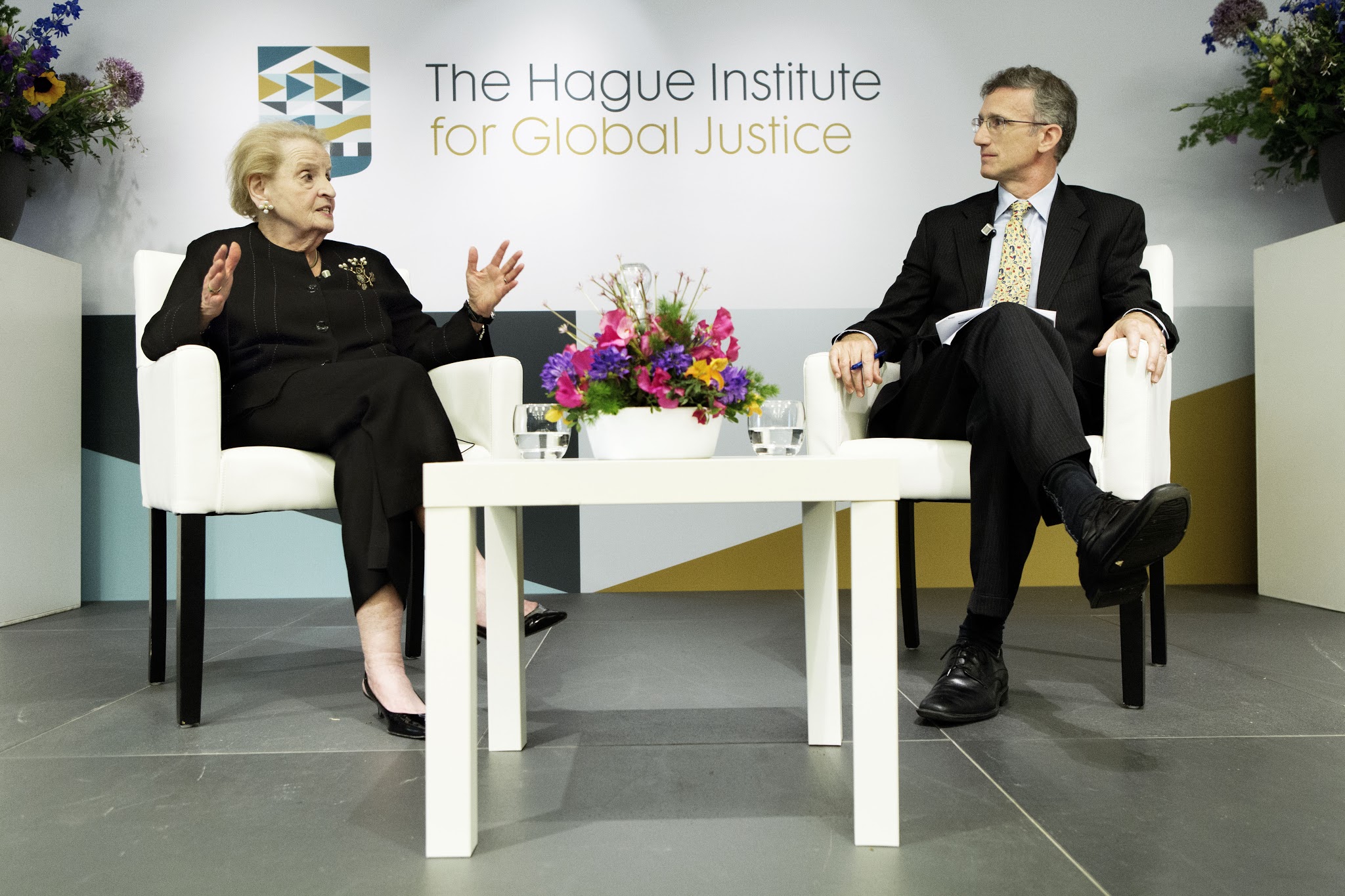
Blok en Dijsselbloem bedienen Verhagen (CDA en Bouwend Nederland)…….

De houten VVD dildo Blok en PvdA hufter ‘deep fry’ Dijsselbloem hebben gisteren aan de hand van NB een CPB rapport besloten de hypotheekgrens te verhogen….. Deze maatregel wordt genomen zodat starters en mensen die simpelweg geen geld hebben voor een koophuis, zich gezien hun inkomen, alsnog een veel te duur huis kunnen ‘aanschaffen’ en zich daarmee veel te diep in de schulden kunnen steken………

Nogmaals: op basis van een CPB rapport…. ha! ha! ha! ha! ha! ha! ha! ha! U weet wel het totaal overbodig, belastingvretend adviesorgaan, dat nooit de juiste cijfers heeft…..

Alsof de overheid al niet veel te veel risico neemt, als het om hypotheken gaat, met een enorme toename van het aantal Nationale Hypotheekgaranties……. Uiteraard geeft geen bank nog een hypotheek aan mensen, die te ver boven hun inkomen een huis kopen, een huis op een overspannen markt, aangeduid als ‘huizenbubbel, met huizen die nog steeds gemiddeld 150% te duur zijn in verhouding tot de werkelijke waarde……

Die banken geven alleen een hypotheek, als de overheid garant staat met…… de Nationale Hypotheekgarantie!! Bij een onderuitgaan van de huizenprijs, ofwel het inklappen van de huizenbubbel, dat volgens deskundigen (zelfs de flapdrollen van het IMF en de Wereldbank) niet uit kan blijven, Nederland in een enorme crisis zal storten……. Waar de twee voornoemde organisaties waarschuwen, dat een land als Nederland, met een veel te hoge hypotheekschuld, die Nederland als een molensteen om de nek hangt, bij ‘nat gaan’ het land financieel onderwater zal trekken………

Vreemd genoeg wijzen ‘politici’ als Dijsselbloem erop, dat Nederland ook enorm veel spaargeld heeft….. ha! a! ha! ha! ha! ha! Alsof die spaarders naar de pinautomaat zullen snellen, om Nederland ‘te ontzetten’ mocht het zover komen……. Of denkt Dijsselbloem, dat hij het geld van die spaarders tegen die tijd af kan pakken??

Daarnaast heeft een onvermijdelijke nieuwe crisis ook directe gevolgen voor de huizenbubbel en als de crisis groot genoeg is, voor de spaarders, die dan een gigantische inflatie van hun gespaarde geld zullen zien…….. Met andere woorden: op dat moment zal het in totaal gespaarde geld in Nederland, fiks minder waard zijn!! Hoe bedoelt u: de totale hypotheekschuld is in balans met het totaal gespaarde geld??!! (overigens is ook dat een leugen, die balans bestaat nu al niet!)

De bankencrisis werd veroorzaakt, doordat een enorm aantal mensen een hypotheek hadden, die ‘een paar maten’ te groot was voor hun beurs!! gezien dat feit is de beslissing van Blok en Dijsselbloem met maar een paar woorden aan te duiden: totaal onverantwoord en knettergek!!

Ondertussen is de capo di tutti capi van de bouwmaffia, CDA Untersturmbannführer Verhagen, op zijn wenken bediend!! (Verhagen pleitte eerder voor een makkelijker toekenning van hypotheken). Ach ja ons kent ons immers in Den Haag, het zou vreemd zijn als de lobby van de bouwmaffia, via Bouwend Nederland dat wordt geleid door Verhagen, niet op haar wenken bediend zou worden, ‘normaal’ toch….??!!!

Voor meer berichten n.a.v. het bovenstaande, klik op één van de labels, u onder dit bericht terug kan vinden

Staalbankiers wordt overgenomen door van Lanschot, behalve de hypotheken………

Vanmiddag na het nieuws van 14.30 u. meldde BNR, dat Staalbankiers wordt overgenomen door van Lanschot.

Een grofgraaier vertelde, dat de bank in haar geheel wordt overgenomen, behalve de hypotheekportefeuille…….. ha! ha! ha! ha! ha! ha! ha!

Wedden dat de overgebleven hypotheken niet gedekt worden door kapitaal, mocht morgen de huizenmarkt instorten……. De zwaar opgeklopte huizenprijs in Nederland is gemiddeld nog steeds minstens 60% te hoog, vergeleken met de werkelijke waarde……

Hoe kan de overheid akkoord gaan met een dergelijke belachelijke overname??!!!

U begrijpt zeker wel, wie er opdraait voor de verliezen, als de huizenmarkt instort..?? Juist, niet het overgebleven deel van Staalbankiers, maar u en ik, de belastingbetalers!! Overigens is de totale hypotheekschuld alweer bijna op het record niveau van 700 miljard euro!!! Een schuld waarvoor Rutte 2 meermaals is gewaarschuwd door het IMF en de Wereldbank, daar deze veel te groot is voor een land als Nederland…….

Voor meer berichten n.a.v. het bovenstaande, klik op één van de labels, die u onder dit bericht terug kan vinden, dit geldt niet voor het label ‘Staalbankiers’.

Nestlé jaagt wereldwijd op waterbronnen en -voorzieningen……..

Dat Nestlé een smerig bedrijf is, mag intussen wel een publiek geheim genoemd worden (of niet?), toch verbaasd het me telkens weer, hoe achterbaks en goor dit bedrijf handelt. In Californië is al een paar jaar lang grote droogte, misbruik van water wordt zwaar gestraft, maar Nestlé dat de rechten op ondergrondse waterbassins voor bijna een eeuw opkocht, mag vrolijk doorgaan met het oppompen van water, om dit in plastic flessen te stoppen……. Dit terwijl de landbouw en natuurgebieden (plus de aanwezige wilde dieren) hier onder lijden……

Dit gebeurt overigens niet alleen in de VS, Nestlé is wereldwijd bezig waterbedrijven op te kopen, of rechten op bronnen te verwerven, waarna men zelfs de arme bevolking confronteert met gigantische prijsverhogingen op water. Dit leidt in een paar Afrikaanse landen al tot fiks wat cholera gevallen, daar men geen geld voor Nestlé water heeft en men ten einde raad water uit onbetrouwbare bron gebruikt………..

Hoorde op 30 april jl. bij BBC World Service (na 1.00 u. onze tijd) het commentaar van een Nestlé woordvoerder. Deze ongelofelijke hufter stelde in een glad praatje (de schoft mocht ook nog eens als laatste aan het woord), dat mensen in ontwikkelingslanden juist blij zijn met Nestlé, vanwege de kwaliteit van het water……. De ploert durfde te stellen, dat water nu juist een product is, waar Nestlé veel minder op verdient, dan er bijvoorbeeld op frisdrank en bier aan winst wordt behaald; dus waar is al het gezeur voor nodig..? Helaas voor deze oplichter: bier en frisdrank zijn geen dagelijkse basisbehoefte! (behalve dan bier en andere alcoholische dranken voor verslaafden aan de harddrug alcohol…)……

Je behoeft geen Einstein te zijn om te bedenken hoeveel winsten Nestlé op water gaat behalen, als drinkwater wereldwijd nog schaarser wordt…. Water is in veel gebieden nu al schaars, maar de komende decennia zal het tekort aan gezond drinkwater enorm oplopen……. De verwachting is zelfs, dat hier in de nabije toekomst oorlogen over zullen worden gevoerd……

Moet u nagaan, de Wereldbank (waar PvdA schoft en oplichter Heemskerk werkt!) prest arme landen hun waterbedrijven te privatiseren, waarna bedrijven als Nestlé zo’n bedrijf voor een appel en een ei opkopen, te schunnig voor woorden!!!!!!!

Voor meer berichten n.a.v het voorgaande, klik op één van de labels, die u onder dit bericht aantreft.

Vluchtelingen uit Bangladesh moeten terug om onze kleding in elkaar te naaien! En snel een beetje!

Vluchtelingen uit Bangladesh worden hier ‘gewoon’ gelukzoekers, dan wel economische vluchtelingen genoemd…… Bangladesh u weet wel, het land waar je geen millimeter anders mag geloven, dan de ‘staatsgodsdienst’ (islam) toestaat, het land waar jaarlijks een groot aantal mensen overlijdt, ten gevolge van: vuil drinkwater, ondervoeding en verdrinking (overstromingen), het land waar critici om hun uitlatingen worden vermoord en het land waar mensen voor een hongerloon meer dan 60 uur per week ‘mogen’ werken in veelal levensgevaarlijke fabrieken…….. Waarom zou je zo’n ‘fijn land’ willen ontvluchten, zeg nu zelf??!!

‘Logisch’ dat men deze vluchtelingen terugstuurt, ze moeten immers tegen dat slavenloon wel zorgen, dat we onszelf jaarlijks minstens 4 keer in het nieuw kunnen steken!!

Die Bengalen moeten al helemaal niet zeuren, want hare PvdA ‘goedaardigheid’ Ploumen heeft er persoonlijk voor gezorgd, dat de textiel importeurs hun waren kopen van fabrieken, waar minstens 3 brandblussers hangen en waar minstens twee nooduitgangen zijn op 1.000 medewerkers……. Bovendien verdienen deze ondankbare honden daar, door ‘ingrijpen’ van Ploumen, minstens drie dollar per maand meer dan de gewone loonslaven!!

Overigens werd afgelopen week bekend gemaakt, dat het IFC (International Finance Corporation: investeert in private sector van ontwikkelingslanden), een onderdeel van de Wereldbank, waarvoor Nederland de 2de grootste geldgever is, bedrijven adviseert de belasting in eigen land te ontwijken……… PvdA oplichter Frank Heemskerk, behartigt de belangen van Nederland bij de Wereldbank. Deze plork ontkende in alle toonaarden, dat er belasting wordt ontdoken, dan wel ontweken. Volgens de hufter werkt de Wereldbank tegen belastingontduiking, dan wel -ontwijking…….. ha! ha! ha! ha! ha! ha! Ja, als je leest waar de Wereldbank voor zou moeten staan, klopt dat, helaas laat de praktijk zien, dat de Wereldbank in een aantal gevallen heel anders handelt, dan de bank zegt te doen………

Kortom Nederland staat weer ‘mooi’ te kakken…….

Klik wat betreft berichten over ontwikkelingshulp à la PvdA kwaadaardigheid Ploumen op de labels ontwikkelingshulp en Ploumen, die u onder dit bericht aantreft. Ploumen heeft de ontwikkelingshulp zo omgevormd, dat Nederlandse bedrijven o.a. ontwikkelingshulp uit Nederland krijgen en zoals het zich door dit bericht laat aanzien, waarschijnlijk ook van IFC……. Dit om zo een bedrijf in ontwikkelingslanden te beginnen, dan wel een bestaand (Nederlands bedrijf) verder uit te bouwen……. Zo kreeg Heineken in het verleden ontwikkelingsgelden, om grondstoffen als rietsuiker t.b.v. een Keniaanse Heineken brouwerij, in datzelfde land te verbouwen………

Zie ook: ‘Ontwikkelingshulp: geld verdienen in Afrika, het nieuwe kolonialisme!!!

       en: ‘Ploumen’s ‘ontwikkelingswerk’: Oeganda, 30 scholen platgegooid voor buitenlandse investeerders………

       en: ‘Ploumen, de nieuwe gouverneur van de wingewesten!!

       en: ‘Ploumen en Rutte naar Libanon, maar niet om vluchtelingen op te halen, dat spreekt voor zich……..

       en: ‘Ploumen met fooi voor noodhulp Rwanda, Hoebink verdedigt haar totale wanbeleid………

       en: ‘Ploumens ontwikkelingsbeleid volgens Oxfam Novib één grote mislukking……….

       en: ‘Ploumen vol lof over textielindustrie Bangladesh, ‘al valt er nog wel wat te verbeteren…..’ ha! ha! ha! ha! ha! ha!

Klik voor meer berichten n.a.v. het voorgaande, op één van de labels, die u onder dit bericht terug kan vinden, dit geldt niet voor het label ‘IFC’.

Wereldbank dwingt ontwikkelingslanden waterbedrijven te privatiseren…… Een petitie!

Nagpur, een metropool gelegen in centraal India, heeft onder druk van de Wereldbank het water gebeuren geprivatiseerd. Veolia (!!) is het belangrijkste bedrijf, dat in een combinatie voor de Wereldbank de watervoorziening heeft overgenomen. Kort na de overname van de watervoorziening door dit bedrijf, begon het drinkwater te stinken en raakten mensen ziek, het bleek dat via lekken in de leidingen, rioolwater zich met drinkwater kon vermengen…….. Om toch aan schoon drinkwater te kunnen komen, zijn de bewoners nu genoodzaakt, relatief duur drinkwater te kopen, dat met tankwagens door hetzelfde bedrijf wordt aangevoerd………

Veolia Water is in Nederland in Ede gevestigd. Ik neem aan, dat dit bedrijf is gelieerd aan Veolia, die ook deels het openbaar vervoer doet in Nederland……..

Jammu Anand, een bewoonster van Nagpur is een petitie begonnen via Corporate Accountability International (Corp. Acc. Int. de afkorting CAI is al voor veel andere zaken in gebruik), om van de Wereldbank te eisen een eind te maken aan de promotie en het kopiëren van deze onzalige privatisering…. (De Wereldbank wil deze schunnige privatisering in 600 andere Indiase steden doorvoeren….).

Hier de link (voor ‘state’: scroll naar beneden, kies daar onderaan ‘other’), teken de petitie a.u.b. en geef het door aan familie, vrienden en bekenden.

Zie ook: ‘Wereldbank laat weer eens het ware, uiterst inhumane neoliberale gezicht zien: El Salvador wordt gedwongen miljarden te betalen aan groot vervuiler OceanaGold……

Voor meer berichten n.a.v. het voorgaande, klik op één van de labels, die u onder dit bericht terugvindt, dit geldt niet voor het label Nagpur en Corp. Acc. Int..

VS dwarsboomt Rusland en China via het IMF en de Wereldbank, terreur op een ander niveau……

De VS dwarsboomt Rusland en China: Oekraïne is het eerste land, dat zegt een lening van Rusland niet terug te betalen, ook al was één van de condities voor die lening 5% rente, veel gunstiger dan die van het IMF en de Wereldbank….. Oekraïne was het eerste land, dat stelde een schuld van 3 miljard dollar aan de Russen niet terug te betalen….. China en Rusland varen een steeds onafhankelijker koers op financieel gebied, als tegenhangers van het uiterst asociale, inhumane, neoliberale aandelenkapitalisme, dat in feite wordt geleid vanuit de VS, via het IMF en de Wereldbank, waarbij de belangen van de VS en haar munt altijd voorop gaan……

Daar de VS feitelijk aan de touwen trekt bij het IMF en de Wereldbank, besloot het IMF niet langer garant te staan voor leningen, die bijvoorbeeld Rusland aan andere landen heeft verstrekt, zoals de hiervoor aangeduide lening van 3 miljard dollar aan Oekraïne. Met andere woorden maande het IMF deze landen en in dit voorbeeld Oekraïne, de lening van Rusland simpelweg niet terug te betalen!! Sterker nog: voorwaarde voor een lening van het IMF, is het niet terugbetalen van schulden aan Rusland of China……. Hiervoor  moest het IMF de regels tijdens het spel aanpassen, een schoftenstreek van enorme grootte!! Oekraïne was normaal gesproken niet zo maar in aanmerking gekomen voor een lening van het IMF of de Wereldbank, vanwege de bestaande schuld aan Rusland, maar kan nu gewoon miljarden extra lenen en het eerder geleende geld in de zak steken.

Voor een lening van het IMF en de Wereldbank moet wel een fiks deel van de soevereiniteit worden ingeleverd en zal het land het neoliberale systeem moeten invoeren, waarbij de bevolking uiteraard de klos is, zoals de Grieken dat nu dagelijks merken: leven in armoede en zelfs met een baan, zullen velen in armoede blijven steken, daar de salarissen gigantisch naar beneden werden bijgesteld…….. Uiteraard moeten zoveel mogelijk staatseigendommen worden verkocht, zoals openbare nutsvoorzieningen, waar mensen bijvoorbeeld veel meer zullen moeten betalen voor water, de gezondheidszorg en scholing……..

Hier het artikel van Information Clearing House, waarin e.e.a. uit de doeken wordt gedaan, een lang artikel, maar uiterst verhelderend:

The
IMF Changes its Rules to Isolate China and Russia

By
Michael Hudson – Guns
and Butter

Dr.
Hudson discusses his paper, The IMF Changes Its Rules To Isolate
China and Russia; implications of the four policy changes at the
International Monetary Fund in its role as enforcer of
inter-government debts; the Shanghai Cooperation Organization (SCO)
as an alternative military alliance to NATO; the Asian Infrastructure
Investment Bank (AIIB) threatens to replace the IMF and World Bank;
the Trans Pacific Partnership Treaty; the China International
Payments System (CIPS); WTO investment treaties; Ukraine and Greece;
different philosophies of development between east and west; break up
of the post WWII dollarized global financial system; the world
dividing into two camps.

Posted
February 05, 2016

A
New Global Financial Cold War

By
Michael Hudson

A
nightmare scenario of U.S. geopolitical strategists is coming true:
foreign independence from U.S.-centered financial and diplomatic
control. China and Russia are investing in neighboring economies on
terms that cement Eurasian integration on the basis of financing in
their own currencies and favoring their own exports. They also have
created the Shanghai Cooperation Organization (SCO) as an alternative
military alliance to NATO.[1] And
the Asian Infrastructure Investment Bank (AIIB) threatens to replace
the IMF and World Bank tandem in which the United States holds unique
veto power.

More
than just a disparity of voting rights in the IMF and World Bank is
at stake. At issue is a philosophy of development. U.S. and other
foreign investment in infrastructure (or buyouts and takeovers on
credit) adds interest rates and other financial charges to the cost
structure, while charging prices as high as the market can bear
(think of Carlos Slim’s telephone monopoly in Mexico, or the high
costs of America’s health care system), and making their profits
and monopoly rents tax-exempt by paying them out as interest.

By
contrast, government-owned infrastructure provides basic services at
low cost, on a subsidized basis, or freely. That is what has made the
United States, Germany and other industrial lead nations so
competitive over the past few centuries. But this positive role of
government is no longer possible under World Bank/IMF policy. The
U.S. promotion of neoliberalism and austerity is a major reason
propelling China, Russia and other nations out of the U.S. diplomatic
and banking orbit.

On
December 3, 2015, Prime Minister Putin proposed that Russia “and
other Eurasian Economic Union countries should kick-off consultations
with members of the SCO and the Association of Southeast Asian
Nations (ASEAN) on a possible economic partnership.”[2]Russia
also is seeking to build pipelines to Europe through friendly secular
countries instead of Sunni jihadist U.S.-backed countries locked into
America’s increasingly confrontational orbit.

Russian
finance minister Anton Siluanov points out that when Russia’s 2013
loan to Ukraine was made, at the request of Ukraine’s elected
government, Ukraine’s “international reserves were barely enough
to cover three months’ imports, and no other creditor was prepared
to lend on terms acceptable to Kiev. Yet Russia provided $3 billion
of much-needed funding at a 5 per cent interest rate, when Ukraine’s
bonds were yielding nearly 12 per cent.”[3]

What
especially annoys U.S. financial strategists is that this loan by
Russia’s National Wealth Fund was protected by IMF lending
practice, which at that time ensured collectability by withholding
credit from countries in default of foreign official debts, or at
least not bargaining in good faith to pay. To cap matters, the bonds
are registered under London’s creditor-oriented rules and courts.

Most
worrisome to U.S. strategists is that China and Russia are
denominating their trade and investment in their own currencies
instead of dollars. After U.S. officials threatened to derange
Russia’s banking linkages by cutting it off from the SWIFT
interbank clearing system, China accelerated its creation of the
alternative China International Payments System (CIPS), and its own
credit card system to protect Eurasian economies from the threats
made by U.S. unilateralists.

Russia
and China are simply doing what the United States has long done:
using trade and credit linkages to cement their diplomacy. This
tectonic geopolitical shift is a Copernican threat to New Cold War
ideology: Instead of the world economy revolving around the United
States (the Ptolemaic idea of America as “the indispensible
nation”), it may revolve around Eurasia. As long as global
financial control remains grounded in Washington at the offices of
the IMF and World Bank, such a shift in the center of gravity will be
fought with all the power of an American Century (and would-be
American Millennium) inquisition.

Any
inquisition needs a court system and enforcement vehicles. So does
resistance to such a system. That is what today’s global financial,
legal and trade maneuvering is all about. And that is why today’s
world system is in the process of breaking apart. Differences in
economic philosophy call for different institutions.

To
U.S. neocons the specter of AIIB government-to-government investment
creates fear of nations minting their own money and holding each
other’s debt in their international reserves instead of borrowing
dollars, paying interest in dollars and subordinating their financial
planning to the U.S. Treasury and IMF. Foreign governments would have
less need to finance their budget deficits by selling off key
infrastructure. And instead of dismantling public spending, a broad
Eurasian economic union would do what the United States itself
practices, and seek self-sufficiency in banking and monetary policy.

Imagine
the following scenario five years from now. China will have spent
half a decade building high-speed railroads, ports, power systems and
other construction for Asian and African countries, enabling them to
grow and export more. These exports will be coming online to repay
the infrastructure loans. Also, suppose that Russia has been
supplying the oil and gas energy for these projects on credit.

To
avert this prospect, suppose an American diplomat makes the following
proposal to the leaders of countries in debt to China, Russia and the
AIIB: “Now that you’ve got your increased production in place,
why repay? We’ll make you rich if you stiff our adversaries and
turn back to the West. We and our European allies will support your
assigning your nations’ public infrastructure to yourselves and
your supporters at insider prices, and then give these assets market
value by selling shares in New York and London. Then, you can keep
the money and spend it in the West.”

How
can China or Russia collect in such a situation? They can sue. But
what court in the West will accept their jurisdiction?

That
is the kind of scenario U.S. State Department and Treasury officials
have been discussing for more than a year. Implementing it became
more pressing in light of Ukraine’s $3 billion debt to Russia
falling due by December 20, 2015. Ukraine’s U.S.-backed regime has
announced its intention to default. To support their position, the
IMF has just changed its rules to remove a critical lever on which
Russia and other governments have long relied to ensure payment of
their loans.

The
IMF’s role as enforcer of inter-government debts

When
it comes to enforcing nations to pay inter-government debts, the IMF
is able to withhold not only its own credit but also that of
governments and global bank consortia participating when debtor
countries need “stabilization” loans (the neoliberal euphemism
for imposing austerity and destabilizing debtor economies, as in
Greece this year). Countries that do not privatize their
infrastructure and sell it to Western buyers are threatened with
sanctions, backed by U.S.-sponsored “regime change” and
“democracy promotion” Maidan-style. The Fund’s creditor
leverage has been that if a nation is in financial arrears to any
government, it cannot qualify for an IMF loan – and hence, for
packages involving other governments. That is how the dollarized
global financial system has worked for half a century. But until now,
the beneficiaries have been U.S. and NATO lenders, not been China or
Russia.

The
focus on a mixed public/private economy sets the AIIB at odds with
the Trans-Pacific Partnership’s aim of relinquishing government
planning power to the financial and corporate sector, and the
neoliberal aim of blocking governments from creating their own money
and implementing their own financial, economic and environmental
regulation. Chief Nomura economist Richard Koo, explained the logic
of viewing the AIIB as a threat to the U.S.-controlled IMF: “If the
IMF’s rival is heavily under China’s influence, countries
receiving its support will rebuild their economies under what is
effectively Chinese guidance, increasing the likelihood they will
fall directly or indirectly under that country’s influence.”[4]

This
was the setting on December 8, when Chief IMF Spokesman Gerry Rice
announced: “The IMF’s Executive Board met today and agreed to
change the current policy on non-toleration of arrears to official
creditors.” Russian Finance Minister Anton Siluanov accused the IMF
decision of being “hasty and biased.”[5] But
it had been discussed all year long, calculating a range of scenarios
for a sea change in international law. Anders Aslund, senior fellow
at the NATO-oriented Atlantic Council, points out:

The
IMF staff started contemplating a rule change in the spring of 2013
because nontraditional creditors, such as China, had started
providing developing countries with large loans. One issue was that
these loans were issued on conditions out of line with IMF practice.
China wasn’t a member of the Paris Club, where loan restructuring
is usually discussed, so it was time to update the rules.

The IMF
intended to adopt a new policy in the spring of 2016, but the dispute
over Russia’s $3 billion loan to Ukraine has accelerated an
otherwise slow decision-making process.[6]

The
target was not only Russia and its ability to collect on its
sovereign loan to Ukraine, but China even more, in its prospective
role as creditor to African countries and prospective AIIB borrowers,
planning for a New Silk Road to integrate a Eurasian economy
independent of U.S. financial and trade control. The Wall Street
Journal concurred that the main motive for changing the rules was the
threat that China would provide an alternative to IMF lending and its
demands for crushing austerity. “IMF-watchers said the fund was
originally thinking of ensuring China wouldn’t be able to foil IMF
lending to member countries seeking bailouts as Beijing ramped up
loans to developing economies around the world.”[7] So
U.S. officials walked into the IMF headquarters in Washington with
the legal equivalent of suicide vests. Their aim was a last-ditch
attempt to block trade and financial agreements organized outside of
U.S. control and that of the IMF and World Bank.

The
plan is simple enough. Trade follows finance, and the creditor
usually calls the tune. That is how the United States has used the
Dollar Standard to steer Third World trade and investment since World
War II along lines benefiting the U.S. economy. The cement of trade
credit and bank lending is the ability of creditors to collect on the
international debts being negotiated. That is why the United States
and other creditor nations have used the IMF as an intermediary to
act as “honest broker” for loan consortia. (“Honest broker”
means being subject to U.S. veto power.) To enforce its financial
leverage, the IMF has long followed the rule that it will not sponsor
any loan agreement or refinancing for governments that are in default
of debts owed to other governments. However, as the afore-mentioned
Aslund explains, the IMF could easily

change
its practice of not lending into [countries in official] arrears …
because it is not incorporated into the IMF Articles of Agreement,
that is, the IMF statutes. The IMF Executive Board can decide to
change this policy with a simple board majority. The IMF has lent to
Afghanistan, Georgia, and Iraq in the midst of war, and Russia has no
veto right, holding only 2.39 percent of the votes in the IMF. When
the IMF has lent to Georgia and Ukraine, the other members of its
Executive Board have overruled Russia.[8]

After
the rules change, Aslund later noted, “the IMF can continue to give
Ukraine loans regardless of what Ukraine does about its credit from
Russia, which falls due on December 20.[9]

The
IMF rule that no country can borrow if it is in default to a foreign
government was created in the post-1945 world. Since then, the U.S.
Government, Treasury and/or U.S. bank consortia have been party to
nearly every major loan agreement. But inasmuch as Ukraine’s
official debt to Russia’s National Wealth Fund was not to the U.S.
Government, the IMF announced its rules change simply as a
“clarification.” What its rule really meant was that it would not
provide credit to countries in arrears to the U.S. government, not
that of Russia or China.

It
remains up to the IMF board – and in the end, its managing director
– whether or not to deem a country creditworthy. The U.S.
representative can block any foreign leaders not beholden to the
United States. Mikhail Delyagin, Director of the Institute of
Globalization Problems, explained the double standard at work: “The
Fund will give Kiev a new loan tranche on one condition: that Ukraine
should not pay Russia a dollar under its $3 billion debt. … they
will oblige Ukraine to pay only to western creditors for political
reasons.”[10]

The
post-2010 loan packages to Greece are a case in point. The IMF staff
saw that Greece could not possibly pay the sums needed to bail out
French, German and other foreign banks and bondholders. Many Board
members agreed, and have gone public with their whistle blowing.
Their protests didn’t matter. President Barack Obama and Treasury
Secretary Tim Geithner pointed out that U.S. banks had written credit
default swaps betting that Greece could pay, and would lose money if
there were a debt writedown). Dominique Strauss-Kahn backed the hard
line US- European Central Bank position. So did Christine Lagarde in
2015, overriding staff protests.[11]

Regarding
Ukraine, IMF executive board member Otaviano Canuto, representing
Brazil, noted that the logic that “conditions on IMF lending to a
country that fell behind on payments [was to] make sure it kept
negotiating in good faith to reach agreement with
creditors.”[12]Dropping
this condition, he said, would open the door for other countries to
insist on a similar waiver and avoid making serious and sincere
efforts to reach payment agreement with creditor governments.

A
more binding IMF rule is Article I of its 1944-45 founding charter,
prohibiting the Fund from lending to a member state engaged in civil
war or at war with another member state, or for military purposes in
general. But when IMF head Lagarde made the last loan to Ukraine, in
spring 2015, she merely expressed a vapid token hope there might be
peace. Withholding IMF credit could have been a lever to force peace
and adherence to the Minsk agreements, but U.S. diplomatic pressure
led that opportunity to be rejected. President Porochenko immediately
announced that he would step up the civil war with the
Russian-speaking population in the eastern Donbass region.

The
most important IMF condition being violated is that continued warfare
with the East prevents a realistic prospect of Ukraine paying back
new loans. The Donbas is where most Ukrainian exports were made,
mainly to Russia. That market is being lost by the junta’s
belligerence toward Russia. This should have blocked Ukraine from
receiving IMF aid. Aslund himself points to the internal
contradiction at work: Ukraine has achieved budget balance because
the inflation and steep currency depreciation has drastically eroded
its pension costs. But the resulting decline in the purchasing power
of pension benefits has led to growing opposition to Ukraine’s
post-Maidan junta. So how can the IMF’s austerity budget be
followed without a political backlash? “Leading representatives
from President Petro Poroshenko’s Bloc are insisting on massive tax
cuts, but no more expenditure cuts; that would cause a vast budget
deficit that the IMF assesses at 9-10 percent of GDP, that could not
possibly be financed.”[13]

By
welcoming and financing Ukraine instead of treating as an outcast,
the IMF thus is breaking four of its rules:

  1. Not
    to lend to a country that has no visible means to pay back the loan.
    This breaks the “No More Argentinas” rule, adopted after the
    IMF’s disastrous 2001 loan.

  2. Not
    to lend to a country that repudiates its debt to official creditors.
    This goes against the IMF’s role as enforcer for the global
    creditor cartel.

  3. Not
    to lend to a borrower at war – and indeed, to one that is
    destroying its export capacity and hence its balance-of-payments
    ability to pay back the loan.

  4. Finally,
    not to lend to a country that is not likely to carry out the IMF’s
    austerity “conditionalities,” at least without crushing
    democratic opposition in a totalitarian manner.

The
upshot – and new basic guideline for IMF lending – is to split
the world into pro-U.S. economies going neoliberal, and economies
maintaining public investment in infrastructure n and what used to be
viewed as progressive capitalism. Russia and China may lend as much
as they want to other governments, but there is no global vehicle to
help secure their ability to be paid back under international law.
Having refused to roll back its own (and ECB) claims on Greece, the
IMF is willing to see countries not on the list approved by U.S.
neocons repudiate their official debts to Russia or China. Changing
its rules to clear the path for making loans to Ukraine is rightly
seen as an escalation of America’s New Cold War against Russia and
China.

Timing
is everything in such ploys. Georgetown University Law professor and
Treasury consultant Anna Gelpern warned that before the “IMF staff
and executive board [had] enough time to change the policy on arrears
to official creditors,” Russia might use “its notorious debt/GDP
clause to accelerate the bonds at any time before December, or
simply gum up the process of reforming the IMF’s arrears
policy.”[14] According
to this clause, if Ukraine’s foreign debt rose above 60 percent of
GDP, Russia’s government would have the right to demand immediate
payment. But President Putin, no doubt anticipating the bitter fight
to come over its attempts to collect on its loan, refrained from
exercising this option. He is playing the long game, bending over
backward to behave in a way that cannot be criticized as “odious.”

A
more immediate reason deterring the United States from pressing
earlier to change IMF rules was the need to use the old set of rules
against Greece before changing them for Ukraine. A waiver for Ukraine
would have provided a precedent for Greece to ask for a similar
waiver on paying the “troika” – the European Central Bank
(ECB), EU commission and the IMF itself – for the post-2010 loans
that have pushed it into a worse depression than the 1930s. Only
after Greece capitulated to eurozone austerity was the path clear for
U.S. officials to change the IMF rules to isolate Russia. But their
victory has come at the cost of changing the IMF’s rules and those
of the global financial system irreversibly. Other countries
henceforth may reject conditionalities, as Ukraine has done, as well
as asking for write-downs on foreign official debts.

That
was the great fear of neoliberal U.S. and Eurozone strategists last
summer, after all. The reason for smashing Greece’s economy was to
deter Podemos in Spain and similar movements in Italy and Portugal
from pursuing national prosperity instead of eurozone austerity.
“Imagine the Greek government had insisted that EU institutions
accept the same haircut as the country’s private creditors,”
Russian finance minister Anton Siluanov asked. “The reaction in
European capitals would have been frosty. Yet this is the position
now taken by Kiev with respect to Ukraine’s $3 billion eurobond
held by Russia.”[15]

The
consequences of America’s tactics to make a financial hit on Russia
while its balance of payments is down (as a result of collapsing oil
and gas prices) go far beyond just the IMF. These tactics are driving
other countries to defend their own economies in the legal and
political spheres, in ways that are breaking apart the post-1945
global order.

Countering
Russia’s ability to collect in Britain’s law courts

Over
the past year the U.S. Treasury and State Departments have discussed
ploys to block Russia from collecting by suing in the London Court of
International Arbitration, under whose rules Russia’s bonds issued
to Ukraine are registered. Reviewing the excuses Ukraine might use to
avoid paying Russia, Prof. Gelpern noted that it might declare the
debt “odious,” made under duress or corruptly. In a paper for the
Peterson Institute of International Economics (the banking lobby in
Washington) she suggested that Britain should deny Russia the use of
its courts as a means of reinforcing the financial, energy and trade
sanctions passed after Crimea voted to join Russia as protection
against the ethnic cleansing from the Right Sector, Azov Battalion
and other paramilitary groups descending on the region.[16]

A
kindred ploy might be for Ukraine to countersue Russia for
reparations for “invading” it and taking Crimea. Such a claim
would seem to have little chance of success (without showing the
court to be an arm of NATO politics), but it might delay Russia’
ability to collect by tying the loan up in a long nuisance lawsuit.
But the British court would lose credibility if it permits frivolous
legal claims (called barratry in English) such as President
Poroshenko and Prime Minister Yatsenyuk have threatened.

To
claim that Ukraine’s debt to Russia was “odious” or otherwise
illegitimate, “President Petro Poroshenko said the money was
intended to ensure Yanukovych’s loyalty to Moscow, and called the
payment a ‘bribe,’ according to an interview with Bloomberg in
June this year.”[17]The
legal and moral problem with such arguments is that they would apply
equally to IMF and U.S. loans. They would open the floodgates for
other countries to repudiate debts taken on by dictatorships
supported by IMF and U.S. lenders.

As
Foreign Minister Sergei Lavrov noted, the IMF’s change of rules,
“designed to suit Ukraine only, could plant a time bomb under all
other IMF programs.” The new rules showed the extent to which the
IMF is subordinate to U.S. aggressive New Cold Warriors: “since
Ukraine is politically important – and it is only important because
it is opposed to Russia – the IMF is ready to do for Ukraine
everything it has not done for anyone else.”[18]

In
a similar vein, Andrei Klimov, deputy chairman of the Committee for
International Affairs at the Federation Council (the upper house of
Russia’s parliament) accused the United States of playing “the
role of the main violin in the IMF while the role of the second
violin is played by the European Union, [the] two basic sponsors of
the Maidan – the … coup d’état in Ukraine in 2014.”[19]

Putin’s
counter-strategy and the blowback on U.S.-European relations

Having
anticipated that Ukraine would seek excuses to not pay Russia,
President Putin refrained from exercising Russia’s right to demand
immediate payment when Ukraine’s foreign debt rose above 60 percent
of GDP. In November he even offered to defer any payment at all this
year, stretching payments out to “$1 billion next year, $1 billion
in 2017, and $1 billion in 2018,” if “the United States
government, the European Union, or one of the big international
financial institutions” guaranteed payment.[20] Based
on their assurances “that Ukraine’s solvency will grow,” he
added, they should be willing to put their money where their mouth
was. If they did not provide guarantees, Putin pointed out, “this
means that they do not believe in the Ukrainian economy’s future.”

Implicit
was that if the West continued encouraging Ukraine to fight against
the East, its government would not be in a position to pay. The Minsk
agreement was expiring and Ukraine was receiving new arms support
from the United States, Canada and other NATO members to intensify
hostilities against Donbas and Crimea.

But
the IMF, European Union and United States refused to back up the
Fund’s optimistic forecast of Ukraine’s ability to pay in the
face of its continued civil war against the East. Foreign Minister
Lavrov concluded that, “By having refused to guarantee Ukraine’s
debt as part of Russia’s proposal to restructure it, the United
States effectively admitted the absence of prospects of restoring its
solvency.”[21]

In
an exasperated tone, Prime Minister Dmitry Medvedev said on Russian
television: “I have a feeling that they won’t give us the money
back because they are crooks … and our Western partners not only
refuse to help, but they also make it difficult for us.” Accusing
that “the international financial system is unjustly structured,”
he nonetheless promised to “go to court. We’ll push for default
on the loan and we’ll push for default on all Ukrainian debts,”
based on the fact that the loan

was
a request from the Ukrainian Government to the Russian Government. If
two governments reach an agreement this is obviously a sovereign
loan…. Surprisingly, however, international financial organisations
started saying that this is not exactly a sovereign loan. This is
utter bull. Evidently, it’s just an absolutely brazen, cynical lie.
… This seriously erodes trust in IMF decisions. I believe that now
there will be a lot of pleas from different borrower states to the
IMF to grant them the same terms as Ukraine. How will the IMF
possibly refuse them?[22]

And
there the matter stands. On December 16, 2015, the IMF’s Executive
Board ruled that “the bond should be treated as official debt,
rather than a commercial bond.”[23] Forbes
quipped: “Russia apparently is not always blowing smoke. Sometimes
they’re actually telling it like it is.”[24]

Reflecting
the degree of hatred fanned by U.S. diplomacy, U.S.-backed Ukrainian
Finance Minister Natalie A. Jaresko expressed an arrogant confidence
that the IMF would back the Ukrainian cabinet’s announcement on
Friday, December 18, of its intention to default on the debt to
Russia falling due two days later. “If we were to repay this bond
in full, it would mean we failed to meet the terms of the I.M.F. and
the obligations we made under our restructuring.”[25]

Adding
his own bluster, Prime Minister Arseny Yatsenyuk announced his
intention to tie up Russia’s claim for payment by filing a
multibillion-dollar counter claim “over Russia’s occupation of
Crimea and intervention in east Ukraine.” To cap matters, he added
that “several hundred million dollars of debt owed by two state
enterprises to Russian banks would also not be paid.”[26] This
makes trade between Ukraine and Russia impossible to continue.
Evidently Ukraine’s authorities had received assurance from IMF and
U.S. officials that no real “good faith” bargaining would be
required to gain ongoing support. Ukraine’s Parliament did not even
find it necessary to enact the new tax code and budget
conditionalities that the IMF loan had demanded.

The
world is now at war financially, and all that seems to matter is
whether, as U.S. Defense Secretary Donald Rumsfeld had put matters,
“you are for us or against us.” As President Putin remarked at
the 70th session of the UN General Assembly regarding America’s
support of Al Qaeda, Al Nusra and other allegedly “moderate” ISIS
allies in Syria: “I cannot help asking those who have caused this
situation: Do you realize now what you have done? … I am afraid the
question will hang in the air, because policies based on
self-confidence and belief in one’s exceptionality and impunity
have never been abandoned.”[27]

The
blowback

America’s
unilateralist geopolitics are tearing up the world’s economic
linkages that were put in place in the heady days after World War II,
when Europe and other countries were so disillusioned that they
believed the United States was acting out of idealism rather than
national self-interest. Today the question is how long Western Europe
will be willing to forego its trade and investment interests by
accepting U.S.-sponsored sanctions against Russia, Iran and other
economies. Germany, Italy and France already are feeling the strains.

The
oil and pipeline war designed to bypass Russian energy exports is
flooding Europe with refugees, as well as spreading terrorism.
Although the leading issue in America’s Republican presidential
debate on December 15, 2015, was safety from Islamic jihadists, no
candidate thought to explain the source of this terrorism in
America’s alliance with Wahabist Saudi Arabia and Qatar, and hence
with Al Qaeda and ISIS/Daish as a means of destabilizing secular
regimes in Libya, Iraq, Syria, and earlier in Afghanistan. Going back
to the original sin of CIA hubris – overthrowing the secular
Iranian Prime Minister leader Mohammad Mosaddegh in 1953 – U.S.
foreign policy has been based on the assumption that secular regimes
tend to be nationalist and resist privatization and neoliberal
austerity.

Based
on this assumption, U.S. Cold Warriors have aligned themselves
against democratic regimes seeking to promote their own prosperity
and resist neoliberalism in favor of maintaining their own
traditional mixed public/private economies. That is the back-story of
the U.S. fight to control the rest of the world. Tearing apart the
IMF’s rules is only the most recent chapter. Arena by arena, the
core values of what used to be American and European social
democratic ideology are being uprooted by the tactics being used to
hurt Russia, China and their prospective Eurasian allies.

The
Enlightenment’s ideals were of secular democracy and the rule of
international law applied equally to all nations, classical free
market theory (of markets free from unearned income and rent
extraction by special interests), and public investment in
infrastructure to hold down the cost of living and doing business.
These are all now to be sacrificed to a militant U.S. unilateralism.
Putting their “indispensable nation” above the rule of law and
parity of national interests (the 1648 Westphalia treaty, not to
mention the Geneva Convention and Nuremburg laws), U.S. neocons
proclaim that America’s destiny is to prevent foreign secular
democracy from acting in ways other than in submission to U.S.
diplomacy. Behind this lie the special U.S. financial and corporate
interests that control American foreign policy.

This
is not how the Enlightenment was supposed to turn out. Industrial
capitalism a century ago was expected to evolve into an economy of
abundance worldwide. Instead, we have American Pentagon capitalism,
with financial bubbles deteriorating into a polarized rentier economy
and a resurgence of old-fashioned imperialism. If and when a break
comes, it will not be marginal but a seismic geopolitical shift.

The
Dollar Bloc’s Financial Curtain 

By
treating Ukraine’s repudiation of its official debt to Russia’s
National Wealth Fund as the new norm, the IMF has blessed its
default. President Putin and foreign minister Lavrov have said that
they will sue in British courts. The open question is whether any
court exist in the West not under the thumb of U.S. veto?

America’s
New Cold War maneuvering has shown that the two Bretton Woods
institutions are unreformable. It is easier to create new
institutions such as the AIIB than to retrofit the IMF and World
Bank, NATO and behind it, the dollar standard – all burdened with
the legacy of their vested interests.

U.S.
geostrategists evidently thought that excluding Russia, China and
other Eurasian countries from the U.S.-based financial and trade
system would isolate them in a similar economic box to Cuba, Iran and
other sanctioned adversaries. The idea was to force countries to
choose between being impoverished by such exclusion, or acquiescing
in U.S. neoliberal drives to financialize their economies under U.S.
control.

What
is lacking here is the idea of critical mass. The United States may
arm-twist Europe to impose trade and financial sanctions on Russia,
and may use the IMF and World Bank to exclude countries not under
U.S. hegemony from participating in dollarized global trade and
finance. But this diplomatic action is producing an equal and
opposite reaction. That is the Newtonian law of geopolitics. It is
propelling other countries to survive by avoiding demands to impose
austerity on their government budgets and labor, by creating their
own international financial organization as an alternative to the
IMF, and by juxtaposing their own “aid” lending to that of the
U.S.-centered World Bank.

This
blowback requires an international court to handle disputes free from
U.S. arm-twisting. The Eurasian Economic Union accordingly has
created its own court to adjudicate disputes. This may provide an
alternative to Judge Griesa’s New York federal kangaroo court
ruling in favor of vulture funds derailing Argentina’s debt
settlements and excluding that country from world financial markets.

The
more nakedly self-serving U.S. policy is – from backing radical
fundamentalist outgrowths of Al Qaeda throughout the Near East to
right-wing nationalists in Ukraine and the Baltics – then the
greater the pressure will grow for the Shanghai Cooperation
Organization, AIIB and related institutions to break free of the
post-1945 Bretton Woods system run by the U.S. State, Defense and
Treasury Departments and their NATO superstructure of coercive
military bases. As Paul Craig Roberts recently summarized the
dynamic, we are back with George Orwell’s 1984 global fracture
between Oceania (the United States, Britain and its northern European
NATO allies as the sea and air power) vs. Eurasia as the consolidated
land power.

Footnotes:

[1]
The SCO was created in 2001 in Shanghai by the leaders of China,
Russia, Kazakhstan, Kyrgyzstan, Tajikistan, and Uzbekistan. India and
Pakistan are scheduled to join, along with Iran, Afghanistan and
Belarus as observers, and other east and Central Asian countries as
“dialogue partners.”

[2]
Putin
Seeks Alliance to Rival TPP
,” RT.com (December 04 2015). The
Eurasian Economic Union was created in 2014 by Russia, Belarus and
Kazakhstan, soon joined by Kyrgyzstan and Armenia. ASEAN was formed
in 1967, originally by Indonesia, Malaysia the Philippines, Singapore
and Thailand. It subsequently has been expanded. China and the AIIB
are reaching out to replace World Bank. The U.S. refused to join the
AIIB, opposing it from the outset.

[3]
Anton Siluanov, “Russia
wants fair rules on sovereign debt
,” Financial Times, December
10, 2015.

[4]
Richard Koo, “EU
refuses to acknowledge mistakes made in Greek bailout
,” Nomura,
July 14, 2015.

[5]
Ian Talley, “IMF
Tweaks Lending Rules in Boost for Ukraine
,” Wall Street
Journal, December 9, 2015.

[6]
Anders Aslund, “The
IMF Outfoxes Putin: Policy Change Means Ukraine Can Receive More
Loans,” Atlantic Council
, December 8, 2015. On Johnson’s
Russia List, December 9, 2015, #13. Aslund was a major defender of
neoliberal shock treatment and austerity in Russia, and has held up
Latvian austerity as a success story rather than a disaster.

[7]
Ian Talley, op. cit.

[8]
Anders Åslund, “Ukraine
Must Not Pay Russia Back
,” Atlantic Council, November 2, 2015
(from Johnson’s Russia List, November 3, 2015, #50).

[9]
Anders Aslund, “The IMF Outfoxes Putin,” op. cit.

[10]
Quoted in Tamara Zamyantina, “IMF’s dilemma: to help or not to
help Ukraine, if Kiev defaults,” TASS, translated on Johnson’s
Russia List, December 9, 2015, #9.

[11]
I provide a narrative of the Greek disaster in Killing the Host
(2015).

[12]
Reuters, “IMF
rule change keeps Ukraine support; Russia complains
,” December
8, 2015.

[13]
Anders Aslund, “The IMF Outfoxes Putin,” op. cit.

[14]
Anna Gelpern, “Russia’s
Bond: It’s Official! (… and Private … and Anything Else It
Wants to Be …)
,” Credit Slips, April 17, 2015.

[15]
Anton Siluanov, “Russia wants fair rules on sovereign debt,”
Financial Times, op. cit.. He added: “Russia’s financing was not
made for commercial gain. Just as America and Britain regularly do,
it provided assistance to a country whose policies it supported. The
US is now supporting the current Ukrainian government through its
USAID guarantee programme.”

[16]
John Helmer, “IMF
Makes Ukraine War-Fighting Loan, Allows US to Fund Military
Operations Against Russia, May Repay Gazprom Bill
,” Naked
Capitalism, March 16, 2015 (from his site Dances with Bears).

[17]
Ukraine
Rebuffs Putin’s Offer to Restructure Russian Debt
,” Moscow
Times, November 20, 2015, from Johnson’s Russia List, November 20,
2015, #32.

[18]
Lavrov:
U.S. admits lack of prospects of restoring Ukrainian solvency
,”
Interfax, November 7, 2015, translated on Johnson’s Russia List,
December 7, 2015, #38.

[19]
Quoted by Tamara Zamyantina, “IMF’s dilemma,” op. cit.

[20]
Vladimir Putin, “Responses
to journalists’ questions following the G20 summit
,”
Kremlin.ru, November 16, 2015. From Johnson’s Russia List, November
17, 2015,  #7.

Lavrov:
U.S. admits lack of prospects of restoring Ukrainian solvency,”
November 7, 2015, translated on Johnson’s Russia List, December 7,
2015, #38.[21]

In
Conversation with Dmitry Medvedev: Interview with five television
channels
,” Government.ru, December 9, 2015, from Johnson’s
Russia List, December 10, 2015,  #2[22]

[23]
Andrew Mayeda, “IMF
Says Ukraine Bond Owned by Russia Is Official Sovereign Debt
,”
Bloomberg, December 17, 2015.

[24]
Kenneth Rapoza, “IMF
Says Russia Right About Ukraine $3 Billion Loan
,” Forbes.com,
December 16, 2015. The article added: “the Russian government
confirmed to Euroclear, at the request of the Ukrainian authorities
at the time, that the Eurobond was fully owned by the Russian
government.”

[25]
Andrew E. Kramer, “Ukraine
Halts Repayments on $3.5 Billion It Owes Russia
,” The New York
Times, December 19, 2015.

[26]
Roman Olearchyk, “Ukraine
tensions with Russia mount after debt moratorium
,” Financial
Times, December 19, 2015.

[27]
Violence
instead of democracy: Putin slams ‘policies of exceptionalism and
impunity’ in UN speech
,” www.rt.com, September 29, 2015. From
Johnson’s Russia List, September 29, 2015, #2.

http://michael-hudson.com/


Click
for
 SpanishGermanDutchDanishFrench,
translation- Note- 
Translation
may take a moment to load.


Zet dit eens af tegen de enorme berg VS propagandafilms (die Goebbels jaloers zouden maken) waarin de VS altijd de goede partij en het slachtoffer is, neem de film; ‘Jack Ryan: Shadow Recruit’, hierin wordt de VS bijna het slachtoffer van o.a. financiële manipulaties door Rusland…. Uiteraard een belachelijk scenario, zoals in al deze films het geval is, maar wel met de bedoeling de kijkers te hersenspoelen met de idee, dat de de uiterst agressieve VS, dat in een flink deel van de wereld ongekende terreur brengt, de goede partij is, die continu het slachtoffer is van kwade manipulaties door landen als Rusland en China…………

Voor meer berichten n.a.v. het voorgaande, klik op één van de labels,die u onder dit bericht aantreft, dit geldt niet voor de labels: AIIB, ASEAN, Aslund, CIPS, G. Rice, Hudson, Lavrov, SCO en Siluanov. Helaas kan ik maar een beperkt aantal labels plaatsen (maximaal 200 tekens…..).

NAVO behoeft nieuwe strategie…….. ha! ha! ha! ha! ha! ha! ha! ha! Kortom: waar kan de NAVO oorlog voeren???

Mensen, hier een artikel dat ik heb overgenomen van het blog van Stan van Houcke (van, van, van..). Dit artikel is naar aanleiding van de instelling door NAVO opperhoofd met de koperen VS fluit, Rasmussen, van een commissie, die een nieuwe strategie voor de NAVO moet uitdenken. Deze opdracht gaat naar VS grofgraaier en oorlogsmisdadiger Albright en grofgraaier en voormalig wereld grootvervuiler bij Shell, van der Veer.

Waarom de NAVO een nieuwe strategie nodig heeft, weet ik niet, daar het uiterst agressieve bondgenootschap op meerdere plekken gewelddadig aan de wereldweg timmert (uiteindelijk altijd onder regie van de grootste terreurorganisatie ter wereld, de VS…). Waarschijnlijk is dat niet genoeg en heeft men deze twee psychopaten uitgenodigd eens te zien waar we nog meer de boel grondig naar de kloten kunnen helpen, waarna de grondstoffen zijn veilig gesteld voor het westen en westerse bedrijven de boel voor vele miljarden mogen herstellen…….

Het is even doorbijten, maar de haarscherpe analyse, aangevuld met feitenmateriaal, is meer dan de moeite waard. Lees en huiver…..:

In NRC
Handelsblad
 van
10 februari 2010 schreef 
‘onze’ Koude
Oorlogsprofeet H.J.A. Hofland over de toenmalige 
NAVO-secretaris
generaal:

Rasmussen
denkt aan een nieuw ‘strategisch concept.’ Een commissie onder
leiding van oud-minister van Buitenlandse Zaken Madeleine Albright en
de vroegere president-directeur van Shell Jeroen van der Veer is al
een paar maanden bezig daarvoor een ontwerp te maken. 

Hofland
stelde zich wijselijk niet de vraag hoe een nieuw ‘strategisch
concept’
 van het offensieve bondgenootschap dat nu
overal ter wereld kan toeslaan, eruit kan zien wanneer een oud
president-directeur van één van de grote oliemaatschappijen én een
oud-minister van Buitenlandse Zaken die publiekelijk Amerikaanse
oorlogsmisdaden rechtvaardigde deze militaire strategie mogen
ontwerpen. En toch is die vraag van vitaal belang. Woensdag 12
december 2012 publiceerde de International Herald Tribune,
The Global Edition of the New York Times
 op de voorpagina
 onder een 4 kolommen brede kop ‘Back in Kosovo,
for business’ 
een foto van een brede winkelstraat in
de Kosovaarse hoofdstad Pristina met alleen Amerikaanse vlaggen, en
daar weer onder de volgende informatie:

Admired
for roles in war, ex-U.S. officials return to seek lucrative
contracts. The prime minister is in a bind. His country’s largest
and most lucrative enterprise, the state telecom, is up for sale…
One bid is from a fund founded by former U.S. Secretary of State
Madeleine K. Albright. Lobbying for another was James W, Pardew, the
U.S. special envoy to the Balkans in Bill Clinton’s presidency.
Both are among the Americans who hold the status of heroes for their
roles in the 1999 war that separated one of the world’s newest
states… so many former U.S. officials have returned to Kosovo for
business –- in coal and telecommunications, or for lobbying and
other lucrative government contracts –- it is hard to keep them
from colliding. The list reads like a ‘Who’s Who’ of recent
American diplomatic history in the region. It also includes Wesley K.
Clark, the former supreme allied commander of NATO forces in Europe
who ran the 78-day bombing campaign against the Serbian strongman
Slobodan Milosevic… Kosovo is not the only nation where former
officials have returned to conduct business – Iraq is another
prominent example –- but it presents an extreme case, and perhaps a
special ethical quandary 
(moeilijk parket. svh),
given the outsize American influence here. Pristina, the capital, may
be the only city in the world where a Bob Dole Street intersects Bill
Clinton Boulevard. Experts in foreign policy say the practice of
former officials returning for business is more common than
acknowledged publicly. Privately, former officials concede the
possibility for conflicts of interest and even the potential to
influence American foreign policy, as diplomats who traditionally
spent careers in public service are rotating more frequently to
lucrative jobs in the private sector.

http://www.nytimes.com/2012/12/12/world/europe/americans-who-helped-free-kosovo-return-as-entrepreneurs.html?pagewanted=all

American
flags streamed recently above the main street of Pristina, Kosovo’s
capital. One of the world’s newest countries, Kosovo separated from
Serbia, with the support of the United States.

Hier
komen de belangrijkste elementen van het westers bestel bij elkaar,
te weten de macht van het militair-industrieel complex,
toonaangevende neoliberale politici en de anonieme bureaucratische
elite die elkaar achter de schermen bevoordelen, terwijl de
commerciële massamedia hier doorgaans over zwijgen. Als ze er al
iets over vertellen dan toch alleen in voorzichtige bewoordingen
als: ‘privé geven voormalige ambtenaren de mogelijkheid
toe van belangenverstrengeling en zelfs de mogelijkheid om de
Amerikaanse buitenlandse politiek te
beïnvloeden.’ 
De ‘mogelijkheid’ dus, terwijl
onder journalisten algemeen bekend is dat de politieke koers
uitgestippeld wordt door een ongecontroleerde kongsi. Ook mijn
collega’s zullen zich afvragen waarom nu juist de olieman Jeroen van
der Veer en de politica Madeleine Albright, die
beiden nietgespecialiseerd zijn in militaire strategie,
door de elite zijn aangewezen om ‘een nieuw strategisch
concept’
 te ontwerpen voor de NAVO. Het
antwoord is even simpel als voor de hand liggend, de NAVO-strategie
wordt bepaald door de economische en daarmee geopolitieke belangen
van de westerse financiële elite. De belangrijkste functie van het
agressieve bondgenootschap is de grondstoffen en markten van het
neoliberale kapitalisme veilig te stellen. 

Laat
ik als eerste generaal Wesley Clark nemen, de voormalige
opperbevelhebber van de NAVO Strijdkrachten in
Europa, die ten tijde van het NAVO-geweld in Kosovo
bereid was een Derde Wereldoorlog te riskeren:

One
of Clark’s most debated decisions during his SACEUR command was
his 
attempted
operation
 to
attack Russian troops at 
Pristina
International Airport
 immediately
after the end of the Kosovo War. A joint NATO-Russia peacekeeping
operation was supposed to police Kosovo. Russia wanted their
peacekeeping force to operate independent of NATO, but NATO refused.
British forces were supposed to occupy Pristina International
Airport, but a contingent of Russian troops arrived before they did
and took control of the airport. Clark called then—Secretary
General of NATO 
Javier
Solana
,
and was told ‘you have transfer of authority’ in the area.
General Clark then issued an order for the NATO troops to attack and
‘overpower’ the armed Russian troops, but 
Captain
Blount
 leading
the British troops questioned this order, and was supported in this
decision by the British commander of the Kosovo Force, General 
Mike
Jackson
,
who refused to sanction the attack, reportedly saying ‘I’m not
going to start the 
Third
World War
 for
you.’     

http://en.wikipedia.org/wiki/Wesley_Clark

Eenmaal
uit het leger Clark 

went
on 
Meet
the Press
 in
June 2003 and said he was ‘seriously consider[ing]’ running for
president,

om
zich naderhand terug te trekken, omdat hij vreesde geen kans te
maken. In 2011 liet hij opnieuw van zich horen toen hij
verklaarde dat de regering van Bush junior onmiddellijk na de
aanslagen in 2001 van plan was om de Amerikaanse strijdkrachten zeven
landen te laten aanvallen.

Wars
Were Planned – Seven Countries In Five Years Because I had been
through the Pentagon right after 9/11. About ten days after 9/11, I
went through the Pentagon and I saw Secretary Rumsfeld and Deputy
Secretary Wolfowitz. I went downstairs just to say hello to some of
the people on the Joint Staff who used to work for me, and one of the
generals called me in. He said, ‘Sir, you’ve got to come in and
talk to me a second.’ I said, ‘Well, you’re too busy.’ He said,
‘No, no.’ He says, ‘We’ve made the decision we’re going to war
with Iraq.’ This was on or about the 20th of September. I said,
‘We’re going to war with Iraq? Why?’ He said, ‘I don’t know.’
He said, ‘I guess they don’t know what else to do.’ So I said,
‘Well, did they find some information connecting Saddam to
al-Qaeda?’ He said, ‘No, no.’ He says, ‘There’s nothing new
that way. They just made the decision to go to war with Iraq.’ He
said, ‘I guess it’s like we don’t know what to do about terrorists,
but we’ve got a good military and we can take down governments.’
And he said, ‘I guess if the only tool you have is a hammer, every
problem has to look like a nail.’

So
I came back to see him a few weeks later, and by that time we were
bombing in Afghanistan. I said, ‘Are we still going to war with
Iraq?’ And he said, ‘Oh, it’s worse than that.’ He reached over
on his desk. He picked up a piece of paper. And he said, ‘I just
got this down from upstairs’ — meaning the Secretary of Defense’s
office – ‘today.’ And he said, ‘This is a memo that describes
how we’re going to take out seven countries in five years, starting
with Iraq, and then Syria, Lebanon, Libya, Somalia, Sudan and,
finishing off, Iran.’ I said, ‘Is it classified?’ He said,
‘Yes, sir.” I said, “Well, don’t show it to me.’ And I
saw him a year or so ago, and I said, ‘You remember that?’ He
said, ‘Sir, I didn’t show you that memo! I didn’t show it to you!’

https://www.youtube.com/watch?v=9RC1Mepk_Sw 

Maar
omdat de oorlog in Irak desastreus verliep, liet de Bush-regering de
andere zes oorlogen vallen. Duidelijk is in elk geval dat Washington
en Wall Street in het grootste geheim oorlogen voorbereidde, en het
publiek dit pas vernam toen een generaal buiten dienst de plannen
onthulde. 


Nu
het geval Madeleine Albright, een moeder en grootmoeder die de
genocidale Amerikaanse politiek verdedigde met het argument dat de
dood van ruim 500.000 Iraakse kinderen onder vijf jaar 
‘de
prijs waard’
 was
geweest om het Amerikaans militaire en politieke beleid uit te kunnen
voeren. Mevrouw Albright begon, na de politiek te hebben verlaten,
voor zichzelf en verrijkt zichzelf nu in landen, waarvan de
infrastructuur mede door haar beleid is verwoest en weer moet worden
opgebouwd. Leest u even mee hoe een Amerikaanse oorlogsmisdadigster
gelauwerd wordt, 
en zich
verrijkt:

In
2001, Albright was elected a Fellow of the 
American
Academy of Arts and Sciences
.
The same year, she founded the 
Albright
Group
,
an international strategy consulting firm based in Washington, D.C.
It has 
Coca-ColaMerckDubai
Ports World
,
and 
Marsh
& McLennan Companies
 among
its clients, who benefit from the access that Albright has through
her global contacts. Affiliated with the firm is 
Albright
Capital Management
,
which was founded in 2005 to engage in private fund management
related to emerging markets.

Albright
currently serves on the 
Council
on Foreign Relations
 Board
of directors
 and
on the International Advisory Committee of the 
Brookings
Doha Center
.
She is also currently the Mortara Distinguished Professor of
Diplomacy at the 
Georgetown
University
 Walsh
School of Foreign Service
 in
Washington, D.C..

In
2003, she accepted a position on the Board of Directors of the 
New
York Stock Exchange
.
In 2005, Albright declined to run for re-election to the board in the
aftermath of the 
Richard
Grasso
 compensation
scandal, in which Grasso, the chairman of the NYSE Board of
Directors, had been granted $187.5 million in compensation, with
little governance by the board on which Albright sat. During the
tenure of the interim chairman, 
John
S. Reed
,
Albright served as chairwoman of the NYSE board’s nominating and
governance committee. Shortly after the appointment of the NYSE
board’s permanent chairman in 2005, Albright submitted her
resignation. 

On
October 25, 2005, Albright guest starred on the television
drama 
Gilmore
Girls
 as
herself.

On
January 5, 2006, she participated in a meeting at the 
White
House
 of
former Secretaries of Defense and State to discuss U.S. foreign
policy with 
George
W. Bush administration
 officials.
On May 5, 2006, she was again invited to the White House to meet with
former Secretaries and Bush administration officials to discuss 
Iraq.

Albright
currently serves as chairperson of the 
National
Democratic Institute for International Affairs
 and
as president of the 
Truman
Scholarship Foundation
.
She is also the co-chair of the 
Commission
on Legal Empowerment of the Poor
 and
held the Chair of the 
Council
of Women World Leaders
 Women’s
Ministerial Initiative up until November 16, 2007, succeeded
by 
Margot
Wallström
.

‘On
June 17, The Hague Institute for Global Justice and the Brookings
Institution welcomed former U.S. Secretary of State Madeleine
Albright for the inaugural Madeleine K. Albright Global Justice
Lecture, held in The Hague… To successfully establish global
order, policymakers must consider justice and security in concert
with one another: Justice brings principles of fairness, equality,
and inclusive governance to security making it more lasting, and
bearing in mind security can make justice mechanisms more practical,
forward leaning, and capable of forestalling or ending conflict.’ 


In
an interview given to 
Newsweek
International
 published
July 24, 2006, Albright gave her opinion on current U.S. foreign
policy. Albright said: ‘I hope I’m wrong, but I’m afraid that Iraq
is going to turn out to be the greatest disaster in American foreign
policy –- worse than Vietnam.’ 

In
September 2006, she received the 
Menschen
in Europa
 Award,
with 
Václav
Havel
,
for furthering the cause of international understanding. 

Albright
has mentioned her physical fitness and exercise regimen in several
interviews. She has said she is capable of 
leg
pressing
 400
pounds. 

At
the National Press Club in Washington on November 13, 2007, Albright
declared that she with 
William
Cohen
would
co-chair a new ‘
Genocide Prevention
Task Force’ created by the 
United
States Holocaust Memorial Museum
,
the 
American
Academy of Diplomacy
,
and the 
United
States Institute for Peace
.
Their appointment was criticized by 
Harut
Sassounian
 and
the 
Armenian
National Committee of America

On
May 13, 2007, two days before her 70th birthday, Albright received an
honorary doctor of laws degree from the 
University
of North Carolina at Chapel Hill

Albright
endorsed and supported 
Hillary
Clinton
 in
her 2008 campaign for U.S. President. Albright has been a close
friend of Clinton and serves as her top informal advisor on foreign
policy matters. She is currently serving as a top advisor for U.S.
President 
Barack
Obama
 in
a working group on national security. On December 1, 2008,
then-President-elect Obama nominated then-Senator Clinton for
Albright’s former post of Secretary of State.

In
September 2009, Albright opened an exhibition of her personal jewelry
collection at the 
Museum
of Art and Design
 in New
York City
,
which ran until January 2010. The collection highlighted the many
pins she wore while serving at the United Nations and State
Department, including the famous pin showing a snake and apple she
wore after the Iraqi press called her ‘an unparalleled serpent,’
and several jeweled insect bugs she wore to meet the 
Russian
Foreign Minister
 Igor
Ivanov
 after
it was discovered the Russian secret service had attempted to bug the
State Department.

In
August 2012, when speaking at a 
Obama
campaign
 event
in 
Highlands
Ranch, Colorado
,
Albright was asked the question ‘How long will you blame
that 
previous
administration
 for
all of your problems?’, to which she replied ‘Forever.’ 

World
Justice Project

Madeleine
Albright serves as an Honorary Chair for the 
World
Justice Project
.
The 
World
Justice Project
 works
to lead a global, multidisciplinary effort to strengthen the 
Rule
of Law
 for
the development of communities of opportunity and equity. 

https://en.wikipedia.org/wiki/Madeleine_Albright

Dit is het
Westen, met al zijn door Geert Mak zo geprezen ‘Western
values and Western ways of thinking,’ 
waarbij, volgens
hem, de ‘kracht van onze westerse samenleving onze
democratie [is], onze variatie in ideeën, onze tolerantie, onze
openheid tegenover andere culturen.’ 
Deze absurditeiten
mogen dan wel door Hoflands ‘politiek-literaire elite’ in
de polder gedachteloos worden verspreid, maar de rest van de
wereldbevolking, dat al vijf eeuwen gebukt gaat onder ‘onze
variatie in ideeën, onze tolerantie, onze openheid,’ 
en
uit ervaring wijs is geworden, bezit een volstrekt andere opvatting.
Die kan zich niet de luxe van Mak’s mythen
veroorloven. Voor de armen, de onderdrukten, voor degenen die worden
uitgebuit, geldt dat ‘de kracht van onze westerse
samenleving’ 
bestaat uit grootschalige terreur. Zij
beseffen maar al te goed hoe treffend Samuel Huntington’s woorden
zijn dat ‘The West won the world not by the superiority of
its ideas or values or religion, but rather by its superiority in
applying organized violence. Westerners often forget this fact,
non-Westerners never do.’ 
Maar omdat Mak en zijn publiek
de geschiedenis niet kennen en ook niet willen kennen,
kan hier de kolder van ‘de chroniqueur van
Europa’ 
onweersproken worden herhaald. In tegenstelling
tot de polder-intelligentsia doet een vooraanstaande intellectueel
als John Gray, emeritus hoogleraar European Thought aan de London
School of Economics,
 wiens werk in vele talen verschijnt,
datgene wat van intellectuelen verwacht mag worden, namelijk het
beschrijven van de werkelijkheid. In zijn, ook in het
Nederlands vertaalde, boek Al Qaeda and what it means to be
modern (2003) 
wees hij op wat de Hoflanden en Makken
angstvallig verzwijgen:

Een
mondiaal conflict komt voort uit de interactie tussen nieuwe
technologieën en religieuze en etnische scheidslijnen, een mengsel
waarvan de brandbaarheid wordt vergroot door de toegenomen wedijver
om natuurlijke hulpbronnen. Het is een combinatie die explosiever
wordt door de toename van uiteenvallende staten. Preventieve oorlogen
tegen ‘schurkenstaten’ kunnen negen terroristische netwerken
uitschakelen die hun toevlucht hebben genomen tot gebieden waar geen
staten meer functioneren. Waar er geen regering is die de zaak onder
controle heeft, is een afgedwongen ‘regime-verandering’ vrij zinloos.
Preventieve oorlogen zonder goedkeuring van instituties als de
Verenigde Naties zullen andere landen van de Verenigde Staten
vervreemden…

Amerika’s
plannen voor regime-veranderingen zorgen in veel landen voor argwaan
en vijandigheid. Een jaar na de aanslagen van Al-Qaida werd Amerika
in meer landen gehaat dan ooit tevoren. 

Volgens
Gray vormt dit feit één van de obstakels voor de Pax
Americana 
dat de Amerikaanse financiële en politieke elite
vergeefs in stand proberen te houden middels NAVO-interventies,
waarbij Europa op sleeptouw wordt genomen. De behoudende Financial
Times
 kwalificeerde professor Gray’s
boek ‘vlijmscherp’ omdat  het ‘de
waarheid dichter benadert dan veel andere boeken.’
 In
dit verband getuigt het van ironie dat juist een NRC-recensent
niet aan de indruk kon ontkomen dat ‘Gray je echt aan het
denken [zet] — een verademing.’ 
Inderdaad, de
werkelijkheid vernemen, wordt in Nederland als ‘een
verademing’ 
ervaren. Vooral wanneer de krantenlezer
in de polder opgescheept zit met opiniemakers als Henk Hofland
voor wie het ware probleem is dat het Westen

[s]inds
9/11 bewezen [heeft] dat het zijn politici en generaals ontbreekt aan
het krijgskundig inzicht dat nodig is om in de regio een oorlog
overtuigend te winnen. Na veertien jaar en een lange reeks militaire
experimenten weten we nog niet hoe de oorlog in de regio moet worden
gevoerd.

http://www.groene.nl/artikel/nieuwe-oorlog-in-wording  

Dat
het realisme van intellectuelen uit grote cultuurlanden de
Nederlandse propagandisten niet ‘echt aan het
denken’ 
zet, blijkt opnieuw wanneer  Gray het
volgende opmerkt:

De
mondialisering luidt allesbehalve een nieuw tijdperk van mondiaal
bestuur in, maar leidt daarentegen tot de wedergeboorte van het
imperialisme. 

Wat
Gray imperialisme noemt, betitelt Hofland ‘het
vredestichtende Westen,’ 
terwijl Mak het
Amerikaans geweld aanprijst als ordebewaking. Hoewel
beide opiniemakers met schaamteloze pedanterie suggereren over
een aanzienlijk historisch inzicht te beschikken, wees al in 1962 de
historicus van wereldnaam, Arnold Toynbee, erop dat

America
is today the leader of a world-wide anti-revolutionary movement in
the defense of vested interests. She now stands for what Rome stood
for. Rome consequently supported the rich against the poor in all
foreign communities that fell under her sway; and, since the poor, so
far, have always and everywhere been far more numerous than the rich,
Rome’s policy made for inequality, for injustice, and for the least
happiness of the greatest number.

Om
de politiek van ‘ongelijkheid,’
‘onrechtvaardigheid,’ 
en ‘het minst mogelijke
geluk voor’ 
zo veel mogelijk mensen mogelijk te maken is
sinds de val van de Sovjet Unie de NAVO niet
ontbonden, maar juist in ledental bijna verdubbeld en is het militair
bondgenootschap almaar verder oostwaarts opgerukt, waardoor de
Russische Federatie nu geheel omsingeld is
met ‘onze’ militaire-bases. Gisteren,
donderdag 3 december 2015, berichtte de International New
York Times
 op de voorpagina, onder de aanhef ‘NATO
bids for new ally, fueling fury in Moscow. Offer to tiny Montenegro
threatens to complicate cooperation against ISIS,’
 dat
Dimitri A. Peskov, woordvoerder van het Kremlin, het volgende heeft
verklaard:

The
continuing expansion of NATO and NATO’s military infrastructure to
the east, of course, cannot but lead to response actions from the
east, namelijk the Russian side.

De
enige partij die van deze gevaarlijke ontwikkeling profiteert is de
gevestigde orde en haar militair-industrieel complex, een macht
waarvoor president Eisenhower in zijn afscheidsrede in 1961 vergeefs
waarschuwde. Hij benadrukte dat ‘This conjunction of an
immense military establishment and a large arms
industry’ 
almaar bleef groeien, waardoor de ‘total
influence — economic, political, even spiritual — is felt in every
city, every State house, every office of the Federal government,’
 en
we must not fail to comprehend its grave implications. Our
toil, resources and livelihood are all involved; so is the very
structure of our society.’ 
Bijna een halve eeuw later,
in augustus 2009 schreef John Gray in het voorwoord van zijn
boek False Dawn. The Delusions of Global Capitalism:

In
the era of the free market, now fast slipping from memory, the past
hardly existed. Only the present had any reality, and it was being
constantly refashioned and made new. New industries, new careers, new
lives were continuously created, then discarded, according to market
imperatives. Grandiose doctrines sprang up to support the belief that
the free-market capitalism that had been adopted in a handful of
countries would prevail over every other economic system.


Nog
geen twintig jaar nadat de Amerikaanse neoconservatieve ideoloog
Francis Fukuyama had verkondigd dat de val van de Sovjet Unie 
‘The
end of history’ 
had
ingeluid, doordat het kapitalisme de eindoverwinning had behaald,
stortten 
‘the
fundamentalist dogmas of free-market ideology’ 
zelf ineen,
en wilde tot groot ongenoegen van het westerse establishment
Rusland 
‘to
start history once more,’  
om
de woorden van Geert Mak te citeren. En dit kon natuurlijk niet, in
het bewustzijn van 
‘onze’ ideologische
opiniemakers bewijst juist het ruim vijf eeuwen durende
kapitalistische expansionisme dat alleen
 ‘wij’ het
recht bezitten om 
‘geschiedenis’ te
maken. Daarentegen zijn intellectuelen sceptischer. Zo stelt Gray dat

The
collapse was not simply a result of unchecked greed — more
fundamentally, it is a consequence of hubris. As Nassim Taleb showed
in The Black Swan 
(boek van Libanees-Amerikaanse
auteur en voormalige derivatenspeculant. svh), 
it was
far from being an inherently unpredictable event. Writing in 2006 he
identified how the crisis would begin: ‘the government-sponsored
institution Fannie Mae, when I look at their risks, seems to be
sitting on a barrel of dynamite, vulnerable to the slightest
hiccup.’ 

Wanneer een
journalist als Geert Mak beweert dat ‘we’ absoluut
niet de ‘deur’ naar de
neoliberale ‘markt’ moeten ‘dichtgooien,’ omdat
er dan ‘Geen Jorwert zonder Brussel’ meer mogelijk
is, dan demonstreert hij, als vooruitgangsgelovige, bitter weinig te
begrijpen van de neoliberale economie. Gray:

If
one sign of the utopian nature of the global free market was its
unrealistic assumptions about human knowledge, another was its
ignoring power and conflict. Markets are not perpetual-motion
machines, which once constructed run on for ever. They are
institutions that display all the flaws and frictions of their
makers. Not only are they liable to cycles of boom and bust; they
reflect the conflicting goals and values of the people who use them.
Above all, market systems are no more enduring than the power that
upholds them.

Wanneer
onverzadigbare begeerte de belangrijkste drijfveer van een cultuur
wordt, dan is het einde al in zicht, want niets in het universum is
oneindig, behalve tijd en ruimte, en dat blijven voor de mens
raadselachtige fenomenen. De uit de Verlichting voortgekomen
veronderstelling dat de geschiedenis een recht opgaande lijn is,
staat lijnrecht tegenover het vroegere besef dat alles een
cirkelbeweging doormaakt, en leidt al langer tijd tot de verdere
desastreuze infantilisering van ‘onze’ samenleving.
Mak’s stelligheid is keer op keer leugenachtig. Dat blijkt wederom
wanneer hij in zijn Reizen zonder John. Op zoek naar Amerika
(2012)
het mainstream-publiek wil overtuigen dat het de 

Amerikaanse
presidenten, Wilson en Roosevelt, [waren] die de aanzet gaven tot een
hele reeks internationale instituten die, ondanks alle problemen, een
begin van orde brachten in de mondiale politiek en economie,

zonder
erbij te vermelden dat die ‘orde’ in de
praktijk twee dingen betekenden, geïnstitutionaliseerd racisme, en
imperialistische oorlogen. De Amerikaanse historicus James W. Loewen
schreef in zijn ‘National Bestseller,’ getiteld Lies
My Teacher Told Me. Everything Your American High School History Book
Got Wrong (1995) 
dat Wilson’s politiek was gebaseerd op

racial
segregation of the federal government and… military interventions
in foreign countries. Under Wilson, the United States intervened in
Latin America more often than at any other time in our history… In
the summer of 1918 he authorized a naval blockade of the Soviet Union
and sent expeditionary forces to Murmansk, Archangel, and Vladivostok
to help overthrow the Russian Revolution. 

Eerder
al had Wilson zelf zijn drijfveren als volgt duidelijk gemaakt:

Since
trade ignores national boundaries and the manufacturer insists on
having the world as a market, the flag of his nation must follow him,
and the doors of the nations which are closed must be battered down …
Concessions obtained by financiers must be safeguarded by ministers
of state, even if the sovereignty of unwilling nations be outraged in
the process. Colonies must be obtained or planted, in order that no
useful corner of the world may be overlooked or left unused.

Loewen: 

‘With
hindsight we know that Wilson’s interventions in Cuba, the Dominican
Republic, Haiti, and Nicaragua set the stage for the dictators
Batista, Trujillo, the Duvaliers, and Somozas, whose legacies still
reverberate.’

Bovendien
zond de president, die 
‘een
begin van orde’
 bracht,
troepen naar Mexico om daar Amerikaanse investeringen veilig te
stellen. Piero Gleijesus, hoogleraar aan de prestigieuze Johns
Hopkins University en expert op het gebied van 
US
intervention in Latin America
, wees
erop dat

It
is not that Wilson failed in his earnest efforts to bring democracy
to these little countries. He never tried. He intervened  to
impose hegemony, not democracy.

Loewen:

The
United States also attacked Haiti’s proud tradition of individual
ownership of small tracts of land, which dated back to the Haitian
Revolution, in favor of the establishment of large plantations.
American troops forced peasants in shackles to work on road
construction crews.’ In 1919 Haitian citizens rose up and resisted
U.S. occupation troops in a guerrilla war that cost more than 3,000
lives, most of them Haitian […] George Barnett, a U.S. marine
general, complained to his commander in Haiti: ‘practically
indiscriminate killing of natives has gone on for some time.’

De
realiteit voert de historicus Loewen tot de conclusie dat Wilson’s
beleid in de praktijk gebaseerd was op drie pilaren: 
‘colonialism,
racism, and anticommunism.’ 
En
het was de door Mak geprezen Woodrow Wilson die

personally
vetoed a clause on racial equality in the Covenant of the League of
Nations… Wilson’s legacy was extensive: he effectively closed the
Democratic Party to African Americans for another two decades, and
parts of the federal government remained segregated into the 1950s
and beyond… Wilson was an outspoken white supremacist who believed
that black people were inferior. During his campaign for the
presidency, Wilson promised to press for civil rights. But once in
office he forgot his promises. Instead, Wilson ordered that white and
black workers in federal government jobs be segregated from one
another… When black federal employees in Southern cities protested
the order, Wilson had the protesters fired.

Dit
alles verzwijgt Mak. Wat hij wel meldt is dat Woodrow Wilson een van
degenen was die ‘aan de wieg’ stond ‘van
het Permanente Hof van Arbitrage — de voorloper van het
Internationale Gerechtshof — en van de Volkenbond.’ 
Daarom
maar weer de nuchtere James W. Loewen, om door Mak’s uiterlijke
schijn heen te prikken:

Wilson
displayed little regard for the rights of anyone whose opinions
differed from his own… In fact Wilson tried to strengthen the
Espionage Act with a provision giving broad censorship powers
directly to the president. Moreover, with Wilson’s approval, his
postmaster general used his new censorship powers to suppress all
mail that was socialist, anti-British, pro-Irish, or that in any
other way might, in his view, have threatened the war effort. Robert
Goldstein served three years in prison for producing The Spirit of
’76, a film about the Revolutionary War that depicted the British,
who were now our allies, unfavorably. Textbook authors suggest that
wartime pressures excuse Wilson’s suppression of civil liberties, but
in 1920, when World War I was long over, Wilson vetoed a bill that
would have abolished the Espionage and Sedition acts. Textbook
authors blame the anticommunist and anti-labor union witch hunts of
Wilsons’s second term on his illness and on an attorney-general run
amok. No evidence supports this view. Indeed, Attorney General Palmer
asked Wilson in his last days as president to pardon Eugene V.
Debs 
(presidentskandidaat voor de Socialistische
Partij. svh)
, who was serving time for a speech attributing
World War I to economic interests and denouncing the Espionage Act as
undemocratic. The president replied ‘Never!’ and Debs languished in
prison until Warren Harding pardoned him.’ 

Kortom,
Geert Mak’s voorstelling van zaken is en leugen. Hetzelfde geldt voor
de wijze waarop hij Franklin Roosevelt portretteert als een
overtuigde internationalist. De vooraanstaande Amerikaanse historicus
Richard Hofstadter liet aan de hand van de feiten een veel
genuanceerder beeld zien:

That
Roosevelt ever had deep faith in the United Nations as an agency of
world peace is doubtful. His original and spontaneous reaction was to
seek for peace and stability not through a general concert of all the
nations but rather through a four-power establishment of the United
States, Great Britain, Russia, and China, which was to police the
world… Rather than an overall world organization he favored
regional organizations, which were to leave all questions of peace
and security to the four great powers. Once when Secretary Hull and
some internationalist visitors who wanted a world organization asked
him: ‘aren’t you at least in favor of a world secretariat?’ he
laughingly replied: ‘I’ll give you the Pentagon of the Empire State
Building. You can put the world secretariat there.’ […] his
philosophy of international relations, however democratic as to ends,
was far from democratic to means.


Ik
ben wat langer blijven stilstaan bij Mak’s 
‘orde,’ omdat
die racistische 
‘orde’ nog
steeds door de 
NAVO,
onder aanvoering van Washington en Wall Street, met 
‘Shock
and Awe’ 
wordt
verdedigd. Geweld om de geglobaliseerde belangen van de elite te
consolideren, is de enige raison d’être van het bondgenootschap.
Daarom is de 
NAVO nu
in ledental bijna verdubbeld, terwijl een opiniemaker als Mak
publiekelijk blijft oproepen dat er nog meer geld moet worden
gespendeerd aan bewapening. Op die manier hoopt hij zijn slogan 
‘Geen
Jorwert zonder Brussel’
 substantiële
inhoud te kunnen geven. De verhulde misdadigheid
van 
‘onze’propagandisten
in de mainstream-media is even grenzenloos. Daarentegen merkt de
gezaghebbende geleerde John Gray op dat 

Before
it was anything else, the global free market was an American project.
Using institutions such as the International Monetary Fund and the
World Bank as its instruments, the US imposed the ‘Washington
consensus’ on countries across much of the world. The consensus
prescribed sound money and balanced budgets as touchstones of
economic virtue — not of course for America, which has rarely
submitted itself to any economic orthodoxy, running up massive
federal deficits year after year — but for everyone else and
especially for poor countries. The consensus also dictated free
traqde, another injunction that applied mainly to the developing
world. Inconsistencies of this kind are normal in great powers, and
so long as the US retained its primacy they continued unchallenged. 


IMF en Wereldbank,
vormen naast de NAVO het fundament waarop de macht
van het Westen rust. Deze instituten zorgen voor wat de westerse
massamedia ‘orde’ noemen. Maar zelfs een
Geert Mak beseft wel degelijk dat die ‘orde’ in
werkelijkheid de grote wanorde betekent van het arme deel van de
mensheid. De rijkdom hier kan slechts door de armoede elders worden
gehandhaafd. Die realiteit geldt nu in toenemende mate ook voor de
situatie in het Westen zelf, waar een groeiend aantal burgers
overtollig zijn geworden en een hindernis vormen voor de verdere
parasitaire ontplooiing van de kapitalistische ideologie. Al vanaf
het moment dat Columbus in een brief aan zijn geldschieters, de
Spaanse vorst Ferdinand II and zijn echtgenote Isabella I, liet weten
dat de Indianen ‘zo inschikkelijk, zo
vreedzaam,’
 waren, ‘dat ik uwe Hoogheden kan
verzekeren dat er geen beter volk in de wereld bestaat,’
 en ‘hoewel
het waar is dat zij naakt rondlopen, toch zijn hun manieren
fatsoenlijk en prijzenswaardig,’ 
was duidelijk dat deze
inheemsen al snel misbruikt zouden worden. Vooral ook omdat Columbus
eraan toevoegde dat de Indianen ‘willingly traded
everything they owned,’
 en belangrijker nog:

do
not bear arms, and do not know them, for I showed them a sword, they
took it by the edge and cut themselves out of ignorance. They have no
iron. They would make fine servants,

waardoor,

With
fifty men we would subjugate them all and make them do whatever we
want.

En
dus maakte Columbus hen onmiddellijk tot slaven, van wie, als ze het
door hem verordonneerde quotum goud niet haalden, de handen
werden afgehakt. Het resultaat van dit Europees terreurbewind was
volkerenmoord. De Amerikaanse historicus Howard Zinn schreef in zijn
baanbrekende werk A People’s History of the United States:
1492-Present (1980) 
dat:

from
1494 to 1508, over three million people had perished from war,
slavery, and the mines… Thus began the history, five hundred years
ago, of the European invasion of the Indian settlements in the
Americas.

Op
zijn beurt concludeerde de Amerikaanse historicus, schout-bij-nacht,
Samuel Eliot Morison, die een Pulitzer Prijs kreeg
voor zijn biografie van Columbus:

The
cruel policy initiated by Columbus and pursued by his successors
resulted in complete genocide.

De
Zuid-Amerikaanse auteur Eduardo Galeano beschrijft in zijn
fameuze trilogie Kroniek van het Vuur. Vijf eeuwen
economische exploitatie van Latijns-Amerika
 de contuïteit
van de gewelddadige blanke cultuur die de blanke elites in
Latijns-Amerika gebruikt

als
louter instrumenten van het internationale kapitalisme, welvarende
onderdelen van het wereldwijde raderwerk dat het bloed van de
koloniën en semi-koloniën uitzoog.

Wat
dreef deze blanke christenen uit Europa? Howard Zinn citeert Columbus
zelf daarover:

As
soon as I arrived in the Indies, on the first island which I found, I
took some of the natives by force in order that they might learn and
might give me information of whatever there is in these parts?

En
de informatie die Columbus het meest zocht was: 

‘Where
is the gold?’

Met
de ‘ontdekking van Amerika,’ aldus Hans
Koning, een Amerikaanse auteur van Nederlandse afkomst,

an
era of genocide, cruelty, and slavery on a larger scale opened than
had ever been seen before. We must finally learn to look at that past
with open eyes. We must dare abandon our comfortable but false myths,
for the sake of our children and their children.

In Columbus:
His Enterprise. Exploding the Myth (1992)
 toont
Koning gedetailleerd aan dat slaven en goud generatieslang de
voornaamste drijfveren waren. En wel omdat, in de woorden van
Columbus zelf:

gold
is the most excellent, gold is treasure, and who has it can do
whatever he likes in this world.

En
dus schreef hij aan het Spaanse vorstenhuis dat ‘their
Highnesses may see that I shall give them as much gold as they
need’ 
en natuurlijk ‘slaves as many as they
shall order to be shipped.’ 

Arawak
indians who failed to produce a predetermined amount of gold had
their hands chopped off by Columbus’ men. They often bled to
death.


Het
materiële gewin mag dan wel de 
reden zijn
van al deze terreur, maar wat waren en zijn de 
oorzaken van
deze stoornis? Die vraag is gerechtvaardigd omdat de christenen zelf
claimden dat hun God alle mensen op aarde had gecreëerd naar zijn
evenbeeld. Ook door mijn decennialange ervaringen met de zelfbenoemde
christen Geert Mak kan ik niet aan de indruk ontkomen dat in het hart
van het christendom een grote leegte huist gepaard aan een agressieve
heerszucht, 
Der
Wille zur Macht
,
een blinde drift. De genadeloze conquistador Hernan Cortez zei in dit
verband dat 
‘We
Spaniards know a sickness of the heart that only gold can
cure.’  
Die ‘ziekte
van het hart’ 
is
ruim vijf eeuwen later nog steeds niet uitgewoed. Integendeel zelfs,
door reclame en propaganda wordt de onverzadigbare lust naar meer
materie almaar aangewakkerd, het is zelfs de spil waarom
heen 
‘onze’ consumptiecultuur
draait. 
‘Wij’ zijn
in dit opzicht even ziek als de zogeheten 
‘ontdekkingsreizigers’ van
eind vijftiende eeuw.  De Pakistaanse historicus Mubarak Ali
beschreef in het essay 
Past
present: Conquest of paradise, 
gepubliceerd
op 17 augustus 2014, hoe schizofreen en genocidaal de blanke
christenen uit Europa reageerden op de zogenaamde 
‘ontdekking
van de nieuwe wereld’
:

The
Spaniards found the new land beautiful and its native people simple
and peaceful. They did however, wonder, if they were, in fact, human
or subhuman. If they were indeed subhuman they could then be
exterminated and their land occupied. But if they were human then
they would have to be converted to Christianity. This was the logic
of the Spaniards. The natives were lucky that the Pope in the 16th
century declared them human and missionaries arrived to change their
religion. Therefore religion and gold were two motives of the
Spaniards in the newly discovered world.

When
they first arrived, they found that the Caribbean Islands were
covered in lush green thick forests. After settling down, they cut
the trees to use the land for sugar cane cultivation; thus destroying
the original environment.

The
native population was either killed by the settlers or they died of
some disease that was brought to the islands by the Europeans.
Columbus could not get as much gold as he had hoped he would and died
in poverty. Those who followed him to the new lands were successful
in extracting gold from the conquered countries.

Cortez
who invaded Tenochtitlan (now Mexico City) in 1519 forced the Aztec
king to surrender and give him gold. He collected all the gold idols,
melted them into gold bricks and in this way, destroyed the
antiquities of the Aztec civilization. In 1532, Pizarro invaded and
plundered the Inca Empire.

As
more settlers arrived in the new world, they established great
plantations and forced the native people to work as slaves. The
Spanish government after discovering silver in Peru and Mexico used
the local population to work as miners. As the local population was
not enough in numbers to work in the plantations and the silver
mines, it was decided that slaves should be imported from Africa.
North America was hence colonized by European powers who reduced its
native population to a non-entity; slavery being a significant factor
in Europe’s growing prosperity and richness.

The
year 1492 is significant in the history of Europe. According to J.M.
Blaut, who in his book 1492: The Debate on Colonialism, Eurocentrism
and History argues that ‘before 1492, cultural evolution in the
eastern Hemisphere was proceeding evenly across the landscape; in
Africa, Asia and Europe a multitude of centres were evolving out of
(broadly) feudalism and toward (broadly) capitalism. Many of these
regions in all the three continents were at the same level of
development and were progressing at about the same rate and (as to
their modes of production) in the same direction. They were in fact
evolving collectively, as nodes in a hemisphere-wide network or
process of evolving capitalism. Europe was not in any way ahead of
Africa and Asia in development or even in the preconditions for
development.’

He
further explains that ‘after 1492, Europeans came to dominate the
world, and they did so because 1492 inaugurated a set of
world-historical processes which gave to European proto-capitalists
enough capital and power to dissolve feudalism in their own region
and begin the destruction of competing proto-capitalist communities
everywhere else. By the end of the 17th century, 200 years after
1492, capitalism (or capitalists) had risen to take political and
social control of a few Western European countries, and colonial
expansion had decisively begun in Africa and Asia.’ 

http://www.dawn.com/news/1125706 

De
Uruguayaanse auteur, wijlen Eduardo Galeano, beschrijft in zijn
boek 
De
aderlating van een continent. Vijf eeuwen economische exploitatie van
Latijns-Amerika (1971)
 het
onlosmakelijke verband tussen de plundering van de gekoloniseerde
wereld en de ontwikkeling van Europa en naderhand de VS, en dat
dus 
‘Dankzij
het offer van de slaven in het Caribisch gebied James Watts
stoommachine en George Washingtons kanonnen op de wereld
kwamen.’ 
Immers,
de

suiker
uit de Latijns-Amerikaanse tropen vormde een grote stimulans voor de
accumulatie van het kapitaal ten behoeve van de industriële
ontwikkeling van Engeland, Frankrijk, Nederland en ook de Verenigde
Staten, terwijl tegelijkertijd de economie van Noordoost-Brazilië en
de Caribische eilanden erdoor verminkt en de historische ruïnering
van Afrika erdoor bezegeld werden. De steunpilaar voor de
driehoek-handel tussen Europa, Afrika en Amerika was de slavenhandel
met als bestemming de suikerplantages. […]

Adam
Smith zei dat de ontdekking van Amerika ‘het mercantilistische
systeem tot een stadium van schittering en glorie had verheven dat
het anders nooit bereikt zou hebben.’ Volgens Sergio
Bagú 
(Argentijnse historicus svh) was
de Zuidamerikaanse slavernij de krachtigste motor voor de accumulatie
van handelskapitaal in Europa; dit kapitaal was op zijn beurt weer
‘de basis waarop het reusachtige industrie-kapitaal van tegenwoordig
gegrondvest is.’ […]

Dankzij
het geaccumuleerde kapitaal uit de driehoek-handel — manufactuur,
slaven, suiker — was de uitvinding van de stoommachine mogelijk:
James Watt werd financieel gesteund door kooplieden die zo fortuin
gemaakt hadden. […] 

Weliswaar
kwam een groot deel van het kapitaal, waardoor de industriële
revolutie in de Verenigde Staten van Amerika vergemakkelijkt werd,
uit de slavenhandel in New England. Halverwege de 18de eeuw brachten
de  slavenschepen uit het noorden tonnen vol rum uit Boston ,
Newport of Providence naar Afrika: in Afrika werden ze ingeruild voor
slaven; ze verkochten de slaven in het Caribisch gebied en vandaar
namen ze stroop mee naar Massachusetts waar het gedestilleerd werden
en om de cirkel rond te maken, in rum veranderde. De beste rum van de
Antillen, de West Indian Rum, werd niet op de Antillen gemaakt. Met
behulp van kapitaal verkregen door deze slavenhandel installeerden de
gebroeders Brown uit Providence de ijzergieterij die generaal George
Washington van kanonnen voorzag voor de Onafhankelijkheidsoorlog.
[…] 

Zo
werd het bloed overgetapt door al deze processen. De landen die in
onze tijd ontwikkeld zijn, ontwikkelden zich; de onderontwikkelden
onderontwikkelden zich. 

Nu
al vijf eeuwen lang leeft een groot deel van de wereld onder de
meedogenloze hegemonie van het Westen en ‘we’ naderen
nu het onvermijdelijke einde van het tijdperk van de blanke man,
wiens ‘sickness of the heart that only gold can cure’ zijn
enige drijfveer is om met maximaal geweld overal ter wereld zijn
belangen af te dwingen. De rest van de wereld accepteert het niet
meer, en is nu in staat terug te slaan. Als de arme en onderdrukte
niets meer te verliezen heeft, met de rug tegen de muur staat, is er
maar één uitweg voor hem: tegengeweld toepassen, contra-terreur
plegen. En daar zijn ‘wij’ nu getuige van.
Meer daarover de volgende keer.

 Zie ook: ‘Turkije valt Noord-Irak binnen, kortom een oorlogsverklaring aan het adres van Irak, gesteund door de NAVO en haar meester de VS………

Klik voor meer berichten n.a.v. dit bericht, op één van de volgende labels, die u onder dit bericht aantreft: NAVO, Jeroen van der Veer, militair-industrieel complex, terreur (op dat gebied is, zoals gezegd, de VS de absolute kampioen!), Shell (en alle andere grote oliemaatschappijen uiteraard!) Rasmussen, VS buitenlands beleid, indianen, genocide, Kosovo, AL Qaida, oorlogsmisdaden, IMF en/of Wereldbank.

Excuus voor de opmaak.

Egbert de Vries, PvdA lid en voorzitter Federatie Amsterdamse Woningcorporaties, wenst de verkoop van sociale huurwoningen niet te stoppen…………

Mensen, m’n oren donderden weer eens van m’n hoofd, toen ik PvdA oplichter in het Amsterdamse, Egbert de Vries, als voorzitter van de Federatie Amsterdamse Woningcorporaties (FAW) hoorde vertellen, dat hij niets ziet, in het verbod, de verkoop van sociale huurwoningen nu eindelijk eens te stoppen. De SP deed dit voorstel, gezien de woningnood en de komende grote groep vluchtelingen, van wie er een flink aantal een verblijfsvergunning zullen krijgen……….

De enorme klootzak de Vries, geeft figuren als de valswitte haatprofeet, de fascist Wilders, olie, om op het smeulende ‘fascistische vuur’ te gooien……. Ongelofelijk!!!

De Vries, verdedigde zich met te zeggen, dat dit bestaand beleid dwarsboomt: het mengen van huurders en kopers in achterstandswijken……. ha! ha! ha! ha! ha! ha! Dit is een totaal mislukte PvdA plan, waarmee achterstandwijken (achterbuurten) zouden veranderen in wijken met gezagsgetrouwe, gehoorzame en ‘nette burgers…’ Iets dat al in veel steden totaal mislukt is, zie de Schilderswijk in Den Haag…….

De wachttijd voor een sociale huurwoning is geen 9 jaar in Amsterdam, aldus de Vries, dat is zwaar overdreven en mensen die dat zeggen, zijn mensen, die woningen hebben afgewezen…….. Ik geef toe, ik ken de situatie niet in Amsterdam, maar het zou me zwaar verbazen, als de wachttijd daar veel korter is dan 8 jaar……. Alsof ‘t godverdomme niets is…. Nogmaals deze hufter is van de PvdA en heeft al in het Amsterdamse stadsdeelbestuur gezeten!!!!

Bovendien, zo stelde de Vries, komen er door het verkoopverbod, niet meer huizen beschikbaar…….. ha! ha! ha! ha! ha! ha! ha! U hoort ‘t goed, ook nog eens een slechte oplichter die de Vries, immers: er verdwijnen dan tenminste geen huizen voor mensen die ze het hardst nodig hebben en blijven er per saldo meer sociale huurwoningen over……. Allemachtig wat een gigantische oetlul!

Nogmaals maakt deze PvdA regent duidelijk, dat de PvdA er aan hecht de huizenbubbel en daarmee de enorme hypotheekschuld in Nederland in stand te houden (plus de woningnood natuurlijk). Dat is een schuld van bijna 700 miljard euro!!! Iets waarvoor de Wereldbank en het IMF Nederland al meermaals hebben gewaarschuwd, als een enorm gevaar voor de Nederlandse maatschappij…….

De huizenbubbel moet gered worden, met het overvragen van huurwoningen, die vaak amper meer dan € 150,– per maand waard zijn, maar waar de politieke- en woningcorporatie schoften overeen zijn gekomen, dat daar gerust € 500,–, of veel meer, per maand, voor gevraagd mag worden……. Uiteraard houdt de PvdA daarmee de woningnood in stand, zo weet u nu ook, wat daar volgens grofgraaier de Vries de oorzaak voor is, het mengen van kopers en huurders…… ha ha! ha! ha! ha! ha!

Ach de onderlaag is weer eens de lul, dat interesseert de neoliberale PvdA al jaren niet meer, behalve dat af en toe, een PvdA volksverlakker met ‘rode praatjes’ komt, zoals oplichter Spekman en Martijn van Dam: klik daarvoor op o.a.: ‘Spekman en z’n PvdA zetten zich toch zo in voor de onderlaag………… AUW!!!!‘ en: ‘Spekman (PvdA) ‘Rood tot na de dood…’ ha! ha! ha! ha! ha! ha! ha!‘ en: ‘Martijn van Dam probeert de PvdA iets roder te kleuren…….. Helaas mislukt!!!

Zie ook: ‘Dijkhoff geeft PVV en vreemdelingenhaat de wind in de rug, met uitermate domme eis aan deelgemeente Oranje!!

Voor meer berichten over/met woningcorporaties, huurstijging, woningnood, huizenbubbel, afbraak sociale huurwoningen, verkoop huurwoningen, Spekman en/of Martijn van Dam, klik op het desbetreffende label, onder dit bericht.

Wereldbank laat weer eens het ware, uiterst inhumane neoliberale gezicht zien: El Salvador wordt gedwongen miljarden te betalen aan groot vervuiler OceanaGold……

De Wereldbank steunt de miljardenclaim van OceanaGold, het Canadees / Australisch goudmijnbedrijf, dat door El Salvador het land uit werd geschopt, daar het intussen 90% van de zoetwatervoorraad in dat land had vervuild met haar smerige productie methode.

Beste lezer ik zal het maar toegeven, in het verleden, weliswaar meer dan 38 jaar geleden, was ik zo naïef, dat ik werkelijk dacht, dat de Wereldbank er was om kleine landen te helpen, niet alleen om de financiën op een ‘fatsoenlijke’ manier op orde te krijgen, maar deze landen ook bij te staan tegen de verregaande corrupte praktijken van grote bedrijven, die in die arme landen, makkelijk machthebbers om kunnen kopen……. ha! ha! ha! ha! ha! Ja, dom hè???!! Zoals eens te meer blijkt, is het juist andersom, de Wereldbank maakt arme landen klaar voor de neoliberale kapitalistische waarden, die wij in het westen omarmen. Niet om die landen echt het westerse welvaartspeil te brengen (of men daar nu wel of niet blij om moet zijn….), nee deze landen mogen mee snoepen van de grote taart, door gebruik te maken van de aanwezige uiterst goedkope arbeid en/of hen de grondstoffen zo goedkoop mogelijk te ontfutselen.

Even terzijde: wat dacht u van de kap van het Amazonewoud? In het westen worden tranentrekkende pleidooien gehouden, dat dit afgelopen moet zijn, terwijl we maar al te graag de genetisch gemanipuleerde soja, voor onze immense veestapel laten verbouwen in dit kwetsbare ecosysteem, waardoor er nog meer van dit oerwoud wordt gekapt, dan wel verbrand (80% van de wereld sojaproductie, gaat naar vee……)…. Zoals aan de andere kant van de wereld, de oerwouden in Zuidoost-Azië worden gekapt, om daar palmbomen te planten, om onze onverzadigbare ‘honger’ naar palmolie te stillen. U moet voor de gein eens kijken op de verpakkingen van het supermarktvoedsel dat u zich aanschaft, dan zal u zien, in hoeveel producten palmolie is verwerkt (beter laten staan in de winkel)….. De grote bedrijven beloven en zeggen zelfs dat ze duurzaam bezig zijn, maar ondertussen doen ze zo goed als niets, tegen het belachelijk grote gebruik van palmolie of soja, waarvoor de oerwouden worden gekapt, of verbrand………

Terug naar El Salvador: nu staat de Wereldbank dus achter een kolossaal rijk bedrijf, dat tegen veel te weinig vergoeding voor El Salvador en met een gigantische vervuiling voor dat land en haar inwoners, dit land ook nog eens financieel kapot wil maken. Uiteraard is de opzet, dat El Salvador op de knieën gaat en OceanaGold smeekt a.u.b. terug te komen, met nog minder bescherming voor de natuur en de watervoorraden…..

Mensen, lees en teken a.u.b. de petitie van SumOfUS, waarin deze organisatie de Wereldbank oproept de claim van OceanaGold als ongegrond te verklaren en zegt het voort!

Zie ook: ‘Wereldbank dwingt ontwikkelingslanden waterbedrijven te privatiseren…… Een petitie!’

Aukje de Vries (VVD) wil huizenprijs gewoon ver over de top houden en de starters met levensgrote schulden opzadelen….

Aukje de Vries, de (voor mij) ‘nieuwoplichter’ van de VVD, een vervelende helleveeg, was gisteren des duivels over de uitspraak van Klaas Knot, opperhoofd van De Nederlandsche Bank (DNB), die halfslachtig stelde, dat een hypotheek nooit hoger zou mogen zijn, dan 90% van de ‘waarde’  van de woning….. U snapt ‘t, dat kan natuurlijk niet volgens de neoliberale doctrine en de valse VVD teef de Vries, mensen moeten zich geheel en al in de schulden kunnen steken, zodat ze minstens 20 jaar lang slaaf zijn van hun huis, dat bovendien in vergelijkbare waarde met het buitenland, zo’n keer of drie te hoog is in prijs, terwijl de kwaliteit vergeleken met die in het buitenland, omgekeerd evenredig slechter is in Nederland……. De huizenbubbel zal en moet in stand worden gehouden……. Dan spreek ik niet eens, over het vermaledijde asociale leenstelsel, waardoor de meeste studenten toch al een grote schuld oplopen in het begin van hun zelfstandig leven…….

Knot is natuurlijk ook een klootzak, niet alleen had hij over 80% van de waarde moeten spreken, maar hij had meteen moeten zeggen, dat er onverwijld een grote afwaardering van de huizenprijs moet komen. Een afwaardering die de banken maar moeten dragen, immers zij hebben het meest verdiend (en verdienen nog steeds het meest) aan de belachelijk ver opgeblazen huizenbubbel, waarvoor de Wereld Bank en het IMF Nederland al minstens drie keer hebben gewaarschuwd……. Een waarschuwing voor de totale hypotheekschuld van een kleine 700 miljard, die veel te groot is voor een klein land als Nederland……. Voorts had Knot moeten waarschuwen, te stoppen met de sloop van goede sociale huurwoningen en er juist een fiks aantal extra te laten bouwen (door buitenlandse bedrijven, die nog tegen een normale prijs een kwalitatief goed huis kunnen bouwen)…….

De huizenbubbel, waarmee de huizenprijs zo hoog is opgelopen, dat starters geen kans meer hebben, nog een huis te kopen in wijken waar zij graag zouden willen wonen…… Bovendien moeten de huurders bloeden voor die schandalig hoge huizenprijs, immers hun huis wordt ‘opgewaardeerd’ (‘huurliberalisatie’) naar de marktprijs, zodat zij voor een huis, dat een schappelijke huur € 250,– p.m. zou moeten opbrengen, ze rustig € 500,– of meer moeten betalen, zelfs als daar geen dubbelglas in zit……….

Jezus wat een laag schoftentuig, die VVD’ers……!!! Al was gisteren praktisch de hele Kamer tegen het voorstel van Knot, tot het beperken van de hypotheek tot 90%……….

Zie ook: ‘Welgestelde studenten sluiten top-studieleningen af………. Leve de klassenmaatschappij!‘ 

Voor meer berichten over de huizenbubbel, huurliberalisatie, huurstijging, huizenprijs, afbraak van sociale huurwoningen, sloop van huizen en/of de hypotheekschuld, klik op het desbetreffende label, onder dit bericht.