De VS heeft een bom van meer dan 18.000 kilo in zee tot ontploffing gebracht en daarmee een enorm aantal zeedieren vermoord

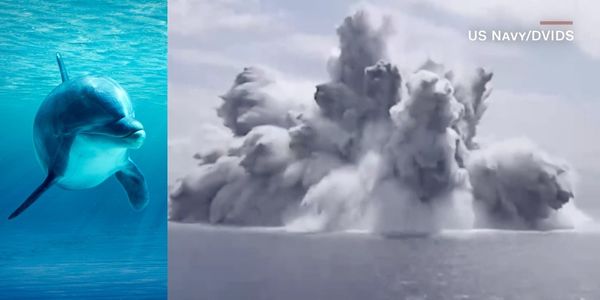
Om te testen of een vliegdekschip klaar is om oorlog te voeren heeft de VS marine een bom van 18.000 kilo in een zeegebied voor de kust van Florida tot ontploffing gebracht, een gebied vol met zeeleven en daarmee deze dieren letterlijk in stukken gereten…..* Onder de vermoorde dieren dolfijnen en walvissen…..

Erger nog: jaarlijks doet de VS marine duizenden van deze explosieve en vernietigende proeven…..

Het Care2 team is een petitie gestart tegen deze schandelijk gang van zaken, e.e.a om de marine te bewegen biologen in dienst te nemen, die ten minste kunnen proberen om zoveel mogelijk dieren uit zo’n testgebied te verjagen en als dat niet kan de test ergens anders te doen……. Lijkt me zelfs nog te veel, immers er zijn al zoveel proeven gedaan dat men makkelijk computerprogramma’s kan samenstellen waarmee men kan uitrekenen welke krachten een nieuw marineschip kan verdragen gezien de bouw, kwaliteit van gebruikt staal en de bepantsering in haar geheel….. Gelukkig vraagt het Care2 team de VS marine wel om te zoeken naar andere manieren om deze testen te doen….

‘Maar goed’, een poging om de VS marine te bewegen ten minste de dieren te verjagen of te zoeken naar een andere plek, voordat men weer een dergelijke proef doet is beter dan niets, dus lees en teken de petitie ajb en geeft het door, deze waanzin moet afgelopen zijn!!

Tot slot nog het volgende: naast de marine van de VS, mogen de wereldvernietigende oliemaatschappijen onder water jaarlijks ook nog eens een groot aantal seismische explosies doen, waarbij uiteraard het zeeleven in de buurt van die explosies in stukken wordt geblazen, ofwel wordt vermoord…….. Dit alles terwijl de zeeën worden leeggevist en worden vergiftigd met o.a olievervuiling, nucleaire vervuiling, plastic en andere chemische troep……..

Tja, de mens ‘is lekker bezig…..’

The U.S. dropped a 40,000 lb bomb on ocean wildlife

Kelsey B., Care2 Action Alerts actionalerts@care2.com

In a perfect example of U.S. priorities, the Navy detonated a 40,000 pound bomb off the coast of Florida in precious wildlife habitat, blasting it and the animals there to pieces in order to test to see if “its newest aircraft carrier…is ready for war.” And this isn’t even the last of what the Navy has planned. Every year they do thousands of these explosive, destructive tests, all to the detriment of our marine friends.

Sign the petition and demand that the Navy find another way to test their ships that doesn’t kill incalculable amounts of wildlife like dolphins and whales!

The grim number of fatalities and the extent of the environmental destruction is hard to determine not just because this blast’s size was particularly outrageous. It’s also because the Navy literally doesn’t employ trained biologists to monitor marine mammals that could be affected by their test bombs. Sign the petition and demand that the United States Navy stop needlessly killing marine animals — they must come up with new ways to test their ships!

Thank you

Kelsey
The Care2 Petitions Team

P.S. The U.S. Navy murdered countless marine animals without even trying to save them. Sign the petition to end this “testing.”

=================================

* Verder moet niet vergeten worden dat de VS marine met dit soort proeven en met oorlogsvoering de klimaatverandering extra aanjaagt….. Uit onderzoek blijkt dat oorlogsvoering een onevenredig grote aanjager is van de klimaatverandering, terwijl deze nooit wordt besproken (en meegerekend bij de oorzaken van klimaatverandering) op de meer dan lamme klimaattoppen, waar de grote vervuilers als oliemaatschappijen een oneindig grotere rol spelen dan milieugroepen, terwijl die laatsten de aarde echt willen bewaren voor de volgende generaties en bijvoorbeeld de oliemaatschappijen de aarde zoals wij die kennen in een noodtempo vernietigen, ondanks hun valse beloften (greenwashing)…….

———————————-

Zie ook: ‘VS marine mag 12 miljoen zeezoogdieren vermoorden voor onderwaterproeven…….‘ (een bericht van 19 mei 2016, ofwel onder ‘vredesduif’ Obama als president en Biden als vicepresident….)

Walvissen: Japan mag geen walvissen meer jagen, De VS ‘stapt in het gat’: Obama geeft oliemaatschappijen toestemming om met seismische explosies 138.000 walvissen te vermoorden……..‘ (een bericht van 14 april 2014)

Joe Biden heeft alweer een verkiezingsbelofte gebroken: toch olieboringen in Alaska

BP’s ‘gang naar duurzaamheid’: gaswinning in West-Afrika‘ (en zie de links in dat bericht!!)

Vanaf 2000 tot 2020 is er elk jaar 267 gigaton ijs van gletsjers gesmolten‘ (en zie de links in dat bericht!!)

‘Koninklijke Shell’: ondanks ‘groene beloften’ blijft CO2 uitstoot van dit bedrijf stijgen (en ja ‘ons’ koningshuis verdient aan de opwarming van de aarde en daarmee aan de luchtvervuiling die alleen in Nederland jaarlijks aan 18.000 mensen het leven kost en dat jaren eerder, meestal na een akelig ziekbed, dezelfde luchtvervuiling die ervoor zorgt dat jaarlijks een groot aantal kinderen long- en luchtwegklachten oploopt……)

Halve graad opwarming van de aarde zal 150 miljoen mensen het leven kosten……‘ (vergelijk dat eens met de oversterfte door het Coronavirus of een andere heftige griepgolf…….)

Shell houdt zich niet aan het klimaatakkoord: 8 bewijzen

Voor meer berichten over dolfijnen, walvisachtigen, klimaatverandering, klimaattop, luchtvervuiling, oliemaatschappijen, greenwashing en/of plastic soep: klik op het desbetreffende label, direct onder dit bericht.

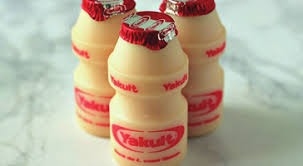
Yakult geïntroduceerd in 1935 en daarop is het bedrijf trots

Zag gisteravond toevallig een reclame voor Yakult (wat ik op tv wil zien neem ik meestal op, zodat ik de reclames kan ‘doorspoelen’ >> het gros van de reclames hoort dan ook in de wc). In deze reclame laat het bedrijf zien dat het trots is 85 jaar oud te zijn….. De ‘uitvinding’ van Yakult zou zijn gedaan door Minoru Shirota, volgens zeggen een professor.

Wat ongelofelijk dom om de nadruk te leggen op het jaar dat Yakult op de markt kwam, immers in 1935 was het fascistische Japan al een paar decennia bezig enorme oorlogsmisdaden te begaan in Korea en het was tevens de vooravond van de Japanse inval in China (1937) waar het Japanse leger nog veel gruwelijker tekeerging, zoals in Nanjing (Nanking)…….. Daar oefende het Japanse leger wekenlang vreselijke terreur uit, o.a. door het verkrachten van vrouwen en meisjes van alle leeftijden…… In totaal werden toen naar schatting 300.000 mensen vermoord…… Deze vreselijke slachting wordt dan ook wel de ‘Verkrachting van Nanjing’ genoemd…… De Japanse regeringen van na WOII hadden en hebben het gore lef om het aantal slachtoffers lager in te schatten, i.p.v. jaarlijks hun excuses aan te bieden voor deze barbarij…….. (benieuwd of de Japanse militairen destijds ook Yakult kregen dat zou me niet verbazen….)

Yakult gezond? (zoals de producent beweert) wetenschappers stellen dat niet bewezen kan worden dat Yakult je beschermt tegen bijvoorbeeld verkoudheden, griep of dat je er beter van gaat poepen (je zou met Yakult een gigantisch aantal bacteriën toevoegen aan je darmflora, echter dat doe je ook met yoghurt, karnemelk en zuurkool en die zijn heel wat goedkoper dan Yakult)…..

Kortom waarom zou je dit product kopen dat bovendien is verpakt in een klein plastic flesje, waardoor het ook nog eens slecht is voor het milieu en een enorme berg plastic toevoegt aan de al gigantische hoeveelheid waarin de wereld bij wijze van spreken verzuipt…….

Yakult? Ja kul!!

Van Nieuwenhuizen (VVD minister) over handelsmissie naar Indonesië

Vanmorgen op BNR (na 8.30 u.) VVD ‘minister’ en volksverlakker van Nieuwenhuizen over een grote handelsmissie met 140 bedrijven naar Indonesië, alweer totaal zinloos begeleid door de grootste uitkeringstrekkers van Nederland: het koningshuis. (terwijl bekend is dat dit koningshuis niets toevoegt aan zo’n handelsmissie, hoewel het meegaan van het koningshuis wel een kapitaal aan extra kosten met zich meebrengt, kosten voor de belastingbetaler en niet voor de begeleidende bedrijven, daar deze weten dat de deelname van het koningshuis je reinste kul is……)

Tussen de begeleidende bedrijven die van Nieuwenhuizen noemde, ook afvalverwerkers…… ha! ha! ha! ha! ha! ha! ha! Jarenlang hebben we de zogenaamd te ‘recycelen’ plastic naar landen als Indonesië gestuurd, waar het werd gedumpt en niet zelden zelfs in zee, of daar in de buurt….. Nu landen als Indonesië een stop hebben gezet op de import van onze rotzooi kan Nederland geld verdienen door daar bedrijven op te zetten die ons plastic wel kunnen verwerken…….

Wat is er nog duurzaam aan plastic, waarvan een groot deel niet eens is te ‘recycelen’, als je ziet dat dit plastic met zwaar vervuilende zeeschepen over de halve wereld wordt gesleept…… (bij mij in de buurt is de container voor plastic uit de ‘milieustraat’ verwijderd….)

Je kan er donder op zeggen dat wanneer die Nederlandse afvalverwerkers grond onder de voeten krijgen in Indonesië, men de milieuregels van dat land zal volgen, ook al zijn die volgens onze normen totaal onvoldoende……. Personeel daar is alvast ‘lekker’ goedkoop en rechten hebben ze amper, dus ook op dat gebied een ‘win win situatie….’

Nederland, om de ogen uit je kop te schamen…...

Shell en Exxon lobbyen voor het behoud van eenmalige plasticverpakkingen

Sharon Lerner heeft op The Interecept een uitgebreid artikel geschreven over de enorme plasticberg waar de wereld in dreigt te verstikken en de pogingen van o.a. de oliemaffia om verboden tegen gebruik van eenmalig plastic en andere plasticproducten tegen te gaan…
De manier waarop deze bedrijven e.e.a. doen is ernstige volksverlakkerij, zo bestaat er een initiatief van bedrijven die bij de productie van plastic zijn betrokken, waarmee men het volk wil laten geloven dat men er alles aan doet om plastic uit het milieu te krijgen……
Zo is er een organisatie met de naam ‘A Bag’s Life’, die een studentenproject tot winnaar heeft uitgeroepen voor een doos waarop tanden te zien zijn in de vorm van driehoeken met de woorden ‘Feed Me’ De studenten die het project wonnen kregen ieder $ 100.00 en de goegemeente gelooft dat ‘A Bag’s Life’, een onderdeel van de American Progressive Bag Allience, werkelijk een organisatie is die zich inzet tegen het gebruik van plastic…… Terwijl de American Progressive Bag Allience een organisatie is die in het leven werd geroepen door de Plastic Industry Association, een lobbyorganisatie van: Shell Polymers, LyondellBasell, Exxon Mobil, Chevron Phillips, DowDuPont en Novolex…. En beste bezoeker deze organisatie is redelijk succesvol in de VS…..
Ook hier doen bedrijven als Shell, DSM en Unilever alsof ze ‘op het rechte groene pad zijn’, echter in werkelijkheid doet men het tegenovergestelde, terwijl de wereld zoals gezegd bijna letterlijk stikt in plastic….. Zo werd een aantal maanden geleden bekend gemaakt dat bijna iedere aardbewoner microplastics in het lichaam heeft……..
Lerner geeft verder een inkijk in de recyclingsindustrie en geeft met cijfers aan dat er maar zeer weinig werkelijk wordt gerecycled (lelijk anglicisme) en als klap op de vuurpijl blijken veel gerecyclede producten zwaar gif te bevatten, stoffen die o.a. vrijkomen bij het recyclen van plastic…….
Ook aandacht voor het verschepen van miljoenen tonnen aan westers consumentenplastic, dat zogenaamd wordt gerecycled in landen als China en de Filipijnen, waar het ‘recyclen’ bestaat uit plastic verbranden, begraven of het openlijk op divers plekken te storten……. Uiteraard gebeurt dit in de buurt waar arme mensen wonen, ofwel die betalen het gelag in de vorm van een slechte gezondheid en een vroegtijdige akelige dood……..
Lees het ontluisterende artikel van Lerner en geeft het door, tijd dat ook onze politici stoppen met liegen en eindelijk wat doen, zoals hare D66 leeghoofdigheid Stientje van Veldhoven, die tot 3 keer toe werd gekozen tot groenste politicus van het jaar, maar die zo gauw ze aan het bewind kwam de ‘terminologie van haar voorgangers’ (‘waar ze zo tegen heeft gevochten…’) overnam en stelde dat de industrie het zelf wel kan regelen….. Welnu van Veldhoven, ook in het hieronder opgenomen artikel kan jij lezen hoe geweldig e.e.a. verloopt, smerige oplichter! Van Veldhoven wilde al jaren statiegeld op kleine petflesjes en blik, iets waar de VVD mordicus tegen is, en zoals gezegd: net aangetreden kwam van Veldhoven met het platgetreden cliché van haar voorgangers………
Tot slot wat betreft mijn schrijven hier: iedereen die meewerkt aan het oplichten van het volk wat betreft plastic (en luchtvervuiling) zou strafrechtelijk moeten worden vervolgd en voor jaren de bak in moeten draaien en dan meteen via de ‘Pluk-ze’-wetgeving alle kapitaal van deze figuren confisceren en gebruiken voor (echte) milieumaatregelen…… Wat een godvergeten geteisem, gadver!!! (vergeet niet dat Exxon en Shell respectievelijk in de 70er en 80er jaren van de vorige eeuw uit eigen wetenschappelijk onderzoek al wisten dat de verbranding van fossiele brandstoffen de klimaatverandering heeft veroorzaakt, waar deze bedrijven dit niet alleen onder de pet hielden, maar zelfs wetenschappers inhuurden om dit te ontkennen……. Strafrechtelijke vervolging meer dan waard!!)

WASTE ONLY

How the Plastics Industry Is Fighting to Keep Polluting the World

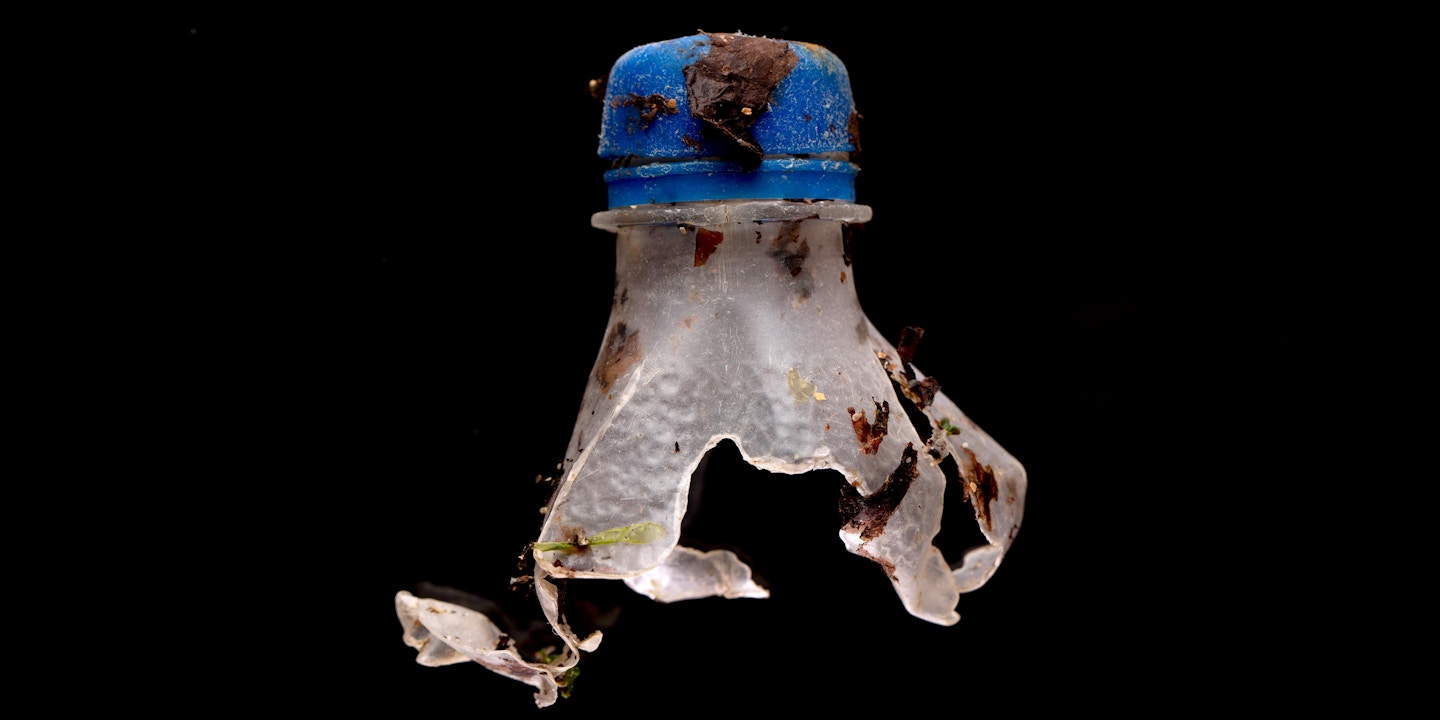
UNSPECIFIED: In this illustration taken on May 30, 2019 a selection of plastics is displayed that were found, on May 26, 2019, within a few metres on Mothecombe Beach at the mouth of the Erme Estuary in South Devon. At a glance Mothecombe, appears a spotless white sandy beach, but looking closely reveals a plethora of degraded micro plastic detritus woven into and buried beneath the seaweed, an important feeding ground for wading birds. Indistinguishable pieces of plastic, tin cans, fishing wires, hooks, and fragments of clothing materials were all found. According to the United Nations Environment Programme (UNEP), at current rates of pollution, there will likely be more plastic in the sea than fish by 2050. In December 2017 Britain joined the other 193 UN countries and signed up to a resolution to help eliminate marine litter and microplastics in the sea. It is estimated that about eight million metric tons of plastic find their way into the world's oceans every year, and that between 1.15 million to 2.41 million tonnes of plastic are entering the ocean each year from rivers. Once in the Ocean plastic can take hundreds of years to degrade, all the while breaking down into smaller and smaller 'microplastics,' which can be consumed by marine animals, and find their way into the human food chain. (Photo by Dan Kitwood/Getty Images)
A portion of plastic bottle found on Mothecombe Beach at the mouth of the Erme Estuary in South Devon, England, on May 30, 2019. Photo: Dan Kitwood/Getty Images
Sharon Lerner July 20 2019, 1:30 p.m.
THE STUDENTS AT Westmeade Elementary School worked hard on their dragon. And it paid off. The plastic bag receptacle that the kids painted green and outfitted with triangular white teeth and a “feed me” sign won the students from the Nashville suburb first place in a recycling box decorating contest. The idea, as Westmeade’s proud principal told a local TV news show, was to help the environment. But the real story behind the dragon — as with much of the escalating war over plastic waste — is more complicated.
The contest was sponsored by A Bag’s Life, a recycling promotion and education effort of the American Progressive Bag Alliance, a lobbying group that fights restrictions on plastic. That organization is part of the Plastics Industry Association, a trade group that includes Shell Polymers, LyondellBasell, Exxon Mobil, Chevron Phillips, DowDuPont, and Novolex — all of which profit hugely from the continued production of plastics. And even as A Bag’s Life was encouraging kids to spread the uplifting message of cleaning up plastic waste, its parent organization, the American Progressive Bag Alliance, was backing a state bill that would strip Tennesseans of their ability to address the plastics crisis. The legislation would make it illegal for local governments to ban or restrict bags and other single-use plastic products — one of the few things shownto actually reduce plastic waste.
A week after Westmeade’s dragon won the contest, the APBA got its own reward: The plastic preemption bill passed the Tennessee state legislature. Weeks later, the governor signed it into law, throwing a wrench into an effort underway in Memphis to charge a fee for plastic bags. Meanwhile, A Bag’s Life gave the Westmeade kids who worked on the bag monster a $100 gift card to use “as they please.” And with that, a minuscule fraction of its vast wealth, the plastics industry applied a green veneer to its increasingly bitter and desperate fight to keep profiting from a product that is polluting the world.
A Bag’s Life is just one small part of a massive, industry-led effort now underway to suppress meaningful efforts to reduce plastic waste while keeping the idea of recycling alive. The reality of plastics recycling? It’s pretty much already dead. In 2015, the U.S. recycled about 9 percent of its plastic waste, and since then the number has dropped even lower. The vast majority of the 8.3 billion metric tons of plastic ever produced — 79 percent — has ended up in landfills or scattered all around the world. And as for those plastic shopping bags the kids were hoping to contain: Less than 1 percent of the tens of billions of plastic bags used in the U.S. each year are recycled.
This is not to say that we shouldn’t try to properly dispose of the array of toys, single-use clamshells, bottles, bags, takeout containers, iced coffee cups, straws, sachets, yogurt tubs, pouches, candy bar wrappers, utensils, chip bags, toiletry tubes, electronics, and lids for everything that passes through our lives daily. We have to. But we are well past the point where the heartfelt efforts of schoolchildren or anyone else on the consumer end can solve the plastics problem. It no longer matters how many hoots we give. There is already way too much plastic that won’t decompose and ultimately has nowhere to go, whether it’s mashed into a dragon container or not.
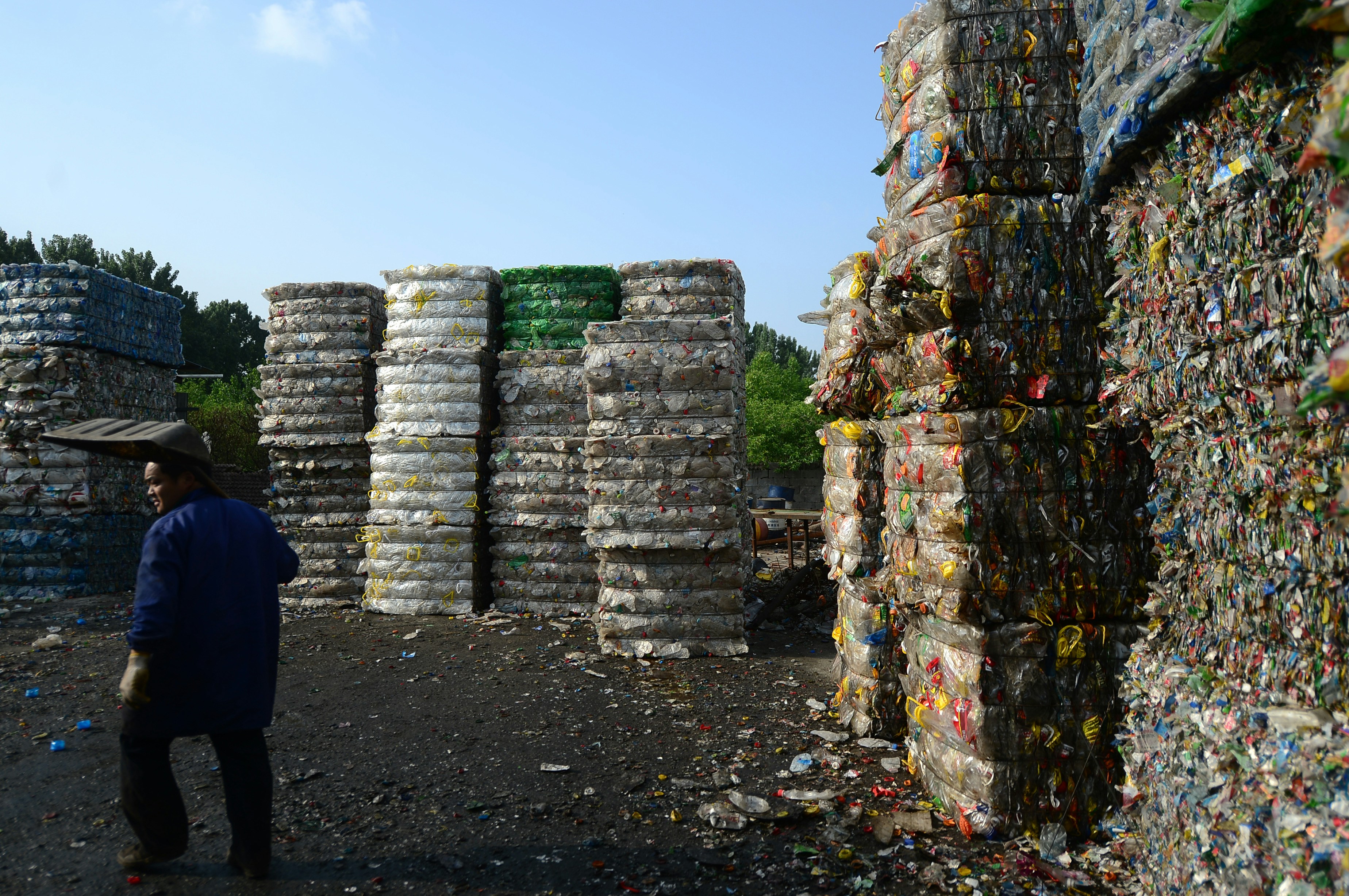
A Chinese worker labors in front of high piles of plastic bottles at the plastic bottle recycling station, which trapped a man, in Ji'nan city, east China's Shandong province, 4 May 2017.
A Chinese worker walks past piles of plastic bottles at a plastic bottle recycling station in Ji’nan city, in east China’s Shandong province, on May 4, 2017.Photo: Imaginechina via AP Images

China’s National Sword

China’s decision in 2017 to stop receiving the vast majority of plastic waste from other countries blew the flimsy lid off our dysfunctional recycling system. That year, when the Chinese government announced the National Sword policy, as it’s called, the U.S. sent 931 million kilograms of plastic waste to China and Hong Kong. The U.S. has been offloading vast bundles of scrap this way since at least 1994, when the Environmental Protection Agency (EPA) began tracking plastics exports. The practice has served to both mask the mounting crisis and absolve U.S. consumers of guilt. But in fact, much of the “recycled” plastic scrap that the U.S. sent to China appears to have been burned or buried instead of being refashioned into new products.
Although China’s turnabout made the failure of the plastics recycling system suddenly and undeniably obvious, in truth the plastics problem has been with us as long as plastic has. Over the decades, as production has grown exponentially, we’ve never managed to repurpose even one-tenth of our plastic waste. Since the EPA began tracking plastics recycling in 1994, when the U.S. recycled less than 5 percent, the rate went up only about 5 percent, peaking at 9.5 percent in 2014.
Although there is no data before 1994, the rate was almost certainly even lower then. Some of that failure can be blamed on careless consumers, but much of the waste that is dutifully put into recycling bins and bags also gets landfilled and burned because there’s no market for it.
The plastics problem has been growing exponentially for decades. In 1967, when Dustin Hoffman’s character in “The Graduate” was being advised to go into plastics, less than 25 million tons were produced each year. Even back then, the companies that made the plastic were already aware of the growing waste problem. Yet by 1980, production had doubled. Ten years later, it doubled again to 100 million tons, surpassing the amount of steel produced globally. Today, the plastics industry, estimated to be worth more than $4 trillion, generates more than 300 million tons of plastic a year according to the most recent records — nearly half of which is for single-use items, meaning that it will almost instantly become trash.
With the institution of China’s new policy in January 2018, the extent of the plastic waste crisis became dramatically more visible. Around the world, bales of used plastic that just a year earlier would have been destined for China began piling up. In the U.S., some cities have stopped their plastics recycling programs altogether.
Without good alternatives, the U.S. is now burning six times the amount of plastic it’s recycling — even though the incineration process releases cancer-causing pollutants into the air and creates toxic ash, which also needs to be disposed of somewhere. And poor people are stuck with the worst consequences of the plastics crisis. Eight out of 10 incinerators in the U.S. are in communities that are either poorer or have fewer white people than the rest of the country, and residents living near them are exposed to the toxic air pollution their combustion produces.
Globally, too, the problem is being dumped on the less fortunate and less powerful. Because the U.S. can no longer ship its plastic waste to China, much of that waste is going to Turkey, Senegal, and other countries that are ill-equipped to deal with it. In May, the most recent month for which data is available, the U.S. sent 64.9 million kilograms of plastic scrap to 58 countries. Thailand, India, and Indonesia — where more than 80 percent of waste is mismanaged, according to data published in Science — are among the countries that now find themselves besieged with U.S. plastic that’s being illegally dumped and burned.
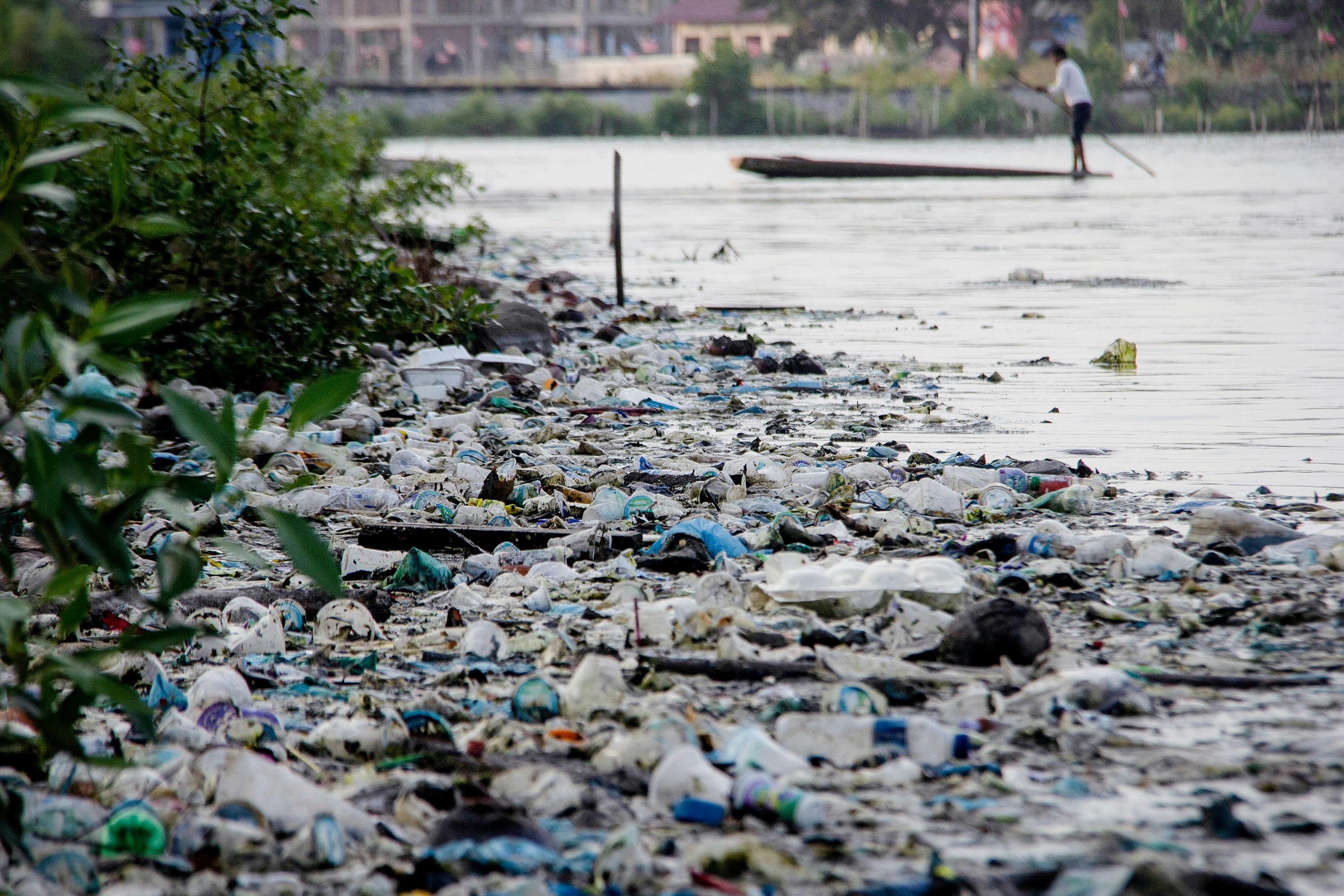
LHOKSEUMAWE, ACEH, INDONESIA - 2019/03/22: A reservoir area with various types of marine fish seen contaminated with plastic waste in Lhokseumawe, Aceh province, Indonesia. Based on the records 25 cases of marine biota in Indonesia were affected by macroplastic waste and microplastic waste from human activities. And from Greenpeace Indonesia's data, waste production in Indonesia reaches 65 million tons per year, 10.4 million tons or 16 percent is plastic waste. (Photo by Zikri Maulana/SOPA Images/LightRocket via Getty Images)
A reservoir contaminated with plastic waste in Lhokseumawe, Indonesia, on March 22, 2019. Photo: Zikri Maulana/SOPA Images/LightRocket via Getty Images

All the Plastics in the Seas

The terrifying news about plastic seems to be as inescapable as the plastic itself, tiny bits of which are now almost everywhere. One study found these “microplastics” in the Pyrenees mountain air 100 miles from the nearest city. Another found that microplastics are being turned into sewage sludge and spread on fields that grow food. And, as we know from the plastic-filled whales that regularly wash up dead, the oceans are awash in plastic waste and now contain some 150 million tons of the stuff — a mass expected soon to surpass the weight of all the fish in the seas.
We humans also have plastic lodged in our bodies. The substance often sold to us as protection from contamination is in both food and water.
Bottled water, sales of which are increasing in part because people are seeking alternatives to contaminated local water supplies, now contains plastic as well. A 2018 study found that 93 percent of bottled water samples contained microplastics. While all the big brands tested positive for microplastics, the worst was Nestlé Pure Life, which claims that its water “goes through a 12-step quality process, so you can trust every drop.”
It’s worth noting that in both 2017 and 2018, Nestlé ranked in the top three among brands whose plastic trash was most often collected in global cleanup efforts conducted by the environmental group Break Free From Plastic.
The confluence of terrible news has taken public outrage over plastic to a new level. Once regarded mostly as an eyesore or a nuisance, plastic waste is now widely understood to be a cause of species extinction, ecological devastation, and human health problems. And because more than 99 percent of plastic is derived from oil, natural gas, and coal — and because its destruction also uses fossil fuels — environmental groups now recognize plastic as a major contributor to climate change. Naturalist David Attenborough has likened the shift in public opinion over plastics to the process through which the public reached a consensus on the harms of slavery.
Between extraction, refining, and waste management, the production and incineration of plastics will add more than 850 million metric tons of greenhouse gases to the atmosphere this year alone — an amount equal to the emissions from 189 500-megawatt coal power plants, according to a report from the Center for International Environmental Law.
Recycled plastics — once seen as a sign of environmental virtue — is increasingly recognized as posing threats to our health. Plastics contain additives that determine its properties, including stability, color, and flexibility. Most of the thousands of these chemicals aren’t regulated, but it’s clear that some of those additives, which end up in recycled plastics, are dangerous. One studyfound that half of recycled plastics in India contained a flame retardant associated with neurological, reproductive, and developmental harms.
Black plastic, used in everything from children’s toys to kitchen utensils, food packaging, cellphone cases, and thermoses, appears to be particularly dangerous. The plastic is often sourced from recycled electronics that contain phthalates, flame retardants, and heavy metals, such as cadmium, lead, and mercury. Even at very low levels, these chemicals can cause serious reproductive and developmental problems.
But most of the additives aren’t tracked or well studied. “The industry has no idea what they’re putting in the plastic and who’s putting it in,” said Andrew Turner, a British chemist who recently found toxic chemicals in 40 percent of the black plastic toys, thermoses, cocktail stirrers, and utensils he tested. In some plastic, he found the chemicals present at 30 times safety standards set by governments.
Even chemicals that are regulated often have limits set for electronics but not for recycled products. “You’ve got something that wouldn’t be compliant with the regulations as an electric item because its levels are too high, but because it’s turned into a fork, there’s nothing to stop it from being used,” Turner said. Antimony, which Turner found in food containers, toys, and office supplies, “is restricted in drinking water, but not in electrical waste.” Turner and Zhanyun Wang, another scientist I spoke with who studies chemical additives to plastics, told me that they no longer use black plastic utensils. “Given the option, I’d prefer something white or clear,” said Turner, adding that he tries to avoid utensils made of any kind of plastic.
The solution to this global mess clearly has to be much bigger than personal cutlery choices. Among the organizations demanding that we push past the idea of recycling and require corporations to limit plastics production are Greenpeace, the Surfrider Foundation, As You Sow, the Rainforest Alliance and 5Gyres, an organization started by a couple who sailed across the Pacific Ocean on a raft made out of discarded bottles. Fueled by a spike in consumer frustration with products that make them complicit in the problem, plastic-free restaurants and grocery stores are now emerging.
Taxes, bans, and fees on plastic products have been catching on around the world. In March, the European Union voted to ban single-use plastics by 2021. In June, Canada followed suit, with Prime Minister Justin Trudeau vowing to not just ban single-use plastics such as bags, straws, and cutlery, but also to hold plastics manufacturers responsible for their waste. One hundred and forty-one countries, including China, Bangladesh, India, and 34 African countries, have implemented taxes or partial bans on plastics.
In the U.S., the Trump administration has worked against international efforts to crack down on plastic waste, so cities and towns are leading the way. While only eight states have enacted plastic restrictions, more than 330 local plastic bag ordinances have passed in 24 states. Some federal lawmakers have also recognized that federal action is necessary to beat back the mounting tide of plastic. “Plastics recycling is not a realistic solution to the plastic pollution crisis. Most consumer plastics are economically impractical to recycle based on market conditions alone,” Rep. Alan Lowenthal and Sen. Tom Udall wrote in a letter to President Donald Trump in June, noting that the “spread of single-use plastic products has led to widespread pollution of plastic in the U.S. and has caused a growing financial burden on state agencies, local governments and taxpayers for remediation.”
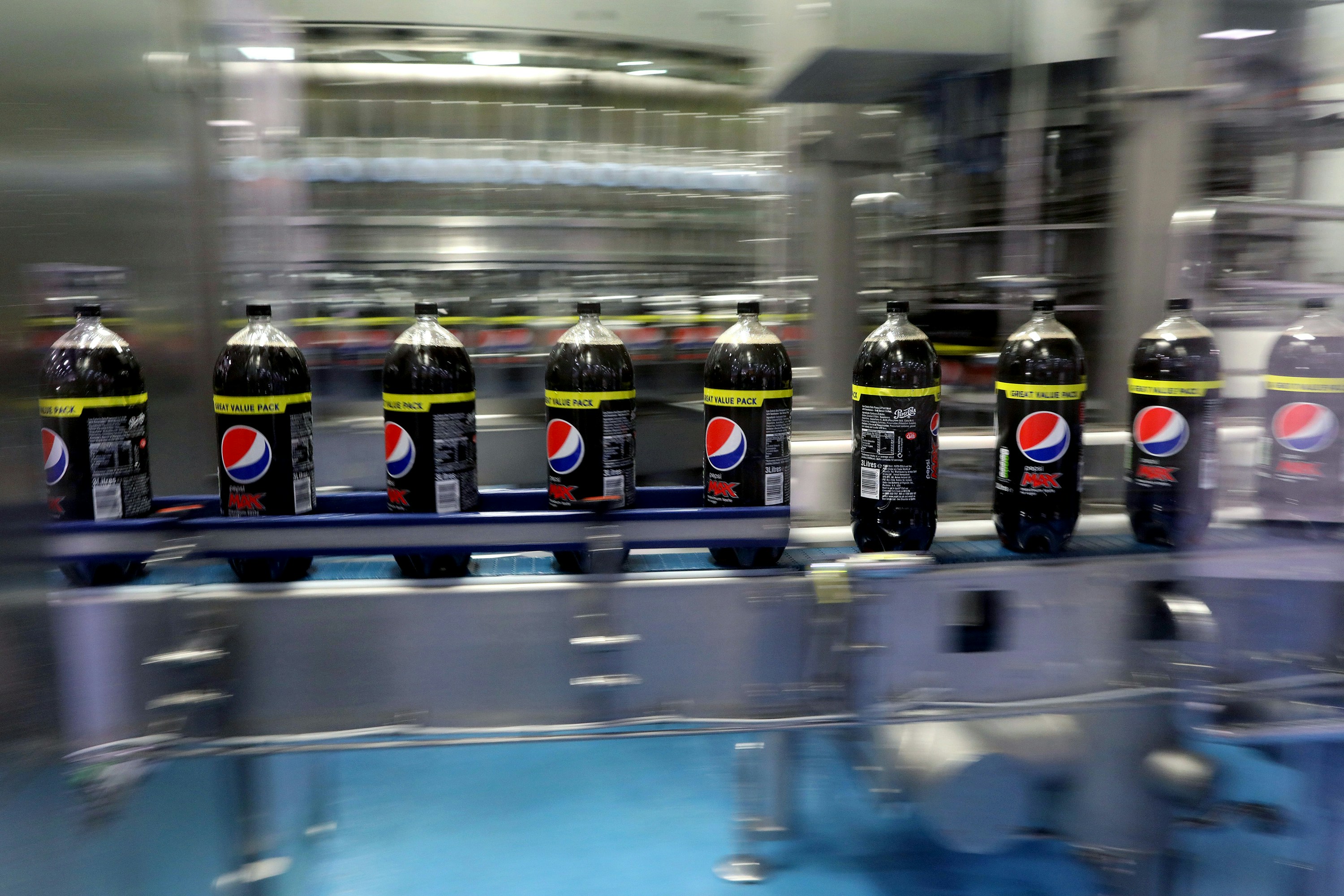
Bottles of Pepsi Max travel along the production line at the Britvic Plc factory and warehouse in Leeds, U.K., on Monday, Jan. 23, 2017. Britvic has agreed in principle to acquire Brazils Bela Ischia Alimentos Ltda, a producer of liquid concentrates and ready to drink juices. The company was founded in 1967 and is based in Astolfo Dutra, Brazil. Photographer: Chris Ratcliffe/Bloomberg via Getty Images
Bottles of Pepsi Max travel along the production line at the Britvic PLC factory and warehouse in Leeds, U.K., on Jan. 23, 2017. Photo: Chris Ratcliffe/Bloomberg via Getty Images

Big Plastic Fights Back

Even the executives at a recent plastics industry conference admit how bad the crisis is — at least to one another. All we hear is “you’ve got to get rid of plastics,” Garry Kohl, of PepsiCo, said to his fellow members of the Plastics Industry Association at a conference in April. Gathered in the gilded ballroom of a Dallas hotel, the representatives of big plastics manufacturers, recyclers, raw materials providers, extruders, brand owners, and others in the plastics business grappled aloud about their role in the crisis. Especially difficult, said Kohl, who directs packaging innovation of PepsiCo’s snacks and foods, was the widely circulated picture of a dead plastic-filled albatross. “This is very emotional for our senior leaders,” Kohl said, as the now iconic picture of the albatross — really just a few feathers and a decaying beak arranged around an assortment of bottle caps, lighter parts, and plastic bits — flashed above him. “They’re all talking about the albatross.”
Patty Long, interim president and chief executive officer of the Plastics Industry Association, the group that convened the Texas meeting, also acknowledged the pain of being the public face of an industry held responsible for the devastation of the natural world. Long admitted that she squirmed her way through another social media phenomenon that, along with the albatross, has changed the course of the war over plastics: the video of the sea turtle with a plastic straw jammed in its nostril. Long isn’t the only one. Since it was posted in 2015, the eight excruciating minutes in which marine biologists yank at the plastic straw with pliers while the creature squirms and bleeds, has been viewed 36 million times.
In this Nov. 2, 2014 photo provided by the U.S. Fish and Wildlife Service, a black footed albatross chick with plastics in its stomach lies dead on Midway Atoll in the Northwestern Hawaiian Islands. The remote atoll where thousands died is now a delicate sanctuary for millions of seabirds. Midway sits amid a collection of man-made debris called the Great Pacific Garbage Patch. Along the paths of Midway, there are piles of feathers with rings of plastic in the middle - remnants of birds that died with the plastic in their guts. Each year the agency removes about 20 tons of plastic and debris that washes ashore from surrounding waters. (Dan Clark/USFWS via AP)
In this photo provided by the U.S. Fish and Wildlife Service, a black footed albatross chick with plastics in its stomach lies dead on Midway Atoll in the Northwestern Hawaiian Islands on Nov. 2, 2014. Photo: Dan Clark/USFWS via AP
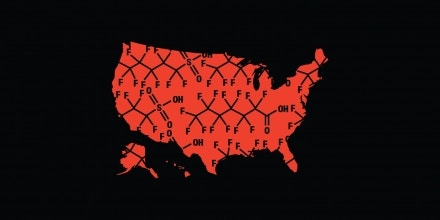
Bad Chemistry

Voor meer berichten met D66 oplichter van Veldhoven, vul haar achternaam in op het zoekvlak aan de rechterbovenkant van deze pagina.
Westland heeft gelukkig op tijd ingegrepen, alles mooi kort en groen >> geen vliegend tuig meer te zien!!

Een paar weken geleden moest ik nog het treurige nieuws brengen, dat de eens groene bermen in het Westland gekleurd waren als een ordinaire kermis, rood, geel, wit, roze en zelfs blauwe bloemen hadden zich agressief vermenigvuldigd en het was er één grote orgie van bevruchtende insecten als bijen en vlinders……..*

Vorige week, de 29ste mei, ondernam ik een expeditie naar ‘de groenste gemeente van Nederland’, nadat mijn web-brievenbus zo ongeveer ontplofte van de hartenkreten en wanhoop betuigingen van Westlanders, die ten einde raad waren. Gewapend met een mattenklopper, om CDA krielkip-burgemeester van der Tak z’n gore blote bips mee af te rossen, toog ik richting Westland.

Mensen, ik moet eerlijk toegeven, dat m’n hart van vreugde een huppel maakte, na de ordinaire felgekleurde bermen van Den Haag, gevuld met vliegend tuig als bijen, hommels en vlinders, die met hun orgies bezig waren, waren de bermen over de gemeentegrens in het Westland keurig kort gemaaid….. Echt mensen als ik daaraan terugdenk springen de tranen van geluk en ontroering me weer in de ogen.

Geen bij, vlinder, vlieg, mug of hommel te zien, heerlijk!! Gelukkig hadden de betreffende groen bedrijven, die e.e.a. hadden gemaaid, de lege plastic flessen, blikjes, glas en diverse verpakkingen in de bermen laten liggen. Het Westland is immers de enige plek op aarde:

  • de plek waar glas, blik en andere troep zichzelf omzet in een organische stof, die goed is voor grasgroei en tegen het opkomen van het vreselijke verschijnsel bloemen……..
  • die niet zal worden getroffen door de klimaatverandering,
  • waar men geen last heeft van plasticsoep, dan wel waar men mee helpt deze in stand te houden en te laten groeien,
  • waar men weet dat landbouwgif zelfs in grote hoeveelheden, niet schadelijk is voor de volksgezondheid,


Wat betreft de bijensterfte, weet men in het Westland, dat de wetenschap genetisch bezig is zelf bevruchtende planten te maken!

Westland de groenste gemeente van Nederland! Het moet maar eens afgelopen zijn, met die leugens, dat het klimaat opwarmt, dat er teveel gif in het milieu en het voedsel zit, dat de bijen en vlinders uitsterven (bovendien wie mist die ondieren nu echt???)…….. Heil Westland, heil van der Tak!

Overigens heeft men in het Westland voor alle zekerheid al een enorme hoeveelheid Roundup (Monsanto) opgeslagen en mocht dit heilzame middel onverhoopt toch verboden worden, kan men daar tot 2050 door-dood-spuiten….. Heerlijk!!

Het Westland gelukkig weer de groenste gemeente van Nederland, houzee!!

* Zie: ‘Westland, de ‘groenste gemeente van Nederland’, is schokkend lelijk gekleurd!!

Klik voor meer berichten n.a.v. het bovenstaande, op één van de labels, die u onder dit bericht terug kan vinden.

Blik met drank 80 jaar…. ‘Hoera!!!’

Las afgelopen maandag op de Ondernemer.nl, dat drank in blik 80 jaar was geworden………. Dat is echt iets om vrolijk van te worden, een hele berg afval waaraan voorafgaand, heel smerige mijnbouw heeft plaatsgevonden, een gigantische verspilling van grondstoffen!!!

In Europa drinken we gemiddeld 84 blikjes met een of andere vloeistof, zelfs met wijn tegenwoordig…… In 2014 vestigde Europa (er werd over Europa gesproken, dus ik naam aan, dat niet aleen de EU wordt bedoeld…..) een record, met een stijging van 4% werden er dat jaar 63 miljard blikjes drank verkocht……..
Excuseer: GODGLOEIENDEGODVERDOMME!!!! De Ondernemer.nl bracht dit alles, alsof het werkelijk een prestatie van formaat is, en we deze enorme verspilling en vervuiling moeten vieren, een vervuiling/verspilling die jaar op jaar groeit………..

Er volgde zelfs een verhaal over het hergebruik (‘recyclen….’) van blik, zo zou het voor 100% herbruikbaar zijn. Prachtige verhalen, er werd alleen niet bijverteld, dat er in Nederland maar bijzonder weinig blik wordt ingezameld…… Sterker nog: als het aan uw ‘duurzame’ (buurt-) supermarkt ligt, werd uw buurt en de natuur nog verder vervuild met grote petflessen en een afschaffing van statiegeld voor glazen flessen, waarvan een deel intussen geen statiegeld meer ‘kent’, waardoor o.a. het Haagse straatbeeld wordt vervuild met gebroken flessen op wegen en fietspaden…….

Er werd in het bericht op De Ondernemer.nl nog bijverteld, dat met het hergebruik van blik, er 95% wordt bespaard op de energiekosten, vergeleken met een nieuw blik….!!! Dat is precies de makke, voor het maken van blik is naast mijnbouw en enorme transportbewegingen over de wereld, ook nog eens een gigantische hoeveelheid energie nodig………..

Dan nog: in een groot deel van de wereld, verdwijnt dit blik in het milieu en wordt dit al helemaal niet hergebruikt!

Voor meer berichten over , mijnbouw, milieuvervuiling, luchtvervuiling, waterverontreiniging, plastic, statiegeld, petfles, recycling, en/of plasticsoep, klik op het desbetreffende label, onder dit bericht.

Draai hierna maar een rustgevend muziekje van Recycler, bijvoorbeeld ‘AlphaBhangraPsychedelicFunkin‘ (prachtig!!!).

Groeneweg van Perfotec heeft duurzaam plastic ontwikkeld voor groente….. ha! ha! ha! ha! ha! ha! ha!

Hoorde gisteravond, een deel van BNR’s ‘Eyeopeners’, een programma over innovaties, gepresenteerd door de neoliberale feeks Marijke Roskam. In deze aflevering o.a. Bas Groeneweg te gast, de directeur van ‘Perfotec….’ ha! ha! ha! ha! ha! ha! Wie verzint zo’n naam? Klinkt lekker betrouwbaar….. ha! ha! ha! ha! ha! Er schijnt, door supermarkten, veel in plastic geperste groente weggegooid te worden, dat komt doordat dit plastic ervoor zorgt, dat de groente snel bederft…….. Al kan Groeneweg niet zeggen, of er in de Nederlandse supermarkten veel wordt weggegooid, daar dit niet wordt bijgehouden, maar de schattingen zijn hoog, zo stelde plastickoning Groeneweg……… Perfotec heeft nu plastic ‘uitgevonden’ met gaatjes erin, dan blijft de groente veel langer goed…… ha! ha! ha! ha! ha! ha! ha! Wat dacht je ervan, om groente helemaal niet in plastic te verpakken????!!!!!!*

Het presentatie monster vroeg of dit plastic met gaatjes ook duurzaam is, nou u snapt ‘t antwoord al: ja hoor! Dit plastic uitrollen over de wereld, Perfotec maakt volgens mij ook verpakkingsmachines voor het buitenland, komt in aanmerking voor de EU milieu ‘award’ (prijs, maar Engels klinkt altijd héééél interessant!) en zit intussen al bij de laatste drie genomineerden….. ha! ha! ha! ha! ha! Olie gebruiken om plastic te maken, dat op zich al slecht is voor groente/fruit en dat vervolgens duurzaam noemen…. ha! ha! ha! ha! ha! ha! ha!

Groeneweg stelt dat Perfotec ook de groente en fruit in zeecontainers behoedt voor teveel vocht ophoping. Blijft de vraag, of de producten in zo’n container dan ook apart in plastic zijn verpakt, immers het in plastic verpakken van groenten en fruit, zorgt op zich al voor het vrijkomen van vocht (binnen de verpakking) en daarmee op snel bederf……. Met andere woorden, ik kan me voorstellen, dat er in gekoelde zeecontainers aardig wat vocht vrijkomt, dat vocht wegvangen is een goede zaak, maar daarbij alle groente en fruit extra in plastic verpakken, lijkt me op z’n zachtst gezegd contraproductief….

Vandaag las ik op de site van Care2, dat plastic in de oceanen voor extreem grote diersterfte zorgt….. Daarover later meer.

* Trouwens daarover gesproken: als u groente koopt, dat verpakt zit in plastic, kunt u dat het best eraf halen, voordat u de groente in de koelkast stopt, zo houdt u de groente langer goed. Bewaar broccoli nooit in de buurt van andere groente of fruit, dat zorgt voor bederf, doordat broccoli warmte blijft uitstralen, het best kan je broccoli goed spoelen, klein snijden en in een bewaardoos stoppen (de stronk kan u voor een groot deel in soep verwerken) en deze gewoon in de koelkast, niet in de groentela! Champignons en andere paddenstoelen kan je het best in een papieren zak bewaren, nooit in de plastic dozen bewaren, waarin de supermarkten het verkopen. In papier houd je je champignons, tot een week goed in de koelkast en zorg daarnaast dat er niets tegen de paddenstoelen aangedrukt zit! Sinaasappels en appels kan u het best in de koelkast bewaren, als u er langer dan 5 dagen mee wilt doen, je kan ze wekenlang goed houden in de koelkast!! Tot slot: een fruitschaal, is een uiterst domme vinding, het staat misschien leuk, maar zorgt ervoor dat het fruit erop snel bederft.