BBC: propaganda-orgaan voor het neoliberalistische beleid van de conservatieven

Gisteren op het blog van Stan van Houcke een artikel van the Canary, dat op 6 mei vorig jaar werd gepubliceerd. Het handelt hier over wie macht uitoefent via de BBC, de publieke Britse omroep, die intussen gerust een gezwel kan worden genoemd, als je alle aftakkingen in het buitenland ziet, zoals die in Canada.

Op dit blog heeft u al vaak kunnen lezen, over de propaganda die de BBC dag in dag uitstort over het Britse publiek, neem de Brexit of de enorme hoeveelheid leugens over de strijd in Aleppo (en het weglaten van feiten, zoals de terreur die de ‘gematigde rebellen’ uitoefende op de bevolking in Oost-Aleppo….)……..

Helaas voor diegenen die het Engels niet kunnen lezen is het een Engelstalig artikel (al kan je e.e.a. via het besturingssysteem van Microsoft laten ‘vertalen’), hier het volledige artikel:

The
sorry facts which show the BBC has moved beyond bias, into pure
propaganda
The sorry facts which show the BBC has moved beyond bias, into pure propaganda

EDITORIAL

The
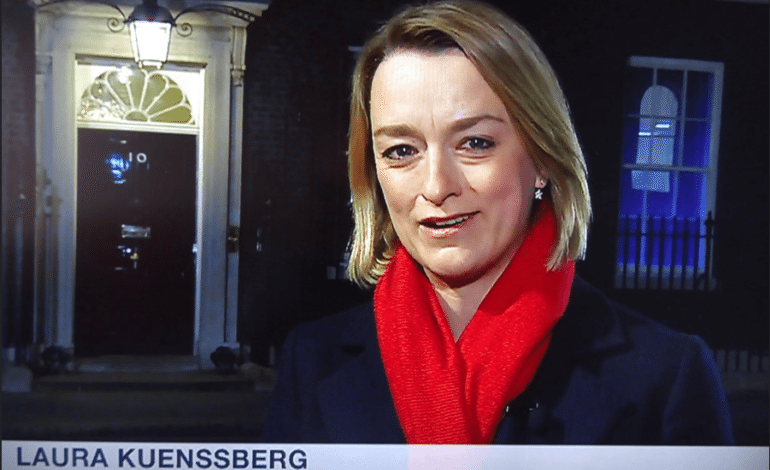
BBC and its political editor Laura Kuenssberg are 
under
fire
 this
week, following local election coverage which has been dismissed as
nothing short of propaganda by people across the country. But how did
we get here?

Who
runs the BBC?
624

Rona
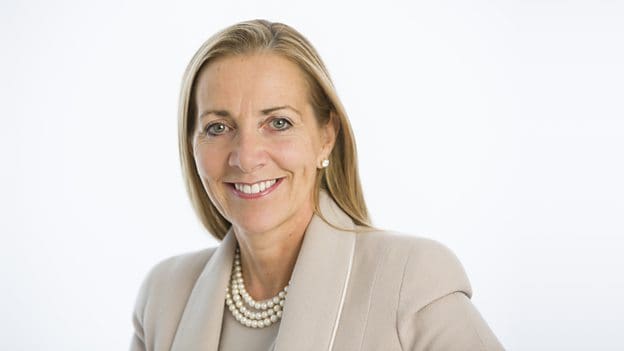
Fairhead, Chair of the BBC Trust, and board member of HSBC (image
via 
BBC)

The
current abysmal state of BBC News and Politics makes much more sense
when you see who has been appointed to plot its editorial
course.

The BBC
Trust
 is
responsible for granting licenses to all BBC outlets and stations,
managing value for money on licence fee payments and 
‘the
direction of BBC editorial and creative output’
.
The Trust consists of 12 Trustees and is headed by 
Rona
Fairhead
 – who
also happens to have been a longtime board member of HSBC bank.

As The
Canary’s
 James
Wright 
reported earlier
this year:

Fairhead
has entrenched ties to the Tory government. In fact, she and
Osborne 
are
old friends
.
Fairhead 
worked
for
 the
Conservative government as a cabinet office member, until being
appointed by the previous Conservative culture secretary – Sajid
Javid – as the new head of the BBC Trust. She 
is
still
 business
ambassador for David Cameron.

Fairhead
has also sat on the board of HSBC directors for a long time. And what
is even more shocking than her other Conservative links are claims
that she was actually appointed chairwoman of the BBC Trust to keep a
lid on Cameron’s involvement in covering up 
a
£1bn fraudulent HSBC scam on British shoppers
.
Whistle-blower 
Nicholas
Wilson
 made
various freedom of information requests that confirmed that
Fairhead’s appointment did not follow proper procedure. She was
rushed to the position after the application date closed, with no
mention of her on any contemporary media shortlist.

Her
appointment does not coincide with the normal process, and 
many
questioned
 why
a business tycoon was right for the job. 
What
it did coincide with
 was
a string of interconnected visits from the BBC, HSBC, the Houses of
Parliament and the Financial Conduct Authority (FCA) to Wilson’s
website where he details the scam and the FCA and Cameron’s
involvement in covering it up.

But
the conflicts of interest do not stop at Fairhead.

The
Director of News and Current Affairs at the BBC, James Harding, is a
former employee of the Murdoch Press. While Editor of The Times
newspaper, he was responsible for 
exposing
the identity of police blogger NightJack
 by hacking
the blogger’s email accounts
 –
which his 
legal
team then covered up
 during
a court case against the action. Harding has also gone on the record
as 
‘pro
Israel’
.

This
is the calibre of the figures responsible for hiring the news teams,
presenters and journalists who will report on matters of hacking,
privacy, and the Middle East.

These
are not trivial conflicts of interests. The two individuals primarily
responsible for driving the News and Politics agenda for the BBC, are
instead driving forward their personal and professional causes –
and the licence fee payer is footing the bill.

What
is the impact on reporting?

BBC3

These
conflicts of interest affect the reporting of News and Politics at
the BBC in a very real way. In 2013, researchers at Cardiff
University undertook a 
major
content analysis
 of
BBC coverage – funded in part by the BBC Trust. They studied the
impartiality of BBC reporting across several areas,
including the Israel-Palestine conflict, the EU, business and
economics, and politics.

The findings revealed
that:

  • Whichever
    party is in power, the Conservative party is granted more air time.

  • On
    BBC News at Six, business representatives outnumbered trade union
    spokespersons by more than five to one (11 vs 2) in 2007 and by 19
    to one in 2012.

  • When
    it comes to the Financial Crisis, BBC coverage was almost
    completely dominated by stockbrokers, investment bankers, hedge fund
    managers and other City voices. 
    Civil
    society voices
     or commentators who
    questioned the benefits of having such a large finance sector were
    almost completely absent from coverage.

On
top of this, BBC reporting of Israel-Palestine has been woefully
partisan – and in 2013, we found out one reason why.

In
2013, a devastating 
report by Electronic
Intifada
,
revealed that 
Raffi
Berg
,
online editor for BBC News, was instructing journalists to skew
reports on Israel-Palestine in favour of Israel. While hundreds of
Palestinians were losing their lives during Israel’s eight day
assault on the Gaza strip in 2012, Berg was 
emailing
journalists with ‘guidance’ to maintain a pro-Israel tone in
their reports
.
This from the report:

In
one, he asked BBC colleagues to word their stories in a way which
does not blame or “put undue emphasis” on Israel for starting the
prolonged attacks. Instead, he encouraged journalists to promote the
Israeli government line that the “offensive” was “aimed at
ending rocket fire from Gaza.”

This
was despite the fact that Israel broke a ceasefire when it attacked
Gaza on 14 November, a ceasefire which the Palestinians had been
observing — firing no rockets into Israel.

In
a second email, sent during the same period, Berg told BBC
journalists:

Please
remember, Israel doesn’t maintain a blockade around Gaza. Egypt
controls the southern border.”

He
omitted to mention that the United Nations views Israel as the
occupying power in Gaza and has called on Israel to end its siege of
the Strip. Israel’s refusal to do so is a violation of UN Security
Council Resolution 1860.”

Berg
is still in his role.

All
that’s left is propaganda

Recently,
these two vested interests – pro-neoliberalism and pro-Israel –
converged on an area of common interest: opposition to Jeremy Corbyn.

This
united bitter Blairites, Conservatives and pro-Israel groups – who
ran perhaps the 
most
toxic smear campaign
 against
the Labour party and its leader in living memory. In the run up to
the local elections on May 5, the headlines across the BBC and wider
media’s flagship television and radio programs was not the 
1
million people
 in
the UK reliant on food banks to eat, but the intrigue of the smear
campaign.

Prior
to the elections, the reporting by Kuenssberg was dominated almost
exclusively by claims of crisis within Labour, providing a platform
to a minority of bitter Blairites, and applying pressure on Corbyn to
stand aside – or at the very least prepare to.

On
Friday morning – when Corbyn’s vote had not collapsed, but
increased, compared to Miliband’s general election performance of
2015 – there was no apology for the wrongful prediction.
Instead, the narrative wheeled on regardless. While the SNP lost
their majority in Scotland, and Labour advanced in England and Wales
– this was the BBC website’s response.

The
situation brings to mind the moment when the BBC’s Andrew Marr
interviewed Noam Chomsky about the role of the mainstream media as a
propaganda service. Chomsky was discussing the role of
self-censorship by journalists, and Marr repudiated the claim,
asking:

How
can you know if I am self-censoring?” Arguing he had never been
censored, or told what to think.

Chomsky
calmly responds, as if he were explaining the non-existence of Santa
Claus to a child:

I’m
sure you believe everything you’re saying, but what I’m saying is
that if you believed something different, you wouldn’t be sitting
where you’re sitting.”

And
therein lies the rub with the role of the BBC, and the wider
mainstream media, as a vehicle by which to advance the causes of
those who own and run them. There is a monopoly of wealth and power
in our society which translates directly into a monopoly of the
media. The result is a staggering lack of diversity and pluralism of
voices and opinions in the mainstream space. The media has
become little more than a monotonous, relentless monologue – when
as a country, and a world, we need to be having a conversation.

Read
more in our recommended book:


Manufacturing
Consent: The Political Economy of the Mass Media 
Paperback
20
Apr 1995

by Edward
S Herman
  (Author), Noam
Chomsky
 (Author)

===============

Zie ook: ‘BBC World Service ontkent gekleurde informatie over Brexit te hebben verstrekt….. AUW!!

       en: ‘BBC World Service bol van EU propaganda……..

       en: ‘Why The British Said No To Europe

       en: ‘Aleppo, de BBC krijgt de deksel op de propaganda neus!!

       en: ‘BBC kan maar niet ophouden over de Brexit…….

       en: ‘BBC: propaganda-orgaan voor het neoliberalistische beleid van de conservatieven

       en: ‘BBC World Service met anti-Russische propaganda over het ‘bombardement aan fake news….’ ha! ha! ha! ha! ha! ha! ha! ha!

       en:  ‘BBC heeft met angstzaaien en propaganda de Schotten hun onafhankelijkheid ontnomen………

Voor meer berichten n.a.v. het bovenstaande, klik op één van de labels, die u onder dit bericht aantreft, dit geldt niet voor de labels: Fairhead, Harding, HSBC, Javid, Kuenssberg, N. Wilson en R. Berg.

Nog toegevoegd: link naar originele bericht, dit vanwege onduidelijkheid getoonde statistieken (al is het daar niet veel duidelijker).

Argentinië: protesten bij politiek proces tegen welzijnsactivist……

Mensen het is weer bal in Argentinië, u weet wel, het land waar uw pampa koningin Maxima opgroeide als dochter van de destijds hoge ambtenaar en fascist Zorreguieta. Dezelfde Zorreguieta die mede verantwoordelijk was voor de verdwijningen van linkse intellectuelen en vakbondsleiders/leden onder de dictatuur van de fascistische moordenaar, verkrachter, martelbeul en ontvoerder Videla. Hetzelfde Argentinië, waar paus Bergoglio alias Franciscus vandaan komt, hij was overigens een goede vriend van Videla……

Sinds 2015 is de rechtse hufter Macri president van Argentinië en hij laat er geen twijfel over bestaan: alles wat naar links ruikt moet aangepakt…… Het grote arme deel van de bevolking heeft niets te verwachten van deze neoliberale hufter.

Afgelopen nacht het bericht op BBC World Service (radionieuws van 1.00 u.), dat Milagro Sala, leider van de sociale welzijnsorganisatie Tupac Amaru, terecht staat. Zij werd gearresteerd nadat zij in januari dit jaar, commentaar had geleverd op het uitkleden van sociale projecten in de provincie Jujuy, door gouverneur Gerardo Morales, een partijgenoot en vriend van Macri……..

Sala werd op belachelijke gronden aangeklaagd voor ‘corruptie’, corruptie die juist tot volle bloei komt onder de verantwoording van de regering Macri……. Naast mensenrechtenorganisaties, heeft zelfs de VN inmiddels de vrijlating van Sala geeist, tot nu toe alles tevergeefs………

BBC berichtte over rellen buiten het gerechtsgebouw, waar Sala terecht staat.

Hier een artikel van Reuters over deze zaak, dat gisteren werd gepubliceerd: 

Tempers
flare outside court over detained Argentine social leader

By
Hugh Bronstein

BUENOS
AIRES (Reuters) – Protesters and police clashed on Wednesday
outside a courthouse in northern Argentina where a social activist is
on trial for offences including corruption, while her lawyers asked
the Supreme Court to free her on human rights grounds.

Fists
flew as supporters of Milagro Sala, leader of the Tupac Amaru social
welfare group in Jujuy province, tried to push past police who used
choke holds to keep the crowd at bay.

It
was part of a series of hearings on charges ranging from intimidation
to corruption. She has denied the allegations and said she is a
victim of political persecution.

Sala’s
lawyers asked the Supreme Court in Buenos Aires to free her based on
recommendations from United Nations and Organization of American
States human rights committees that said she has been arbitrarily
detained for nearly a year.

The
case, and the international attention it has gathered, has been a
headache for President Mauricio Macri as he tries to improve
Argentina’s image and attract foreign investment needed to help pull
the country out of recession.

Sala,
whose organization is allied with Macri’s predecessor and political
foe Cristina Fernandez, has long been accused by opponents of
skimming public housing monies that she had received in cash under
the previous Jujuy governor.

Soon
after Macri ally Gerardo Morales became governor a year ago, he
changed Jujuy’s welfare distribution system to tighten controls. Sala
was protesting the change in January when she was arrested by
provincial authorities and charged with sedition.

Rights
groups branded this a violation of free speech and the sedition
charge was quickly replaced by accusations of corruption. But Sala’s
allies said the switch looked like a manoeuvre aimed simply at
keeping her behind bars.

“Like
everyone else, Milagro Sala should be prosecuted if she has committed
serious crimes, but the Jujuy justice system must ensure that her
basic due process guarantees are respected,” Jose Miguel
Vivanco, Americas director of Human Rights Watch, told Reuters.

Early
this month, the Inter-American Commision on Human Rights called on
Argentina to release Sala. The commission, part of the OAS, said
Argentina should “give prompt attention” to recommendations
from a U.N. body in October that called Sala’s pre-trial detention
“unwarranted and arbitrary.”

The
case threatens to dent Macri’s authority as one of the region’s chief
critics of Venezuelan President Nicolas Maduro, whom he accuses of
holding political prisoners.

Macri’s
government has said the Sala case is a local one to be resolved in
Jujuy. But if the Supreme Court rules that Sala’s initial detention
was unlawful, it could turn up the pressure on Macri to find a
solution.

Eduardo
Tavani, coordinator of Sala’s legal committee told Reuters in a
telephone interview that “the court will have to make a ruling
on the arbitrary nature of Milagro’s detention.”

Leftist
activists stopped rush hour traffic on Buenos Aires’ main avenue
Nueve de Julio in a protest supporting Sala late Wednesday afternoon.

Macri
fanned the controversy early this month when he said “the
majority of Argentines” believe Sala should be tried for “a
number of important crimes” but the president did not provide
evidence for his assertions.

“Macri
says Milagro is in jail because most people think she should be,”
said Hector Recalde, a congressman from Fernandez’s Victory Front
party. “That’s about the same as a lynching.”

(Reporting
by Hugh Bronstein; editing by Grant McCool)

===========

Fijn ook dat de Nederlandse reguliere media ‘zoveel aandacht aan deze zaak besteedt……..’ Ach ja, Argentinië, het land van Videla en Zorreguieta, daar wil men uiteraard liever geen negatieve berichtgeving over brengen in de reguliere afhankelijke media, Maxima is immers populair en de regering wil zoveel mogelijk negatieve Argentijnse zaken uit de media houden……….

Zie ook: ‘Obama biedt excuses aan voor staatsgreep in Argentinië en stelt dat het VS beleid drastisch is veranderd…….. ha! ha! ha! ha! ha! ha! ha!

       en: ‘Mexico: mensenrechten- en milieuactivist Isidro Baldenegro vermoord……..

       en: ‘Berta Cáceres voorvechter gelijke rechten en milieuactivist vermoord in Honduras

       en: ‘Hillary Clinton mede verantwoordelijk voor moord op Berta Cáceres………..

       en: ‘Hondurese activiste ontvoerd en vermoord (alweer…), met instemming van de VS………

Voor meer berichten n.a.v. het bovenstaande, klik op één van de labels, die u onder dit bericht terug kan vinden, dit geldt niet voor de labels: Buenos Aires (vreemd genoeg..), G. Morales, Sala en Tupac Amaru.

Monasch dubbel gepakt door een ‘linkser’ PvdA….. ha! ha! ha! ha! ha! ha! ha!

Ben bepaald geen ‘fan’ van Monasch, ook hij ‘scoorde’ prima op het gebied van volksverlakkerij en paste derhalve goed in de PvdA.

Asscher die een neoliberaal beleid steunt en voert, wil dat de PvdA een zwenk naar links maakt en hij krijgt daar de ruimte voor. Terwijl dit niet de taak van de lijsttrekker zou zijn, daarmee zou immers de partijbestuur worden gepasseerd en indirect de PvdA achterban. Precies de reden, waarom Monasch werd uitgesloten van de lijsttrekkersverkiezing……… ha! ha! ha! ha! ha! ha! ha! ha!

Asscher die een meer linkse PvdA wil……. ha! ha! ha! ha! ha! Overigens net zo’n lachertje als het pleidooi van Monasch. Asscher wil gelijk loon in een zelfde functie, terwijl hij hier als (wanpresterend minister) 4 jaar lang niets voor heeft gedaan…… Sterker nog, Asscher heeft zelfs bezuinigd op de arbeidsinspectie, die dergelijke zaken onderzoekt!!

Eigenlijk nog veel vreemder: zelfs vrouwen verdienen in Nederland, in eenzelfde functie, met gelijke opleiding (of regelmatig zelfs hoger opgeleid), minder dan hun mannelijke collega’s!! Ook daar is de afgelopen 4 jaar amper enige verandering in gekomen……….

Dezelfde Asscher die het wel oké links vindt, dat uitkeringsgerechtigden verplicht aan het (meestal onzinnige*) werk worden gezet……

Er zijn veel meer voorbeelden te vinden, waaruit blijkt dat Asscher de afgelopen 4 jaar niets anders heeft gedaan, dan een neoliberaal beleid voeren. Met Asscher als lijsttrekker weet u zeker, dat u besodemieterd zal worden, zoals Samsom dat heeft gedaan na de verkiezingen in 2012!!

Van Jole was vanmiddag op Radio1 te horen (in de Nieuws BV), waar hij stelde, dat je als politicus nooit het ‘eerlijke verhaal’ moet vertellen……… Nee hè van Jole, waarom zou je als politicus de kiezers het eerlijke verhaal vertellen?? (overigens maar heel even geluisterd, ik werd schijtziek van het geouwehoer)

Nog een ‘nakomer’: afgelopen  maandag liet Klijnsma weten, dat 50+ Wajongers niet langer herkeurd hoeven te worden, daar ze toch niet aan werk kunnen komen…….. De Wajongers zijn de afgelopen 4 jaar afgeknepen, en dan probeert PvdA trollatorslet Klijnsma, een paar maanden voor de verkiezingen, haar vieze poten nog enigszins schoon te wassen……. Zoals u waarschijnlijk wel weet  is Klijnsma staatssecretaris onder Asscher……..

* Onzinnig werk, of zelfs werk dat al door bestaande bedrijven wordt gedaan, zoals hovenierswerk, waar die uitkeringsgerechtigden dan amper het minimumloon mee verdienen…….

Klik voor meer berichten n.a.v. het bovenstaande, op één van de labels, die u onder dit bericht terug kan vinden.

Brazilie: de VS coup is geslaagd, Temer gaat het volk 20 jaar lang uitnemen……. Financiële maffia dolblij……

De VS coup tegen de democratisch gekozen Braziliaanse regering Dilma Rousseff is gelukt. Nu draait de corrupte misdadiger Temer het volk voor 20 jaar de duimschroeven aan…….. Neoliberalisme in optima forma, de financiële maffia is dik tevreden! Intussen zijn een aantal van de regeringsleden van Temer gepakt op corruptie en andere fraude, dat blijkt geen reden tot afzetting te zijn……….

Het volgende interview gepubliceerd op The Real News Network, van 15 december 2016, vond ik op Information Clearing House (ICH), onder de volgende tekst:

Brazilian
President Temer Signs Constitutional Amendment Imposing 20 Years of
Austerity

Rousseff
was ousted to shift economic policy towards neoliberalism, and now
Temer is rewarding the banks and financial investors for backing the
legislative coup, says SOAS Professor Alfredo Saad-Filho

Hier het interview van 15 december jl. in schrift:

SHARMINI
PERIES: It’s The Real News Network. I’m Sharmini Peries, coming to
you from Baltimore. On Thursday, Brazil’s President, Michel Temer,
signed a constitutional amendment that will limit fiscal spending
over the next 20 years. The measure is highly controversial and has
sparked protests throughout the country over the last few weeks.
Critics say that the amendment commits Brazil to austerity for the
next 20 years by limiting spending regardless of population or GDP
growth. Spending increases are only connected to inflation growth.
According to a recent poll, only 24% of the population supported and
60% are opposed to it. Many also view President Temer as being
illegitimate since he came into office through a legislative coup.
That was when Workers Party President Dilma Rousseff was ousted on
accusations of having committed administrative irregularities.

Joining
us now from London to discuss this is Alfredo Saad-Filho. Alfredo is
a Professor of Political Economy at the School of Oriental and
African Studies, the University of London, and was a Senior Economic
Affairs Officer at the United Nations Conference on Trade and
Development. Alfredo, thank you so much for joining us today.

ALFREDO
SAAD-FILHO: Thank you very much for having me.

SHARMINI
PERIES: Alfredo, let’s start by giving us some detail of the
constitutional amendment that Brazil is now implementing, that’s been
approved after being afloat for a few weeks now. What will it do?

ALFREDO
SAAD-FILHO: This constitutional amendment, as you explained in your
introduction, limits government spending in all areas by the Federal
Executive, by the Legislature and the judicial system to spending
this current year plus the rate of inflation for the next 20 years.
This is what it is intended to do: the idea is to limit the
government deficit and to provide credibility to economic policy in
Brazil.

SHARMINI
PERIES: Now, there’s been some controversy or reports that this is
also about social spending, that it freezes social spending
regardless of GDP growth. Is that the case, and what impact will it
have if it is?

ALFREDO
SAAD-FILHO: This is exactly what it does. Social spending is the area
of the government budget that has been growing the fastest because
Brazil is a country that is aging very rapidly. Population growth has
stalled for the last 20 years or so, so the population is getting
older, and demands on the social security system have been
increasing. Which is also a peculiarity of the Brazilian
Constitution, that it is very progressive in the social realm. It has
a very… a good social charter providing education, universal
education, providing a universal health system. And this is
incompatible with the now liberal economic policies that this
administration is trying to implement. And in the attempt to break
this impasse, the government has blamed the fiscal deficit on social
spending and tried to limit the spending of the government as a whole
as a way to stall the growth, suspend the growth, of public education
and public health in Brazil.

SHARMINI
PERIES: Now, why would the Temer government, who is in a very tenuous
position as far as popularity is concerned, particularly given that
he was not elected — and a measure being introduced here and passed
now is also very unpopular — why would he be throwing himself into
such a vulnerability as far as what’s happening on the streets and so
on, if he is looking like he wants to remain the president here?

ALFREDO
SAAD-FILHO: Because this is what they were trying to achieve by
removing President Rousseff from office: trying to shift economic
policy in Brazil towards neo-liberalism. You will notice that what is
not included in the ceiling for fiscal spending is the interest that
is paid on the domestic public debt. So the banks are protected —
the financial investors are protected — but the retirees, but the
people who have illnesses, but the children in the public school
system, they are not protected, and their services will be limited,
so that the government should have enough money to pay the banks.
This is exactly what is happening in Brazil at the moment, which is a
political priority and President Temer is paying those who supported
him.

SHARMINI
PERIES: And the other question is why was this done through a
constitutional amendment, rather than a piece of legislation?

ALFREDO
SAAD-FILHO: Because the public expenditure in health and education
and the public pensions paid by the State, they are all set in the
Constitution. So you would need something of that legal status in
order to limit those outlays.

SHARMINI
PERIES: All right, then the people are protesting on the streets.
What do you think the short-term and the long-term effects of this
measure will be on Brazilians?

ALFREDO
SAAD-FILHO: In the long term, evidently it’s a decline of the size of
the State. You will notice the absurdity. The education budget is 33
billion reals at the moment. The health budget is 94 billion reals.
The total fiscal deficit is 170 billion reals. But the government
provides in subsidy each year 200 billion reals. So subsidies for
large companies, subsidies for entrepreneurs are fine. The payment of
the interest on the domestic debt of the government, that is about 7%
of GDP — that is fine. But education and health, they have to be
limited.

So
this is the reason why there has been a lot of resistance against
this particular measure. And President Temer, whose popularity is now
stuck in single digits — he is less popular than President Rousseff
was at the end of her administration — President Temer is trying to
present this constitutional amendment as a political victory. But it
may well be that this is really the end of his administration.

SHARMINI
PERIES: Well, how is it that a very unpopular president with an
unpopular Congress, with a very unpopular constitutional amendment,
gets it all through? I guess he’s putting his political life on the
line here because of the investigations that have also been underway
and there’s been some determination on all of that. So it doesn’t
look like he’s actually going to be able to even run in the next
election. Would you explain all of that to us?

ALFREDO
SAAD-FILHO: He cannot run in the next presidential elections that are
scheduled for 2018 because he has been judged guilty in a case of
corruption, and therefore rendered ineligible. So, one of the many
paradoxes of the political situation in Brazil at the moment is that
the current president cannot run for his own office in the future. It
is absurd.

Now,
President Temer is in a very tenuous position, but he does have a
majority support in Congress, which is a very unpopular Congress,
with a large number of members of Congress being accused of
corruption and other misdemeanors. Now, even though the political
system is highly unpopular, the President is there to deliver
something that was promised when he was leading the conspiracy to
overthrow President Rousseff. This is what he is trying to do, and
any hesitation on his part will lead to — almost inevitably lead to
— his removal from office.

Now,
notice the date: if President Temer is removed from office or forced
to resign before the 31st of December — this year — then there will
be direct elections for a president in Brazil. If he resigns or is
forced to step down next year, then there will not be direct
elections and Congress will elect someone indirectly to complete the
administration until 2018. So there is a race going on. This
administration is extremely fragile, and if the president steps down,
there will be elections, but my bet is that he will not step down
right now. He will wait at least until the end of the month, try to
coast until the beginning of the next year, so that Congress will be
able to elect someone that they trust, while in elections you do not
know what you’re going to get.

SHARMINI
PERIES: Right. Alfredo, there is a large number of legislative and
Senate lawmakers that are being investigated at the moment for their
corruption, or accusations of corruption and so on, and in an article
in The Globe and Mail a few months ago, they put this number at a
very high rate — over 360 people in the Legislative Branch being
investigated. This pits a really peculiar situation in terms of
governance in Brazil with the courts and the legal system against the
Legislative Branch. What do we make of this and what can we expect in
the next few months?

ALFREDO
SAAD-FILHO: Corruption is the way in which the Brazilian political
system works. The law says that financing for political campaigns and
political parties has to follow a particular route, but that route is
insufficient to support very expensive campaigns that have been
taking place in the country recently. So a lot of the funding for
politicians and for candidates has to go through illegal channels.
This is absolutely well-known in the country. It has always been
well-known, but it has become a major political issue right now.

The
judicial system has been pursuing a number of leads of corruption,
but it is very, very important not to have any illusions about what
is going on. This is a dispute between groups, between cliques, to
see which one is the most prominent power in the Republic — and at
the moment the most prominent power is the judiciary. There are no
controls essentially over the judiciary in Brazil. It is divided
within itself. Every day there are newspaper headlines about fights
between members of the Supreme Court and between judges at the lower
level than the Supreme Court itself. And they fight between
themselves, they fight with the lawmakers, particularly in the Senate
at the moment, and they all try to push President Temer to do their
bidding. It is an extremely confusing, chaotic, even political
situation where we see, at the same time, the disintegration of
democracy in the country, and the collapse of the Constitution. It
does not look good, and I suspect that the Brazilian Constitution
will not survive for very long.

SHARMINI
PERIES: All right. Alfredo, I thank you so much for joining us today,
and we’ll be following this over the next few months, and I hope you
join us again very soon. Thank you.

ALFREDO
SAAD-FILHO: Thank you so much.


SHARMINI
PERIES: And thank you for joining us on The Real News Network.

Alfredo
Saad-Filho
 is
Professor of Political Economy at the School of Oriental and African
Studies (SOAS), University of London, and was a senior economic
affairs officer at the United Nations Conference on Trade and
Development. He has degrees in Economics from the Universities of
Brasilia (Brazil) and London (SOAS), and has taught in universities
and research institutions in Brazil, Canada, Japan, Mozambique,
Switzerland and the UK. His research interests include the political
economy of development, industrial policy, neoliberalism, democracy,
alternative economic policies, Latin American political and economic
development, and inflation and stabilisation.

Voor meer berichten n.a.v. het bovenstaande, zoals die met Rousseff en Temer, klik op de betreffende labels, die u onder dit bericht terg kan vinden, dit geldt niet voor de labels, Saad-Filho en Peries.

Jozias van Aartsen: “Iedereen wordt gelijk behandeld in Nederland….” ha! ha! ha! ha! ha! ha! Wel een goed plan overigens!

De mislukte VVD praalhans van Aartsen liet gisteren, als reactie op het niet afgeven van een vergunning voor een islamitisch gebedshuis weten, dat iedereen in Nederland gelijk wordt behandeld…… ha! ha! ha! ha! ha! ha! ha! ha! ha! ha! ha! ha! ha! ha! ha! ha! ha! ha!

Dat merken we elke dag weer van Aartsen! Neem de uitspraken van rechters in zaken waarbij bekende bestuurders de verdachten zijn, steevast volgt het cliché bij de uitspraak, dat de straf minder hoog uit is gevallen dan normaal is, daar de ‘goede naam’ van de ‘VIP’ al door het slijk is gehaald…… Terwijl deze figuren een voorbeeldfunctie hebben en derhalve zwaarder zouden moeten worden gestraft dan iemand, die zo’n functie niet bekleedt…..

Of neem het betalen van belasting, de onderlaag betaalt in feite veel meer belasting dan de toplaag, die weliswaar in percentage meer betaald, maar onevenredig veel meer overhoudt, dan iemand met een minimumloon, of iemand die zelfs daaronder uitkomt met het inkomen………. Hierover zo meer. Dan zijn daar nog figuren als de Oekraïense juntaleider Porosjenko, die in een aparte regeling met de belastingdienst, het door hem gestolen geld gunstig kan wegzetten in Nederland………… Porosjenko ontduikt de belastingen van het straatarme Oekraïne, dus reken maar dat hij een stuk minder betaalt dan de 37%, die de onderlaag hier moet ophoesten…… Wedden dat hij zelfs dik onder de 15% betaalt, op zijn bij elkaar gestolen vermogen……

Dat laatste geldt ook voor puissant rijke bedrijven, die hier middels afspraken met de belastingdienst, tegen een schijntje de belasting in eigen land kunnen ‘ontwijken’ (een eufemisme voor ‘legaal’ misdadig belastingontduiken in eigen land, zoals o.a. Griekse bedrijven doen in Nederland..)….

Ondanks dat de grote onderlaag een toeslag krijgt voor de huur, moeten zij alsnog één derde van hun inkomen verwonen…….. Gaat u maar eens na hoeveel er dan overblijft om van te leven, terwijl daar nog gas, elektra, de zorgpremie en een groot aantal (regionale) belastingen van betaald moeten worden  ……..

Over die huurders gesproken: ondanks dat ze praktisch geen rechten meer overhebben, betaalt een groot deel van de huurders meer voor hun huis, dan de eerste beste koper, alsof dat een gelijke behandeling en rechtvaardig is……….

Terug naar de reden voor die uitspraak door van Aartsen: de psychopathische haat-imam Fawaz Jneid (kort: Fawaz) wil een gebedshuis openen in de Haagse wijk Transvaal. Volgens van Aartsen kan dit niet, daar de erfpacht dit niet toestaat…… Let wel: het gaat hier om een pand, dat eerder al een islamitisch gebedshuis was.

Deskundigen maken gehakt van de uitspraak die van Aartsen deed, daar (houdt u vast) de erfpacht is afgekocht voor dat pand…… ha! ha! ha! ha! ha! ha! ha! ha! ha! ha! ha! Kortom de pedante ezel van Aartsen lult voor de zoveelste keer uit de nek en dat alleen, daar hij de PVV rechts wil inhalen!!

 Ach ja, alleen als het de VVD uitkomt wordt iedereen gelijk behandeld en ondanks dat men dit in deze misdadigers partij propageert (die gelijke behandeling van iedereen) is dat, zoals u ongetwijfeld weet, in de praktijk meestal niet het geval….. Intussen hebben de VVD en de PvdA de oude klassenmaatschappij nieuw leven ingeblazen, nu nog even dit bouwwerk van onrecht vervolmaken en klaar is de ijskoude, inhumane neoliberale politiek!!

Klik voor meer berichten n.a.v. het bovenstaande, op één van de labels, die u onder dit bericht terug kan vinden.

Chomsky: socialisme voor het kapitaal van de rijken en kapitalistisch afknijpen voor de armen

Las gisteren een verslag van een interview met Noam Chomsky op het blog van Stan van Houcke, hij plaatste het onder de titel ‘Noam Chomsky: Socialism for the Rich’ (origineel komt van Truthout).

Chomsky geeft een analyse van het hedendaagse kapitalisme en concludeert terecht, dat wat betreft de welgestelden in tijden van crises plotsklaps socialistische regels van stal worden gehaald, om hun kapitaal te beschermen.

Een en ander zagen we nadat de huidige crisis in 2008 begon, de grote banken, die de crisis NB veroorzaakten, werden met honderden miljarden aan belastinggeld op de been gehouden, daar ze ‘te groot waren om failliet te laten gaan’ (too big to fail)…… Terwijl onder kapitalistische regels deze banken failliet waren gegaan en daarmee de welgestelden hadden meegetrokken in hun val (althans wat betreft risicovolle investeringen, uiteraard niet voor het geld dat ze in belastingparadijzen hadden ondergebracht >> wat mij betreft een zware misdaad!!)…….

Deze manier van doen, zou hooguit passen in een socialistisch systeem, dat ten gunste stond van de armsten……. Wat betreft die armsten, voor hen geldt, zeker in de VS (maar ook hier), dat zij afgeknepen worden met kapitalistische wet- en regelgeving. Na de crisis in 2008 zijn de armen in Nederland er met 20 miljard op achteruit gegaan, de middengroepen met 30 miljard (maar die hebben nog wat vet op de botten, ook al doen ze nu net of ze arm zijn), terwijl de welgestelden in ons land, houdt u vast, er met 50 miljard euro op vooruit zijn gegaan…!!!

In feite zou je dat laatste, die 50 miljard erbij voor de rijken, ook een vorm van socialisme voor de rijken kunnen noemen………. Een schande, die een revolutie waard zou zijn!!!

Hier het interview met Chomsky:

SOCIALISM
FOR THE RICH, CAPITALISM FOR THE POOR: AN INTERVIEW WITH NOAM CHOMSKY


Sunday,
11 December 2016 00:00 
By C.J.
Polychroniou
,
Truthout | Interview

How
did we reach a historically unprecedented level of inequality in the
United States? A new documentary,
 Requiem
for The American Dream
,
turns to the ever-insightful Noam Chomsky for a detailed explanation
of how so much wealth and power came to be concentrated in so few
hands. Click here to order this DVD by making a donation to Truthout
today! 

The
United States is rapidly declining on numerous fronts — collapsing
infrastructure, a huge gap between haves and have-nots, stagnant
wages, high infant mortality rates, the highest incarceration rate in
the world — and it continues to be the only country in the advanced
world without a universal health care system. Thus, questions about
the nature of the US’s economy and its dysfunctional political system
are more critical than ever, including questions about the status of
the so-called American Dream, which has long served as an inspiration
point for Americans and prospective immigrants alike. Indeed, in a
recent documentary, Noam Chomsky, long considered one of America’s
voices of conscience and one of the world’s leading public
intellectuals, spoke of the end of the American Dream. In this
exclusive interview for Truthout, Chomsky discusses some of the
problems facing the United States today, and whether the American
Dream is “dead” — if it ever existed in the first place.

C.J.
Polychroniou: Noam, in several of your writings you question the
usual view of the United States as an archetypical capitalist
economy. Please explain.

Noam
Chomsky:
 Consider
this: Every time there is a crisis, the taxpayer is called on to bail
out the banks and the major financial institutions. If you had a real
capitalist economy in place, that would not be happening. Capitalists
who made risky investments and failed would be wiped out. But the
rich and powerful do not want a capitalist system. They want to be
able to run the nanny state so when they are in trouble the taxpayer
will bail them out. The conventional phrase is “too big to
fail.”

The
IMF did an interesting study a few years ago on profits of the big US
banks. It attributed most of them to the many advantages that come
from the implicit government insurance policy — not just the
featured bailouts, but access to cheap credit and much else —
including things the IMF researchers didn’t consider, like the
incentive to undertake risky transactions, hence highly profitable in
the short term, and if anything goes wrong, there’s always the
taxpayer. Bloomberg Businessweek estimated the implicit taxpayer
subsidy at over $80 billion per year.

Much
has been said and written about economic inequality. Is economic
inequality in the contemporary capitalist era very different from
what it was in other post-slavery periods of American history?

The
inequality in the contemporary period is almost unprecedented. If you
look at total inequality, it ranks amongst the worse periods of
American history. However, if you look at inequality more closely,
you see that it comes from wealth that is in the hands of a tiny
sector of the population. There were periods of American history,
such as during the Gilded Age in the 1920s and the roaring 1990s,
when something similar was going on. But the current period is
extreme because inequality comes from super wealth. Literally, the
top one-tenth of a percent are just super wealthy. This is not only
extremely unjust in itself, but represents a development that has
corrosive effects on democracy and on the vision of a decent society.

What
does all this mean in terms of the American Dream? Is it dead?

The
“American Dream” was all about class mobility. You were
born poor, but could get out of poverty through hard work and provide
a better future for your children. It was possible for [some workers]
to find a decent-paying job, buy a home, a car and pay for a kid’s
education. It’s all collapsed — and we shouldn’t have too many
illusions about when it was partially real. Today social mobility in
the US is below other rich societies.

Is
the US then a democracy in name only?

The
US professes to be a democracy, but it has clearly become something
of a plutocracy, although it is still an open and free society by
comparative standards. But let’s be clear about what democracy means.
In a democracy, the public influences policy and then the government
carries out actions determined by the public. For the most part, the
US government carries out actions that benefit corporate and
financial interests. It is also important to understand that
privileged and powerful sectors in society have never liked
democracy, for good reasons. Democracy places power in the hands of
the population and takes it away from them. In fact, the privileged
and powerful classes of this country have always sought to find ways
to limit power from being placed in the hands of the general
population — and they are breaking no new ground in this regard.

Noam Chomsky at a SISSA event on September 17, 2012. In a democracy, the public influences policy but the US state largely works to benefit the privileged and powerful.

Noam
Chomsky at a SISSA event on September 17, 2012. In a democracy, the
public influences policy but the US state largely works to benefit
the privileged and powerful. (Photo: 
Dimitri
Grigoriou / SISSA
;
Edited: JR / TO)

Concentration
of wealth yields to concentration of power. I think this is an
undeniable fact. And since capitalism always leads in the end to
concentration of wealth, doesn’t it follow that capitalism is
antithetical to democracy?

Concentration
of wealth leads naturally to concentration of power, which in turn
translates to legislation favoring the interests of the rich and
powerful and thereby increasing even further the concentration of
power and wealth. Various political measures, such as fiscal policy,
deregulation, and rules for corporate governance are designed to
increase the concentration of wealth and power. And that’s what we’ve
been seeing during the neoliberal era. It is a vicious cycle in
constant progress. The state is there to provide security and support
to the interests of the privileged and powerful sectors in society
while the rest of the population is left to experience the brutal
reality of capitalism. Socialism for the rich, capitalism for the
poor.

So,
yes, in that sense capitalism actually works to undermine democracy.
But what has just been described — that is, the vicious cycle of
concentration of power and wealth — is so traditional that it is
even described by Adam Smith in 1776. He says in his famous 
Wealth
of Nations
 that,
in England, the people who own society, in his days the merchants and
the manufacturers, are “the principal architects of policy.”
And they make sure that their interests are very well cared for,
however grievous the impact of the policies they advocate and
implement through government is on the people of England or others.

Now,
it’s not merchants and manufacturers who own society and dictate
policy. It is financial institutions and multinational corporations.
Today they are the groups that Adam Smith called 
the
masters of mankind
.
And they are following the same vile maxim that he formulated: 
All
for ourselves and nothing for anyone else
.
They will pursue policies that benefit them and harm everyone else
because capitalist interests dictate that they do so. It’s in the
nature of the system. And in the absence of a general, popular
reaction, that’s pretty much all you will get.

Let’s
return to the idea of the American Dream and talk about the origins
of the American political system. I mean, it was never intended to be
a democracy (actually the term always used to describe the
architecture of the American political system was “republic,”
which is very different from a democracy, as the ancient Romans well
understood), and there had always been a struggle for freedom and
democracy from below, which continues to this day. In this context,
wasn’t the American Dream built at least partly on a myth?

Sure.
Right through American history, there’s been an ongoing clash between
pressure for more freedom and democracy coming from below and efforts
at elite control and domination from above. It goes back to the
founding of the country, as you pointed out. The “founding
fathers,” even James Madison, the main framer, who was as much a
believer in democracy as any other leading political figure in those
days, felt that the United States political system should be in the
hands of the wealthy because the wealthy are the “more
responsible set of men.” And, thus, the structure of the formal
constitutional system placed more power in the hands of the Senate,
which was not elected in those days. It was selected from the wealthy
men who, as Madison put it, had sympathy for the owners of wealth and
private property.

This
is clear when you read the debates of the Constitutional Convention.
As Madison said, a major concern of the political order has to be “to
protect the minority of the opulent against the majority.” And
he had arguments. If everyone had a vote freely, he said, the
majority of the poor would get together and they would organize to
take away the property of the rich. That, he added, would be
obviously unjust, so the constitutional system had to be set up to
prevent democracy.

Recall
that Aristotle had said something similar in his 
Politics.
Of all political systems, he felt that democracy was the best. But he
saw the same problem that Madison saw in a true democracy, which is
that the poor might organize to take away the property of the rich.
The solution that he proposed, however, was something like a welfare
state with the aim of reducing economic inequality. The other
alternative, pursued by the “founding fathers,” is to
reduce democracy.

Now,
the so-called American Dream was always based partly in myth and
partly in reality. From the early 19th century onward and up until
fairly recently, working-class people, including immigrants, had
expectations that their lives would improve in American society
through hard work. And that was partly true, although it did not
apply for the most part to African Americans and women until much
later. This no longer seems to be the case. Stagnating incomes,
declining living standards, outrageous student debt levels, and
hard-to-come-by decent-paying jobs have created a sense of
hopelessness among many Americans, who are beginning to look with
certain nostalgia toward the past. This explains, to a great extent,
the rise of the likes of Donald Trump and the appeal among the youth
of the political message of someone like Bernie Sanders.

After
World War II, and pretty much up until the mid-1970s, there was a
movement in the US in the direction of a more egalitarian society and
toward greater freedom, in spite of great resistance and oppression
from the elite and various government agencies. What happened
afterward that rolled back the economic progress of the post-war era,
creating in the process a new socio-economic order that has come to
be identified as that of neoliberalism?

Beginning
in the 1970s, partly because of the economic crisis that erupted in
the early years of that decade and the decline in the rate of profit,
but also partly because of the view that democracy had become too
widespread, an enormous, concentrated, coordinated business offensive
was begun to try to beat back the egalitarian efforts of the post-war
era, which only intensified as time went on. The economy itself
shifted to financialization. Financial institutions expanded
enormously. By 2007, right before the crash for which they had
considerable responsibility, financial institutions accounted for a
stunning 40 percent of corporate profit. A vicious cycle between
concentrated capital and politics accelerated, while increasingly,
wealth concentrated in the financial sector. Politicians, faced with
the rising cost of campaigns, were driven ever deeper into the
pockets of wealthy backers. And politicians rewarded them by pushing
policies favorable to Wall Street and other powerful business
interests. Throughout this period, we have a renewed form of class
warfare directed by the business class against the working people and
the poor, along with a conscious attempt to roll back the gains of
the previous decades.

Now
that Trump is the president-elect, is the Bernie Sanders political
revolution over?

That’s
up to us and others to determine. The Sanders “political
revolution” was quite a remarkable phenomenon. I was certainly
surprised, and pleased. But we should remember that the term
“revolution” is somewhat misleading. Sanders is an honest
and committed New Dealer. His policies would not have surprised
Eisenhower very much. The fact that he’s considered “radical”
tells us how far the elite political spectrum has shifted to the
right during the neoliberal period. There have been some promising
offshoots of the Sanders mobilization, like the Brand New Congress
movement and several others.

There
could, and should, also be efforts to develop a genuine independent
left party, one that doesn’t just show up every four years but is
working constantly at the grassroots, both at the electoral level
(everything from school boards to town meetings to state legislatures
and on up) and in all the other ways that can be pursued. There are
plenty of opportunities — and the stakes are substantial,
particularly when we turn attention to the two enormous shadows that
hover over everything: nuclear war and environmental catastrophe,
both ominous, demanding urgent action.

Copyright,
Truthout. May not be reprinted without 
permission.

C.J.
POLYCHRONIOU

C.J.
Polychroniou is a political economist/political scientist who has
taught and worked in universities and research centers in Europe and
the United States. His main research interests are in European
economic integration, globalization, the political economy of the
United States and the deconstruction of neoliberalism’s
politico-economic project. He is a regular contributor to Truthout as
well as a member of Truthout’s Public Intellectual Project. He has
published several books and his articles have appeared in a variety
of journals, magazines, newspapers and popular news websites. Many of
his publications have been translated into several foreign languages,
including Croatian, French, Greek, Italian, Portuguese, Spanish and
Turkish.

RELATED
STORIES

Plutonomy
and the Precariat: On the History of the US Economy in Decline 

By
Noam Chomsky, 
TomDispatch |
News Analysis

Plutocracy
the First Time Around: Revisiting the Great Upheaval and the First
Gilded Age

By
Steve Fraser, 
TomDispatch |
News Analysis

Capitalism
Killing You? Income Sharing Could Save Our Lives

By
Matt Stannard, 
Occupy.com |
Op-Ed

http://www.truth-out.org/opinion/item/38682-socialism-for-the-rich-capitalism-for-the-poor-an-interview-with-noam-chomsky

Voor meer berichten n.a.v. het bovenstaande, klik op één van de labels, die u onder dit bericht terug kan vinden, dit geldt niet voor de labels: Chomsky, Madison en A. Smith.

Tom van den Nieuwenhuijzen stapte van de VVD over naar GroenLinks vanwege ‘het decorum…’ ha! ha! ha! ha! ha! ha!

In ‘Hemmen’, het BNR programma van oliebol Roelof Hemmen, vanmiddag na 12.30 u. o.a. Tom van den Nieuwenhuijzen. Hemmen had 3 mensen die op de lijst staan voor de komende Kamerverkiezingen.

Na het voorstellen, schoot ik een in een lachstuip van 20 minuten. Van den Nieuwenhuijzen, vertelde dat hij van de VVD (actief lid JOVD) overstapte naar GroenLinks. Niet omdat de VVD geen donder doet tegen de luchtvervuiling en daarmee tegen de klimaatverandering, nee omdat het VVD-decorum van Nieuwenhuijzen niet aanstond……. De pakken en mantelpakjes op de congressen vond van den Nieuwenhuijzen maar niets………. ha! ha! ha! ha! ha! ha! ha! ha! ha! ha! ha! ha! ha! ha! ha! ha! ha! ha! ha! ha! ha! ha! ha! ha! ha! ha! ha! ha! ha! ha!

Onbedoeld gaf van den Nieuwenhuijzen hier precies aan, wat er mis is met GroenLinks: als deze partij mee mag doen aan het dagelijks bestuur, of dat nu gemeenten of provincies zijn, is deze partij één op één inwisselbaar met de neoliberale VVD!!

Voor meer berichten n.a.v. het bovenstaande, klik op één van de labels, die u onder dit bericht terug kan vinden, dit geldt niet voor het label ‘T. Van den Nieuwenhuijzen’.

Samsom en Asscher: ‘Laat horen die stem…’ ha! ha! ha! ha! ha! ha! ha!

Toevallig kwam ik gisteren de volgende boodschap tegen, naast een gevonden bericht:

Ha! ha! ha!  ha! ha! ha! ha! ha! ha! ha! ha! ha! ha! ha! ha! ha! ha! ha! ha! ha! ha! ha! ha! ha! ha! ha! ha! ha! ha! Met een grijns op de domme kop de bevolking besodemieteren…….

Laat horen die stem? Die stem op wie?

Wat een keus!!

Samsom:

‘Die stem’ op de enorme PvdA leugenaar, die velen in de diepe ellende heeft gestort, ook al beloofde hij voor de laatste Kamerverkiezingen, niet de zwaksten aan te pakken, maar uiteindelijk z’n onvoorwaardelijke steun gaf aan alle maatregelen, die het tegenovergestelde bewerkstelligden??? Stemmen op de leugenaar Samsom die een beleid verdedigde waarmee nu meer dan 4 miljoen mensen, tegen-, op- of onder de armoedegrens moeten leven????

Stemmen op de ploert die de gehandicapten in 2012 nog op het Malieveld beloofde, dat de regering kon vergeten aan de werkplek van deze gehandicapten te komen, maar amper een half jaar later een kabinet smeedde, dat precies juist dat wel heeft gedaan?? Overigens een zaak waar Samsom zijn onvoorwaardelijke steun voor gaf!! Stemmen op de paljas die het gore lef had z’n kinderen te misbruiken voor verkiezingspropaganda???

Stemmen op de smeerlap die in een interview na de formatie van Rutte 2, met dezelfde grijns op z’n kop (zoals hierboven) durfde te zeggen, dat hij na eerst 5 minuten (tijdens het eerste formatiegesprek) in de ogen van Rutte te hebben gekeken, het PvdA verkiezingsprogramma in de prullenbak schoof……..

Asscher:

Of ‘die stem’ op de andere PvdA volksverlakker, die er als minister voor zorgde dat de arbeiders een groot deel van de door hen bevochten rechten kwijtraakten?? Stemmen op kwal Asscher die nu maar niet kan ophouden over hoe geweldig zijn beleid de afgelopen 4 jaar was en tegelijkertijd stelt dat er veel moet veranderen, daar de verkeerde mensen de dupe zijn geworden van zijn eigen neoliberale wanbeleid?? Stemmen op diezelfde schoft, die uitkeringsgerechtigden, die NB in de uitkering terechtkwamen door het wanbeleid van hemzelf en zijn inhumane neoliberale kabinet Rutte 2, de gemeenten preste deze uitkeringsgerechtigden uit te kleden en ze verplicht te werk te stellen……

Ook voor deze mislukte PvdA sierdrol geldt, dat hij een beleid heeft gesteund, waardoor meer dan 4 miljoen mensen in de armoede zijn beland, Dezelfde oetlul die er mede voor heeft gezorgd, dat we intussen met meer dan 1 miljoen werklozen zitten, het echte cijfer, dus inclusief de bijstandsgerechtigden en de mensen die na hun WW ‘geen recht op bijstand hadden’, daar hun partner 10 cent teveel verdiende……. Let wel, terwijl de laatste groep voor die bijstand, tijdens hun ‘werkzame jaren’ hebben betaald……

==========

Overigens zijn de genoemde feiten*, als dit niet werd genoemd door mij, van toepassing op beide PvdA oplichters, immers beiden hebben het ijskoude, inhumane neoliberale beleid van Rutte 2 uit en te na verdedigd, sterker nog: beiden verdedigen dit nog steeds………

Alsof er iets te kiezen is, als je de keus hebt tussen 2 liegende schoften, die er daarnaast voor hebben gezorgd, dat een derde kandidaat, Monasch, niet mocht deelnemen aan deze ‘democratische verkiezingen’ (overigens, ook Monasch is een enorme bedrieger, al kan hij niet tippen aan Samsom en Asscher)………

Wat een keus, Samsom of Asscher! ha! ha! ha! ha! ha! ha! ha! ha! ha! ha! ha! ha! ha! ha! ha!

Asscher liet een paar dagen geleden weten, dat de PvdA door deze voorzittersverkiezing er 3.000 leden bij heeft. Ik wed dat dit allen verblinde Asscher stemmers zijn en ben benieuwd of deze leden blijvers zijn, ik vrees het niet (voor de Partij van de Afleggers)……… Die extra leden zijn te danken aan o.a. de bovenstaande prent: iedereen kon stemmen op deze volksverlakkers, maar dat je daar eerst lid voor moest worden van de PvdA, werd er consequent niet bij vermeld, ‘ook niet’ in de radiospotjes, die tot hetzelfde opriepen….**

Laten we in godsnaam hopen en (als ik gelovig zou zijn, zou ik zeggen) bidden, dat de PvdA wordt verkleind tot een tweepersoons fractie…….. Ach er zullen nog steeds mensen genoeg zijn, die zelfs als ze 100 keer zijn genaaid door de PvdA, toch weer op deze waardeloze oplichterspartij zullen stemmen…..

* Feiten, waar er nog wel ‘een paar’ aan toe te voegen zijn…..

** Zie: ‘Samsom: ‘we moesten dit land redden, vandaar dat ik u zo enorm heb belazerd!

Klik voor meer berichten n.a.v. het bovenstaande, op één van de labels, die u onder dit bericht terug kan vinden.

Griekenland moet nog meer hervormen, bankenlobbyist Schäuble in de bocht……….

Zelfs de minieme groei in Griekenland moet eraan geloven, de bevolking moet opdraaien voor de financiële maffia en haar inhumane, neoliberale politieke slippendragers!!

Het land is in het belang van de financiële maffia ontdaan van staatseigendommen, ouderen hebben hun (veelal karig) pensioen verloren, terminaal zieken kunnen amper of niet aan medicijnen komen, de jeugdwerkloosheid, die al hoog was, is intussen tot gigantische proporties gestegen en toch moeten de Grieken nog verder afgeknepen worden, als het aan de Duitse minister van Financiën, Schäuble ligt….. Dit terwijl de grofgraaiers van de westerse banken, die niet alleen Griekenland, maar een groot deel van de wereld in een diepe en lange crisis hebben gestort, niet eens zijn vervolgd……

Datzelfde geldt voor de centrale banken, zoals De Nederlandse Bank, daar had men moeten ingrijpen, toen Nederlandse banken en andere financiële instellingen geld op de pof leenden aan Griekenland, terwijl elke imbeciel wist, dat het land de schulden nooit terug zou kunnen betalen………

Schäuble stelt doodleuk dat Griekenland geen verlichting van de schuldenlast krijgt, een schuldenlast die intussen is opgelopen van 300 miljard euro in 2010, naar 350 miljard* nu (het artikel hieronder spreekt van 330 miljard). Het is onmogelijk voor Griekenland deze schuld ooit in te kunnen lossen……. Het IMF dat zich eerder uitsprak voor Griekse lastenverlichting, lult daar al maanden niet meer over, maar stelt wel, dat Griekenland nog veel meer moet hervormen……..

Het IMF stelde dat een groot deel van de Griekse schulden zouden moeten worden kwijtgescholden, daar dit land met die schuld alleen maar dieper in de stront zakt. Blijkbaar hebben Duitsland en de bankenlobbyisten bij het IMF aan de bel gehangen en heeft men daar deze kritiek ingeslikt……….

‘Hervormen’, u weet wel, de gewone arbeiders alle rechten afnemen, hen het opgebouwde pensioen afnemen en de salarissen nog verder verlagen………. Kortom: IMF eist dat Griekenland een inhumaan, ijskoud neoliberaal beleid gaat voeren, iets dat Schäuble ook voorstaat……..

Een en ander werd vanmorgen gepubliceerd op Information Clearing House:

Greece
must reform or leave eurozone, says German minister

Greece must
implement economic reforms if it is to keep its place in the
eurozone, Germany’s finance minister has insisted, ruling out debt
relief for the country ahead of a crucial euro group meeting on
Monday.

As
the finance ministers of member states using the single currency
prepared to discuss fiscal plans for the coming year, Wolfgang
Schäuble in effect presented Greece with an ultimatum: either it
must enforce unpopular structural reforms or exit the bloc.

Athens
must finally implement the needed reforms,” he told the
newspaper 
Bild
am Sonntag in an interview
 published
on Sunday.

If
Greece wants to stay in the euro, there is no way around it – in
fact completely regardless of the debt level.”

Asked
if German voters should be prepared for the inevitability of debt
relief in the run-up to national elections next year, Schäuble
quipped: “That would not help Greece.”

Schäuble,
who also asserted the Greek budget was not burdened by debt servicing
because interest rates were now so low, made the comments as
speculation mounted over how best to put the thrice-bailed-out nation
back on the road to economic recovery. On Friday the German finance
ministry announced that short-term measures to lighten Greece’s
debt load would be among the proposals up for discussion at the euro
group meeting.

Athens’s
leftist-led government has long argued that the 
country’s
staggering €330bn debt load
 is
the single biggest impediment to sustainable growth. It is an
argument that has won 
backing
from the International Monetary Fund
.

Time
is of the essence. The economic crisis enveloping Greece is far from
over despite more than €300bn of emergency loans since 2010 when,
after its first brush with bankruptcy, it received its first EU-IMF
sponsored bailout.

Amid
relentless tax rises and budget cuts – the price of the aid –
support for the euro is falling fast with graffiti 
extolling
the virtues of the drachma
 appearing
across the capital. Euclid Tsakalatos, the Greek finance minister,
has said the situation “is as critical as it was in the summer of
2015” when, under threat of euro ejection, Athens received
its 
third
€86bn rescue package
.

With
his own popularity plummeting in the face of fury over
creditor-mandated cutbacks, the prime minister, 
Alexis
Tsipras
,
had hoped to wrap up a second review of policy measures in time for
Monday’s meeting as part of a broader strategy to secure short-term
debt relief and participation of Greek bonds in the European Central
Bank’s (ECB) quantitative easing programme. The latter, he argues, is
vital to Greece returning to international capital markets when
its 
current
bailout expires in mid-2018
.

Instead,
the review has been bogged down by disputes over contentious labour
reforms including the abolition of collective bargaining and guards
against companies laying off workers – red lines for leftists in
the ruling Syriza party. Recently the IMF has added to the pressure,
saying Athens will have to apply €4.2bn worth of extra measures to
meet fiscal targets after 2018, a demand widely seen as the tipping
point for austerity-whipped Greeks.

But
Tsipras is also acutely aware that forthcoming European elections and
the possible loss of sympathetic friends – starting with 
Italy’s
Matteo Renzi in Sunday’s referendum
 –
could spell further trouble for the eurozone’s weakest link by
quashing any chance of debt relief. Tellingly, leading Syriza cadres
and MEPs have in recent weeks underlined the need for a “plan B”
and not ruled out euro exit.

Highlighting
the significance of Monday’s euro group meeting, the EU economic
affairs commissioner, Pierre Moscovici, said discussion of fiscal
plans would take place against a backdrop of the commission calling
“for a positive fiscal stance for the eurozone as a whole”. 

Hier een verminkt twitter bericht:

Pierre Moscovici 
@pierremoscovici

The  today needs a positive fiscal stance to support growth. My thoughts ahead of tomorrow’s  http://lc.cx/ovQj 

‘Everyone is outraged’: Angry Greeks foresee Grexit and drachma’s revival >> read more

* Moet u nagaan: die schuld is opgelopen tot 350 miljard, ondanks alle maatregelen die Griekenland onder druk heeft genomen……..

Klik voor meer berichten n.a.v. het bovenstaande, op één van de labels, die u onder dit bericht terug kan vinden, heb ook het label ‘Wellink’ toegevoegd, de plork die alles behalve toezicht hield bij De Nederlandse Bank (voor berichten over het uitkleden van Griekenland, klik op het label Griekenland, of schuldenlanden).

Groot-Brittannië: ondanks de enorme bezuinigingen is de staatsschuld met 600 biljoen pond gestegen……….

Ondanks de enorme bezuinigingen in Groot-Brittannië, is de staatsschuld de afgelopen vier jaar onder de ‘conservatieve’ (lees: neoliberale) regering Cameron opgelopen met 600 biljoen pond…… ‘Dit betekent’ dat iedere Brit, inclusief de kinderen, een schuld heeft van 30.000 pond…….

Dagelijks gaan in GB 1,5 miljoen kinderen met honger naar school…….* De welgestelden in GB zijn er in dezelfde tijd gigantisch op vooruit gegaan…….. Biljonairs in GB hebben in de periode 2009 – 2015 hun inkomen meer dan verdubbeld (+ 112%!!)………..

Leve de beschaving, leve het inhumane, ijskoude neoliberalisme! Er moet nog veel meer bezuinigd worden en enorme bakken aan belastinggeld in donkere putten worden gedonderd! (de kans dat dit binnen afzienbare tijd weer nodig zal zijn, om de banken overeind te houden, is bijzonder groot…….)

* Zie: ‘Groot-Brittannië: de hongercijfers weggepoetst met de VS presidentsverkiezingen……..

Voor meer berichten n.a.v. het bovenstaande, klik op één van de labels, die u onder dit bericht terug kan vinden. ‘May’ is de huidige premier, die de taak van Cameron overnam na de Brexit, ook het beleid van May is desastreus voor het grote, arme deel van de bevolking………