Caitlin Johnstone heeft een paar weken terug een artikel geschreven waarin ze aantoont dat de steenrijke eigenaren van de reguliere (massa-) media de hersenen van het volk bewerken met neoliberale propaganda (het is overduidelijk dat deze ‘ideologie’ ten grondslag ligt aan deze gekmakende propaganda)….. Met die propaganda weten de eigenaren van deze media het volk dusdanig te manipuleren dat het stemt op de kandidaten die deze steenrijke figuren als beste kandidaten neerzetten in hun mediaorganen, ofwel van een echte democratie is al lang geen sprake meer…..
Om nog maar te zwijgen over de grote invloed die bedrijven kopen door presidentskandidaten met grote bedragen te steunen, bedragen waarmee kandidaten in de media worden geplugd, zie wat dat betreft ook Facebook dat politieke advertenties accepteert die bomvol leugens staan en dan durft Zuckerberg te blaten over Russiche manipulatie, ook al een leugen van formaat……
Hoorde op 8 juli jl. toevallig op Radio1 ene Mary ter Steege, een socioloog die het roddelen promoot, daar het goed zou zijn voor de sociale samenhang en mensen bij de les houdt, ofwel men stemt de mening die men over een bepaald onderwerp of persoon heeft af op wat anderen daarvan vinden en corrigeert mensen die een afwijkende mening hebben….. Kijk zo stelde ter Steege het niet letterlijk, maar daar komt haar onzinpraatje wel op neer……
Zoals je begrijpt wordt met roddelen tevens de mening van de eigenaren van de reguliere media als leidend onderling afgestemd, media die bewezen tientallen meters aan dossiers hebben volgeschreven met fake news (nepnieuws) en andere leugens, dit in een innige samenwerking met geheime diensten, die bekend staan om hun leugens, en liegende politici als Rutte, die men dan ook de hemel in prijst, zelfs met het Coronadossier, terwijl Rutte c.s. gigantisch heeft lopen blunderen (ook) op dat gebied en dat in feite nog steeds doet…… Dat Rutte een aartsleugenaar is heeft hij ook meermaals tijdens de Coronacrisis bewezen, bijvoorbeeld met de keiharde leugen dat de intensive care afdelingen vol lagen met jonge mensen…… En wat zeggen de reguliere media over dit soort leugens? Liegen hoort bij politiek bedrijven……..
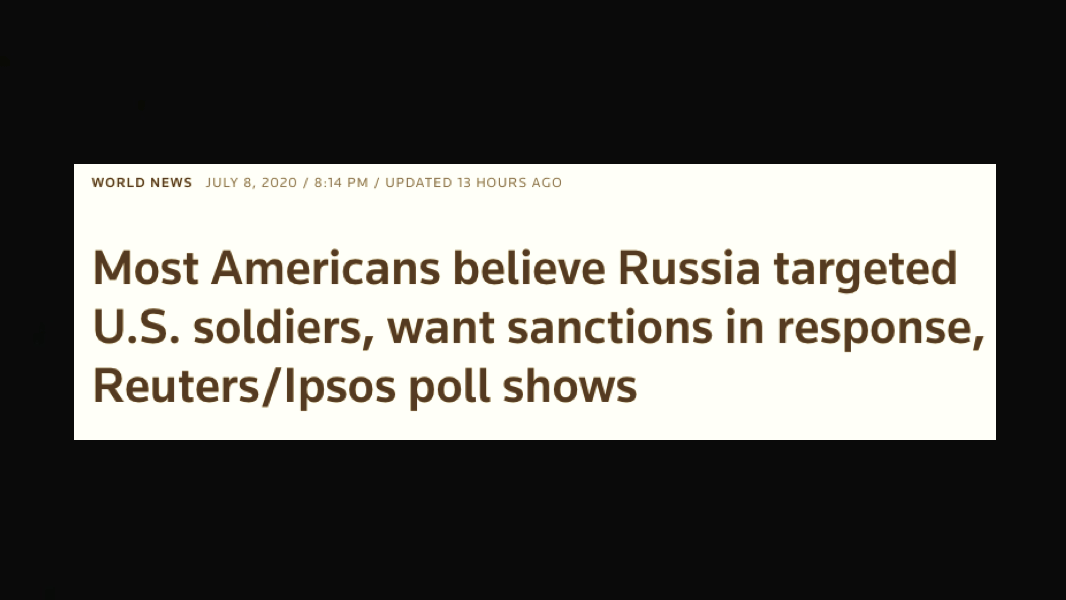
Johnstone haalt ook de enorme leugen uit de VS aan waarin wordt gesteld dat Rusland de Taliban betaalt om aanslagen te plegen op VS militairen, alsof de Taliban daar een dergelijke reden voor nodig heeft….. Deze leugen is dan ook bedoeld om te voorkomen dat de Trump administratie meer troepen terugtrekt uit Afghanistan……. Ongelofelijk dat zelfs de media hier deze leugens geloven, sterker nog: zelfs het Nederlandse leger doet mee en spreekt van ‘een zorgelijke situatie….’ ha! ha! ha! ha! ha! Wat een stel smerige oplichters!!
Roddel is in het verleden ‘iets te vaak’ de oorzaak geweest voor volksgerichten en voor het uitstoten van mensen uit gemeenschappen, ofwel roddel is één van de manieren om angst en haat te zaaien…… Extreem rechtse partijen, beter gezegd fascistische partijen, de nazi’s en hun opvolgers de neonazi’s, gebruikten en gebruiken die roddel om het volk op te hitsen tegen minderheden, daarvoor liegt men zelfs keihard in het openbaar, zie nu weer wat fascisten als Wilders, Baudet en hun slippendragers aan leugens ventileren, voor een groot deel gericht tegen minderheden en mensen die links zijn (al zien die sukkels zelfs de PvdA als een linkse partij…. ha! ha! ha! ha!). Ik lach wel, maar de achterban van de PVV en FVD zien die leugens als waarheid en gebruiken die dan ook in roddels over minderheden…… (terwijl velen niet eens een vertegenwoordiger van zo’n minderheid kennen, ofwel ze hebben een buur die tot zo’n minderheid behoort, waar men dan over zegt dat deze een uitzondering is en wel ‘een goede burger’ is…..)
Lees het artikel van Johnstone waarin ze zoals gezegd m.n. stelt dat er van een echte democratie geen sprake kan zijn als de reguliere (massa-) media de hersenen van het volk bespelen met leugens die mits ze maar een paar keer herhaald worden, zich als feit in de hersenpan van die mensen nestelen……. Jammer dan ook dat scholing van jongeren er niet op gericht is om vragen te stellen bij het nieuws in de reguliere media, terwijl er meer dan voldoende bewijs is dat die media het volk van A tot Z manipuleren……… Ach ja, scholing is ook gericht op zo min mogelijk kritisch zijn en vooral een volgzame burger te worden…..
A new Reuters/Ipsos poll has reportedly found that a majority of Americans believe the completely discredited narrative that the Russian government paid Taliban-linked fighters to kill the occupying forces of the US and its allies in Afghanistan.
“A majority of Americans believe that Russia paid the Taliban to kill U.S. soldiers in Afghanistan last year amid negotiations to end the war, and more than half want to respond with new economic sanctions against Moscow, according to a Reuters/Ipsos poll released on Wednesday,” Reuters reports.
“Overall, 60% of Americans said they found reports of Russian bounties on American soldiers to be ‘very’ or ‘somewhat’ believable, while 21% said they were not credible and the rest were unsure,” says Reuters.
Those 21 percent are objectively correct: the story is not credible, and it’s not even close. Gareth Porter shows in The Grayzone how the “Bountygate” narrative is so utterly baseless that even US intelligence agencies have dismissed it, Joe Lauria of Consortium Newsexplains how it doesn’t make any sense on its face, and FAIR’s Alan MacLeod breaks down the appalling journalistic malpractice that went into circulating this incredibly thinly sourced story to the mainstream public.
The story advances no solid facts or verified information. What it does advance is pre-existing imperialist agendas like remaining in Afghanistan, killing the last of the remaining nuclear deals with Moscow, and manufacturing public support for new Russia sanctions.
And yet a majority of people believed it, and still believe it. The narrative that Russia paid Taliban fighters to kill occupying forces is now regarded as an established fact in many key circles, despite being backed by literally zero facts.
If people were as objective and adept at critical thinking as we tend to believe we are, the mass media’s unconscionable facilitation of a brazen cold war psyop would by itself have killed off all public trust in the institution of mass news reporting. But people are not as objective and adept at critical thinking as we tend to believe we are. People have many cognitive biases which distort our ability to objectively process information and understand events, including one which causes us to believe something is true just because they’ve heard it said multiple times. This makes us easily susceptible to mass media propaganda, where our encounters with daily news headlines can shape our perception of what’s going on in the world regardless of whether or not those headlines are backed by actual facts.
“Bounty-Gate” is the Pentagon’s main chance to keep the U.S. war in #Afghanistan going for a while longer. Push-back against those in Congress exploiting this fraud is needed to deprive the Pentagon and its allies from succeeding in this scheme. https://bit.ly/3filROQ
This latest poll is a perfect example of how the plutocrat-owned media manipulate public opinion in the interest of establishment agendas with brazen propaganda campaigns, but it is just the most recent example. Over and over and over again we see public perception of what’s going on distorted by lies inserted into their minds by the corporate news media, like when half a year after the invasion of Iraq seven in ten Americans believed Saddam Hussein was responsible for the 9/11 attacks. All it took to trick them into believing this and supporting the invasion was repeatedly mentioning 9/11 and Saddam in the same breath, despite there never being any evidence whatsoever for any such thing.
This kind of manipulation is not rare, it is ubiquitous and ongoing. Every single day the plutocratic media are putting ideas in people’s minds which favor the establishment upon which said plutocrats have built their kingdoms, normalizing the insane status quo and manufacturing support for agendas which bolster it. This is not some delusional conspiracy theory, it’s a well-documented fact to which many mainstream journalists have testified.
As long as this remains the case in our society, democracy cannot exist in any meaningful way. As long as a loose alliance of plutocrats and government operatives are able to consistently manipulate the way a critical mass of people think and vote, then you cannot rightly say that the people are in charge of the fate of their nation. If the majority is consistently in alignment with the plutocrats whose outsized media influence enables them to dominate the public narrative, then voting necessarily reflects the will of those plutocrats, not the people.
Even if you changed everything else that is wrong with the current system, nothing would change if the plutocratic class retained its ability to manipulate the way people think and vote. You can fix America’s garbage election integrity, end gerrymandering, even get money out of politics, but as long as the plutocratic class is still using its wealth to manipulate public thought in support of its interests, people would keep voting the way they’re manipulated to vote.
Manipulation is a key ingredient in any long-term abusive relationship, because people don’t tend to stay in abusive situations unless they are manipulated into doing so. This is true whether you’re talking about romantic partnerships, governments, or globe-spanning power structures. We don’t use the power of our numbers to end this abusive relationship where we are at the whim of crushing austerity, exploitative neoliberalism, endless war and rapacious ecocide, because we’re being manipulated into staying.
And, just like with any other abusive relationship, there comes a time to leave before it’s too late. That time is now. We can begin by expanding awareness of what’s really going on, both inwardly in ourselves and outwardly by sharing truthful information with others. In so doing, we stand a chance at making ourselves impossible to propagandize effectively and using our strength in numbers to force real change.
Alle verhalen over Russische manipulatie van verkiezingen zijn leugens, zo is intussen meer dan duidelijk geworden, echter de westerse (massa-) media en het grootste deel van de westerse politiek blijven deze leugen volhouden, immers als je een leugen dag in dag uit bij het publiek door de strot duwt, blijft deze bij een groot deel hangen als was het een waarheid als een koe…..
Professor Russische studies en politiek aan de Princeton University en de New York University (NYU), Stephen Cohen ziet het anders, volgens hem is er een kentering opgetreden en hij stelt daarbij dat juist door het hameren op die leugens, het publiek het vertrouwen en geloof in integere politiek verliest…. Ofwel de democratie zelf wordt aangetast met deze leugens en zoals in de kop gesteld het ondermijnt de democratie…….
Cohen bedoelt niet dat het (grootste deel van het) publiek doorheeft dat er wordt gelogen, echter de verhalen over de Russische bemoeienis richt bij dat publiek grote schade aan in het vertrouwen in de politiek…. Dit daar men zal denken dat zelfs al ‘één door de Russen gemanipuleerde of gestoken verkiezing’ zal leiden tot meer, ofwel ‘men heeft het manipuleren van de presidentsverkiezingen in 2016 niet kunnen voorkomen’, waarom dan nu wel?? Het is al zo zot in de VS dat men het ontbreken van bewijzen voor Russische bemoeienis, wordt gezien als een bewijs voor de manipulatie die Trump in 2016 het presidentschap in de schoot heeft geworpen….. ha! ha! ha! ha! ha!
Jammer dat Cohen niets zegt over de politiek en het gehalte aan democratie in de VS*, immers als je niet van het christelijk geloof bent, of je hebt niet de grote bedrijven met kapitalen achter je staan, kan je het als kandidaat in deze immer weer gekochte verkiezingen wel vergeten, om over alle leugens waarmee men elkaar bestookt voorafgaand aan de verkiezingen nog maar te zwijgen, waar men ook mensen inzet om het publiek via de sociale media (en uiteraard via de reguliere media) te bestoken met leugens en achterklap……… (en dan nog durven lullen over Russische inmenging……)
Ik moet zeggen dat ik het niet met Cohen eens ben, waar hij een intellectueel uit Moskou citeert dat Russisch autoritarisme** niet door de politiek wordt bepaald, maar door de genen (van het Russische volk)…. Je reinste kul, hetzelfde soort gelul als het verhaal dat alle Nederlanders op klompen lopen….. Democratie moet groeien, niet alleen in de politiek, maar ook in het individu en gezien er van democratie nog maar kort sprake is in Rusland (en deze als de democratie in de VS bepaald niet volmaakt is), kan je niet stellen dat mensen niet open zouden staan voor democratie. Het lullige is wel dat de Russen een hoop rottigheid zien in westerse ‘democratische landen’, dit doet de lust voor democratie op z’n zachtst gezegd geen goed…… (zie bijvoorbeeld hoe men in EU landen als Nederland met referenda is omgesprongen…..) Waar de macht van bedrijven, geheime diensten en terreurorganisaties als de NAVO over de westerse ‘democratieën’ niet vergeten moet worden…..
Het volgende artikel van Cohen komt van The Nation (je kan daar ook 2 video’s bekijken, die ik niet kan overnemen):
Who’s Really ‘Undermining’ American Democracy?
Allegations that Russia is still “attacking” US elections, now again in November, could delegitimize our democratic institutions.
Stephen F. Cohen, professor emeritus of Russian studies and politics at NYU and Princeton, and John Batchelor continue their (usually) weekly discussions of the new US-Russian Cold War. (Previous installments, now in their fifth year, are at TheNation.com.)
Summarizing one of the themes in his new book, War with Russia? From Putin and Ukraine To Trump and Russiagate, Cohen argues that Russiagate allegations of Kremlin attempts to “undermine American democracy” may themselves erode confidence in those institutions.
Ever since Russiagate allegations began to appear more than two years ago, their core narrative has revolved around purported Kremlin attempts to “interfere” in the 2016 US presidential election on behalf of then-candidate Donald Trump. In recent months, a number of leading American media outlets have taken that argument even further, suggesting that Putin’s Kremlin actually put Trump in the White House and now is similarly trying to affect the November 6 midterm elections, particularly House contests, on behalf of Trump and the Republican Party. According to a page-one New York Times “report,” for example, Putin’s agents “are engaging in an elaborate campaign of ‘information warfare’ to interfere with the American midterm elections.”
Despite well-documented articles by Gareth Porter and Aaron Maté effectively dismantling these allegations about 2016 and 2018, the mainstream media continue to promote them. The occasionally acknowledged lack of “public evidence” is sometimes cited as itself evidence of a deep Russian conspiracy, of the Kremlin’s “arsenal of disruption capabilities…to sow havoc on election day.” (See the examples cited by Alan MacLeod at FAIR.org.)
Lost in these reckless allegations is the long-term damage they may themselves do to American democracy. Consider the following possibilities.
Even though still unproven, charges that the Kremlin put Trump in the White House have cast a large shadow of illegitimacy over his presidency and thus over the institution of the presidency itself. This is unlikely to end entirely with Trump. If the Kremlin had the power to affect the outcome of one presidential election, why not another one, whether won by a Republican or a Democrat? The 2016 presidential election was the first time such an allegation became widespread in American political history, but it may not be the last.
Now the same shadow looms over the November 6 elections and thus over the next Congress. If so, in barely two years, the legitimacy of two fundamental institutions of American representative democracy will have been challenged, also for the first time in history.
And if US elections are really so vulnerable to Russian “meddling,” what does this say about faith in American elections more generally? How many losing candidates on November 6 will resist blaming the Kremlin? Two years after the last presidential election, Hillary Clinton and her adamant supporters still have not been able to do so.
We know from critical reporting and from recent opinion surveys that the origins and continuing fixation on the Russiagate scandal since 2016 have been primarily a product of US political-intelligence-media elites. It did not spring from the American people—from voters themselves. Thus a Gallup poll recently showed that 57 percent of those surveyed wanted improved relations with Russia. And other surveys have shown that Russiagate is scarcely an issue at all for likely voters on November 6. Nonetheless, it remains a front-page issue for US elites.
Indeed, Russiagate has revealed the low esteem that many US political-media elites have for American voters—for their ability to make discerning, rational electoral decisions, which is the bedrock assumption of representative democracy. It is worth noting that this disdain for rank-and-file citizens echoes a longstanding attitude of the Russian political intelligentsia, as recently expressed in the argument by a prominent Moscow policy intellectual that Russian authoritarianism springs not from the nation’s elites but from the “genetic code” of its people.
US elites seem to have a similar skepticism about—or contempt for—American voters’ capacity to make discerning electoral choices. Presumably this is a factor behind the current proliferation of programs—official, corporate, and private—to introduce elements of censorship in the nation’s “media space” in order to filter out “Kremlin propaganda.” Here, it also seems, elites will decide what constitutes such “propaganda.”
=========================== * Althans Cohen gaat er in dit artikel niet op in, al heeft hij het boek ‘War with Russia? From Putin and Ukraine To Trump and Russiagate’, over dit onderwerp geschreven, wellicht dat hij daarin wel ingaat op die kant van het verhaal. ** Autoritarisme is een politiek systeem dat gekenmerkt wordt door de volgende elementen: Er is geen machtsdeling: de leider of de leidende groep verenigt alle machten in één hand. Er is geen scheiding van de wetgevende, uitvoerende en rechterlijke machten, overeenkomstig het beginsel van de “Trias politica” (Wikipedia). Alsof je het over de VS hebt…..
Mensen hier een vergeten concept, maar nog even actueel: de beschuldiging dat Iran de Houthi rebellen zou voorzien van wapens en munitie. Deze leugen is al eerder doorgeprikt maar gezien het feit dat men in de reguliere media deze leugen nog steeds propageert, kan het niet genoeg herhaald worden, vindt u ‘ook niet?’ Hier het artikel van Information Clearing House (u kunt onder dit artikel klikken voor een vertaling, dat kost wel wat tijd) :
How False Stories of Iran Arming the Houthis Were Used to Justify War in Yemen
By Gareth Porter
January 02, 2015 “Information Clearing House” – “Truth Out” – Peace talks between the Saudi-supported government of Yemen and the Houthi rebels ended in late December without any agreement to end the bombing campaign started by Saudi Arabia and its Gulf allies with US support last March. The rationale for the Saudi-led war on Houthis in Yemen has been that the Houthis are merely proxies of Iran, and the main alleged evidence for that conclusion is that Iran has been arming the Houthis for years.
The allegation of Iranian arms shipments to the Houthis – an allegation that has often been mentioned in press coverage of the conflict but never proven – was reinforced by a report released last June by a panel of experts created by the UN Security Council: The report concluded that Iran had been shipping arms to the Houthi rebels in Yemen by sea since at least 2009. But an investigation of the two main allegations of such arms shipments made by the Yemeni government and cited by the expert panel shows that they were both crudely constructed ruses.
Diplomatic cables released by WikiLeaks reveal that the story of the arms onboard the ship had been concocted by the government.
The government of the Republic of Yemen, then dominated by President Ali Abdullah Saleh, claimed that it had seized a vessel named Mahan 1 in Yemeni territorial waters on October 25, 2009, with a crew of five Iranians, and that it had found weapons onboard the ship. The UN expert panel report repeated the official story that authorities had confiscated the weapons and that the First Instance Court of Sana’a had convicted the crew of the Mahan 1 of smuggling arms from Iran to Yemen.
But diplomatic cables from the US Embassy in Yemen released by WikiLeaks in 2010 reveal that, although the ship and crew were indeed Iranian, the story of the arms onboard the ship had been concocted by the government. On October 27, 2009, the US Embassy sent a cable to the State Department noting that the Embassy of Yemen in Washington had issued a press statement announcing the seizure of a “foreign vessel carrying a quantity of arms and other goods….” But another cable dated November 11, 2009, reported that the government had “failed to substantiate its extravagant public claims that an Iranian ship seized off its coast on October 25 was carrying military trainers, weapons and explosives destined for the Houthis.”
Furthermore, the cable continued, “sensitive reporting” – an obvious reference to US intelligence reports on the issue – “suggests that the ship was carrying no weapons at all.”
A follow-up Embassy cable five days later reported that the government had already begun to revise its story in light of the US knowledge that no arms had been found on board. “The ship was apparently empty when it was seized,” according to the cable. “However, echoing a claim by Yemen Ambassador al-Hajj, FM [Foreign Minister] Qaairbi told Pol Chief [chief of the US Embassy’s political section] on 11/15 the fact that the ship was empty indicated the arms had already been delivered.”
President Saleh had hoped to use the Mahan 1 ruse to get the political support of the US for a war to defeat the Houthis.
President Saleh had hoped to use the Mahan 1 ruse to get the political support of the US for a war to defeat the Houthis, which he was calling “Operation Scorched Earth.” But as a December 2009 cable noted, it was well known among Yemeni political observers that the Houthis were awash in modern arms and could obtain all they needed from the huge local arms market or directly from the Yemeni military itself.
Unlike the government’s story of the Mahan 1 and its phantom weapons, the official claim that a ship called the Jihan 1, seized on January 23, 2013, had arms onboard was true. But the totality of the evidence shows that the story of an Iranian arms shipment to the Houthis was false.
The ship was stopped in Yemeni waters by a joint patrol of the Yemeni Coast Guard and the US Navy, and an inspection found a cache of weapons and ammunition. The cargo including man-portable surface-to-air missiles, 122-millimeter rockets, rocket-propelled grenade launchers, C-4 plastic explosive blocks and equipment for improvised explosive devices.
Some weeks later, the UN expert panel inspected the weaponry said to have been found on board the Jihan 1 and found labels stuck on ammunition boxes with the legend “Ministry of Sepah” – the former name of the Iranian military logistics ministry. The panel report said the panel had determined that “all available information placed the Islamic Republic of Iran at the centre of the Jihan operation.”
But except for those labels, which could have been affixed to the boxes after the government had taken possession of the arms, nothing about the ship or the weapons actually pointed to Iran. All of the crew and the businessmen said to have arranged the shipment were Yemenis, according to the report. And the expert panel cited no evidence that the ship was Iranian or that the weapons were manufactured in Iran.
The expert panel cited no evidence that the ship was Iranian or that the weapons were manufactured in Iran.
The case rested on the testimony of the Yemeni crew members of the Jihan 1 – then still in government custody – who said they had sailed from Yemen to the Iranian port of Chabahar, had been taken to another Iranian port and then ferried by small boat to the Jihan 1 sitting off the Iranian coast. But although the panel said it had access to “waypoint data retrieved from Global Positioning System (GPS) devices,” it did not cite any such data that supported the crew members’ story. In fact, the panel acknowledged that it had “no information regarding the location at which the Jihan was loaded with arms….”
A crucial fact about the cargo, moreover, points not to Iran but to Yemen itself as the origin of the ship: The weapons on the ship were hidden under diesel fuel tanks and could be accessed only after those tanks had been emptied. The expert panel referred to that fact but failed to discuss its significance. But the June 2013report of a UN Security Council Monitoring Group on Somalia and Eritrea said that Jihan 1’s crew members had “divulged to a diplomatic source who interviewed them in Aden that the diesel was bound for Somalia.” An unnamed Yemeni official confirmed that fact, which the crew members had kept from the Security Council expert panel, according to the UN Monitoring Group report.
The fact that the Jihan 1 was headed for Somalia indicates that the ship was engaged in a commercial smuggling operation – not a politically motivated delivery. The lucrative business of smuggling diesel fuel from Yemen to Somalia had long been combined with arms smuggling to the same country across the Gulf of Aden from Yemen, as the Monitoring Group report made clear. The Monitoring Group report explained that the reason authorities in the Puntland region of Somalia had made it illegal to import petroleum products was that arms had so often been smuggled into ports on its coast hidden under diesel fuel.
The same UN Monitoring Group report also revealed that a series of arms shipments had been smuggled to Somalia in late 2012 – just before the Jihan 1 was seized – in which rocket-propelled grenade launchers were the primary component and IED components and electrical detonators were also prominent. Those were also major components of the Jihan 1 weapons shipment. The report said information received from the Puntland authorities and its own investigation had “established Yemen as a principal source of the these shipments.”
A key piece of evidence confirming that those arms had originated in Yemen was a communication from the Bulgarian government to the UN Monitoring Group indicating that all the rocket-propelled grenade rounds and propellant charges in one lot manufactured in Bulgaria and seized in Somalia had been delivered to the Yemeni armed forces in 2010.
The information in the Monitoring Group report thus points to Yemeni arms smugglers as the source of the cargo of weapons and diesel fuel aboard the Jihan 1. When the arms were seized by the joint US-Yemen patrol, the Yemeni government evidently decided to exploit it by creating a new story of an Iranian arms shipment to the Houthis, and later used the Yemeni crew to provide the details to the UN expert panel.
The Somalia and Eritrea Monitoring Group’s report created an obvious problem for the official story of the Jihan 1, and the Yemeni government’s anti-Iran, Western backers sought to give the story a new twist.Reuters quoted a “Western diplomat” as citing the Jihan 1 arms shipment as evidence that Iran had actually been involved in supplying arms to al-Shabaab terrorists in Somalia. The anonymous source noted that the cargo had included C-4 explosives such as were used by al-Shabaab for terrorist bombings, whereas the Houthis were not known to carry out such operations. But that claim was hardly credible, because al-Shabaab had close ties to al-Qaeda and was therefore an enemy of Iran. It has not been repeated except in pro-Saudi and pro-Israeli media outlets.
The Jihan 1 story and the broader narrative of intercepted Iranian arms shipments to the Houthis, as recycled by the UN Security Council expert panel, have nevertheless become key pieces of the widely accepted history of the regional conflicts involving Iran.
Gareth Porter (@GarethPorter) is an independent investigative journalist and historian writing on US national security policy. His latest book, Manufactured Crisis: The Untold Story of the Iran Nuclear Scare, was published in February 2014.
Voor meer berichten n.a.v. het voorgaande, klik op één van de labels, die u onder dit bericht terugvindt. Dat geldt niet voor het label ‘Ali Abdullah Saleh’.