Goldman Sachs topgraaier ‘krijgt’ een loonsverlaging van 10 miljoen, moet je nagaan……

David Solomon, de topgraaier van Goldman Sachs, ‘krijgt’ een verlaging op zijn inkomen van 10 miljoen dollar, maar geen medelijden met deze exorbitante zelfverrijker, daar hij altijd nog 17,5 miljoen dollar per jaar overhoudt……. Eén en ander is het gevolg van het fraude/corruptie 1MDB schandaal in Maleisië*, waarvoor de bank alleen aan schikkingen al 5 miljard is kwijtgeraakt….. Inderdaad weer een schikking, waar anderen die iets dergelijks zouden doen, voor vele jaren achter de tralies verdwijnen…..

Een ander ‘mooi voorbeeld’ is Ralph Hamers, de ex-topgraaier van ING, die nu in dienst is van de Zwitserse bank UBS. Ondanks dat deze ploert onder de loep ligt van het Openbaar Ministerie (OM), heeft de top van UBS er alle vertrouwen in dat deze zaak zal overwaaien en wellicht weer middels een schikking…… Anders gezegd de top van UBS is ervan overtuigd dat Hamers niet zal worden veroordeeld, waar zoals gezegd een ander voor jaren de bak in zou draaien……

Morgan Stanley, ook al een bank met wat schandalen aan de broek, heeft het inkomen van haar topgraaier, James Gorman, verhoogd met 22% naar een totaal van 33 miljoen dollar, daarmee is deze misdadiger de best betaalde bankbaas in de VS……..

De misdadige topgraaier van JP Morgan Chase, Jamie Dimon, voor Gorman de best betaalde bankenbaas, behield zijn schamele inkomen van 31,5 miljoen dollar, alweer ondanks de schandalen waar deze bank zich schuldig aan maakte…..

Je hoeft overigens maar voor het woord ‘scandal’ de naam van een grote bank uit de VS in te vullen en je krijgt een overzicht van de misdaden die de bewuste bank heeft begaan en in bijna alle gevallen werd en wordt er een schikking getroffen, het is dan ook niet voor niets dat ik op deze plek regelmatig spreek over de financiële maffia…… (die wordt gedekt door de politiek, zie de schikkingen, i.p.v. strafrechtelijke vervolging van de verantwoordelijken……) Klassenjustitie in optima forma!!

Het volgende bericht komt van DeBeurs. nl:

Goldman verlaagt beloning topman vanwege fraudeschandaal

Gepubliceerd op 27 januari 2021 08:29
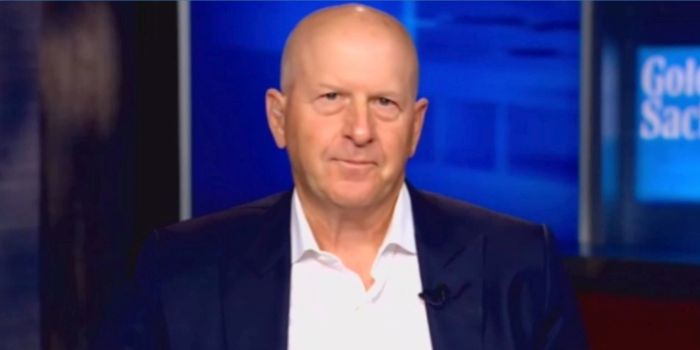
NEW YORK (ANP/BLOOMBERG) – De Amerikaanse bank Goldman Sachs verlaagt de beloning voor zijn topman David Solomon. Die ziet vanwege de rol van Goldman in het omvangrijke fraudeschandaal in Maleisië zijn honorarium met 10 miljoen dollar dalen. Nog altijd is Solomon goed voor een beloningspakket van 17,5 miljoen dollar.

Goldman Sachs sloot eerder grote deals voor het Maleisische staatsfonds 1MDB. De voormalige premier van het land, Najib Razak, werd veroordeeld voor het wegsluizen van grote sommen geld uit dat fonds. De Maleisische regering richtte 1MDB in 2009 op als investeringsfonds voor economische ontwikkeling. De Amerikaanse justitie schat dat er miljarden dollars uit het fonds zijn verdwenen.

Goldman Sachs zelf trof in oktober een schikking van 2,9 miljard dollar met Amerikaanse openbaar aanklagers, omdat het via omkoping lucratieve opdrachten van 1MDB had binnengehaald. In totaal was de bank meer dan 5 miljard dollar kwijt aan de afhandeling van civiele en strafrechtelijke onderzoeken.

Miljoenenboete

De kwestie was reden voor de bank om Solomon de ‘boete’ van 10 miljoen dollar op te leggen. Los daarvan hield de bank het loon van Solomon gelijk aan een jaar eerder.

Goldman sloot afgelopen jaar af met een 22 procent hogere winst, terwijl de bank ook de hoogste boete ooit kreeg in de VS voor een buitenlandse omkopingszaak. Hoewel Salomon nooit schuldig is bevonden, vond de bank het gepast om in totaal 31 miljoen dollar aan beloning in te houden voor de topbestuurders van de bank.

Eerder maakte Morgan Stanley bekend de beloning van topman James Gorman met 22 procent te verhogen naar 33 miljoen dollar. Daarmee is hij de bestbetaalde bankbaas in de Verenigde Staten. Hij streefde Jamie Dimon van JPMorgan Chase voorbij. Die bank hield de beloning voor de topman op jaarbasis gelijk op 31,5 miljoen dollar.

===================================================

* Zie: ‘Ex-topman Goldman Sachs weigert te betalen voor fraudeschandaal‘ (i.v.m. 1MDB schandaal) Voor uitleg over dat schandaal zie:

Goldman Sachs de zoveelste bank die uiterst misdadig gedrag afkoopt met een schikking‘ (voor het 1MDB schandaal)

—————————————————–

Zie voorts: ‘G20 doet niets aan de schulden van arme landen bij commerciële banken, terwijl die landen al extra lijden door het Coronavirus

Coronavirus als excuus om de stresstest van banken niet uit te voeren

Goldman Sachs: het genezen van een patiënt is niet rendabel……..‘ (vandaar ook dat wie zich laat inenten tegen het Coronavirus, dat hoogstwaarschijnlijk jaarlijks zal moeten herhalen >> ping ping kassa, niet alleen voor de farmaceuten maar ook voor de banken!!)

Joe Biden ‘van zins de Keystone XL pijpleiding te stoppen’‘ (waar de grote banken als Goldman Sachs deze letterlijke smeerpijpen’ financieren….)

ING haalde porno en gokken binnen ondanks de belofte dat dit niet weer zou gebeuren

ING besluit ‘n.a.v. Coronacrisis’ 42 kantoren te sluiten, aandeelhouders blij…..

Banken hebben in Davos versoepeling van regels geëist

Rutte vs Baudet: Rutte geeft toe: onze banken zijn weer ‘too big to fail’‘ (zo worden we dag in dag uit belazerd door de politiek…..)

Goldman Sachs de zoveelste bank die uiterst misdadig gedrag afkoopt met een schikking

Marieke Blom, hoofdeconoom ING, vindt het niet meer dan logisch dat bedrijven die overheidssteun kregen 181.000 mensen hebben ontslagen

ING too big in crime: misdadig handelen ING Bank Slaski, gecombineerd met de leugens over de vergiftiging van Navalny

Verzekeraars mogen weer dividend uitkeren en eigen aandelen opkopen: ach en als de financiële crisis hen hard treft zijn wij weer de klos

ING, Rabobank en BNP Paribas financieren de oliewinning in het Amazonegebied: u wordt opgelicht!!‘ (en zie de links in dat bericht naar artikelen over het Amazonegebied en de vernieling daarvan door o.a. oliemaatschappijen)

ING besluit ‘n.a.v. Coronacrisis’ 42 kantoren te sluiten, aandeelhouders blij…..

Goldman Sachs: het genezen van een patiënt is niet rendabel……..‘ (!!!!)

ING verhoogt koersdoel chemicaliëndistributeur en werkt daardoor mee aan de vernietiging van de aarde en aantasting van de volksgezondheid

ING doet het goed volgens Ralph Hamers (opperhoofd ING)

ING is alweer zo groot dat ze niet failliet mag gaan, met dank aan topgraaier Hamers

ING blij met nieuwe oliewinning voor de kust van Guyana, ‘uiterst duurzaam…’

ING verhoogt koersdoel chemicaliëndistributeur en werkt daardoor mee aan de vernietiging van de aarde en aantasting van de volksgezondheid

ING >> fraude onderzoek (o.a. witwassen en corruptie) duurt langer dan verwacht……..

Ralph Hamers 50% erbij op ‘zeer karig salaris’ en Jeroen van der Veer vindt gewoon dat ook Hamers een loonsverhoging mag hebben……..

ING raad van commissarissen had groot verzet tegen schunnige salarisverhoging Hamers niet verwacht…… ha! ha! ha! ha! ha! ha! ha!

Ralph Hamers (ING top): 2018 geeft een dubbel gevoel, maar geen dubbel salaris

Ralph Hamers (topgraaier ING): er zijn geen klanten weggelopen vanwege de voorgestelde onbeschofte loonsverhoging bovenop zijn al veel te hoge salaris…….

DNB gaat ING niet onderzoeken op zware misdaden, ‘logisch’ immers alweer hield deze bank geen toezicht

Ralph Hamers: ING stopt met investeringen in steenkool energie, hoewel….???

ABN Amro topman van Dijkhuizen: staatsbank financiert steenkooluitvoer van Australië naar China

ABN Amro, staatsbank vraagt bankvergunning aan in VS, ofwel ‘too big to fail’ is geen probleem

ING onder puissant zelfverrijker Hamers bezig weer ‘too big to fail’ te worden

ABN Amro, de staatsbank ‘gaat dak repareren terwijl het mooi weer is’: 250 mensen op straat…..

Voor een eerlijke verdeling van smerige bankzaken, heb ik ook het label Rabobank toegevoegd aan de labels direct onder dit bericht, door daarop te klikken krijg je artikelen over smerige zaken van deze bank te zien. Toevallig vandaag (28 januari 2021) gaf een topgraaier van de Rabobank toe dat de bank mede hoofdverantwoordelijk is voor de enorme milieu problemen die de intensieve landbouw en veehouderij hebben veroorzaakt en veroorzaken, waarbij Nederland zelfs één van de grootste uitstoters is van methaangas, een broeikasgas dat meer dan 80 keer zo sterk is dan CO2 en waarmee Nederland tevens een grote aanjager is van de klimaatverandering……

Argentijnse regering naait het volk in IMF pak

Het IMF leent de totaal onverantwoordelijke regering van Argentinië het voor dit land fenomenaal grote bedrag van 50 miljard dollar.
Alsof het geld gratis is zo laat de Argentijnse regering weten blij te zijn met deze meer dan waanzinnige deal…….
Eerder gaf de Argentijnse regering een obligatielening uit waar deze voor 100 jaar een vaste winst garandeert………
De grote onderlaag zal weer keihard worden gepakt met deze lening, zoals dit eerder deze eeuw (zie het tweede hieronder opgenomen artikel uit 2004 met de titel ‘IMF admits mistakes in Argentina crisis‘) en in de 90 er jaren al eens het geval was. Argentinië zal zich met deze deal moeten onderwerpen aan het IMF en haar keiharde neoliberale eisen tot hervormingen…….
Begin deze eeuw versterkte een grote lening van het IMF de crisis in Argentinië en ook nu is de verwachting dat dit zal gebeuren…….
Argentinië verwordt met deze IMF lening tot het Zuid-Amerikaanse Griekenland, waar de welgestelden, zoals die in Griekenland al lang hun kapitaal hebben veiliggesteld in het buitenland (2 vliegen in 1 klap >> ten eerste het geld is veilig voor eventuele faillissementen van banken (of grote belastingverhogingen op vermogen), ten tweede: de ontduiking van belastingen op enorme schaal…… (waar familie Zorreguieta, je weet wel de familie van pampakoningin Maxima, ook tot de welgestelden behoort……)
De arme bevolking van Griekenland, intussen het grootste deel van de bevolking weet wat dit betekent, zoals de ouderen die daar praktisch geen pensioen meer ontvangen (waar ze zelf voor spaarden), of wat dacht je van kankerpatiënten die de benodigde medicamenten zoals pijnstillers niet meer kunnen betalen……..
De Griekse schuld is zo hoog dat de (lage) rentebetalingen al niet zijn te voldoen, laat staan dat het land tot aflossen van de enorme schuld zal komen, hetzelfde lot wacht Argentinië…….
Lees nogmaals hoe ijskoud, inhumaan neoliberaal beleid tot grote ellende zal leiden onder de grote maatschappelijke onderlaag van Argentinië en de crisis daar alleen zal verdiepen…… Bovendien regeert president en regeringsleider Mauricio Macri van de Propuesta Republicana, kortweg PRO, over zijn eigen graf en dat van nakomende regeringen, immers Argentinië heeft met deze lening een groot deel van de zeggenschap in eigen land vrijwillig overgedragen aan het IMF……..

Daarmee is het zeker dat Argentinië zich met hart en ziel heeft verbonden aan het ijskoude, inhumane neoliberalisme, waar zelfs een socialistische regering niets tegen kan ondernemen…… Zie de Griekse situatie waar Tsipras een zogenaamde socialist zijn land uit handen heeft gegeven aan de Europese Commissie, het IMF en de ECB, de Europese Centrale Bank……. Staatseigendommen zijn voor 99 jaar uit handen gegeven aan een EU orgaan, het Europees Stabiliteitsmechanisme (ESM) dat naar goeddunken staatseigendommen kan verkopen voor een appel en een ei…….

Argentina Just Made IMF History With Biggest Bailout Loan Ever

June 7, 2018 at 9:51 pm
Written by Tyler Durden
(ZHE) — Just a few weeks after Argentina became ground zero for the coming Emerging Market crisis, when its currency suddenly collapsed at the end of April amid soaring inflation, exploding capital outflows and a central bank that was far behind the curve (as in “13% of rate hikes in a week” behind)…
the IMF has officially bailed out the country – again – this time with a $50 billion, 36-month stand-by loan, and coming in about $10 billion more than rumored earlier in the week, it was the largest ever bailout loan in IMF history, meant to help restore investor confidence in a nation that, between its soaring external debt and current account deficit, prompted JPMorgan to suggest that along with Turkey, Argentina is in effect, doomed.
As the JPM chart below shows, the country’s total budget deficit, which includes interest payments on debt, was 6.5% of GDP last year, much of reflecting a debt binge of about $100 billion over the last two and a half years. The primary fiscal deficit in 2017 was 3.9%.

The loan will have a minimum interest rate of 1.96% rising as high as 4.96%.
We are convinced that we’re on the right path, that we’ve avoided a crisis,” Finance Minister Nicolás Dujovne said at a press conference in Buenos Aires. “This is aimed at building a normal economy.”
Dujovne said that about $15 billion from the credit line would be immediately available to Argentina after the package is approved by the IMF’s board, which is expected on June 20. The rest would be dispersed as needed as Argentina meets its targets.
Shortly after the news the loan was finalized, Dujovne made some additional, more bizarre comments, saying that “the amount we received is 11 times Argentina’s quota, which reflects the international community´s support of Argentina,” almost as if he was proud at just how insolvent his country “suddenly” become. He was certainly delighted that, in his view, Argentina is now “too big to fail”, and received not only this loan as a result…

It’s very good news that the integration with the world allows us to receive this support.”

but also hinted that the international community would also foot the bill for all other upcoming Argentinian bailouts. And if the country’s history is any indication, there will be plenty more, as well as the occasional military coup for good measure.
According to Bloomberg, Argentina will see 30% of the funds a day or two after the Fund’s June 20 board meeting, and in typical IMF-bailout fashion, a form of austerity will be imposed on what was once Latin America’s richest nation: as part of the agreement, the country will now target a fiscal deficit of 1.3% of GDP in 2019 and 2.7% this year, with a fiscal balance targeted for 2020 (good luck). And since the previous targets of 2.2% and 3.2%, were almost as laughable, this latest IMFian austerity package not only has zero chance of ever being achieved, but if Greece is any indication, it will make the Argentina crisis far worse. The government has also set a new inflation target of 17% in 2019 – It’s considered low – declining to 13% in 2020 and 9% in 2021.
And the biggest joke, as part of the program, Argentina will agree to accelerate the pace at which it reduces the government deficit. The nation spends more than it collects in revenue and imports more than it exports, creating fiscal and current-account shortfalls that leave Argentina vulnerable to fluctuations in its currency. But, thanks to the even more idiotic policies of central banks, Argentina managed to sell a 100 year bond last year, demonstrating just how stupid some managers of “other people’s money” really are.
This is a plan owned and designed by the Argentine government, one aimed at strengthening the economy for the benefit of all Argentines,” IMF Managing Director Christine Lagarde says in the statement which can be found on the IMF’s website.
To take effect, the deal reached between the IMF’s staff and Argentine authorities still requires the approval of the IMF’s executive board.
Oh, and thank you American taxpayers: the IMF’s largest shareholder, the U.S., said in a statement Thursday from Treasury Secretary Steven Mnuchin that it supported the program, according to the WSJ.
The size of the package should provide relief, but implementing the program entails significant challenges and will require skillful political leadership,” said Martin Castellano, the head of Latin America research at the Institute of International Finance (IFF).
Argentina was bailed out by the IMF for the second time in 2 decades after three rate hikes pushed borrowing costs above 40% but failed to halt a plunge in the currency. The peso fell 25% against the dollar this year to trade at 24.9850 on Thursday, while capital outflows soared.
Central Bank President, Federico Sturzenegger, said the bank will continue to intervene in currency markets in times of “disruptive movement” although the central bank will not target inflation this year, he said. Meanwhile, the government has agreed to send a bill that gives the central bank more autonomy, and as a result it wil no longer transfer funds to the Treasury.
We’re convinced that we’re on the right track, that we managed to avoid a crisis, gather support for the program we already had and that has been in place since Dec. 2015, which looks to build a normal economy, reduce poverty and protect the vulnerable,” Dujovne said, echoing what Greece said after its first bailout 8 years… and its second… and its third.
Gerry Rice, an IMF spokesman, speaking Thursday before the details of the bailout were announced, told reporters that the IMF is “not seeing negative spillovers to other countries at this point.”
Well, he may want to take a look at Brazil.
* * *
As for what happened the last time the IMF bailed out Argentina in the early 2000, the following 2004 article from the Telegraph tells you all you need to know why when a nation is desperately in need of deleveraging, giving it another $50 billion in debt is generally a bad idea.

IMF admits mistakes in Argentina crisis

By Edmund Conway12:01AM BST 30 Jul 2004

The International Monetary Fund yesterday admitted that its mistakes helped plunge Argentina deeper into the red during the currency crisis that crippled the country’s economy three years ago.

In a report published yesterday by its independent evaluation office, the IMF said it ought to have prevented the Argentine government from following poor economic policies.

IMF surveillance failed to highlight the growing vulnerabilities in the authorities’ choice of policies and the IMF erred by supporting inadequate policies too long,” it said.

The financial meltdown that reached a climax in 2001, causing the country to default on $132 billion of foreign debt, was worsened by the government’s vain attempts to maintain the Argentine peso’s peg against the dollar. The IMF ploughed money into the country to help it sustain the peg, pledging an extra $22 billion as late as the end of 2000.

In retrospect, the resources used in an attempt to preserve the peg could have been better used to mitigate some of the inevitable costs of exit,” the report said.

Although it became clear to some IMF staff that the country’s currency plan was flawed in the 1990s, they did not report their doubts to their board for fear of triggering a speculative attack on the peso. The executive board, for its part, ignored staff complaints that Argentina was not reforming its economy satisfactorily.

Both the IMF and the US touted the country as Latin America’s economic success story but the fund maintained its support despite the fact that Argentina missed its fiscal targets every year since 1994. Analysts have also claimed that the IMF’s demands that Argentina raise taxes in 2002 worsened the crisis. The conclusions will come as a blow to the institution, whose role has come under increased scrutiny in recent years.

Yesterday the Argentine finance minister, Roberto Lavagna, argued that the country should not be pressed too hard for repayments of its current three-year $13 billion loan. He said the IMF was now insisting it reformed its economy “in a way absent throughout the 90s” and “under a schedule that is oblivious to the political realities of the country”.

Good luck, and some advice to Argentina: this time try to prevent Elliott Management from buying up your debt at distressed prices.
By Tyler Durden / Republished with permission / Zero Hedge / Report a typo

Grote banken overtreden eigen duurzaamheidsregels………

Grote banken als JP Morgan Chase (ook met kantoor in Nederland) en Wells Fargo (en als ik me niet vergis ING) hebben de zogenaamde Equator Principles getekend. Dit betekent dat ze bij de financiering van grote infrastructurele projecten rekening houden met de sociale aanvaardbaarheid van dergelijke projecten (waarbij de belangen van de oorspronkelijke bewoners in acht moeten worden genomen) en moeten proberen te voorkomen dat de klimaatverandering verder wordt aangejaagd. Er zijn meer voorwaarden aan de Equator Priciples verbonden, verderop vindt u een meer uitgebreide uitleg, het komt erop neer dat die banken in feite duurzaamheid voorop moeten stellen bij voornoemde financieringen.

‘Vreemd’ dat die ondertekenaars met het grootste gemak smerige projecten steunen, zoals de Dakota Acces Pipeline (DAPL)……… Vreemd tussen aanhalingstekens, daar het de normaalste zaak van de wereld is geworden dat grote smerige bedrijven zich met het grootste gemak duurzaam durven te noemen.

Van 23 tot 25 oktober a.s. vindt er een overleg in Brazilië plaats van de banken die de Equator Principles hebben getekend, tijd dat de banken daar wordt gewezen op hun verantwoordelijkheid.

De volgende tekst behoort bij een petitie die ik afgelopen woensdag ontving van Rainforest Action Network (RAN), lees en teken de petitie ajb en wijs de grote banken daarmee op hun verantwoordelijkheid die ze dragen (als u Netherlands zoekt in de landenlijst, deze staat als tweede genoemd en dus niet op alfabetische volgorde):

Tell Big Banks: Protect Climate and Indigenous rights!

Did you know that big banks funded the disastrous Dakota Access Pipeline (DAPL) under the Equator Principles* — the supposedly premier guidelines for responsible lending practices?


This is a problem. Tell the Equator Banks to make a change.

The Equator Principles didn’t stop banks like Wells Fargo from financing DAPL. They didn’t stop banks like JPMorgan Chase from financing the Kinder Morgan Trans Mountain pipeline. Despite enormous impacts on our shared climate, and unacceptable abuses of the rights of Indigenous Peoples, disaster projects like these have all been financed under the Equator Principles.

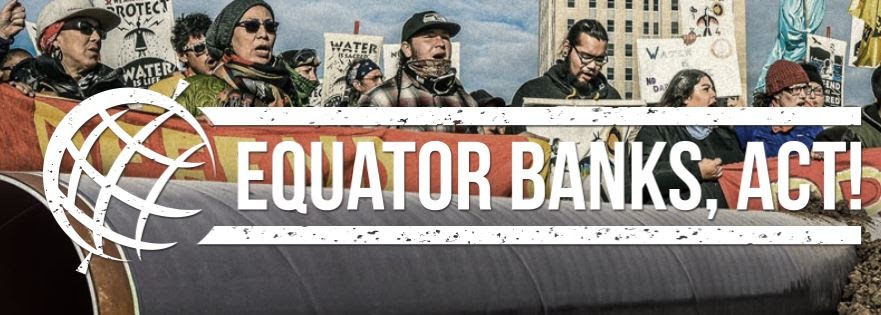
Equator Banks, act! Stop financing climate disasters, and respect Indigenous Peoples’ rights and territories.

Equator_Banks_Header.JPG

This October, over 90 of the world’s largest banks will meet in Brazil to discuss their commitments under the Equator Principles, a collectively agreed set of rules for responsible financing of big infrastructure projects. We are teaming up with hundreds of other organizations to demand that the Equator Banks commit to stop financing climate disasters and fully respect Indigenous Peoples’ rights and territories.

Join us: tell the Equator Banks to act on climate and Indigenous rights.

We need thousands of people like you to add their name to the petition. We will deliver this petition ahead of their October meeting.
Add your name now!

Stop Financing Climate Disasters, Respect Indigenous Peoples’ Rights and Territories

This October, over ninety of the world’s largest banks will meet in Brazil to discuss their commitments under the Equator Principles, a collectively agreed set of rules for financing big infrastructure projects. These ‘Equator Banks’ have all promised to finance such projects in a ‘socially responsible manner’ and to avoid negative impacts on climate change wherever possible.
It sounds good, but it’s not working.
The Principles as they are written now are not stopping banks from financing disaster projects that have a devastating impact on the climate. Coal power plants, coal mines, tar sands exploration and transport, oil pipelines, LNG plants, deepwater oil rigs, exploration projects in the Arctic and more, have all qualified for bank lending under the Equator Principles.
Nor are these Principles stopping banks from financing disaster projects that trample on the rights of Indigenous Peoples, fully recognised in international law, to reject projects they do not want on their traditional territories. From the Americas to Australia, Indigenous Peoples find themselves on the front line of struggles against fossil fuel extraction and transport projects, but also large hydro and other infrastructure projects that threaten their lands and traditional way of life.
The Dakota Access Pipeline in the United States, fiercely opposed by the Standing Rock and Cheyenne River Lakota Tribes, and the Agua Zarca hydro project in Honduras, where Indigenous leader Berta Cáceres was murdered for leading the Lenca people’s opposition to the project, are but two examples of projects financed by banks under the Equator Principles.
What good are such Principles when they allow these disaster projects to be built?
We demand that at their meeting this October, Equator Banks commit to a new set of Principles that stops the financing of climate disasters and fully respects Indigenous Peoples’ rights and territories.
Please read our Call to the Equator Banks below, then sign up by using the form.

This October 23-25, 91 banks will meet in São Paulo, Brazil to discuss their social and environmental commitments under the Equator Principles.
While these Principles are to ensure that adopting banks do not finance projects with a large negative impact on people and planet, Equator Banks continue to support projects that pose a massive threat to the world’s climate, such as coal, oil and gas extraction, transportation and power generation projects. Equator Banks also continue to finance fossil fuel and other projects that trample on the rights and interests of Indigenous Peoples.
We are appalled that the Equator Principles as formulated today allow Equator Banks to finance projects that are a disaster for the world’s’ climate and for Indigenous peoples. For the Principles to be a meaningful sustainability commitment they need to be fully overhauled.
We therefore call on the Equator Principles Association to agree in Brazil to a full revision process for the Principles, so that they reflect at minimum two solid commitments:
1. Stop Financing Climate Disasters:
  • include a full commitment to the Paris Agreement goal of limiting global temperature rise to below 2 degrees, aiming for 1,5 degrees;
  • include stringent and binding criteria that all projects to be financed under the Equator framework be fully aligned with reaching the Paris Agreement goals; and for this reason:
  • explicitly exclude all new fossil fuel extraction, transportation and power projects from financing under the Equator Principles.
2. Respect Indigenous Peoples’ Rights and Territories:
  • include an explicit commitment to respect the right of Indigenous Peoples anywhere in the world to withhold their consent for projects situated on territories they traditionally use and occupy;
  • commit to not financing projects, neither directly or indirectly, that did not obtain such consent;
  • strengthen due diligence and consultation processes to ensure that Indigenous Peoples’ rights are fully respected;
  • ensure that Indigenous Peoples and other project-affected communities have full access to grievance channels with project sponsors and financing banks when their rights and interests are violated.
In Brazil, Equator Banks face a choice between deepening their collective commitment to effectively stop financing climate change and respect Indigenous Peoples’ rights, or see the Equator initiative become irrelevant for meeting the pressing social and environmental challenges the world faces today. We expect that the Equator Banks will act decisively on this call.

Voor het tekenen, hier de link naar de bewuste pagina, waar u aan de rechter kant ‘uw handtekening’ kan zetten.

* The Equator Principles: a collectively agreed set of rules for financing big infrastructure projects. These ‘Equator Banks’ have all promised to finance such projects in a ‘socially responsible manner’ and to avoid negative impacts on climate change wherever possible.

Moet u nagaan: eerst hebben de grote banken een groot deel bvan de wereld in een diepe crisis gestort,blijkbaar is dat niet genoeg en willen de topgraaiers van die banken de wereld zelf om zeep helpen……

ING stapte na langdurig protest uit de DAPL.

Zie ook: ‘Grote banken moeten stoppen met het financieren van klimaatrampen en de rechten van de oorspronkelijke bevolking her en der respecteren!

PS: overtreding van de Equator Principles kent geen sanctie, het is dan ook een flut-convenant van de banken, waarmee ze hun smerige investeringen schoon denken te wassen……

Toptalent neemt ontslag na zwaar disfunctioneren

Toptalent, u weet wel van die lui, die je niet kan missen in je bedrijf en ze daarom een salaris (en bonussen) geeft, dat alle perken te buiten gaan. Welnu één van die ‘toptalenten’, een dame van JP Morgan Chase, ene Ina Drew, heeft ontslag genomen, na de ontdekking dat het bedrijf 2 miljard dollar verloor door fouten van een handelaar, die onder haar verantwoording viel. Deze dame verdiende maar liefst 16 miljoen dollar per jaar!!!!! Zoals u weet, is zij bepaald niet het enige ‘toptalent’, dat zwaar op de bek ging.
De ‘financiële wereld’ (ook in Nederland) zijn alweer bekomen van de schrik en het argument, dat je ‘toptalent’ erg dik moet betalen, is intussen weer gemeengoed.